Whether you’re working on a large construction project or handling debris from a home renovation, renting a dumpster is a safe and reliable way to dispose of waste. Dumpsters come in a variety of sizes and styles to handle different types of debris. Learn about the different types of dumpsters to find the right one for your project.
Our Dumpster Rental Guide covers the following topics:
As the construction industry continues to grow, the need for competent heavy equipment operators to manage machinery on busy construction sites also rises.
These skilled professionals operate various equipment to efficiently transport building materials, dig trenches, grade landscapes, and more—playing a pivotal role throughout the entire construction process on a construction site.
If you aspire to become one of the most sought-after heavy equipment operators, this guide will help you understand the steps and qualifications needed to launch a successful career performing essential tasks with bulldozers, excavators, cranes, and other heavy machinery.
Key Takeaways
Heavy equipment operators play a crucial role in construction and development projects by operating various types of machinery.
Becoming a heavy equipment operator requires a combination of technical training, on-the-job experience, and certifications.
It is essential for operators to have proficiency in operating different types of machinery, as well as the ability to read and interpret construction blueprints accurately.
Safety is a top priority for heavy equipment operators, and they must adhere to regulations, follow operating procedures, and regularly maintain and inspect their equipment.
The Role of a Heavy Equipment Operator
As a heavy equipment operator, you’ll handle machinery like bulldozers, forklifts, and cranes, performing tasks that are essential to construction and development projects.
Heavy equipment operators operate construction equipment in various industries, including construction, mining, and forestry, requiring specialized training and qualifications to manage these machines effectively and safely.
Your key responsibilities include not only operating these machines efficiently but also ensuring their maintenance and safety on the job site.
You’ll need a strong set of skills, such as precise hand-eye coordination, the ability to interpret blueprints, and knowledge of safety protocols, to excel in this role.
Common Types of Heavy Machinery Operated
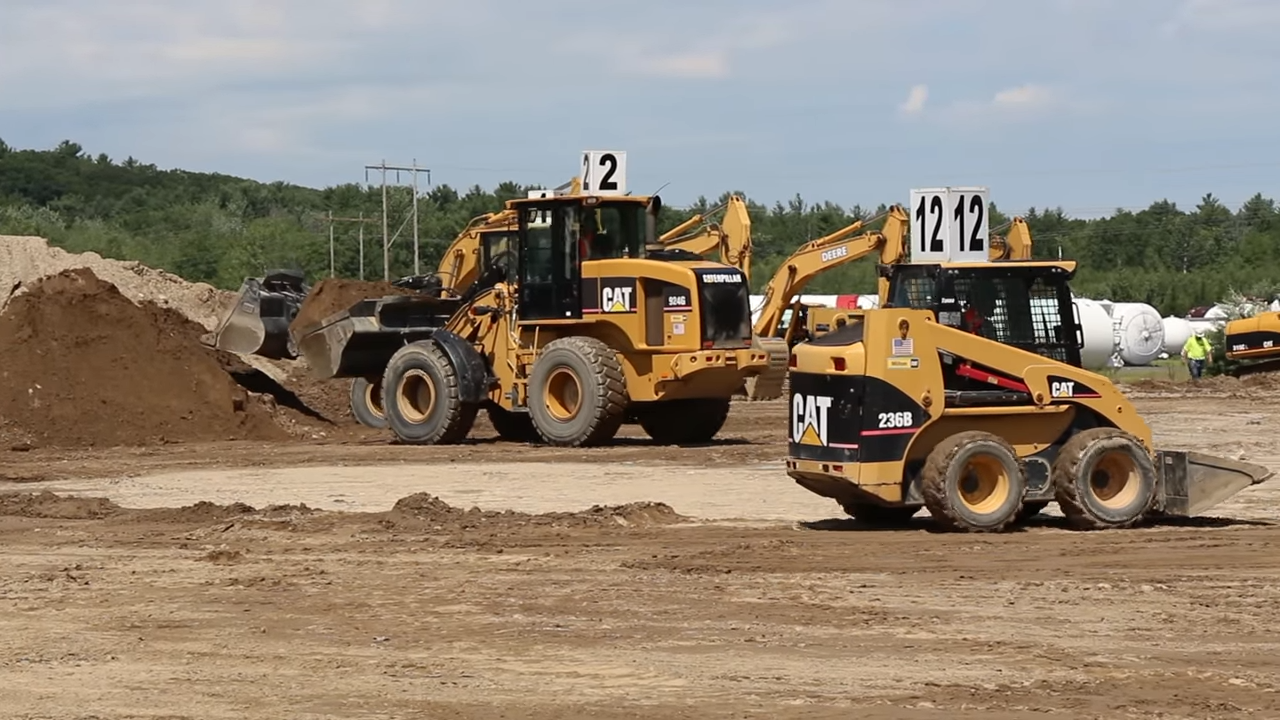
Heavy machinery operators must master a diverse array of machinery, each designed to perform specific tasks that are pivotal in construction and infrastructure projects. As a construction equipment operator, you’ll handle bulldozers to demolish structures, level ground, and clear land. You’ll operate cranes to lift and transport heavy materials with precision. Maneuvering skid steers will become second nature for tasks like snow clearing, digging, and transporting materials on tight job sites.
Driving dump trucks means you’re responsible for hauling large quantities of material—a role that requires a Commercial Driver’s License (CDL). The excavator will be your tool for grading landscapes, drilling holes, and dredging canals. Mastery of this heavy machinery, along with ongoing training and certification, is essential to your success and safety as a construction equipment operator, ensuring compliance with evolving equipment technology and safety procedures.
Key Responsibilities
Operating heavy machinery goes beyond mere driving; it involves precise maneuvering and maintenance to ensure tasks such as trench digging and landscape grading are completed efficiently and accurately. You’ll be responsible for the safe equipment operation, which is crucial not only for project success but also for the safety of everyone on site. Your role includes reading and interpreting blueprints and designs, guaranteeing that every move you make with the equipment aligns with the project’s specifications.
As a heavy equipment operator, you’ll also manage equipment maintenance, ensuring the machinery is in top working condition. This involves routine checks and troubleshooting any issues that arise. Your expertise in operating heavy equipment is vital to the progression and efficiency of construction projects, roadwork, and infrastructure development.
Required Skills
To excel as a heavy equipment operator, you’ll need to master several key skills, ranging from precise equipment handling to understanding complex blueprints and safety regulations.
Proficiency in operating heavy machinery like excavators, bulldozers, and cranes is fundamental. You must also be adept at reading and interpreting construction blueprints, ensuring you can follow project designs accurately.
Your heavy equipment training should cover the essentials of equipment regulations and compliance with OSHA safety protocols. With proper training, you’ll learn to transport materials efficiently, erect construction components, and prepare sites with precision.
Additionally, maintaining machinery for optimal performance is crucial. By adhering to these safety measures, you’ll command control over your role and contribute significantly to any construction project.
Education Requirements
To kick off your career as a heavy equipment operator, you’ll need at least a high school diploma or GED. Technical training programs and apprenticeships offer practical skills and hands-on experience that are invaluable in this field.
Additionally, on-the-job training can sharpen your abilities and ensure you meet the certification requirements necessary for operating heavy machinery.
High School Diploma or GED
Before setting out on the path to becoming a heavy equipment operator, you’ll need to secure a high school diploma or GED, as it’s the foundational educational requirement for this career. This credential signals that you’ve met the necessary educational standards to embark on specialized heavy equipment operator training.
The construction industry values operators who’ve a solid grasp of basic educational concepts, which you’ve demonstrated by earning your diploma or GED.
Equipped with this qualification, you’ll be better prepared to understand the technical aspects and safety protocols associated with operating heavy machinery. Remember, your high school diploma or GED is more than just a piece of paper; it’s a stepping stone towards mastering the skills required in the demanding and rewarding field of heavy equipment operation.
Technical Training Programs
Once you’ve obtained your high school diploma or GED, you’ll need to enroll in a technical training program to gain the specialized skills required for a career as a heavy equipment operator. These training programs are available through vocational schools and can range from 1 to 4 years, blending classroom knowledge with practical, hands-on experience. You’ll delve into equipment maintenance, safety protocols, and the fundamental skills necessary for the trade.
Formal training will prepare you for certification and licensing exams that are often mandated. These are provided by recognized testing organizations or may be part of employer-sponsored programs that comply with OSHA standards. Remember, your ability to perform the operating skills and pass test assessments will be crucial for successfully completing your technical training.
Apprenticeship Programs
After completing your technical training, you’ll likely progress to an apprenticeship program to further refine your skills through real-world experience. These apprenticeship programs, often available through union or state initiatives, are crucial for becoming proficient as operating engineers. They blend classroom instruction with hands-on experience, allowing you to apply theoretical knowledge practically on job sites.
During your apprenticeship, which typically lasts 3 to 4 years, you’ll learn the ins and outs of heavy equipment operation. The program’s comprehensive nature ensures you receive a well-rounded education, covering everything from safety protocols to advanced operational techniques.
On-the-Job Training
As you embark on your journey to become a heavy equipment operator, hands-on training under the watchful eye of seasoned professionals is an indispensable part of your education. On-the-job training allows you to gain practical knowledge and real-world skills, essential for mastering the demands of operating heavy machinery.
By learning directly from experienced equipment operators, you’ll understand the nuances of machinery operation and adopt safety practices crucial in this field. This type of education requirement is more than just instruction; it’s an opportunity to demonstrate your ability to control and maneuver equipment effectively.
With on-the-job training, you’ll not only learn the ins and outs of heavy equipment but also develop the confidence needed to manage these powerful machines with precision and care.
Certification Requirements
After meeting the education prerequisites, you’ll need to obtain certification to legally operate heavy machinery.
You can choose between state or national certification, both requiring a combination of written and practical exams.
Continuing education units are also necessary to maintain your certification and keep your skills sharp.
State Certification
To operate heavy equipment with a lifting capacity over 2,000 pounds, you’ll need to obtain state certification through a written and practical examination administered by a recognized testing organization. Obtaining certification isn’t just a formality; it’s a crucial step to ensure safety and compliance with industry standards.
Here are several key aspects of state certification:
Certification must be obtained for machinery exceeding a 2,000-pound lifting capacity.
You’ll undergo both written and practical exams.
Look for employer-sponsored programs that meet OSHA requirements.
Acquire certification from city or state licensing authorities aligned with OSHA standards.
Consider certifications like Formal Training, NCCER, DOT TX Qualifying Exam, or NCCCO.
Understanding these elements will empower you to control your path in becoming a certified heavy equipment operator.
National Certification
Securing national certification as a heavy equipment operator requires completing a recognized program and passing rigorous exams to prove your proficiency and safety knowledge. To qualify for heavy equipment operator jobs at a national level, you’ll need to enroll in training schools that offer programs meeting the standards of testing organizations, such as The National Commission for the Certification of Crane Operators.
Once you’ve completed the necessary training, you must pass both written and practical examinations with at least a 70% score.
Keep in mind, you’ll need to renew your national certification every five years. This ensures you’re up to date with OSHA standards and possess the latest knowledge in your field. Commit to continued education to maintain your qualifications and control your career trajectory.
Continuing Education Units
Maintaining your national certification as a heavy equipment operator isn’t a one-time achievement; it requires ongoing education through Continuing Education Units (CEUs) to ensure you remain at the forefront of industry standards and practices. To keep your skills sharp and certification valid, you’ll need to engage in approved training or educational programs.
Here’s what you should focus on:
Completing the requisite number of CEUs within the determined timeframe.
Participating in vocational training that covers new technologies and equipment.
Staying updated with the latest safety procedures and regulations.
Attending workshops that emphasize equipment maintenance and operational efficiency.
Demonstrating a commitment to professional growth and industry compliance.
Licensing Requirements
To legally operate heavy equipment, you’ll need to secure a Commercial Driver’s License (CDL) if your role requires driving commercial vehicles.
You must also pass a medical examination to ensure you’re fit for the demands of the job.
Commercial Driver’s License (CDL)
If you’re aiming to operate heavy equipment, you’ll need a Commercial Driver’s License (CDL), which involves passing both written and practical exams. A CDL is crucial for machinery with a lifting capacity over 2,000 pounds and must be renewed every five years.
To secure your commercial driver’s license and operate equipment effectively:
Obtain a CDL by passing required exams.
Get certified by recognized organizations like NCCCO.
Complete formal training and licensing tests.
Gain hands-on experience for practical skills.
Utilize training organizations and unions for education.
These steps ensure you’re not only legally compliant but also proficient in safety procedures and operation techniques, giving you the control you need in your role as a heavy equipment operator.
Medical Examination
Before you can take the helm of heavy equipment, you’ll need to pass a thorough medical exam to ensure your physical ability meets the stringent safety standards required by OSHA and state licensing bodies. As an aspiring heavy equipment operator, this medical exam will assess your overall physical fitness, including vision and hearing capabilities, critical for your ability to safely operate machinery. Licensing authorities require proof of this examination to verify that you’re physically up to the task.
License Renewal
As a heavy equipment operator, you’re required to renew your certification every five years. This involves passing updated written and practical exams to demonstrate continued competence and adherence to OSHA regulations. The process ensures you’re up-to-date with the latest safety protocols and machinery functions.
Here’s what you need to focus on for your license renewal:
Stay informed about your state’s specific licensing requirements.
Maintain a valid driver’s license, as it’s often a prerequisite.
Complete any mandatory continuing education or training sessions.
Prepare for and pass the necessary written and practical exams.
Ensure your knowledge of OSHA regulations is current and comprehensive.
Gaining Experience
As you embark on your journey to become a heavy equipment operator, starting with entry-level equipment options allows you to get your hands on the controls and understand the basics.
Working alongside an experienced operator can provide you with invaluable insights and practical skills that are essential for your growth.
Furthermore, building a portfolio of your work will showcase your experience and increase your credibility in the field.
Entry-Level Equipment Options
To kickstart your journey as a heavy equipment operator, consider enrolling in vocational schools or technical training programs for essential hands-on experience and fundamental education. These entry-level equipment options will equip you with the knowledge to safely operate machinery.
Here are some practical steps to gain experience:
Explore apprenticeship programs combining on-the-job training with classroom education.
Look for laborer positions that offer on-the-job training for handling different types of equipment.
Seek out certificate programs focusing on equipment knowledge and safety.
Consider CDL training courses for operating specific heavy machinery.
Join local unions or organizations that provide resources and networking in the field.
Working with an Experienced Operator
After gaining fundamental knowledge through training programs, you’ll find that working alongside an experienced heavy equipment operator offers invaluable practical experience. This mentorship allows you to observe and operate machinery under real-world conditions, learning directly from someone who’s mastered the craft. You’ll learn not just how to maneuver the equipment but also the subtler aspects of the job, such as site safety and equipment maintenance.
Don’t hesitate to ask questions and seek advice. An experienced operator can provide insights that no textbook can offer. Use this opportunity to gain hands-on experience and absorb the feedback given. This direct exposure will sharpen your skills, giving you the confidence and competence needed to control heavy machinery effectively.
Building a Portfolio
Building a strong portfolio is crucial for showcasing your skills and experience as a heavy equipment operator. In the competitive field of construction projects, standing out to potential employers with proof of your heavy equipment operation expertise can open up numerous job opportunities.
Here’s how you can build an impressive portfolio:
Seek apprenticeships or on-the-job training for practical, hands-on experience.
Enroll in technical school programs for formal education on heavy equipment.
Obtain certifications from bodies like The National Commission for the Certification of Crane Operators.
Get a commercial driver’s license (CDL) to expand your qualifications.
Document all your experiences and qualifications comprehensively.
On-the-Job Best Practices
As you step into the role of a heavy equipment operator, it’s crucial that you always adhere to safety protocols and wear the necessary protective gear.
You’ll need to routinely check and service your machinery to prevent breakdowns and ensure optimal performance.
Moreover, commit to enhancing your skills and keeping abreast of industry advancements to excel in this field.
Safety Procedures
To ensure your safety as a heavy equipment operator, always wear the necessary personal protective equipment (PPE), including hard hats, high-visibility vests, and steel-toed boots.
Adhering to occupational safety principles is crucial, and it’s your responsibility to maintain them. Here’s what you must do:
Conduct pre-operation inspections to verify machinery is in top condition.
Follow OSHA guidelines and other safety regulations diligently.
Communicate clearly using standardized hand signals with your team.
Stick to established operating procedures to handle equipment safely.
Maneuver machinery with utmost care to avoid incidents.
Equipment Maintenance
Having established the importance of safety procedures, let’s now focus on the best practices for equipment maintenance to keep your machinery running smoothly.
As a heavy equipment operator, you must perform regular maintenance to ensure optimal performance and longevity. Inspect your equipment for signs of wear, damage, or malfunction before each use.
It’s crucial to follow the manufacturer’s maintenance guidelines and schedule regular servicing according to the equipment’s manual. Keep detailed records of all maintenance, repairs, and service history to track the condition of your machinery.
Additionally, properly store and protect your equipment from harsh weather and secure it when not in use to maintain equipment effectively and avoid unnecessary damage.
Continuous Self-Improvement
Mastering the operation of heavy machinery is an ongoing journey, and embracing a mindset of continuous self-improvement is crucial for career advancement and skill enhancement. To carve out a successful heavy equipment operator career path, you’ll need to:
Continuously seek and embrace opportunities for on-the-job training and skill improvement.
Regularly engage in self-assessment to pinpoint areas needing growth.
Actively seek feedback from seasoned operators and supervisors.
Staying abreast of industry best practices and technological advancements is also essential. This can be achieved by:
Proactively seeking additional certifications and specialized training programs.
These practices don’t just bolster your proficiency, but also signal your commitment to excellence in your field. Keep pushing the boundaries of your expertise, and you’ll find doors opening along your career path.
Looking for Equipment?
Compare rates from dozens of companies in less than 3 minutes.
A standard 33-pound LP fuel tank for a forklift (holds 8 gallons of propane), which is the size of most forklifts, will last for around 8 hours. – With typical usage of a forklift, 1 gallon of propane = 1 hour of power
No. We currently do not offer trailer-mounted or towable boom lift models for rent.
No. The listed rental price does not include pickup and delivery charges or required taxes and service fees. The Damage Waiver is also additional. The rental prices listed are samples based on major metro areas. We provide service in more than 500 metro areas, so the final rental price will vary due to availability and market pricing. Please call or email us for an exact quote.
Get The Latest From The Think Big Blog Delivered To Your Inbox.
A Guide To Renting Vs. Buying Compaction Equipment
Meta Description: Discover the critical factors for renting or buying compaction equipment. Evaluate costs, flexibility, and tax benefits for your business needs.
Deciding whether to rent or buy construction equipment is a significant decision for contractors that requires evaluating multiple cost and operational factors over the long run.
This article analyzes critical considerations around the total cost of ownership, flexibility, maintenance responsibilities, and equipment availability to help contractors determine the most suitable option based on their unique business needs and project requirements.
Key Takeaways
Renting provides flexibility for varying needs, but purchasing offers more control over customization and availability.
Renting is often financially sensible for short-term projects, while ownership is preferred for long-term recurring use to offset a higher upfront cost over time.
The total cost of ownership must consider initial investments and ongoing operational, maintenance, and repair expenses, which purchasing absorbs.
Resale value, tax benefits, and avoiding rental rate fluctuations strengthen the case for owning equipment that has been used extensively for years.
Flexing between renting and owning depends on a business’s unique utilization patterns, cash flow, and ability to manage equipment lifecycle costs. A balanced assessment is critical.
Importance of Renting or Buying Compaction Equipment
For construction contractors, deciding between renting or purchasing compaction equipment has significant implications for long-term costs and operational efficiency. Renting offers flexibility for varying project needs but comes with recurring rental fees.
Purchasing compactors provides control over customization and ensures availability without relying on rental inventory. However, owning requires higher upfront investments and bearing maintenance responsibilities.
Contractors must carefully evaluate utilization rates, cash flow, and project timelines to determine the most cost-effective option that best meets their unique business needs.
Renting Vs. Buying Compaction Equipment – Key Factors to Consider
Whether renting or purchasing is the best option for your compaction equipment needs depends on evaluating several essential considerations. Your project requirements, expected frequency of use, timeframe, and long-term business goals require analysis to determine the ideal solution.
1. Your Project Needs
Every project has unique specifications that impact equipment selection. Consider the precise size, power capacity, and attachments required for your tasks. Renting enables flexibility to change configurations as needs evolve over the life of a job.
However, if you perform similar work regularly requiring specialized features, ownership allows customizing a machine to optimize efficiency. Matching the right equipment to your application is essential for productivity and cost-effectiveness.
2. Timeframe of Usage
The duration of your project plays a crucial role in deciding between renting or purchasing compaction equipment. Short-term jobs often make more financial sense to rent equipment and avoid a significant upfront cost.
However, the ongoing equipment rental expenses could exceed the purchase price if you need equipment access for an extended period or recurring jobs. Purchasing may prove more cost-effective for long-term heavy equipment utilization.
You must also consider the specific equipment requirements of future anticipated projects. Owning a machine provides flexibility if you expect to use similar compaction needs on upcoming jobs. Renting limits you to the rental period but has a lower initial investment if future requirements are uncertain.
3. Short-term vs. Long-term Needs
Balancing costs over different durations is essential in deciding whether to rent construction equipment or buy construction equipment.
Short-Term Projects
Renting construction equipment for the duration of a job often makes financial sense for short-term, temporary, or one-off projects. This avoids a significant upfront cost and provides flexibility without long-term expense if usage is sporadic.
Rental enables access to the precise compaction solution as needed without the rental costs of ownership, like storage when idle. It eliminates the risks of selling underutilized machines.
For contractors with intermittent work, renting equipment ensures access without significant capital investment tied to unused assets between jobs. Rental expenses can be quickly billed to individual projects.
Ongoing or Long-Term Projects
Purchasing may prove more cost-effective over time for contractors with regular and recurring needs for compaction equipment on long-term infrastructure or energy projects. While the initial investment is higher, avoiding rental fees throughout the extended period of heavy equipment utilization helps offset that upfront cost.
Owning also ensures reliable access to suitable machines as required without relying on rental availability or changing rental rates.
If the usage level remains high for years, the total expenditure could surpass the purchase equipment price with lower ongoing ownership costs. Depreciation may also create tax advantages for businesses.
4. Cost Considerations
Comparing total expenditures over time is essential when deciding between renting or purchasing construction equipment.
Initial Investment
The upfront cost of buying construction equipment can be substantial, requiring a sizeable down payment and securing financing. However, for long-term heavy equipment needs, this higher initial investment may prove more cost-effective in the long run compared to recurring rental fees.
It allows offsetting the purchase price by avoiding rental expenses over years of regular usage. Contractors must consider their cash flow and financial resources available to pay cash upfront versus ongoing rental payments from their business income.
Operational Costs
Operational costs, including fuel, insurance, and maintenance, are significant long-term expenditures. While rental rates cover maintenance by the rental company, owning equipment entails bearing these ongoing expenses to run the machines.
Frequent repairs and downtime can rapidly increase costs. However, if utilization remains high, well-timed maintenance keeps machines running productively. Purchasing also allows customizing insurance cost plans to the business needs.
Weighing total operational expenses over the long run is crucial in deciding whether renting or buying equipment makes the most financial sense.
Maintenance and Repair Costs
Maintenance and repair costs for owned equipment can be substantial over the long run if not appropriately managed. While rental rates cover regular maintenance by the rental company, purchasing requires contractors to bear these ongoing business expenses to keep machines running productively. Frequent downtime for heavy repairs rapidly increases ownership costs.
However, establishing preventative maintenance routines helps reduce repair bills. It may also make financial sense to purchase extended warranty or protection plans to limit repair liabilities for high-cost items. These long-term factors must be weighed carefully.
5. Flexibility and Customization
Renting construction equipment allows contractors to change configurations for different projects as needs evolve. It allows access to various machine types, sizes, and specialized attachments from rental companies.
However, owning equipment offers more customization options. Purchasing allows contractors to modify machines as required and outfit them with specific attachments optimized for regular work.
This enhances productivity and makes the equipment a tailored asset for business needs. Based on project requirements, it is essential to weigh flexibility versus customization.
6. Equipment Access and Availability
Relying on rental equipment requires planning to secure machines to avoid project delays. However, owning compaction solutions ensures they are readily available on demand without relying on rental company inventory.
This provides peace of mind, especially for urgent jobs or unpredictable weather conditions that can influence project schedules.
Purchasing equipment gives more autonomy than managing rental availability and rates, which may fluctuate. For contractors with regular needs, this accessibility and dependability make purchasing attractive despite higher initial investment.
7. Resale Value and Depreciation
Owning construction equipment long-term allows benefits if resale value holds up over the years of ownership. Well-maintained machines commanded higher used prices. While new equipment depreciates rapidly, later resale can offset some of the initial purchase cost
Rental equipment typically has no resale value for contractors. Depreciation is also a tax advantage that may reduce taxable income over the equipment ownership life.
Factoring in the potential resale value versus rental expenditures is prudent for long-term planning and total cost of operation calculations when deciding between renting or purchasing heavy machinery.
8. Maintenance Responsibilities
Whether renting or owning construction equipment, maintenance is crucial to equipment productivity and availability. Renting transfers repair responsibilities to the rental company, but owners bear this burden.
While maintenance costs can be substantial for owners, establishing preventative maintenance routines performed by qualified technicians helps reduce repair bills over the long run.
It also prevents downtime, which is costly for projects. For contractors regularly using machines, factoring in maintenance management and planning time commitment is essential. Outsourcing some repairs may benefit certain businesses based on needs.
Frequently Asked Questions
What are the key factors when deciding between renting or buying compaction equipment?
Both options offer benefits; leasing equipment allows you to pay monthly payments and manage transportation and storage costs, while purchasing provides tax advantages and ownership. Consider your financial situation and the frequency of equipment use.
How do transportation and storage costs affect renting or buying equipment?
Renting reduces transportation costs as the rental company usually handles delivery. Storage costs are also lower when renting, as you don’t need space for the equipment between uses, unlike owning where storage is necessary.
What are the tax benefits associated with buying compaction equipment?
Buying construction equipment offers tax advantages through depreciation deductions and potential tax credits. This financial incentive can be significant for businesses looking to reduce their tax burden while acquiring necessary machinery.
How does the utilization rate impact renting or buying construction equipment like skid steers?
Buying may be more cost-effective if you require equipment regularly, ensuring higher utilization rates and lower average costs per use. Renting suits sporadic needs or projects requiring different equipment, optimizing fleet management.
What are the cons of renting compaction equipment compared to buying it?
While renting typically involves lower upfront costs and avoids maintenance responsibilities, it may be more expensive in the long run for equipment regularly used. Additionally, renting doesn’t offer the potential equity and asset value associated with owning equipment outright.
Looking for Equipment?
Compare rates from dozens of companies in less than 3 minutes.
We are currently rebuilding our checkout system and apologize for any inconvenience.
Dumpster rentals must be ordered separately from all other equipment. Go back to order review, select only equipment rental item(s) by deleting your dumpster rental(s) and proceed to checkout. Follow the same process with only your dumpster rental(s).
To order all equipment at once, please call (888) 888-8888


 Admin August 4, 2022