Choosing the Right Lift: Manlift vs Scissor Lifts

Mediapayperlead-com December 11, 2024

Choosing the Right Lift: Manlift vs Scissor Lifts

Meta Description: Understand the differences between man lifts and scissor lifts to determine which type of aerial work platform is best for indoor or outdoor construction projects requiring elevated work.

This article provides an overview of the main types of construction lifts used in the industry. Understanding the different kinds of man lifts is essential for safety considerations and choosing the right equipment for specific jobs.

We will explore articulating, vertical plane telescopes, boom, and scissor lifts. Their key features and applications will be discussed to help readers make informed decisions for their projects.

Key Takeaways

  • Manlifts and scissor lifts are aerial work platforms that provide elevated access for construction and maintenance tasks.
  • Manlifts offer greater flexibility of Movement but smaller workspaces, while scissor lifts have stable, larger platforms but limited vertical Movement.
  • Safety is paramount when operating any aerial lift. Proper training, inspection, fall protection, and adherence to manufacturers’ guidelines and regulations are necessary.

Comparing Manlifts and Scissor Lifts

Man lifts and scissor lifts are two types of boom lifts, the most commonly used when tackling construction or maintenance jobs that require working at heights. However, choosing between these lifting means requires understanding their key differences.

Design and Movement Capabilities

Manlifts, or boom rough terrain scissor lifts or aerial work platforms, feature an extendable boom arm for vertical and horizontal Movement. This provides greater flexibility to access challenging workspaces. Scissor lifts use a scissor mechanism of crisscrossing supports to move the work platform solely up and down. Meanwhile, the vertical lifting ability of scissor lifts is limited compared to man lifts.

Platform Size and Load Capacity

Scissor lifts typically have a more extensive work platform to accommodate multiple workers and heavier equipment and materials. For example, a 50-foot scissor lift may carry up to 2,250 pounds.

In contrast, boom lifts are designed for one or two lifts vs. multiple joints. Two workers have lower weight limits, usually around 500 pounds. Their compact bucket or platform offers less workspace.

Indoor and Outdoor Applications

Scissor lifts can be used for indoor and outdoor projects, with electric models well-suited for enclosed spaces. Diesel-powered scissor lift handles outdoor and rough terrain much better.

Meanwhile, electric boom lifts function indoors and outdoors, but diesel/gas versions are meant for outdoor and indoor use only due to emissions. Their compact size allows navigation of tight indoor areas.

Cost Comparison

Overall, scissor lifts tend to be more cost-effective than boom lifts. For instance, renting a 40-foot electric scissor lift costs approximately $630 per week, whereas a similar boom lift costs $728. However, lift size, power source, and attachment/extension capabilities influence final rental rates.

Choosing the Right Construction Equipment for Your Project

Choosing the correct construction equipment for your project is essential for safety, efficiency, and budget management. The right equipment can help complete tasks on schedule and minimize risks on site.

Manlifts vs. Scissor Lifts: Understanding the Basics

  • Manlifts and scissor lifts are two popular options for working at heights.
  • Manlifts, called boom lifts or aerial work platforms, feature an extendable arm that allows workers to reach higher areas and move horizontally.
  • Scissor lifts use crisscrossing supports to lift a platform vertically. They provide a large, stable workspace and can carry more weight than man lifts.
  • Manlifts can extend up to 210 feet, while scissor lifts typically lift 60 feet. Manlifts offer greater flexibility of Movement, but scissor lifts are easier to operate.

Key Factors to Consider When Choosing Equipment

Several factors determine the best equipment for each project:

  • Required height – Manlifts can reach higher, but scissor lifts serve up to 50 feet for most applications.
  • Maneuverability – Manlifts move horizontally using articulating or telescopic arms, while scissor lifts only lift vertically.
  • Platform size – Scissor lifts accommodate more workers and equipment due to their larger workspace.
  • Weight capacity – Heavier scissor lifts support higher payloads than more minor man lifts.

Safety Regulations for Operating Equipment

  • Prioritizing safety is critical.
  • All operators must complete certified training on any aerial lift.
  • Inspect equipment daily for defects and follow maintenance schedules.
  • Wear fall protection like harnesses and lanyards secured to the lift when working at height.
  • Understand load limits and safe operating procedures to avoid accidents.
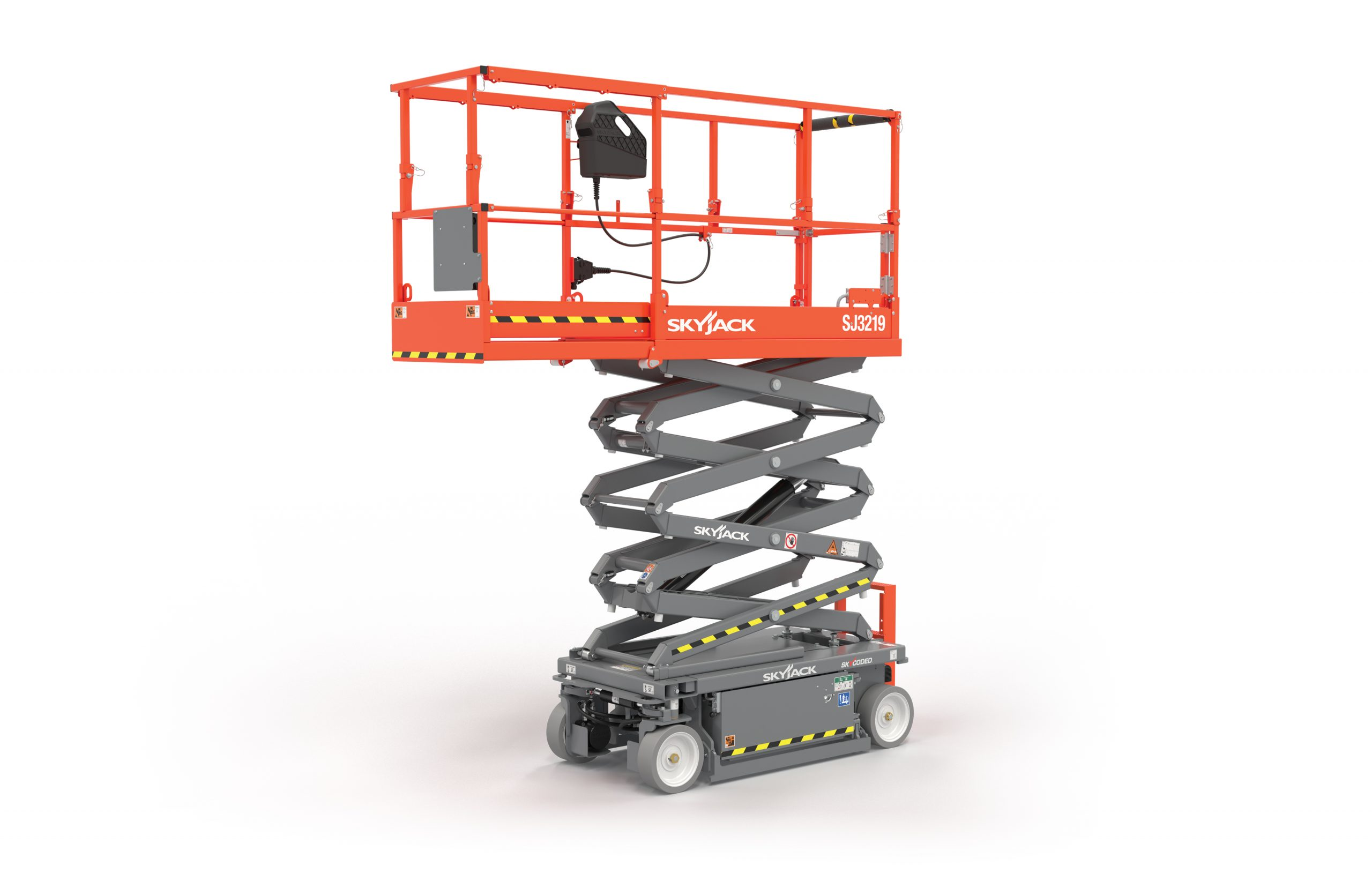
A red and grey Skyjack SJ3219 scissor lift with a fully extended platform on a white background

Advantages of Manlifts

Manlifts offer numerous advantages that make them suitable for various construction and maintenance tasks. Their flexible design allows operators to access challenging workspaces and tall structures easily.

The Flexibility of Movement

One of the core advantages of man lifts is their flexibility of Movement. Unlike other equipment that provides limited mobility, man lifts can move vertically and horizontally. This capability results from their hydraulic arm design that enables smooth Movement in all directions.

Variety of Types and Sizes

Choosing the suitable manlift model from the available options is essential, depending on the job requirements. Manlifts come in different types, including telescopic boom lifts, front articulating boom lifts, and bucket trucks. Each caters to unique needs through unique designs. They also vary considerably in size to accommodate small residential projects and significant industrial maintenance works.

Higher Load Capacities

While manlift designs focus on mobility and accessibility, they do not compromise functionality. Most man-lift models have a high load capacity due to their robust build. This enables multiple workers’ and materials’ total lifting capacity to be safely transported to the required work areas.

Some elite models can carry loads up to 500 pounds, sufficient for piping work, exterior cleaning, and routine maintenance. The heavy-duty capability makes man lifts appropriate for various industrial jobs that demand lifting heavier equipment or machinery.

Advantages of Scissor Lifts

Scissor lifts provide various benefits for construction and maintenance projects that require working at heights. Their stable and spacious platform makes them well-suited for tasks involving multiple workers.

Stability and Large Platforms

One key advantage of scissor lifts is their stable work platform. Thanks to the scissor mechanism design, the lift platform remains steady as workers move around freely. This allows for safe and efficient work at heights. Additionally, scissor lifts provide a large flat work area. Their spacious platforms allow workers to complete tasks efficiently without feeling confined.

Suitability for Multiple Workers

The ample platform size of most scissor lifts makes them suitable for accommodating multiple workers. This enables efficient teamwork on projects involving more than one person. Whether installing equipment, performing repairs, or maintaining, scissor lifts can efficiently support collaborative efforts. Their higher-weight capacities allow all workers to carry the necessary tools and materials.

Cost-Effectiveness

Scissor lifts also provide a cost-effective option for aerial work. Their pricing is generally lower than other equipment like boom lifts or small bucket-top trucks. This makes them appropriate for more minor to mid-sized projects with tighter budgets. For contractors and building owners, scissor lifts deliver value without burning a hole in the pocket. Their affordable rates enhance the feasibility of routine maintenance tasks as well.

Ensuring Compliance with Local Regulations

Ensuring safety is a top priority when renting equipment for construction projects. Following local regulations plays a key part in maintaining a secure work site.

Permit Requirements

Permits are necessary to operate specific equipment on construction jobs. Depending on the type of lift and location of the project, permits may be required from the local transportation department or other regulatory bodies.

Scissor and boom lifts typically necessitate permits for public roads or sidewalks. Closed sidewalk permits allow equipment to block pedestrian paths as long as safety measures like barricades are in place.

Training and Certification

Proper training reduces risks on the job site. The Occupational Safety and Health Administration (OSHA) mandates that all aerial lift personnel complete certified instruction. This ensures lift operators understand safe operating procedures, weight limitations, emergency protocols, and inspection practices.

Inspection and Maintenance

Regular maintenance of mine lift equipment is crucial for safety. Inspections identify defects early to address them before causing incidents. Scissor and boom lifts must be carefully checked before each use according to manufacturer guidelines.

Functional tests, inspections, and repairs as needed help equipment perform dependably over the long run.

Frequently Asked Questions (Choosing the Right Lift: Manlift vs Scissor Lifts)

Manlifts, also known as boom lifts or aerial lifts, can move vertically and horizontally, providing greater flexibility than scissor lifts, which only move vertically. Manlifts typically can lift workers and have higher load capacities and outreach capabilities due to their power lines and extendable hydraulic arms. However, scissor lifts offer a larger, more stable work platform and can accommodate multiple workers.
Manlifts are well-suited for projects requiring work at height in tight spaces or involving heavy loads. Their flexibility of Movement and ability to reach higher heights with heavier loads make them suitable for building maintenance, construction, and infrastructure projects. Industries that leverage manlifts include utilities, telecommunications, and wind energy.
Some typical applications of scissor lifts include maintenance, construction, and warehouse/facility tasks. They are frequently used for electrical and mechanical maintenance of large buildings, installing siding/windows, indoor painting projects, and stacking/retrieving inventory in warehouses. Scissor lifts provide stable, elevated access for multiple workers indoors or on level outdoor surfaces.
According to OSHA regulations, scissor lifts fall under the category of aerial lifts. While OSHA’s general industry standards classify scissor lift operators using them as aerial lifts, their construction standards refer to scissor lifts as mobile scaffolds.
When using man lifts, scissor lifts, or another type of aerial lift for work platforms on public property in New York City, permits are required from the NYC Department of Transportation (DOT). Common types of lifts include Construction Equipment Permits, Closed Sidewalk Permits, and Lane Closure Permits.

Forklift vs Telehandler – Which is Right for the Job?

Mediapayperlead-com December 11, 2024

Forklift vs Telehandler – Which is Right for the Job?

Meta Description: Understand the differences between forklifts and telehandlers to select the right equipment for material handling jobs. Which is best – the conventional forklift, the versatile telehandler, or the compact forklift?

This article overviews two commonly used material handling equipment: forklifts and telehandlers. It discusses their typical applications, capabilities, and limitations to help customers understand critical differences and choose the right equipment.

Whether you need to lift items indoors or outdoors, this breakdown covers basic specifications, operation types, and typical terrains where each thrives. The goal is to make an informed selection by highlighting what each does best.

Overview of Forklift

Forklifts are versatile machines commonly used for material handling in various industries such as construction, manufacturing, and warehousing. They help lift heavy loads and transport them efficiently over flat surfaces. Some key types of forklifts are discussed below:

Types of Forklifts

Forklifts are available in different models to suit diverse job conditions. Electric forklifts, such as warehouses, are suitable for indoor usage due to their zero emissions and ability to operate in confined spaces.

Rough terrain forklifts have large pneumatic tires that effectively traverse uneven outdoor surfaces like construction sites. Heavy-duty forklifts can lift hefty loads weighing up to 60,000 pounds for specialized heavy-lifting tasks.

How Forklifts Operate

All forklifts have a mast with solid forks at the front for lifting loads. Batteries power electric forklifts for emission-free operation, while rough terrain models have diesel engines. The operator controls the forklift by manipulating a steering wheel or lever.

The forks raise and lower hydraulically to pick up pallets and other palletized loads. Forklifts can then transport the lifted loads over flat surfaces and lower them accurately at the desired destination. Attachments like rotators and clamps allow forklifts to handle different types of loads. Safety features maintain stability while lifting and moving loads around.

Overview of Telehandlers

Telehandlers, telescopic handlers, are versatile lifting machines commonly used in the construction industry. They come in different types to suit varied jobsite needs and load requirements.

Types of Telehandlers

Three types of telehandlers are mainly based on their lifting capacity – light-medium, heavy-duty, and high-capacity. Light-medium duty telehandlers can lift between 5,000 and 9,000 pounds and are suitable for lifting loads in narrow aisles or confined spaces.

Heavy-duty telehandlers, as the name suggests, have higher lifting capacities ranging from 10,000 to 12,000 pounds, making them ideal for lifting heavy moving loads indoors. High-capacity telehandlers have the highest load capacity of 14,000 to 24,000 pounds, allowing them to handle bulkier loads efficiently.

How Telehandlers Operate

All telehandlers are powered by diesel engines, as there are currently no electric models. They come equipped with large pneumatic tires that offer good traction even on rough terrain like construction sites. One of the defining features of telehandlers is the boom – a telescopic arm attached to the rear of the machine.

The boom can extend to 30 feet on some models and tilt between fully horizontal and 70 degrees vertically. This allows operators to lift loads placed in areas not accessible by other equipment.

Telehandlers are also highly maneuverable thanks to their four-wheel steering and can lift loads forwards, backward, and vertically, providing maximum versatility for material handling in construction.

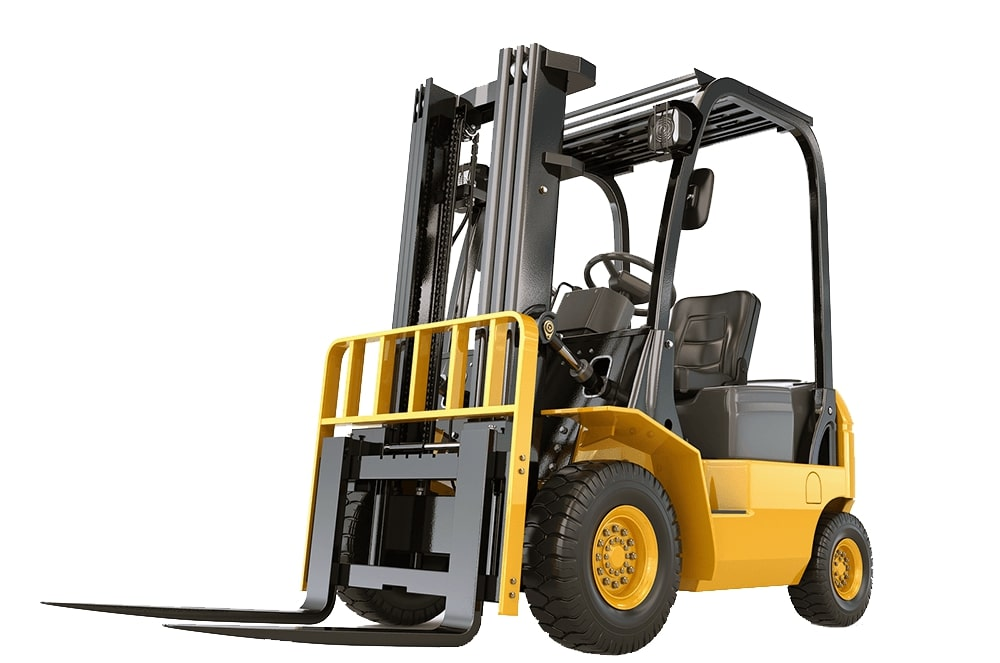
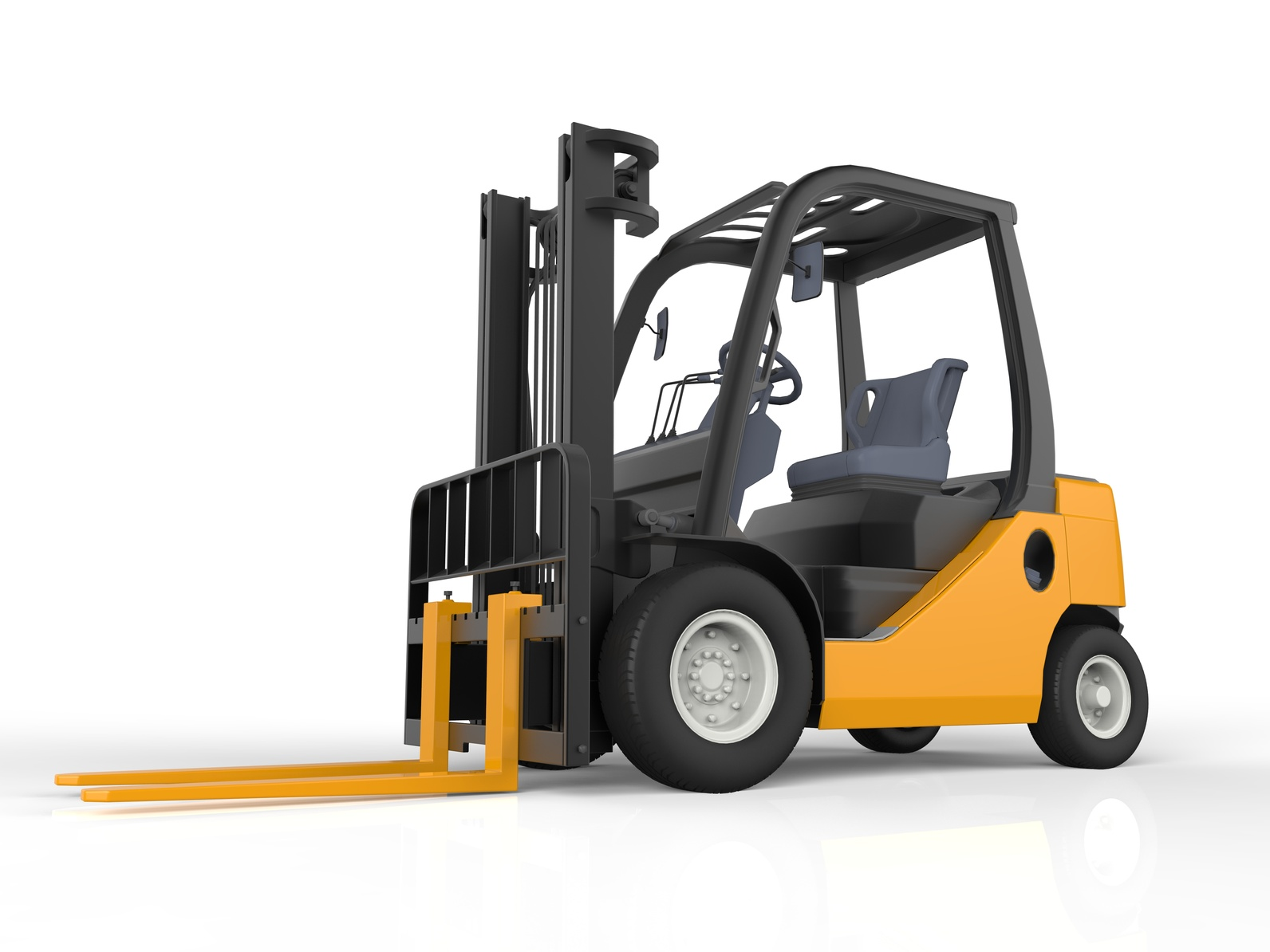
Yellow and black forklift with its forks in the front, positioned on a slight left angle, isolated on a white background

Comparing Forklifts and Telehandlers

Whether lifting heavy loads on construction sites or transporting pallets in warehouses, forklifts and telehandlers are invaluable equipment for material handling applications. Both machines excel at lifting and moving heavy objects from one location to another. However, their lifting capacities, maneuverability, and suitability for different terrains vary greatly.

1. Lift Capacity and Height

Depending on their intended use, forklifts are available in various lift capacities. Rough terrain forklifts can lift loads weighing up to 60,000 pounds, making them suited for heavy lifting.

Meanwhile, telehandlers and forklifts offer greater versatility in lifting loads vertically and forward. Larger telehandlers have lift capacities exceeding 24,000 pounds. Their booms also allow operators to lift loads to heights surpassing 56 feet.

2. Maneuverability and Stability

Maneuverability is a key factor when operating equipment in tight spaces like warehouses or on construction sites with narrow aisles. Forklifts are highly maneuverable machines thanks to their compact size.

However, telehandlers offer even greater maneuverability through their four-wheel steering and ability to turn within a small radius. Both pieces of equipment maintain stability through hydraulic systems and counterweights, but telehandlers can further stabilize themselves using their outriggers when working at maximum reach.

3. Terrain Suitability

The terrain is an important consideration when choosing between forklifts and telehandlers. While forklifts are suitable for level surfaces like warehouses, rough terrain forklifts can manage dirt and asphalt.

Telehandlers excel when lifting loads in rough terrain due to their four-wheel drive and wide tires. Their suitability for uneven and sloping ground makes telehandlers better equipped for construction sites and outdoor applications involving lifting loads in rough conditions.

What are Material Handling Equipment?

Material or building materials handling equipment refers to machinery and tools used to transport, lift, store, and protect various materials at construction sites, warehouses, distribution centers, and other industrial facilities.

This equipment plays a vital role in ensuring the smooth movement of materials throughout various stages of construction, manufacturing, and distribution.

Types of Material Handling Equipment Commonly Used in Construction

  • Forklifts: Forklifts are widely used to lift loads using their fork attachment and transport them to different locations on site. They commonly move materials like bricks, lumber, pipes, and other packaged goods. Forklifts come in electric and diesel variants to suit indoor and outdoor operations.
  • Telehandlers: Telehandlers, also known as telescopic handlers, are versatile machines that lift loads from ground level and transport them to higher platforms using their extendable boom. They are suitable for lifting materials forwards and backward. Telehandlers place trusses, set precast concrete elements, and move other heavy loads on construction sites.
  • Articulated Boom Lifts: Articulated boom lifts have a jointed or articulated boom and outriggers for stability. They help access elevated working platforms and lift loads to perform tasks like installing trusses or working on building facades and roofs. Boom lifts come in both electric and fuel variants.
  • Scissor Lifts: Scissor lifts have a scissor-like mechanism for their elevating platform instead of a boom. They provide accessible working heights and help install ceilings, lay cables, and perform maintenance work. Scissor lifts are usually electric-powered and suitable for indoor applications.
  • Cranes: Tower and mobile cranes are useful for lifting heavy loads and components with the help of their hoists, slings, and rigging accessories. They can lift loads over obstacles and access hard-to-reach areas on construction sites. Cranes require experienced operators for safe operation.

Frequently Asked Questions (Choosing the Right Lift: Manlift vs Scissor Lifts)

Manlifts, also known as boom lifts or aerial lifts, can move vertically and horizontally, providing greater flexibility than scissor lifts, which only move vertically. Manlifts typically can lift workers and have higher load capacities and outreach capabilities due to their power lines and extendable hydraulic arms. However, scissor lifts offer a larger, more stable work platform and can accommodate multiple workers.
Manlifts are well-suited for projects requiring work at height in tight spaces or involving heavy loads. Their flexibility of Movement and ability to reach higher heights with heavier loads make them suitable for building maintenance, construction, and infrastructure projects. Industries that leverage manlifts include utilities, telecommunications, and wind energy.
Some typical applications of scissor lifts include maintenance, construction, and warehouse/facility tasks. They are frequently used for electrical and mechanical maintenance of large buildings, installing siding/windows, indoor painting projects, and stacking/retrieving inventory in warehouses. Scissor lifts provide stable, elevated access for multiple workers indoors or on level outdoor surfaces.
According to OSHA regulations, scissor lifts fall under the category of aerial lifts. While OSHA’s general industry standards classify scissor lift operators using them as aerial lifts, their construction standards refer to scissor lifts as mobile scaffolds.
When using man lifts, scissor lifts, or another type of aerial lift for work platforms on public property in New York City, permits are required from the NYC Department of Transportation (DOT). Common types of lifts include Construction Equipment Permits, Closed Sidewalk Permits, and Lane Closure Permits.

Forklift vs Pallet Jack: Which is Right for You

Mediapayperlead-com December 11, 2024

Forklift vs Pallet Jack: Which is Right for You

Meta Description: Understand the difference between a pallet jack and forklift jacks and forklifts to select the right equipment for your material handling needs.

This article provides a straightforward comparison between pallet jacks and forklifts. As an equipment rental expert, understanding the differences between these two commonly used material handling machines is essential.

This comparison focuses on critical factors such as lifting capacity, maneuverability, cost, versatility, and other operational aspects. The aim is to help readers decide whether a pallet jack vs forklift would better suit their material handling needs.

Key Takeaways

  • Pallet jacks and forklifts are material handling equipment but differ in load capacity, lift height, cost, and other factors.
  • Pallet jacks are best for lighter loads, indoor use, and maneuvering in tight spaces, while forklifts can lift heavier loads, transport over longer distances, and are more versatile.
  • Both require Training and certification, but pallet jacks need less Training. Choosing depends on your budget and specific material handling needs.

Understanding Pallet Jacks and Forklifts

Pallet jacks and forklifts are essential equipment for handling material in various industries. Choosing the right one depends on the type of task and whether heavy loads are involved.

What is a Pallet Jack?

A pallet jack, pallet truck, or hand truck is a machine used to transport pallets within facilities.

  • It consists of a platform with wheels and tapered forks that slide under the pallet to lift and wheel it.
  • Pallet jacks are best suited for lifting lighter loads like those in warehouses and retail stores.
  • They are available in manual and electric models.

What is a Forklift?

A forklift is a powered industrial vehicle to lift and move heavy materials over various terrains, including outdoors.

  • It uses a mast with lifting forks to serve applications like construction sites and ports that handle heavier loads.
  • Forklifts offer versatility for loading trucks due to their ability to lift loads higher than pallet jacks.
  • Different types are available based on power source and other factors to suit diverse load requirements.

In conclusion, while pallet trucks and jacks excel at maneuvering tight spaces and lifting lighter loads, forklifts are preferred for applications requiring lifting heavier loads and operating in varied outdoor environments. Understanding these machines’ key attributes and suitable applications helps select the right equipment.

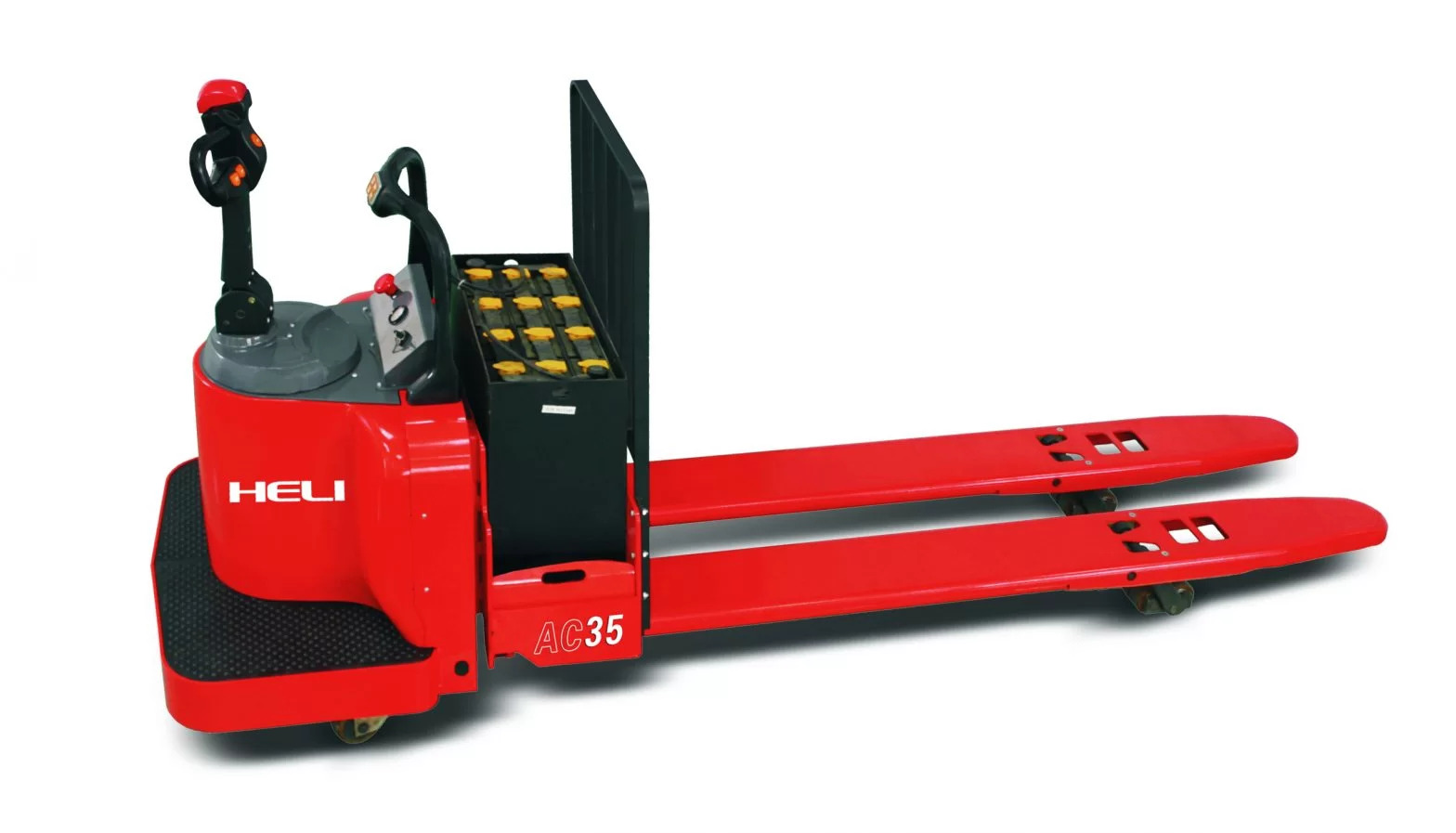
Red and black electric pallet jack by Heli with a model number AC35 on the side, featuring an upright steering handle, control levers, and an attached battery section on the back

Key Differences Between Pallet Jacks and Forklifts

When deciding between a pallet jack or forklift for material handling needs, it is important to understand how these machines differ in their capabilities. While both offer options for lifting and transporting small loads and loads, certain factors make one piece of equipment better suited than the other for different job requirements.

1. Load Capacity

Load capacity is among the most significant differences between pallet jacks and forklifts. Pallet jacks generally have a lifting capacity ranging from 2,000 to 5,500 pounds for manual models and up to 15,000 for heavy-duty electric options. Forklifts, on the other hand, can lift much heavier loads, between 5,000 to 40,000 pounds, depending on the model.

2. Maneuverability

Pallet jacks have a clear advantage for maneuverability thanks to their compact size. Measuring only a few feet wide, pallet jacks can easily navigate narrow aisles, tight corners, and congested spaces with large loads while on pallets.

Forklifts, while highly mobile, need more room to turn and maneuver due to their larger bending radii. Operations requiring frequent turns or workspace in confined areas are better suited to pallet jack use.

3. Mobility and Range of Motion

While pallet jacks offer excellent maneuverability, their mobility and range of motion are limited compared to forklifts. Pallet jacks are designed for short-distance transport of loads on pallets, typically within a building or warehouse. With their driving capabilities, forklifts can transport loads much further on job sites and across rough outdoor terrain.

4. Lifting Height

As mentioned earlier, the maximum lifting height of pallet jacks is restricted compared to forklifts. Manual pallet jacks usually lift loads only three to eight inches from the ground. While electric models and heavy-duty variants offer increased height, their maximum is still lower than forklifts designed for stacking.

Depending on the attachment and model, forklifts can lift loads to twenty-five feet or more. Applications involving loading to or unloading from elevated platforms, mezzanines, or racks necessitate greater lifting heights, which are attainable only through forklift use.

5. Cost and Maintenance Requirements

Cost is an essential factor for any material handling equipment purchase. Pallet jacks have a lower initial investment, renting from $204-$542 monthly compared to $1,200-$3,475 for basic forklift models. However, maintenance costs should also be considered.

Forklifts undergo more extensive scheduled maintenance checks and repairs due to their size, operation in varied conditions, and load weights handled. Pallet jacks operated indoors on level surfaces experience less wear and tear, resulting in lower long-term maintenance expenditures. Overall operational costs must be evaluated against the tasks required of warehouse equipment.

6. Operator Training

OSHA mandates operator training for safely operating pallet jacks and forklifts. However, forklift certification generally involves more extensive written testing and hands-on skills evaluation than pallet jack operation.

In conclusion, carefully considering factors like load weights, workspace constraints, transport needs, overhead storage, and operational expenses helps determine whether electric pallet trucks with jacks or forklifts best suit an operation’s material handling needs. Both offer valid solutions; selecting the right equipment depends on objectively analyzing jobsite requirements.

Frequently Asked Questions (Choosing the Right Lift: Manlift vs Scissor Lifts)

Manlifts, also known as boom lifts or aerial lifts, can move vertically and horizontally, providing greater flexibility than scissor lifts, which only move vertically. Manlifts typically can lift workers and have higher load capacities and outreach capabilities due to their power lines and extendable hydraulic arms. However, scissor lifts offer a larger, more stable work platform and can accommodate multiple workers.
Manlifts are well-suited for projects requiring work at height in tight spaces or involving heavy loads. Their flexibility of Movement and ability to reach higher heights with heavier loads make them suitable for building maintenance, construction, and infrastructure projects. Industries that leverage manlifts include utilities, telecommunications, and wind energy.
Some typical applications of scissor lifts include maintenance, construction, and warehouse/facility tasks. They are frequently used for electrical and mechanical maintenance of large buildings, installing siding/windows, indoor painting projects, and stacking/retrieving inventory in warehouses. Scissor lifts provide stable, elevated access for multiple workers indoors or on level outdoor surfaces.
According to OSHA regulations, scissor lifts fall under the category of aerial lifts. While OSHA’s general industry standards classify scissor lift operators using them as aerial lifts, their construction standards refer to scissor lifts as mobile scaffolds.
When using man lifts, scissor lifts, or another type of aerial lift for work platforms on public property in New York City, permits are required from the NYC Department of Transportation (DOT). Common types of lifts include Construction Equipment Permits, Closed Sidewalk Permits, and Lane Closure Permits.

Compactor vs Road Roller – Key Differences for Your Project

Mediapayperlead-com December 11, 2024

Compactor vs Road Roller – Key Differences for Your Project

Meta Description: Understand the critical differences between rollers and compactors to choose the right heavy equipment for your following construction equipment or project. Which compacting machine is best – roller or compactor?

When preparing for construction projects, choosing the correct compaction equipment is essential. This affects project quality and budget. While rollers and compactors are both used for soil densification, they differ in operation and suitability.

This article analyzes the key differences between these machines to help construction managers and contractors select the appropriate option for their needs. The focus is on equipment function, applications, and performance to aid decision-making.

Key Takeaways

  • Rollers are large ride-on machines used for large-scale compaction like road construction, while compactors are smaller walk-behind machines for compacting in confined spaces.
  • Rollers work by the weight of their drum and provide smooth, even compaction over a wide area. Compactors use a vibrating plate or ram for high-impact compaction in trenches or around structures.
  • Choosing the right machine depends on the size of the project and site conditions. Rollers are best for open areas, while compactors are highly maneuverable for compacting in tight spaces.

Roller vs. Compactor – Key Differences Explained

Whether preparing the ground for a construction project or maintaining existing infrastructure, choosing the right compaction equipment is essential. Rollers and compactors are commonly used machines, but understanding how they differ can help contractors select the optimal option for the job.

How Each Machine Achieves Compaction

Rollers rely on static weight distribution or induced vibrations to compact materials. Their large, ride-on drums achieve compaction through repeated rolling passes that exert steady pressure. This compresses air pockets and locks particles into place. Vibratory rollers add an oscillating function for more effective compaction of cohesive soils.

Compactors use repetitive impact forces rather than steady pressure. Plate compactors transfer power from their vibrating steel plates through short, sharp movements. This allows them to displace air between material particles. Rammer compactors function similarly through their reciprocating rams. Both types deliver high-intensity compaction energy in short bursts, ideal for compacting trenches and other confined areas.

Common Types of Rollers and Compactors

There are several roller variations depending on the drum design. Smooth drum rollers are suited to granular soils and materials, while Padfoot rollers can handle cohesive soils. Tandem and pneumatic-tired rollers provide specialized functions.

Compactors also come in different styles. Pedestrian-operated plate compactors are versatile for paths and other small jobs. Larger vibrating and rammer models offer higher outputs. Landfill compactors feature corrosion-resistant components for waste applications.

Using static weight or induced vibrations, rollers provide efficient flatwork compaction over large surface areas. Compactors are better for irregular surfaces and tight spaces, delivering high-impact compaction through short, sharp movements of their plates or rams. Understanding these fundamental differences in how each machine achieves its compaction results enables contractors to select the right soil compaction equipment for any project scope and conditions.

Applications of Rollers and Compactors in Construction

Rollers and compactors play a vital role in preparing surfaces for the various stages of construction projects. Whether ensuring stable soil for building foundations or achieving a smooth finish for pavement installations, choosing the correct compaction equipment can make or break a project. Compactors excel in tight spaces, while rollers provide efficient compaction over large areas. Understanding their diverse applications is critical to leveraging the best from each machine.

Road Construction and Maintenance

One of the most essential uses of rollers and compactors is in road works. During road building, rollers compact the sub-base and base course layers to provide an even and sturdy surface able to withstand heavy traffic loads. Their ability to achieve smooth, level compaction makes rollers especially suitable for asphalt paving.

Compactors are also important for trench compaction during drainage installation and compacting around underground utilities. Their maneuverability allows working in confined areas alongside a road. Regular maintenance activities like pothole repair and shoulder grading also require compaction, for which both machine types prove indispensable.

Preparing Land for Building Projects

Whether it be a housing complex, warehouse, or other structure, properly compacted soil is vital to the stability and longevity of buildings. During site preparation, rollers and compactors work to stabilize the ground. Their use results in an evenly compacted base supporting construction loads without settling issues.

This helps ensure buildings remain sturdy through their design life. Compactors’ smooth rollers especially come in handy for compacting around building edges and other limited access spots a roller cannot access. A firm soil foundation paved using compactors and rollers prevents costly structural issues in the future.

Landscaping and Pavement Installation

These construction applications also rely on efficient compaction. Roller use during landscaping creates a stable surface for amenities like pathways and parks. Their vibration assists with shifting drainage and irrigation lines into the ground. Compactors play a crucial role during hardscaping by preparing the ground for elements like retaining walls and ensuring a level base.

Both machine types are indispensable for installing concrete slabs and asphalt surfaces, where compaction achieves an even finish ready for use, whether residential or commercial; compactors and rollers form the groundwork of functional, long-lasting landscaping and pavement projects.

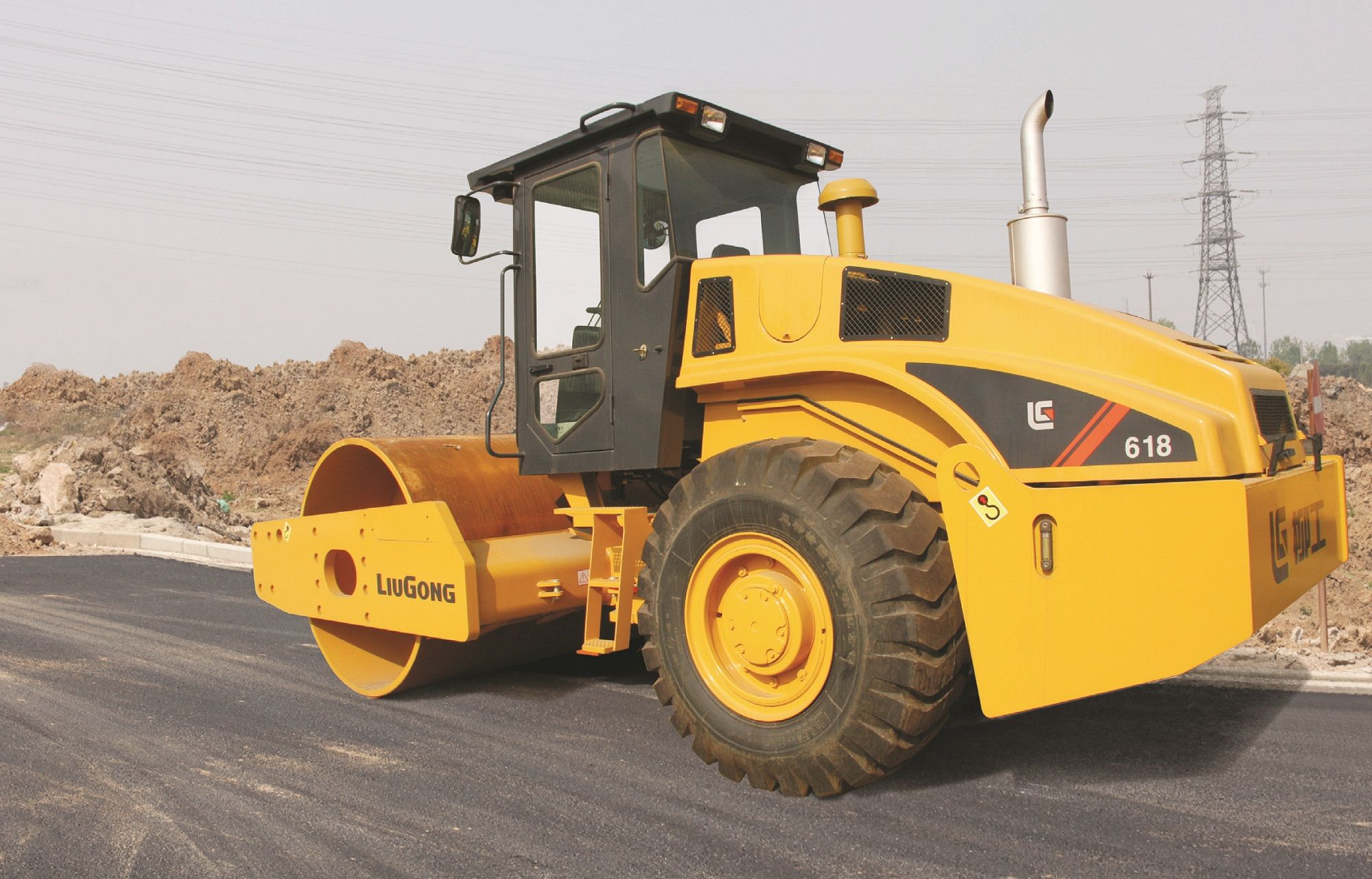
Yellow LiuGong 618 road roller on a newly paved road with dirt and construction debris in the background and an electricity pylon in the distance

Factors to Consider When Selecting Equipment

There are several important factors to consider when selecting the right compaction equipment for a construction or landscaping project. Careful evaluation of these factors helps ensure the equipment chosen can efficiently and effectively complete the compaction requirements of the intended task.

Size of the Project Area

The size of the area needing to be compacted plays a crucial role in determining whether a roller or compactor is more suitable. Rollers are best for large, continuous project areas like road construction sites because they work faster over a wider coverage area. Compactors are better for smaller, irregular spaces that require precise maneuvering, such as walkways or trenches.

Type of Material Being Compacted

The type of material, such as soil, gravel, or asphalt, also influences equipment selection. For example, Padfoot rollers work well on cohesive soils to displace air and achieve dense compaction, while smooth drum rollers create a smooth, level finish when compacting granular materials. Plate compactors suit various other soil types and aggregate types in tight spaces.

Access and Terrain Conditions

Project terrain and access points must also be considered. Rollers are less maneuverable on steep slopes or confined areas that compactors can easily navigate. Compactors are well-suited to irregular surfaces and hard-to-reach places where larger equipment cannot fit or operate effectively. Rammer compactors are useful for trench compaction and other applications requiring precise control in limited spaces or uneven terrain.

By carefully evaluating the size, material type, and access conditions, contractors can determine whether a roller, compactor, or combination is most suitable to efficiently complete soil compaction, road construction, landscaping, and other tasks on schedule and within budget. This ensures the best possible outcome.

Choosing the Right Equipment for Soil Compaction

Proper soil compaction is essential for creating stable foundations for construction projects. The type of equipment used for soil compaction depends on the project scope and conditions.

Understanding the Compaction Process

There are always various layers and stages in any soil compaction process. Firstly, the surface layer is prepared by loosening the topsoil. Then, fill material like gravel or sand is added if needed. Compaction equipment is used to compress the soil in thin, uniform layers. This process is repeated for each added layer until the desired compaction level is achieved.

  • Padfoot rollers are commonly used for compacting heavy clay soils that are difficult to work with. With its projections, the Padfoot design efficiently drives out air pockets and excess water from the soil.
  • Smooth drum rollers are suitable for compacting granular materials like crushed stone or gravel, quickly displaced by excessive vibration. The smooth surface of the drum achieves compaction through static weight distribution without disturbing the material.
  • Vibrating plate compactors are handy for compacting around obstacles or confined areas with restricted access. Their maneuverability allows compaction in trenches or along foundations where larger rollers cannot fit.
  • Rammer compactors, called tamping rammers, deliver high-impact compaction through an oscillating foot pad, making them practical for rocky soils. The repeated pounding breaks up clumps and locks the material into a dense layer.
  • Landfill compactors are applied where large volumes of waste must be compressed underground. Their durability and corrosion resistance allow them to withstand harsh conditions.

In conclusion, choosing the right compaction equipment depends on project needs, soil type, and site conditions. Combining different equipment helps achieve proper densities uniformly across the compaction area. This paves the way for stable constructions.

Frequently Asked Questions (Choosing the Right Lift: Manlift vs Scissor Lifts)

Manlifts, also known as boom lifts or aerial lifts, can move vertically and horizontally, providing greater flexibility than scissor lifts, which only move vertically. Manlifts typically can lift workers and have higher load capacities and outreach capabilities due to their power lines and extendable hydraulic arms. However, scissor lifts offer a larger, more stable work platform and can accommodate multiple workers.
Manlifts are well-suited for projects requiring work at height in tight spaces or involving heavy loads. Their flexibility of Movement and ability to reach higher heights with heavier loads make them suitable for building maintenance, construction, and infrastructure projects. Industries that leverage manlifts include utilities, telecommunications, and wind energy.
Some typical applications of scissor lifts include maintenance, construction, and warehouse/facility tasks. They are frequently used for electrical and mechanical maintenance of large buildings, installing siding/windows, indoor painting projects, and stacking/retrieving inventory in warehouses. Scissor lifts provide stable, elevated access for multiple workers indoors or on level outdoor surfaces.
According to OSHA regulations, scissor lifts fall under the category of aerial lifts. While OSHA’s general industry standards classify scissor lift operators using them as aerial lifts, their construction standards refer to scissor lifts as mobile scaffolds.
When using man lifts, scissor lifts, or another type of aerial lift for work platforms on public property in New York City, permits are required from the NYC Department of Transportation (DOT). Common types of lifts include Construction Equipment Permits, Closed Sidewalk Permits, and Lane Closure Permits.

Dozer or Excavator for Clearing Land: Which Works Best

Mediapayperlead-com December 11, 2024

Dozer or Excavator for Clearing Land: Which Works Best

Meta Description: Which heavy equipment is best for clearing your land – an excavator or bulldozer? This article compares how these machines differ in their abilities to dig, push materials, and reshape terrain for various clearing needs.

This article compares excavators and bulldozers, two commonly used heavy equipment for clearing land. Both machines can help remove debris and reshape terrain. However, their capabilities are different.

Understanding the advantages and limitations of excavators versus bulldozers will help operators select the right equipment for specific tasks. This ensures the job gets done efficiently while minimizing challenges that may arise from using an improper tool for an essential part of the building process of the work.

Key Takeaways

  • Bulldozers are best for clearing land, leveling terrain, and moving large debris due to their powerful blade and ability to push material.
  • Excavators excel at digging trenches, removing stumps, and transporting debris thanks to their adjustable buckets and ability to maneuver material.
  • For the most effective land clearing, use a bulldozer first to knock down obstacles, then follow with an excavator to remove and transport leftover debris.

Understanding the Key Differences Between Dozers and Excavators

Whether clearing land for construction or performing earthworks or demolition, bulldozers, dozers, and excavators are indispensable heavy machinery. However, with different configurations pushing materials and intended uses, determining the best equipment for the job requires understanding the key differences between these machines.

What Each Machine is Used For

Bulldozers are machines designed for pushing and leveling surfaces using a mounted blade. They are well-suited for clearing land, digging shallow ditches, grading, and creating slopes to create hills.

Excavators feature tools and a bucket for digging, scooping, and transporting materials. They excel at excavation tasks like digging trenches, demolition, mining, and heavy-duty construction projects requiring lifting and drilling capabilities to transport materials.

Key Specifications of Dozers and Excavators

  • Bulldozers generally have higher power ratings than excavators, making them better for pushing and moving heavy loads over flat terrain.
  • With their ability to rotate 360 degrees, excavators allow operators to work dynamically from a fixed position without repositioning the machine. Their tracks provide stability on uneven ground.
  • Extended reach and heavy-duty excavators are suited for large-scale projects like roadworks and mining where significant lifting and digging depths are required.
  • Compact sizes and wheel configurations of mini dozers allow nimble maneuvering in tight spaces like residential yards and narrow work sites.

Operation and Functionality

  • A bulldozer’s blade is ideal for leveling ground, landscaping, and creating slopes and drainage ditches. It can also dig shallow trenches, push debris, and fill holes.
  • An excavator bucket efficiently digs trenches, excavates soil, and moves materials. Attachments enable picking up, sorting, and loading different media.
  • Falling, standing trees and boulders are easily pushed or pulled by a bulldozer. An excavator requires attachments to handle large, heavy items and lacks the raw power for significant earthworks.
  • Demolition, mining, and utility work often demand an excavator’s digging reach and precision. A dozer works well for preliminary land clearing but lacks digging control.

Choosing the Right Equipment for the Job

Properly selecting equipment, tools, and machines for land development and construction activities is crucial. Choosing the appropriate machine ensures tasks are completed efficiently while avoiding issues.

Clearing Vegetation and Debris

Clearing land requires removing standing trees, fallen trees, and brush. For knocking over standing trees and pushing around any other large debris or fallen trees, a bulldozer is well-suited due to its powerful blade. The blade allows uprooting trees and moving vegetation and construction debris to clear vast areas. An excavator can then efficiently remove standing trees, brush with its bucket, and help alleviate the land by transporting debris.

Digging and Earthmoving

Tasks involving digging trenches and holes and creating slopes require effective earthmoving equipment. An excavator provides the versatility needed for excavating functions because it can dig trenches to desired depths while moving loose dirt with one machine using its bucket. The bucket also helps transport excavated material when filling or leveling land. Meanwhile, a bulldozer can efficiently fill trenches or shallow ditches and grade land using its blade to spread dirt or create slopes for drainage with relative ease.

Grading and Land Development

Leveling and shaping the land into desired contours is done using grading equipment. A bulldozer is well-suited for larger grading projects like creating flat work surfaces, filling low-lying areas, and forming slopes due to one advantage of its powerful straight blade. The blade allows scraping and distributing topsoil or subsoil over vast areas. Meanwhile, an excavator can efficiently smooth delicate grade areas through the precise movement of its bucket, which helps finish touches.

Demolition Activities

Demolishing structures requires heavy machinery capable of tearing down buildings and walls. An excavator can grasp, hold, and crush material, providing an advantage over a bulldozer for demolition tasks. Its bucket allows for collecting construction debris and excavating foundations with relative ease. The bucket also helps load demolition waste onto trucks for removal from the job site.

Effective Techniques for Land Clearing

There are several important techniques involved in effective land-clearing work. The right equipment choices and procedures can help ensure the job-level land mine is completed safely and efficiently.

Removing Trees and Shrubs

Fallen trees and shrubs are commonly encountered on construction sites and areas needing clearing. Heavy machinery like excavators or bulldozers with brush-cutting or tree-mulching attachments allow workers to remove overgrown vegetation quickly. An operator can grab trees or shrubs with the attachment and mulch or cut them down to size right on the spot. This avoids the need for manual labor to chop a tree or transport cut materials elsewhere.

Relocating Rocks and Boulders

Rocks and boulders scattered across cleared land must sometimes be moved to flat surfaces or off-site for disposal. More enormous bulldozers or excavators equipped with ripper teeth or hydraulic hammers can push, pull, or break up stubborn rocks and boulders. Workers then relocate pieces and burn piles of heavy debris by moving or hauling them to designated areas away from the work zone. Compact machinery may also transport smaller rocks and fill low-lying areas.

Filling Ditches and Trenches

Filling ditches or trenches is common when reshaping land or preparing a site for construction. Bulldozers or backhoes can swiftly push piles of dirt, debris, fallen trees, or other materials into the ditches or trenches from surrounding areas. The equipment then levels out uneven terrain and compacts the filled areas using blades or buckets. This readies the ground efficiently for future tasks or planting.

Pushing Debris and Scrap Materials

After clearing activities, piles of cut materials like branches or construction scrap often remain on-site. Bulldozers are well-suited for pushing large volumes of these piles into manageable heaps that can be loaded onto trucks for removal. Operators systematically remove roots and move cuttings to the side of the burn pile in an organized fashion. The blade allows for scraping materials into windrows or piles from hard-to-reach spots, cleaning the work area thoroughly.

Other Factors to Consider When Choosing Equipment for Land Clearing

There are several other important factors to weigh when determining whether an excavator or bulldozer is best for your land-clearing needs. Evaluating your project specifics and saving time will ensure you choose the right machinery.

Terrain and Site Conditions

The terrain where the clearing must be done plays a crucial role. Bulldozers work well on flat, hard surfaces, while excavators can operate on uneven grounds thanks to their tracks. If the site involves a lot of hills, slopes, or soft soil, an excavator may be preferable to a bulldozer. Excavators offer excellent stability, pushing power, and mobility in challenging conditions.

Budget and Cost-effectiveness

Purchasing or renting heavy equipment involves substantial costs. A project’s budget must be evaluated carefully against the machinery cost. While bulldozers are initially more affordable options, excavators can perform multiple tasks like digging and transporting materials more efficiently.

This improves productivity and can prove more cost-effective for larger jobs despite higher rental or purchase prices. Permit requirements from local authorities for using other heavy equipment and machinery also impact the budget.

Permit Requirements

Construction sites, fallen trees, standing trees, and heavy machinery all have regulatory guidelines to be followed. Excavation and land clearing tasks require permits from concerned bodies. These requirements differ according to the type and size of equipment used. Operators must be fully certified for the intended machine. Ensuring all paperwork and training qualifications are in order as per needs saves time and avoids project delays. Proper planning for permit procedures contributes to a cost-effective approach.

Frequently Asked Questions (Choosing the Right Lift: Manlift vs Scissor Lifts)

Manlifts, also known as boom lifts or aerial lifts, can move vertically and horizontally, providing greater flexibility than scissor lifts, which only move vertically. Manlifts typically can lift workers and have higher load capacities and outreach capabilities due to their power lines and extendable hydraulic arms. However, scissor lifts offer a larger, more stable work platform and can accommodate multiple workers.
Manlifts are well-suited for projects requiring work at height in tight spaces or involving heavy loads. Their flexibility of Movement and ability to reach higher heights with heavier loads make them suitable for building maintenance, construction, and infrastructure projects. Industries that leverage manlifts include utilities, telecommunications, and wind energy.
Some typical applications of scissor lifts include maintenance, construction, and warehouse/facility tasks. They are frequently used for electrical and mechanical maintenance of large buildings, installing siding/windows, indoor painting projects, and stacking/retrieving inventory in warehouses. Scissor lifts provide stable, elevated access for multiple workers indoors or on level outdoor surfaces.
According to OSHA regulations, scissor lifts fall under the category of aerial lifts. While OSHA’s general industry standards classify scissor lift operators using them as aerial lifts, their construction standards refer to scissor lifts as mobile scaffolds.
When using man lifts, scissor lifts, or another type of aerial lift for work platforms on public property in New York City, permits are required from the NYC Department of Transportation (DOT). Common types of lifts include Construction Equipment Permits, Closed Sidewalk Permits, and Lane Closure Permits.

Bulldozer vs Excavator: Which One is Better for You

Mediapayperlead-com December 11, 2024

Bulldozer vs Excavator: Which One is Better for You

Meta Description: Learn the critical differences between excavators and bulldozers, including their uses and capabilities on large-scale projects. Which heavy equipment option is best for digging, grading, or material transport materials handling on your construction or mining project?

Whether you need to clear land, dig trenches, or level earth, excavators and bulldozers are invaluable heavy equipment used widely in the construction industry. However, with different configurations and intended uses, selecting the suitable machine depends on your specific project needs.

This article provides a detailed comparison of excavators and bulldozers, analyzing their key specifications and features. It aims to help construction professionals better understand the capabilities of each piece of equipment to pick the most suitable one for the specific tasks of the job.

Key Takeaways

  • Excavators are best for digging, demolishing, and handling material using buckets.
  • Bulldozers excel at clearing land, grading, and pushing large volumes of material using their flat blade.
  • Excavators can dig deeper, but bulldozers are more powerful and stable on uneven terrain.
  • Consider a project’s specific needs and machine functionality when deciding between equipment types.

Understanding the Key Differences Between Bulldozers and Excavators

Proper equipment selection is crucial for construction projects to be completed efficiently. Bulldozers and excavators are two of the most commonly used heavy machinery. However, with different functions and capabilities, understanding the critical differences between these two machines is essential for skilled operators and project managers to utilize them effectively.

What is a Bulldozer?

A bulldozer, also known as a dozer, is a crawler equipment generally running on tracks. It has a large blade and a wide, sturdy blade fixed at the front that can be adjusted based on the job requirements. Bulldozers are suited for clearing construction sites, digging shallow trenches, grading and leveling land, and reshaping terrain. Their ability to quickly push large volumes of dirt, mud, and other materials makes them highly useful for moving heavy loads like land development.

What is an Excavator?

An excavator is heavy equipment that consists of a bucket or digging device mounted on an articulating boom. Excavators are heavy machinery commonly used in applications like digging trenches for utility lines, demolishing structures, mining, material handling at construction sites, and loading trucks. Their 360-degree rotating cab provides operators with clear visibility while working.

Main Functions of Bulldozers and Excavators

  • Bulldozers are well-suited for clearing construction sites, land development work, land grading, leveling, creating slopes, and shallow digging. Their sturdy blade efficiently moves large volumes of dirt and other materials.
  • Excavators excel at digging trenches, demolition of buildings, excavation work required for foundations, mining, loading trucks, and handling excavated material due to their ability to scoop, lift, swing, and place loads accurately.
  • Bulldozers generally level the ground while excavators perform more focused digging tasks. They are often used together to efficiently clear a site, excavate trenches and foundations, and grade the land.

Choosing the Right Equipment for the Job

Choosing the right equipment for construction projects is important for efficient workflow and timely completion of tasks. While excavators and bulldozers are versatile machines from various angles, understanding their core functions and capabilities helps contractors select the best option for specific jobs.

Tasks that Suit Bulldozers Best

Bulldozers, with sturdy blades, are well-suited for tasks requiring land clearing and leveling, tough jobs such as digging shallow ditches, creating slopes, and grading at construction sites. Their ability to push large volumes of dirt, mud, and rocks helps contractors build temporary roads to transport material at heavy construction sites. The tracks of bulldozers provide better traction for tasks involving the movement of heavy loads pushing material like soil across rugged terrains.

Tasks that Suit Excavators Best

Excavators excel at tasks requiring digging and handling of materials. Projects like digging trenches for pipeline construction or foundation work benefit from the digging ability and enhanced control provided by an excavator operator’s arm. The versatility of excavators makes them suitable for jobs like removing waste in material handling areas. Their mobility helps them work in confined underground spaces or crowded urban environments. The 360-degree rotation of an excavator operator and their arm allows excavators to work efficiently in tight spaces.

Jobs that Require Both Excavators and Bulldozers

Some construction or mining tasks need the combined capabilities of excavators and bulldozers to finish efficiently. Large earth-moveth moving building dams or redirecting river routes for flood control projects require excavators to dig and remove soil while bulldozers level land and compact the terrain. Quarrying involves excavators digging out rocks and bulldozers collecting and transporting the material. During land development, excavators can level an area after bulldozers clear vegetation.

Types of Bulldozers and Excavators

Different types of heavy machinery are, commonly, bulldozers and excavators available for various road construction needs. The type of heavy machinery required depends on the job and site conditions. Choosing the right equipment is important as it directly impacts project timelines and costs.

Common Bulldozer Types

Due to their robust design and power, Crawler bulldozers are commonly used for heavy-duty land clearing, digging, and moving large amounts of heavy earth movings. Thanks to tracks, they perform well even in challenging environments that create hills and uneven terrain. Due to their maneuverability, wheel bulldozers are suitable for leveling and grading work in spacious areas like stadiums and fields.

Common Excavator Types

Crawler excavators are a popular choice for grading land, trenching, mining, and other heavy construction activities that require digging and material handling capabilities. Their tracks provide stability for operating in varied ground conditions. Dragline excavators employ a hydraulic or rope-based mechanism to excavate material over long distances and are well-suited for large-scale road and infrastructure projects.

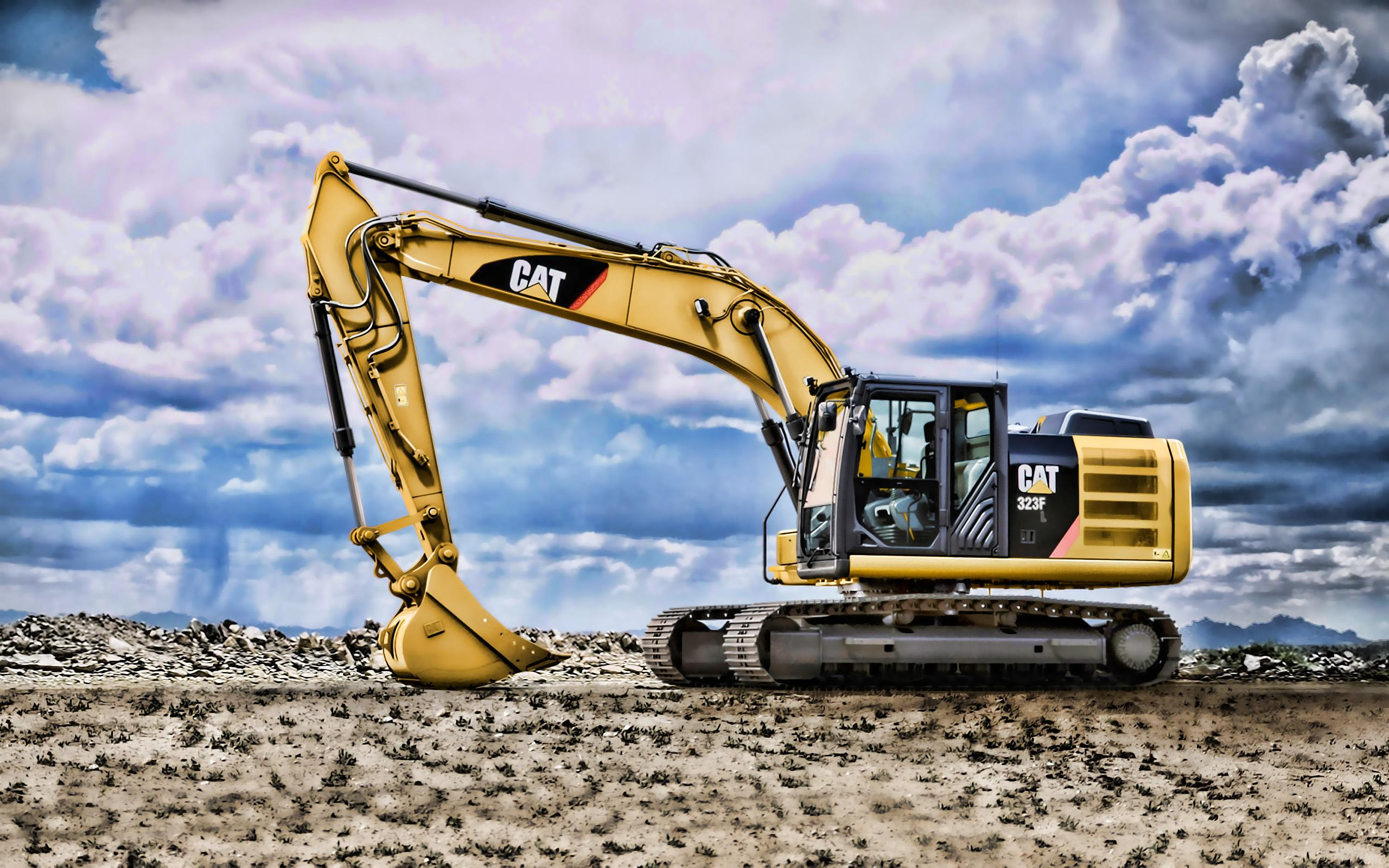
Yellow CAT 323F hydraulic excavator on a construction site with a pile of rubble in the background and a dramatic cloudy sky

Cost Considerations When Choosing Bulldozers or Excavators

When choosing between bulldozers and excavators for a construction project, it is essential to consider the costs involved. The equipment’s initial purchase or rental and ongoing operating costs are significant in determining the most suitable and cost-effective option.

Carefully analyzing these cost factors can help construction businesses make well-informed decisions.

Equipment Purchase vs Rental Costs

Whether to purchase or rent heavy equipment depends on several factors. Purchasing heavy materials and equipment involves a significant upfront capital investment but offers asset ownership. However, renting equipment provides flexibility without long-term ownership commitments.

However, buying heavy-duty machines can be more economical for more meaningful, long-term projects in the long run.

Operating Costs

Operating costs include fuel, maintenance, repairs, and equipment insurance. These ongoing expenses can influence the total cost of ownership significantly. Bulldozers and excavators have different operating cost structures based on design and function.

For instance, bulldozers have higher fuel efficiency than excavators during land clearing and more power for grading tasks.

A thorough cost-benefit analysis of initial investment and operating expenses is necessary to determine the most suitable and cost-effective option between bulldozers, dump trucks, and excavators.

This ensures construction businesses can complete projects within budget while maximizing returns through efficient, optimized equipment selection and regular maintenance.

Frequently Asked Questions (Choosing the Right Lift: Manlift vs Scissor Lifts)

Manlifts, also known as boom lifts or aerial lifts, can move vertically and horizontally, providing greater flexibility than scissor lifts, which only move vertically. Manlifts typically can lift workers and have higher load capacities and outreach capabilities due to their power lines and extendable hydraulic arms. However, scissor lifts offer a larger, more stable work platform and can accommodate multiple workers.
Manlifts are well-suited for projects requiring work at height in tight spaces or involving heavy loads. Their flexibility of Movement and ability to reach higher heights with heavier loads make them suitable for building maintenance, construction, and infrastructure projects. Industries that leverage manlifts include utilities, telecommunications, and wind energy.
Some typical applications of scissor lifts include maintenance, construction, and warehouse/facility tasks. They are frequently used for electrical and mechanical maintenance of large buildings, installing siding/windows, indoor painting projects, and stacking/retrieving inventory in warehouses. Scissor lifts provide stable, elevated access for multiple workers indoors or on level outdoor surfaces.
According to OSHA regulations, scissor lifts fall under the category of aerial lifts. While OSHA’s general industry standards classify scissor lift operators using them as aerial lifts, their construction standards refer to scissor lifts as mobile scaffolds.
When using man lifts, scissor lifts, or another type of aerial lift for work platforms on public property in New York City, permits are required from the NYC Department of Transportation (DOT). Common types of lifts include Construction Equipment Permits, Closed Sidewalk Permits, and Lane Closure Permits.

The Ultimate Guide: Boom Lift vs Scissor Lift

Mediapayperlead-com December 11, 2024

The Ultimate Guide: Boom Lift vs Scissor Lift

Meta Description: Learn the critical differences between boom and boom lift vs scissor lift lifts to determine which aerial equipment rental is best for your construction or maintenance project needs based on work height, load capacity, mobility, and cost.

When working at heights, choosing the right lifting equipment is essential. Boom lifts and scissor lifts are commonly used options. However, each has distinct features suited to different job requirements.

This article compares boom and scissor lifts straightforwardly to help readers understand their capabilities and limitations. The goal is to empower rental customers to select the machine that best matches their project needs.

Key Takeaways

  • Boom lifts can extend vertically and horizontally, while scissor lifts only lift vertically.
  • Boom lifts can reach greater heights, ranging from 30 to 210 feet, while scissor lifts lift to 60 feet.
  • Scissor lifts have larger platforms and can carry more weight, accommodating multiple workers. Boom lifts typically take one worker.
  • Boom lifts are more maneuverable, while scissor lifts require placement directly beside the work area.
  • Consider your lift height needs, load capacity, terrain, and budget to determine the best equipment for your project.

Key Differences Between Boom Lifts and Scissor Lifts

Boom and scissor lifts are two of the most commonly used pieces of aerial equipment when lifting personnel or materials to elevated workspaces. Their overall goal is to provide safe access to high places.

These machine types have notable variations in their design and operation that suit different job requirements. Understanding the core distinctions between boom and scissor lifts is crucial for choosing the right tool for any overhead task.

Working Height and Reach

Boom lifts can achieve greater working heights than scissor lifts, with some articulating boom lifts and straight boom lifts able to lift personnel and payloads to heights over 150 feet and even up to 210 feet in some cases. In comparison, most scissor lifts max out around 60 feet, though some larger rough terrain models can reach heights between 50 to 70 feet.

Another critical difference is horizontal reach – while scissor lifts can only move vertically up and down, boom lifts, like articulating boom lifts, are highly maneuverable and have varying degrees of horizontal reach depending on the machine type, with some able to extend horizontally without repositioning. This makes boom- vs scissor lifts more suitable when an overhead workspace cannot be directly accessed from the ground.

Platform Capacity and Stability

On the other hand, scissor lifts tend to have a structural and weight capacity advantage over boom lifts. Platforms on scissor lifts can range in capacity from 500 to over 3,500 pounds, allowing them to lift multiple workers and heavier materials safely.

In contrast, most boom lifts can only accommodate one person and have lower weight limits of 400 to 1,200 pounds, depending on the machine model. Scissor lifts also tend to offer a wider stance,, and outrigger supports provide greater height stability than articulating boom lifts vs. lifts with smaller base footprints.

Maneuverability

Regarding maneuverability, articulating boom lifts have an edge over scissor lifts due to their ability to rotate and reach work areas from multiple angles, both vertically and horizontally, without repositioning.

Scissor boom lifts are limited to straight up and down motion and require being placed directly adjacent to the workspace for optimal access. Boom lifts can also be fitted with rough terrain tires that allow them to navigate uneven outdoor terrain more easily. In contrast, most scissor lifts are intended for level indoor or outdoor surfaces.

Operating Costs

Operating and maintenance costs are usually higher for boom lifts than for scissor lifts. Their more complex articulating designs with multiple joints mean more components that require regular inspection and potential repairs over the machine’s lifespan.

Scissor lifts have a simpler vertical-lift mechanism, which is generally more economical. Rental rates also typically favor scissors when comparing boom lifts, with daily rates for similar-capacity machines often lower than equivalent boom lifts.

Safety Considerations

As with any powered elevated work platform, safety should be the top priority when using boom or scissor lifts. However, boom lifts may pose more significant risks than most scissor lifts due to lifting personnel above the ground.

Proper training certification and fall protection are mandatory for operating either machine type. Boom lifts also have less stability at height than scissor lifts and articulated boom lifts due to their smaller outrigger footprint, requiring extra precautions. Adhering to load limits and avoiding over-reaching are essential considerations for aerial work.

In summary, choosing between a boom lift and a scissor lift depends on the job tasks and environment. Comparing their critical differences in their vertical reach, capacity, maneuverability, and other factors will help determine the best equipment option for any overhead project needs. Proper due diligence is essential to stay safe and productive at height.

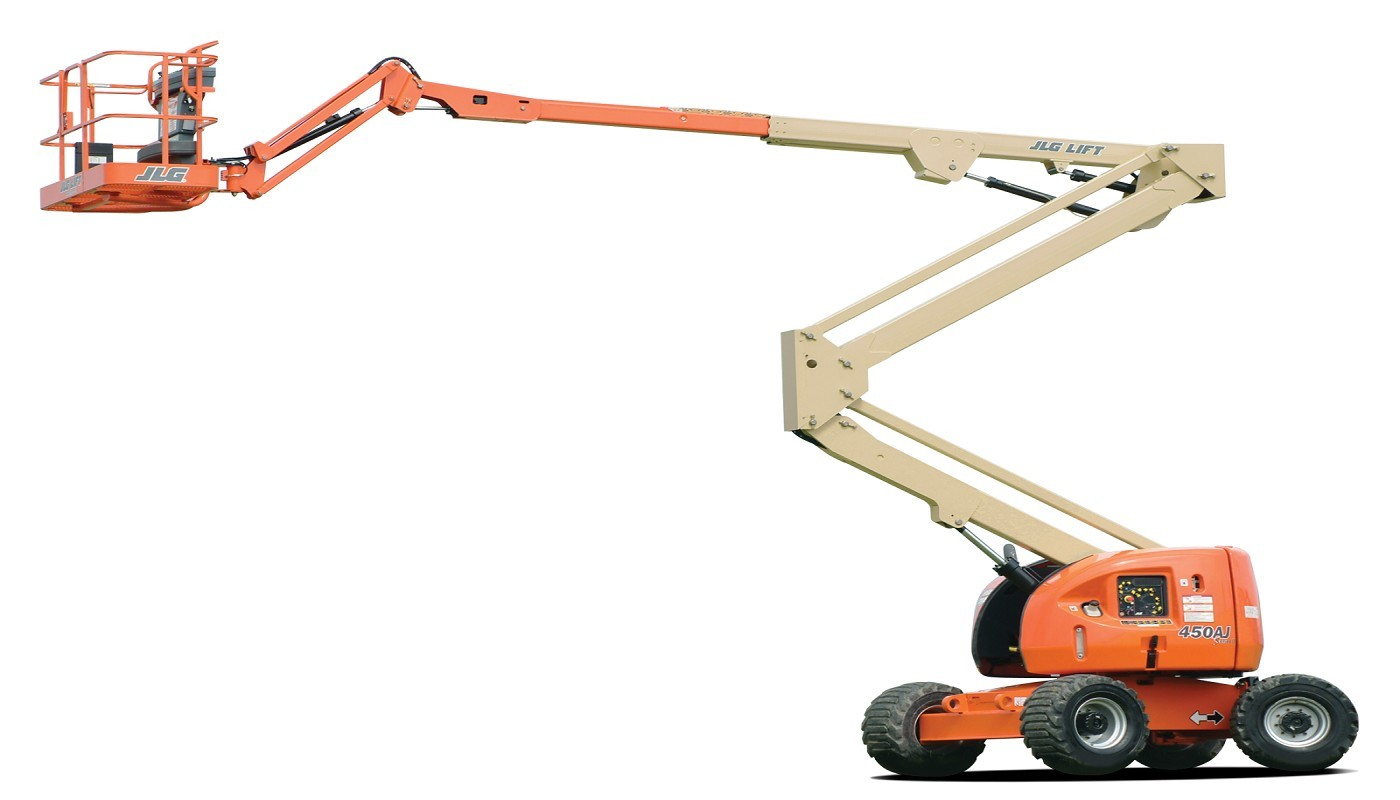
Orange and beige articulated boom lift with extended platform on a white background

Types of Boom Lifts

Different types of boom lifts and other lifts are available to suit various jobsite needs and requirements. The type of boom lift chosen should match the project’s unique conditions to ensure safety and productivity.

1. Articulating Boom Lifts

Articulating boom lifts feature extendable arm sections that can be bent and positioned, allowing them to maneuver around obstacles easily. This makes them well-suited for tasks that require accessing tight spaces.

Their ability to reach areas conventional lifts cannot allow hard-to-reach places for improved efficiency. Some common uses include cleaning building exteriors, installing signs, and performing repairs in congested areas. The joints on their arms enable workers to safely complete tasks around corners and in locations difficult to access otherwise.

2. Telescopic Boom Lifts

Telescopic boom lifts have straight-extending arms rather than articulating joints. These booms smoothly slide in and out like a telescope via hydraulic functions. They grow to considerable heights without the need for obstacles.

Some models can also rotate 360 degrees, proving useful for painting, glazing, and maintenance tasks. Their design suits jobs requiring work on large, flat surfaces like bridges and high-rise buildings. Workers appreciate the stable work area and unhindered views these lifts provide.

3. Bucket Trucks

Bucket trucks, also called aerial lifts, combine the functions of a boom lift and a car. An insulated bucket mounted on an articulating or telescopic arm provides overhead lines or equipment access.

These machines allow workers to perform tasks like pruning trees, installing and repairing cables, and inspecting utility infrastructure safely.

Common industries using bucket trucks include forestry, construction, and utility services. Their truck-mounted design allows driving to the job site or sites and positioning the lift bucket close to work areas for improved convenience.

Types of Scissor Lift

Are various lifts available to suit different applications and jobsite needs? The main types include electric, diesel, hydraulic, and pneumatic scissor lifts. Each type has its advantages depending on the requirements.

1. Electric Scissor Lifts

  • Electric scissor lifts are powered by batteries, making them ideal for indoor use where emissions are a concern. They offer a quiet operation without any fumes.
  • Electrically powered, these lifts can be used in enclosed areas like warehouses and manufacturing plants where ventilation may be limited.
  • The quiet operation of electric scissor lifts makes them suitable for use in noise-sensitive environments like factories, libraries, etc.

2. Diesel Scissor Lifts

  • Diesel scissor lifts are powered by diesel engines, making them more suitable for outdoor use due to their enhanced capabilities.
  • The diesel engines provide higher power output, allowing diesel scissor lifts to lift heavier loads in terms of people and materials.
  • Some diesel scissor lift models come with a four-wheel drive configuration, enabling them to handle rough outdoor terrains better than electric lifts.

3. Hydraulic Scissor Lifts

  • Hydraulic scissor lifts utilize hydraulic cylinders and fluid to lift platforms and payloads efficiently.
  • They are easier to operate than other lift types as minimal training is required due to the straightforward hydraulic mechanism.
  • Being mechanically driven, hydraulic scissor lifts experience minimal downtime and require less maintenance than electrically powered lifts.

4. Pneumatic Scissors Lift

Pneumatic scissor lifts are powered by compressed air instead of hydraulic fluids or electricity.

They produce zero direct emissions, making them suitable for indoor applications with limited ventilation. Due to their simple design relying on air pressure, pneumatic scissor lifts experience fewer mechanical failures than hydraulic or electric lifts.

Some pneumatic scissor lift models consume less power during operation, helping reduce overall operational costs.

Choosing the Right Lift for Your Project

Selecting the appropriate aerial, boom, and scissor lift for a construction or maintenance project requires evaluating the job’s specific requirements. Both boom lifts and scissor lifts have advantages and use cases to consider.

Consider Project Requirements

The first step in deciding between a boom lift and a scissor lift is to examine the project’s needs closely. Key factors to consider include the working height, the direction of access needed, the right equipment used, load capacity, and terrain conditions.

Boom lifts typically have higher maximum working heights than scissor lifts, with some models able to lift personnel and materials over 200 feet in the air. However, scissor lifts can still access many common work areas under 70 feet.

Guidelines for Selecting Boom Lifts or Scissor Lifts

When considering which type of aerial lift equipment to use, refer to the following guidelines:

  • Rent a boom lift if horizontal movement and reach are necessary for the job. Their ability to extend outwards and upwards allows access around obstacles or to hard-to-reach areas.
  • Scissor lifts are better suited if the work involves lifting multiple workers or heavy tools and materials straight up without horizontal movement. Their larger platform capacities accommodate this type of application well.
  • For any project that requires lifting above 70 feet, a boom lift should be selected over a scissor lift due to its greater maximum height.
  • Terrain conditions must also factor into the decision. While some scissor lifts are suitable for rough outdoor areas, boom lifts may better handle very uneven or soft ground environments, depending on the model.
  • Operating costs should be considered if budget is a restricting factor. On average, scissor lifts have lower rental rates than boom lifts for an equivalent working height.

By thoroughly assessing the project scope and following these guidelines, the right aerial lift type between a boom lift or scissor lift can be identified for safe and efficient job completion.

Frequently Asked Questions (Choosing the Right Lift: Manlift vs Scissor Lifts)

Manlifts, also known as boom lifts or aerial lifts, can move vertically and horizontally, providing greater flexibility than scissor lifts, which only move vertically. Manlifts typically can lift workers and have higher load capacities and outreach capabilities due to their power lines and extendable hydraulic arms. However, scissor lifts offer a larger, more stable work platform and can accommodate multiple workers.
Manlifts are well-suited for projects requiring work at height in tight spaces or involving heavy loads. Their flexibility of Movement and ability to reach higher heights with heavier loads make them suitable for building maintenance, construction, and infrastructure projects. Industries that leverage manlifts include utilities, telecommunications, and wind energy.
Some typical applications of scissor lifts include maintenance, construction, and warehouse/facility tasks. They are frequently used for electrical and mechanical maintenance of large buildings, installing siding/windows, indoor painting projects, and stacking/retrieving inventory in warehouses. Scissor lifts provide stable, elevated access for multiple workers indoors or on level outdoor surfaces.
According to OSHA regulations, scissor lifts fall under the category of aerial lifts. While OSHA’s general industry standards classify scissor lift operators using them as aerial lifts, their construction standards refer to scissor lifts as mobile scaffolds.
When using man lifts, scissor lifts, or another type of aerial lift for work platforms on public property in New York City, permits are required from the NYC Department of Transportation (DOT). Common types of lifts include Construction Equipment Permits, Closed Sidewalk Permits, and Lane Closure Permits.

Boom Lift vs Forklift: The Ultimate Showdown

Mediapayperlead-com December 11, 2024

Boom Lift vs Forklift: The Ultimate Showdown

Meta Description: Learn the critical differences between booms and forklifts, including lift height, weight capacity, maneuverability, and suitable applications, to help you choose the right heavy equipment for construction and warehouse projects.

This article overviews two essential machinery used in construction – boom lifts and forklifts. It analyzes their key features, capabilities, use cases, and safety aspects.

We aim to help rental businesses and their customers understand this equipment better to ensure the selection of the right one for different tasks. Proper knowledge of machinery is essential for safe, compliant, and efficient operations.

Key Takeaways

  • Boom lifts excel at reaching great heights but require stable positioning and safety gear, while forklifts can handle heavy loads but need care in tight spaces.
  • Both machines take skill to operate efficiently, from inspecting for defects to following speed limits based on terrain and conditions.
  • Proper training is essential to use this equipment safely for construction, facility maintenance, and warehousing tasks. When treated with respect, boom lifts and forklifts are valuable tools.

Introduction to Boom Lifts and Forklifts

Boom lifts and forklifts are essential equipment utilized across various industries for their ability to handle material at different heights efficiently. Whether you need to reach new elevations or transport heavy loads, these machines are invaluable work partners.

What are Boom Lifts and Forklifts?

Boom lifts, aerial lifts, articulating boom lifts, or telescopic boom lifts are designed to provide accessible elevated work platforms for personnel. Two main types of aerials are articulated boom lifts, which can bend and maneuver like an arm, and telescopic boom lifts with an extendable arm. Boom lifts are commonly used for tasks that require working at heights, such as construction, facility maintenance, and window cleaning.

Forklifts are industrial trucks that transport and place materials using vertically adjustable tines called forks. The two primary varieties are rough terrain forklifts for uneven outdoor surfaces and industrial forklifts for indoor environments like warehouses and manufacturing facilities. Powered by electric motors and gasoline or diesel engines, forklifts are indispensable for heavy lifting and transporting bulky or multiple items efficiently over flat surfaces.

Key Differences Between Boom Lifts and Forklifts

While boom lifts and forklifts both provide elevated functionality, there are some notable differences in their operating capabilities:

  • Lift Height: Boom lifts, especially articulating and telescopic models, can reach 20-185 feet. Forklifts typically lift loads to a maximum of around 36 feet.
  • Load Capacity: Most boom lifts can carry between 500-1000 pounds. Forklifts have significantly higher weight capacities, often over 3000 pounds and up to 70,000 pounds for heavy-duty models.
  • Mobility: Boom lifts excel at navigating tight spaces and uneven terrain thanks to their flexible articulating arms. Forklifts perform best on level indoor and outdoor surfaces.
  • Applications: Boom lifts are suited for maintenance, construction, and window cleaning, requiring precise height control. Forklifts specialize in transporting and stacking bulkier or heavier shipments of materials.

The specialized features of boom lifts and forklifts make each machine well-suited to different elevated jobs, from high-reach applications to heavy lifting duties. Understanding their varying capabilities is key to selecting the right equipment for material handling requirements.

Capabilities of Boom Lifts

Boom lifts are versatile aerial work platforms that can reach considerable heights indoors and outdoors. Their unique design allows workers to access hard-to-reach areas safely and with precision. Some key capabilities that make boom lift highly useful for various applications include their impressive reach abilities, higher weight capacity, robust mobility features, and common types available.

Reach and Mobility

Boom lifts offer extensive vertical and horizontal reach capabilities due to their articulating or telescopic arm designs. The reach can range from around 20 feet for smaller models up to 185 feet for some heavy-duty aerial lifts, depending on the type and brand. This extensive reach allows workers to access high structures, rooftops, trees, and other elevated work areas.

At the same time, boom lifts also have strong mobility as their arm can be maneuvered smoothly around obstacles. The articulating boom lifts can efficiently navigate tight spaces and perform overhead work because their flexible arm can precisely bend and position the bucket.

Common Types of Boom Lifts

Two main types of boom lifts are commonly used – articulating and telescopic boom lifts. Articulating boom lifts feature a multi-jointed arm that can bend and position the bucket at various angles, while telescopic boom lifts have a straight extending arm.

Depending on the application, these types are available in varying lift heights and load capacities. Another common type is the spider lift, an articulating boom lift designed for indoor use in confined spaces.

Key Features and Safety Mechanisms

Boom lifts incorporate several safety features to protect operators at heights. An important mechanism is outriggers or legs that stabilize the lift on rough outdoor surfaces. Other key safety components include railings around the bucket, fall arrest harness attachments, load sensors to prevent overloading, and emergency controls in the bucket. Some advanced models of zoom boom will also have features like tilt sensors that automatically cut power if the lift loses stability. Regular maintenance ensures all such critical safety mechanisms function correctly for safe operation.

3D rendering of a yellow and black forklift on a white background, viewed from a slight angle showing the side and front of the vehicle

Capabilities of Forklifts

Forklifts are versatile machinery utilized in various industries for their heavy lifting and transportation abilities. Their key capabilities allow for efficient material handling in construction sites, warehouses, and other commercial spaces.

Load Handling and Transport

Forklifts are equipped with sturdy forks to handle loads of different sizes and weights securely. The forks are adjustable to accommodate pallets of varying dimensions. Operators can raise and lower loads precisely using the forklift’s controls. Forklifts are adept at transporting heavy shipments across long distances over flat surfaces. Their powerful engines quickly transport loads weighing up to several tons to and from storage areas, work sites, and loading docks.

Common Types of Forklifts

There are three main common types: telescopic forklifts that provide an extendable boom for elevated load and material handling equipment, rough terrain forklifts for transport over uneven outdoor surfaces, and heavy-duty forklifts suitable for intensive indoor applications involving heavy weights.

Telescopic forklifts, called telehandlers, combine load lifting with a telescopic boom for versatility. Rough terrain forklifts have robust tires, allowing navigation of construction sites and outdoor areas. Heavy-duty forklifts are built for continuous operation within industrial facilities and warehouses.

Key Features and Controls

All forklifts have essential features for efficient operations. These include a multi-function lever or joystick to manage hydraulic lifts and tilts. They also have a parking brake, directional controls, an engine, and a fuel tank. Safety features like indicators and backup alarms are standard.

Forklifts may operate on diesel, gas, electric, or dual-fuel systems. Their load capacities often range from 3,000 to 5,000 pounds. Operators are trained in forklift control mastery to handle loads precisely and transport shipments smoothly within the premises.

Choosing the Right Equipment

Selecting the appropriate equipment for construction and industrial tasks requires evaluating multiple factors. Each jobsite and project presents unique challenges that demand specialized solutions. Proper assessment of these factors ensures that construction companies’ tasks are completed safely, efficiently, and on schedule.

Factors to Consider for Different Jobsites and Tasks

One of the most important considerations is the work environment. Outdoor worksites with uneven terrain may necessitate aerial lifts with larger balloon tires or tracks for added stability. Meanwhile, indoor spaces or areas with low overhead clearance often require compact machinery.

The expected lift height and weight of items to be moved also influence equipment choice. For example, heavy lifting near ground level is well-suited for forklifts, while installations at elevation require boom lifts or telescopic handlers.

Accessibility also matters. Narrow or confined work areas demand highly maneuverable equipment, whereas open spaces allow machines with a larger footprint. Equipment must match the terrain and job conditions.

For example, rough surfaces are well-matched to machinery with four-wheel drive and ground clearance, while delicate floors require gentle wheeled or tracked vehicles. Versatility is key – equipment should handle multiple tasks without compromising safety or efficiency.

Comparing Equipment Options

When considering equipment alternatives, evaluating key specifications helps determine the best fit. Comparing lift capacities, reach heights, and ground clearance/stability across various aerial lifts, forklifts, and telehandlers reveals suitability for loads at certain heights or terrains.

Equipment weight affects mobility, with lighter options moving more freely indoors or through tight spaces.

Safety features also require analysis. Boom lifts, for example, incorporate fall protection anchors, overload sensors, and outriggers for stability. Meanwhile, forklifts prioritize load security, braking, and visibility.

Fuel or battery power affects performance needs and indoor suitability. Overall, thoroughly understanding equipment capabilities leads to choosing tools that optimize workflow while protecting workers according to jobsite conditions and tasks.

Frequently Asked Questions (Choosing the Right Lift: Manlift vs Scissor Lifts)

Manlifts, also known as boom lifts or aerial lifts, can move vertically and horizontally, providing greater flexibility than scissor lifts, which only move vertically. Manlifts typically can lift workers and have higher load capacities and outreach capabilities due to their power lines and extendable hydraulic arms. However, scissor lifts offer a larger, more stable work platform and can accommodate multiple workers.
Manlifts are well-suited for projects requiring work at height in tight spaces or involving heavy loads. Their flexibility of Movement and ability to reach higher heights with heavier loads make them suitable for building maintenance, construction, and infrastructure projects. Industries that leverage manlifts include utilities, telecommunications, and wind energy.
Some typical applications of scissor lifts include maintenance, construction, and warehouse/facility tasks. They are frequently used for electrical and mechanical maintenance of large buildings, installing siding/windows, indoor painting projects, and stacking/retrieving inventory in warehouses. Scissor lifts provide stable, elevated access for multiple workers indoors or on level outdoor surfaces.
According to OSHA regulations, scissor lifts fall under the category of aerial lifts. While OSHA’s general industry standards classify scissor lift operators using them as aerial lifts, their construction standards refer to scissor lifts as mobile scaffolds.
When using man lifts, scissor lifts, or another type of aerial lift for work platforms on public property in New York City, permits are required from the NYC Department of Transportation (DOT). Common types of lifts include Construction Equipment Permits, Closed Sidewalk Permits, and Lane Closure Permits.

Boom Lift vs Crane – The Main Differences

Mediapayperlead-com December 11, 2024

Boom Lift vs Crane – The Main Differences

Meta Description: The critical differences between boom lifts and cranes when lifting heavy objects. Boom lifts are vehicle-mounted and can lift heavy loads for workers using regular trucks, while cranes use pulleys and counterweights to hoist loads.

This article compares boom lifts and cranes, two famous pieces of heavy machinery used for lifting heavy loads. Both types of equipment have their advantages depending on the job’s needs.

The main differences between these options will be outlined and easy to understand. Practical examples will show the main difference and help readers make informed decisions based on their project requirements.

Key Takeaways

  • When removing large trees, using a crane or boom truck can make the job safer and faster and cause less damage than climbers.
  • Consider safety certifications and insurance with any tree service to protect yourself from liability.
  • Compare multiple estimates considering the equipment size needed and your specific needs, like protecting other plants.
  • Requesting proof of adequate insurance and adding your name is important before hiring.

Main Differences Between Boom Lifts and Cranes

There are important distinctions between boom lifts and cranes that contractors and businesses need to understand to determine the best heavy machinery for construction projects and their unique job site needs and safety requirements.

Uses and Purposes

Boom lifts are primarily used for lifting workers and equipment to work at heights, helping with building maintenance, construction sites, and tree care. Cranes do not have bucket platforms to lift materials or hold workers and are used strictly for lifting and moving hefty loads.

Mechanism and Design

Boom lifts function by having a fixed cab with a wheeled or stabilized base that allows for lifting workers in an attached bucket or platform via an extending boom arm. Cranes rely on a complex system of chains, cables, pulleys, and outriggers to counterbalance the weight and enable the lifting of their rotating jib.

Lifting Capacity and Applications

The applications and maximum weight capacities of machines also differ significantly. Boom lifts are suited for jobs requiring access rather than heavy lifting, with total height capacity typically under 1,000 pounds. Cranes can lift much greater tons depending on their specific truck crane, hydraulic, or telescopic configuration. Cranes are necessary when lifting or repositioning cumbersome equipment, machinery, or large tree sections.

Boom Lifts

Boom lifts are versatile aerial work platforms for tree trimming, building and construction sites, maintenance, and construction. They utilize a hydraulic or mechanical boom to position personnel and equipment at elevated work heights while providing safety and productivity.

Types of Boom Lifts

Several common types of boom lifts are available depending on the application’s needs. Vertical reach boom lifts can extend their booms straight up and down, ideal for replacing lightbulbs on tall buildings. Vertical scissors lift uses a scissor-like mechanism to raise their platforms straight up without horizontal reach.

Articulating boom lifts have telescopic booms extending outward and up, allowing workers to reach various angles and positions. Telescopic boom lifts extend their booms outward through a series of nested sections for maximum horizontal reach.

Features and Components

Most boom lifts share standard features for optimal safety, stability, and functionality. They are usually mounted on rubber tires or tracks for mobility and feature outriggers or stabilizing arms extending from the base to distribute the weight when used. The platform or bucket where workers stand is typically made of steel mesh or grating to allow debris to fall through for improved visibility and weight distribution.

Railings and harnesses help secure personnel and heavy cargo, while load sensors ensure the maximum load on the equipment does not exceed its rated capacity. Booms incorporate hydraulic, electric, or mechanical systems to raise, lower, extend, and position the platform as needed. Controls in the bucket allow for precise positioning and operation.

Safety Mechanisms

Safety is the top priority with boom lifts, and manufacturers have designed various mechanisms for protection. Proximity detection systems automatically limit the boom function if any obstructions are too close. Load sensing automatically prevents tasks that could cause instability if weight limits are exceeded.

Emergency controls like a safety arm or basket rail allow workers to cut power immediately. Back-up alarms and flashing lights warn of truck movement. Outriggers feature leveling sensors so the equipment cannot be operated if not adequately stabilized. Many lifts also include wind sensors to cease operation during high winds. These integrated safety features help protect both operators and those on the ground.

A crane parked on the ground, ready for use

Cranes

Cranes are extremely versatile and powerful heavy equipment for lifting and moving heavy objects and materials. They are essential for many construction, industrial, and commercial applications that require lifting loads above humans’ normal reach. Some of the common types of cranes and their operation are discussed below:

Types of Cranes

  • Mobile Cranes: These cranes have wheels, crawlers, or hydraulic outriggers, allowing them to transport between job sites quickly. Some common types include all-terrain, rough-terrain, crawler, and truck-mounted cranes.
  • Tower Cranes: As the name suggests, these cranes have a fixed vertical tower and are best suited for jobs that require lifting loads high into the air over an extended period. They are widely used in building construction projects.
  • Gantry Cranes: These cranes have a gantry-like structure spanning an area. Gantry cranes are commonly used in manufacturing plants and warehouses for dockside cargo handling.
  • Overhead Cranes: As the name implies, these cranes are installed above the working area and have fixed runways. They are commonly used for heavy lifting tasks in industrial facilities like factories, shipyards, and workshops.

Operation and Functionality

Cranes utilize a system of wire ropes or chains, sheaves, winches, and hoists to lift and lower loads and machinery. The load is lifted by hoisting ropes or chains that run over a hoist drum on the crane. Hydraulic, electric, or diesel motors power the hoists and movement of the crane boom and jib.

Mobile cranes are set up on hydraulic outriggers to provide stability while lifting. Tower cranes are fixed to foundations. Gantry and overhead truck cranes are run on selected rail tracks above the workspace. Crane operators control the lifting and movement of loads through manual levers or remote controls, depending on the type of crane. Onboard computers also aid load charts and lifting calculations.

Safety Procedures

Safety is the topmost priority while operating cranes. Some best practices include:

  • Conducting thorough equipment inspections and maintenance checks.
  • Ensuring a firm, stable base is set up before lifting using outriggers or stabilizers.
  • Checking the weight of all loads is within the crane’s rated capacity using load charts.
  • Establish exclusion zones and do not allow anyone to stand near or under suspended loads.
  • Using tag lines to guide and control swinging loads.
  • Carefully planning lifts considering overhead power lines or other obstructions.
  • Train and certify all crane operators and riggers as per applicable regulations.

Proper safety protocols ensure that cranes can be operated efficiently while protecting life and property. A regular hydraulic crane attached, mobile, hydraulic crane towers, gantry, overhead, inspections, and maintenance are also critical.

Choosing the Right Equipment

Choosing the right equipment for tree removal jobs is crucial. Several factors need consideration to complete the task while avoiding potential damage safely.

Careful assessment of job requirements, location constraints, and cost implications of construction projects will ensure the right equipment is deployed.

1. Job Requirements

The type and size of the tree dictate the job requirements. Large trees with extensive canopies that spread over buildings, public roads, or other structures necessitate equipment with a high lifting capacity, like cranes or boom trucks. These can sectionalize the tree and remove branches and chunks from sensitive areas. Smaller trees in open spaces may require climbing equipment and chainsaws to dismantle the tree piece-by-piece from the top down.

2. Location Constraints

Access and uneven terrain also determine the suitable equipment. Narrow residential streets may not accommodate larger trucks. Limited workspace in tight locations between buildings or fences calls for equipment with maneuverability to perform the task within restrictions.

Outriggers need adequate space to stabilize lifting devices safely. Jobs near power lines demand precaution and insulation.

3. Cost Comparison

Cost estimates include equipment requirements, rental charges, labor, and job duration. While crane trucks involve lifting charges, climbing crews require additional person-hours. For large trees surrounded by structures, cranes and boom trucks prove more economical by completing tasks quicker with fewer resources.

Isolated smaller trees permit climbers and chainsaws for a lower total cost. Overall benefits, safety, and property protection outweigh minor cost differentials in choosing equipment.

Maintenance and Insurance

Maintaining equipment properly and carrying adequate insurance coverage is essential for safety and risk management in equipment rental operations. Regular inspections can help catch any issues early while the appropriate policies protect owners and renters from financial losses.

Inspections and Certifications

All hydraulic, boom, hydraulic crane mounted, and truck equipment must undergo thorough inspections according to the manufacturer’s schedule to ensure safe operation.

Certified inspectors examine hydraulic hoses and fittings, structural components, safety mechanisms, and electrical systems to verify all are in good working order with no defects or damage. Any necessary repairs or part replacements are then promptly made. Records of inspections are kept on file.

Liability and Risk Management

Both liability and property insurance help protect from unforeseen incidents and claims. A standard commercial general liability policy covers bodily injury and property damage claims for which the owner is found legally responsible.

An inland marine equipment floater additionally insures owned machinery against risks like theft and breakdown. Umbrella liability insurance can also increase coverage limits for catastrophic accidents. Maintaining current policies with sufficient coverage limits is a prudent risk management strategy that provides reassurance for clients.

Frequently Asked Questions (Choosing the Right Lift: Manlift vs Scissor Lifts)

Manlifts, also known as boom lifts or aerial lifts, can move vertically and horizontally, providing greater flexibility than scissor lifts, which only move vertically. Manlifts typically can lift workers and have higher load capacities and outreach capabilities due to their power lines and extendable hydraulic arms. However, scissor lifts offer a larger, more stable work platform and can accommodate multiple workers.
Manlifts are well-suited for projects requiring work at height in tight spaces or involving heavy loads. Their flexibility of Movement and ability to reach higher heights with heavier loads make them suitable for building maintenance, construction, and infrastructure projects. Industries that leverage manlifts include utilities, telecommunications, and wind energy.
Some typical applications of scissor lifts include maintenance, construction, and warehouse/facility tasks. They are frequently used for electrical and mechanical maintenance of large buildings, installing siding/windows, indoor painting projects, and stacking/retrieving inventory in warehouses. Scissor lifts provide stable, elevated access for multiple workers indoors or on level outdoor surfaces.
According to OSHA regulations, scissor lifts fall under the category of aerial lifts. While OSHA’s general industry standards classify scissor lift operators using them as aerial lifts, their construction standards refer to scissor lifts as mobile scaffolds.
When using man lifts, scissor lifts, or another type of aerial lift for work platforms on public property in New York City, permits are required from the NYC Department of Transportation (DOT). Common types of lifts include Construction Equipment Permits, Closed Sidewalk Permits, and Lane Closure Permits.

Comparing the Backhoe vs Mini Excavator – Which is Best for Your Project

Mediapayperlead-com December 11, 2024

Comparing the Backhoe vs Mini Excavator – Which is Best for Your Project

Meta Description: Learn the critical differences between backhoes and mini excavators to determine which digging machine best suits your construction needs. Both offer powerful digging machines and material movers for projects large and small.

This article provides a straightforward comparison between backhoes and mini excavators. Both machines are useful for construction and landscaping projects. Understanding the critical differences in their capabilities, applications, and operations is essential when deciding which equipment best matches your needs.

This guide covers specifications, features, and suitable tasks for backhoes and mini excavators to help you select the better option.

Key Takeaways

  • A backhoe loader has a front bucket and rear digging arm, while a mini excavator only has a single front arm but can use various attachment sites.
  • Consider the size of your project site, required tasks, travel needs, and future equipment uses to determine whether a backhoe loader or mini excavator would be a better fit.
  • Renting is better for short-term or infrequent use, while purchasing provides value for fleet additions or integral long-term equipment needs. Maintaining equipment can impact ongoing costs.

Main Differences Between Backhoe and Mini Excavator

When choosing the right equipment for construction projects, it is essential to understand how a complete backhoe vs. a mini excavator differs from a mini compact excavator to an entire backhoe vs a mini excavator.

While both machines can do tasks like digging and trenching, their size, weight, and attachment capabilities set them apart. Analyzing these key areas will help in selecting the most suitable option.

1. Size and Weight

Backhoes are more extensive compared to mini excavators. They also have higher operating weights and full-sized excavators, sometimes weighing over 15,000 pounds. Mini excavators, sometimes called compact excavators, usually weigh under 12,000 pounds.

Their compact dimensions make them suitable for working on small demo projects in tight and small spaces. The smaller size and weight of mini excavators allow them to access confined job sites quickly.

2. Number of Attachments

Both backhoes and mini excavators can use different types of attachments to perform multiple tasks. However, mini excavators have an advantage over backhoe attachments due to their single-arm design, which provides flexibility.

A wide range of interchangeable attachments like drills, breakers, compactors, grinders, thumbs, and hammers can be fitted to the front digging arm. This enables mini excavators to work on drilling, demolition, and asphalt work. On the other hand, the backhoe attachment has fixed front buckets and digging arms on the front bucket rear for digging.

3. Mobility

Another critical difference between front and back backhoe vs. arm alone is mobility. Backhoes can travel between work sites on roads at speeds of up to 25 miles per hour since they are fitted with wheels.

Mini excavators must be transported on a trailer pulled by a truck, as they run on tracks and have a maximum speed of just a few miles per hour. While mini excavators offer superior maneuverability with their ability to rotate 360 degrees, backhoes provide on-site transportation flexibility without any external support equipment.

Common Project Applications

Whether you need to dig trenches for utility lines, move materials around a job site, dig well, or landscape your backyard, mini excavators and backhoes are invaluable tools for contractors and homeowners alike. These versatile machines can take on various tasks with the help of their assortment of interchangeable attachments.

Digging and Trenching

One of the most common uses for mini excavators and backhoes is digging and trenching. Their digging arms, also called buckets or dig thumbs, allow them to excavate soil and move it aside to create trenches easily. This makes them perfect for projects like laying drainage or utility lines. Their ability to rotate 360 degrees means the machine and operator have complete visibility while digging and do not need to reposition the front and back arms of the machine frequently.

Material Handling

These machines are handy for material handling tasks on the job and construction site on sites and digging. The extra bucket can scoop up soil, debris, rocks, and other materials to load them onto trucks or dump them in a skip additional loader. This makes light work of jobs on construction sites like clearing vegetation, packing dump trucks, and moving materials around the work area. Attachments to extra buckets like forks or grapples allow them to grasp more oversized items and rubble for disposal or relocation.

Landscaping

Both mini excavators and backhoes are excellent landscaping tools thanks to their versatility and several attachments. In addition to digging beds and shaping yard contours, their buckets can level at shallow ground, create retaining walls, and move mulch and topsoil. Landscaping attachment lets homeowners transplant shrubs and small trees or create ponds and water features. Contractors also use them to prepare sites for new construction by grading land, digging foundations, and installing drainage systems.

Yellow backhoe loader operating on a construction site, lifting a shovel full of dirt, with a cloudy sky and barren landscape in the background. A worker in a safety vest is visible in the cab

Backhoe vs Mini Excavator: Choosing Based on Project Details

Choosing the right equipment for a construction site or landscaping project requires analyzing key aspects of the tasks and work area conditions. Understanding the specifics of one site will help select the more useful machine that best fits the requirements of larger projects.

Type of Tasks Involved

The tasks that must be performed play a significant role in deciding between a backhoe loader or a mini excavator. Thanks to its compact size and power, a backhoe loader can efficiently handle tasks like digging, trenching, pushing, pulling, and heavy lifting; it is particularly suitable for deep digging and heavy-duty projects.

Mini excavators are better for repetitive tasks since the operator can rotate the cab while the backhoe or arm is stationary. This allows completing the work faster without needing to reposition the equipment repeatedly.

Work Area Conditions

The work area conditions where the machine will be used also require consideration. Mini excavators are preferable for indoor or outdoor areas with noise limits since they cause minimal disturbance. Their tracks provide better traction control on hilly or slippery grounds and dirt than wheels. Due to its weight and stability, this loader is a more helpful machine durable for rugged job sites and dirt. However, soft terrain and finished work areas can be navigated carefully using a mini excavator’s lightweight tread without risking damage.

Project Duration

The project’s length impacts the decision and other equipment used in more extensive projects projects. Renting equipment long-term can become costlier than purchasing. However, renting avoids ownership costs, like maintenance or repairs, if the project is completed quickly. Transporting and storing a backhoe on-site is more straightforward than a mini excavator since it can be driven between locations.

But mini excavators offer better fit and more flexibility for compact storage. Overall, analyzing project duration helps decide whether to buy, rent, or choose the right equipment size for a larger project.

Equipment Maintenance and Lifecycle Costs

Proper maintenance is key to maximizing the efficiency and lifespan of any heavy machinery. Regular servicing and repair can save time and help prevent breakdowns and unplanned downtime. It also ensures machines are operating at their full potential.

Fuel Efficiency and Running Costs

Fuel costs form a significant part of owning and operating heavy equipment. Proper maintenance helps improve fuel efficiency in several ways. Clean air filters allow engines to breathe easier and perform better. Regular fluid changes and tune-ups keep engines running smoothly.

Tire pressure monitoring prevents irregular wear and tear that sap fuel economy. Operators can also track fuel usage based on attachment to optimize runtime. All these steps together can significantly boost fuel mileage over the lifecycle of a machine.

Repair and Replacement Parts

Keeping close records of part replacements helps anticipate future repair and maintenance needs. It also provides insight into components that require more frequent servicing. This data aids in productive lifecycle cost planning. Budgeting for scheduled component overhauls and unexpected breakdowns is easier with a reliable service history.

Quality original equipment manufacturer (OEM) parts ensure machines perform as designed. Third-party alternatives risk voiding warranties and compromising safety. Regular inspections catch minor machinery issues before they become expensive repairs. Outsourcing maintenance to qualified technicians transfers repairs liabilities and keeps operators liability-compliant.

Proper maintenance greatly maximizes the efficiency and lifespan of a multi-purpose machine and heavy equipment like mini excavators, backhoes, and digging machines. Regular servicing and repairs using OEM parts can significantly improve fuel efficiency and prevent costly downtime over the operational lifetime of multi-purpose machines and excavators. It also facilitates productive whole-lifecycle cost planning for rental businesses, the construction industry, and equipment owners.

Additional Tips for Choosing the Right Equipment

There are several other essential factors to consider when renting a complete backhoe vs. a mini excavator or mini excavator to ensure worksite safety and project success. Understanding machine capabilities and limitations is critical.

Safety Features for Different Environments

  • Both backhoes and mini excavators are available with enclosed cabs that protect them from weather elements like rain and sun for the operator. An enclosed cab is essential for working in extremely hot or cold environments.
  • Backhoes generally have larger wheels or tracks than mini excavators, which provide excellent stability on uneven, sloped, or slippery surfaces. Tracked mini excavators offer more traction in such conditions.
  • Additional safety features, for example, backup cameras, sensors, and alarms help prevent incidents while operating in confined spaces or areas with limited visibility. These are especially useful for mini excavators.

Compatibility with Accessories

  • Backhoes and mini excavators can be outfitted with different types of digging arms, buckets, hammers, and drills based on the project’s needs, such as digging, drilling, or demolition.
  • Verifying that any intended accessories are compatible with the specific machine model is essential. Attachment options may vary between manufacturers and equipment classes.
  • Multi-purpose machines like backhoes allow quick switching between compatible buckets, forks, and other tools using a universal coupler system for digging, lifting, and material handling tasks.
  • Mini excavators provide flexibility with hydraulic thumbs and rotation capabilities but have a limited selection of compatible quick-attach accessories compared to backhoes.

Frequently Asked Questions (Choosing the Right Lift: Manlift vs Scissor Lifts)

Manlifts, also known as boom lifts or aerial lifts, can move vertically and horizontally, providing greater flexibility than scissor lifts, which only move vertically. Manlifts typically can lift workers and have higher load capacities and outreach capabilities due to their power lines and extendable hydraulic arms. However, scissor lifts offer a larger, more stable work platform and can accommodate multiple workers.
Manlifts are well-suited for projects requiring work at height in tight spaces or involving heavy loads. Their flexibility of Movement and ability to reach higher heights with heavier loads make them suitable for building maintenance, construction, and infrastructure projects. Industries that leverage manlifts include utilities, telecommunications, and wind energy.
Some typical applications of scissor lifts include maintenance, construction, and warehouse/facility tasks. They are frequently used for electrical and mechanical maintenance of large buildings, installing siding/windows, indoor painting projects, and stacking/retrieving inventory in warehouses. Scissor lifts provide stable, elevated access for multiple workers indoors or on level outdoor surfaces.
According to OSHA regulations, scissor lifts fall under the category of aerial lifts. While OSHA’s general industry standards classify scissor lift operators using them as aerial lifts, their construction standards refer to scissor lifts as mobile scaffolds.
When using man lifts, scissor lifts, or another type of aerial lift for work platforms on public property in New York City, permits are required from the NYC Department of Transportation (DOT). Common types of lifts include Construction Equipment Permits, Closed Sidewalk Permits, and Lane Closure Permits.

Backhoe vs. Excavator: Key Differences and How To Choose What’s Best for Your Project

Mediapayperlead-com December 11, 2024

Backhoe vs. Excavator: Key Differences and How To Choose What’s Best for Your Project

Meta Description: Learn the differences between backhoes and excavators in size, rotation capabilities, versatility, and suitable applications to determine which type of heavy machinery best fits your construction project needs.

Whether taking on a construction project, big or small, you’ll likely need heavy machinery to dig, move materials, and shape the land. Two popular options are backhoes and excavators. While both are powerful tools, they have key differences that impact what jobs they can handle best. This article will help you understand these machines by examining what each one is designed for and how they differ in size, rotation, and versatility. It then guides you on deciding which machine matches the scale of your work, job site conditions, and mobility needs. Let’s dive right into the comparison of backhoe vs excavator.

Key Takeaways

  • Excavators are larger and more powerful, while backhoes are smaller and more versatile.
  • Excavators are ideal for heavy digging, demolition, mining, and large-scale landscaping. At the same time, backhoes are effective for precision digging, material handling, and landscaping tasks.
  • Excavators have a full 360-degree swing, providing unparalleled maneuverability, while backhoes have a restricted rotation range of about 200 degrees.
  • When choosing between a backhoe and an excavator, consider the scale of the job, worksite conditions, and the need for mobility and versatility.

What is an Excavator?

When you’re tackling a hefty project, you may find yourself in need of an excavator. This powerhouse is designed for various tasks, from demolition to mining, thanks to its 360-degree rotation and versatile attachments.

Let’s look at how its capabilities can match the demands of your specific job site.

Excavator Uses

Before delving into the key differences between backhoes and excavators, you must understand that an excavator is a versatile piece of heavy machinery typically employed for demolition, mining, and large-scale landscaping. Hydraulic excavators, known for their supreme digging power, are especially adept at digging deep holes and handling tough excavation projects where precision and control are key.

Here’s what you can tackle with an excavator:

  • Demolition: Tear down structures efficiently with its powerful arm.
  • Mining: Excavators can extract minerals and other materials.
  • Landscaping: Reshape land with ease, thanks to their broad rotation range.

Mastering the excavator controls allows you to maneuver through challenging tasks, giving you the upper hand in large industrial job sites.

What is a Backhoe Loader?

You might be familiar with the sight of a backhoe, a versatile piece of machinery smaller than an excavator and known for its agility. With its distinctive structure, featuring a front loader and a rear digging bucket on a rotating boom, backhoes can tackle various tasks, from digging trenches to loading materials.

Let’s explore how the use of backhoes can impact your project’s efficiency and cost-effectiveness.

Backhoe Uses

A backhoe, characterized by its single digging bucket on the end of a two-part articulated arm, is a versatile tool for various tasks on your work site. As someone who values control and efficiency, you’ll appreciate the backhoe loader’s capacity to perform in medium-scale construction projects.

Here’s what you can achieve with this powerful machine:

  • Excavating: Digging holes and trenches with precision using the backhoe arm and digging bucket.
  • Material Handling: Shifting materials around your site is a breeze with the loader arm.
  • Landscaping: Shaping the land and moving the earth to create the desired topography.

The backhoe’s adaptability makes it an indispensable asset, especially when dealing with tasks that require finesse and strength.

Key Differences Between a Backhoe and an Excavator

When you’re sizing up the needs of your project, understanding the key differences between a backhoe and an excavator can make all the difference.

Consider the size and power you require; excavators pack a heftier punch for large-scale jobs, while backhoes offer more versatility for various tasks.

Moreover, think about rotation and mobility: excavators boast a full 360-degree swing, essential for certain jobs, whereas backhoes bring greater ease in transportation and maneuverability on site.

Size

Considering the size difference, excavators are typically larger and more robust than backhoes, making them suitable for heavier tasks. When tackling large-scale industrial projects, you’ll find that the sheer size and average weight of an excavator’s entire machine far surpasses that of backhoe loaders. As heavy construction equipment, excavators are engineered to handle more extensive and demanding workloads.

On the flip side, backhoes offer a more compact frame and are significantly lighter, which adds to their mobility and versatility for specific tasks. While they may not match the muscle of their larger counterparts, their adaptability makes them a go-to for various construction scenarios.

Versatility

Given the size differences previously noted, you’ll find that a backhoe’s versatility stems from its ability to accommodate a wider range of attachments compared to an excavator. This translates to a backhoe performing various functions on construction sites, from digging to material handling. The loader attachment enhances its utility, allowing you to move dirt, gravel, and even snow with ease. The range of hydraulic attachments further extends the backhoe’s capabilities.

In contrast, excavators, with their powerful digging prowess, are somewhat more specialized. Their attachment options aren’t as vast, focusing mainly on heavy digging and demolition tasks. Still, their 360-degree rotation offers unique operational advantages.

When deciding, consider versatility crucial—a backhoe for a multi-tool approach or an excavator for focused, heavy-duty work.

Rotation

Regarding rotation, the key difference between a backhoe and an excavator is that while you can swivel an excavator a full 360 degrees, a backhoe’s range is restricted to about 200 degrees.

This stark contrast means you can pivot an excavator’s track frames to complete a circle, offering unparalleled maneuverability. It’s a game-changer when you’re looking for the right machine to maintain continuous work without the need to reposition.

The excavator’s rotation, paired with a tilt rotator, allows for more complex movements, granting you a level of control perfect for intricate projects.

Conversely, a backhoe’s limited rotation can hinder efficiency, particularly in tight spaces.

A new Caterpillar 426F2 backhoe loader with a yellow front loader bucket and rear digging arm, parked against a white background

Excavator or Backhoe: How to Choose

When deciding whether to opt for a backhoe or an excavator, you’ll need to weigh the scale of your job first.

Assess the work site conditions carefully; tight spaces may call for the agility of a mini excavator, while open areas offer more flexibility.

Also, consider how often the machine will need to move around, as backhoes provide greater mobility across job sites.

The scale of the job

You’ll want to assess the scale of your project before choosing between a backhoe and an excavator. An excavator is your powerhouse for large-scale construction or demolition projects requiring heavy-duty digging. Its robust capabilities make it perfect for creating deep holes or tearing down substantial structures. Think of it as the go-to heavy equipment when the job’s scale demands more muscle and efficiency.

On the other hand, if your tasks involve digging trenches, moving materials, or smaller-scale work, a backhoe offers versatility without overpowering your site. It’s the jack-of-all-trades in medium-sized operations where precision and adaptability are key.

Work Site Conditions

Considering your project’s scale, evaluating the work site conditions is equally important to determine whether a backhoe or excavator best suits your needs. Suppose your job site is compact, or you’re maneuvering in tight spaces. In that case, a mini excavator may be the ideal choice with its smaller footprint and reduced ground pressure. Their precise operator controls enable delicate movements for tasks like grading stones or indoor demolition.

On the other hand, if you’re dealing with open spaces and heavy materials, a backhoe’s versatile digging arm and powerful material handling capabilities make it a strong contender. It balances strength and flexibility and is adept at medium-sized projects where mobility and varied functionality are paramount.

Mobility

As you decide between a backhoe and an excavator, consider how the machine’s mobility will impact your project’s efficiency and logistics.

In the construction industry, mobility can be a game-changer. Being wheeled machines, backhoes offer superior mobility on job sites. They can achieve speeds up to 25 miles per hour on public roads. This makes them the go-to choice when you need one machine to move quickly between tasks or locations.

In contrast, excavators are less mobile but excel in stability for heavy-duty tasks, especially on large industrial sites. If your work involves confined spaces or delicate surfaces, a mini excavator’s maneuverability and fuel efficiency might be ideal.

Frequently Asked Questions (Choosing the Right Lift: Manlift vs Scissor Lifts)

Manlifts, also known as boom lifts or aerial lifts, can move vertically and horizontally, providing greater flexibility than scissor lifts, which only move vertically. Manlifts typically can lift workers and have higher load capacities and outreach capabilities due to their power lines and extendable hydraulic arms. However, scissor lifts offer a larger, more stable work platform and can accommodate multiple workers.
Manlifts are well-suited for projects requiring work at height in tight spaces or involving heavy loads. Their flexibility of Movement and ability to reach higher heights with heavier loads make them suitable for building maintenance, construction, and infrastructure projects. Industries that leverage manlifts include utilities, telecommunications, and wind energy.
Some typical applications of scissor lifts include maintenance, construction, and warehouse/facility tasks. They are frequently used for electrical and mechanical maintenance of large buildings, installing siding/windows, indoor painting projects, and stacking/retrieving inventory in warehouses. Scissor lifts provide stable, elevated access for multiple workers indoors or on level outdoor surfaces.
According to OSHA regulations, scissor lifts fall under the category of aerial lifts. While OSHA’s general industry standards classify scissor lift operators using them as aerial lifts, their construction standards refer to scissor lifts as mobile scaffolds.
When using man lifts, scissor lifts, or another type of aerial lift for work platforms on public property in New York City, permits are required from the NYC Department of Transportation (DOT). Common types of lifts include Construction Equipment Permits, Closed Sidewalk Permits, and Lane Closure Permits.

Backhoe vs Bulldozer: Comparing Construction Equipment for Your Project

Mediapayperlead-com December 11, 2024

Backhoe vs Bulldozer: Comparing Construction Equipment for Your Project

Meta Description: Understand the critical differences between excavators, backhoes, and bulldozers. Which heavy equipment is best for your construction or excavation needs based on the task and project site conditions?

This article provides a detailed comparison of excavators, backhoes, and bulldozers. As an equipment rental expert, understanding the differences between these machines is essential for selecting the right equipment. Each one has distinct configurations and applications.

This analysis explores their uses, advantages, limitations, and performance to help readers make an informed decision about choice. The goal is to determine which equipment best matches their project needs.

Key Takeaways

  • A backhoe is suited for tasks like precise digging and material handling thanks to its versatility, while a bulldozer excels at moving large volumes of earth for grading and leveling.
  • Consider your specific project needs – backhoes are best for excavation and trenching near structures, whereas bulldozers are more suitable for large-scale earthmoving.
  • Factors like budget, timelines, and environmental regulations also influence the choice. An attachment may help a backhoe perform bulldozer tasks or vice versa.

An Overview of Backhoes

Backhoes are versatile heavy construction equipment commonly used in excavation projects and material handling applications. With a mighty digging bucket and loader functionality, backhoes can efficiently perform tasks like digging trenches, grading land, and transporting materials. Their robust design and maneuverability make backhoes valuable for construction sites and projects.

Key Features and Components

Backhoes feature a strong excavator arm with an attached digging bucket at the rear. This enables precise excavation of trenches and holes for tasks like digging foundations. The front of the backhoes consists of a loader bucket to lift and move construction materials. Backhoes also have robust tracks or wheels for traversing various terrains and a protective cab enclosure for operators.

Operation and Functions

The digging bucket is hydraulically operated to excavate soil and debris and dig holes precisely. The loader bucket then collects the excavated material and loads it onto trucks for transportation to other locations. This dual functionality makes backhoes highly productive for grading land and preparing sites for heavy construction projects. Backhoes can also use different attachments like hydraulic hammers to aid in excavating hard surfaces.

Applications and Strengths

With their ability to perform excavation and loading tasks efficiently, backhoes are especially suitable for digging trenches, grading land, and transporting materials in construction sites and other projects.

Their robust design and maneuverability allow backhoes to navigate challenging worksites and excavate in confined areas. Backhoes also offer high versatility through interchangeable attachments for expanded capabilities in material and other materials handling applications.

An Overview of Bulldozers

Understanding bulldozers and their mechanisms is crucial for any construction or excavation project. These heavy-duty machines diligently move mat efficiently through their robust blade and power systems. Let’s explore some key aspects of bulldozer blades’ design and functionality.

Design and Mechanism

Bulldozers feature a sturdy chassis mounted on continuous tracks for excellent traction. A powerful engine powers these tracks, enabling movement even on uneven terrains. At the front is a heavy-duty straight or curved blatant pushing materials over long distances.

Hydraulic systems precisely control the blade’s angle and depth. Some bulldozers also have rear ripper attachments for breaking hard surfaces. A fully enclosed closed cab offers operators comfortable working conditions.

Capabilities and Specializations

With their raw power and track systems, bulldozers can clear landscapes, grade land, and quickly shift vast amounts of soil, gravel, or debris. They are well-suited for tasks like creating level surfaces, pushing mounds, and preparing sites for construction.

Specialized bulldozers called “crawler dozers” handle even tougher jobs like digging in rocky soils and stabilizing slopes. Their versatility makes bulldozers invaluable for excavation projects, infrastructure works, and heavy construction activities.

Benefits and Suitability

The ability of bulldozers to move large volumes of heavy materials through their robust blades and continuous tracks proves beneficial for projects requiring mass land clearing, grading of expansive areas, or development of terrain.

Their power and stability allow operations in challenging conditions. Bulldozers can perform efficiently for construction activities like preparing foundations over large footprints, leveling grounds over uneven land, or transporting excavated materials in bulk while minimizing time and costs. Their suitability depends on the scale-pushing material used and the nature of the earthworks involved.

Backhoe vs Bulldozer: Comparing Performance

Comparing the performance of excavators and bulldozers is essential to determine the most suitable machine for specific construction needs and projects. Their performance varies in areas like excavation work, material handling, and precision requirements. A thorough analysis of these aspects will help construction firms select the right heavy equipment.

Excavation and Digging Work

Regarding excavation projects and digging trenches, excavators have clear advantages. Equipped with a hydraulically operated digging bucket, excavators can efficiently dig trenches for utilities or excavate foundations with precision.

Their digging arm provides excellent reach and depth, allowing excavators to tackle various excavation and trenching jobs. On the other hand, while bulldozers can excavate to some extent, they are more suitable for bulk earthmoving land-clearing tasks rather than intricate digging work requiring more finesse.

Material Handling and Movement

Bulldozers have established themselves as experts in material handling and moving large volumes of soil, debris, or aggregates. With their powerful blade that can push and manipulate vast amounts of materials, bulldozers excel at land clearing, creating barriers, and grading projects.

With their lifting capacity and ability to load dump trucks efficiently using the loader bucket, Excavators also play an important role in transporting materials within construction sites. However, they may not match bulldozers’ raw power and efficiency for tasks involving mass movement of land and soil over large areas.

Precision Requirements

When it comes to precision requirements, especially when excavation is needed around existing structures or confined areas, excavators have a clear upper hand. Their maneuverability and ability to complete digging work methodically make excavators suitable for projects demanding high finesse.

On the other hand, while bulldozers can achieve precision when skilled operators manipulate the blade carefully, they generally may not meet the exacting standards of projects requiring delicate excavation work in restricted spaces.

Choosing the Right Equipment

Choosing the right equipment is crucial for any construction or excavation project. A well-planned selection can maximize efficiency and success while minimizing costs. Backhoes and bulldozers are versatile machines commonly used in heavy construction and excavation projects. Understanding their distinct advantages is critical to determining the right fit for specific tasks.

Backhoe Advantages

Backhoes excel at precision digging tasks like trenches or foundations. Their digging bucket and articulating arm precisely control excavation around structures or confined areas. The front loader also enables efficient material handling and transporting loads onto trucks. These capabilities make backhoes suitable for digging, trenching, loading materials, and working in tight spaces.

Bulldozer Benefits

Bulldozers are highly effective for grading land and quickly pushing or leveling large volumes of soil or debris over extensive areas. Their robust blade can clear vegetation or reshape terrain efficiently. Bulldozers are well-suited for land clearing, creating slopes or level surfaces, and moving substantial materials. Their power and stability allow operating under challenging conditions.

Integrating Multiple Machines

Integrating backhoes with bulldozers can provide a cost-effective solution for excavation, material movement, and land development projects. Backhoes handle excavation and loading accurately. Bulldozers level the ground and shape the terrain.

Coordinating both minimizes the re-handling of materials and improves workflow. Their complementary roles increase productivity and efficiency for infrastructure development, trench digging, and site grading.

A large yellow Komatsu D475A bulldozer on a construction site with dusty soil and sparse vegetation in the background

Understanding Earthmoving Equipment Needs

Understanding the specific needs of a construction project is essential to determine the suitable type of earthmoving equipment. The tasks involved and site conditions must be carefully evaluated to select equipment that can work efficiently.

Common Construction Tasks

  • Digging trenches for utilities like water pipelines or sewage systems requires precise excavation equipment.
  • Grading land to create level surfaces for the foundation of buildings or parking lots demands powerful machines for bulk earthmoving.
  • Transporting materials like sand, gravel, or construction debris from one location to another calls for equipment with loading capabilities.

Project Requirements and Conditions

  • The scale and timeline of a project help determine if larger equipment will be more productive despite higher costs.
  • Working in confined urban spaces constrains machine size and maneuverability needs.
  • Soil conditions and terrain challenges influence whether a machine can perform effectively on the site.
  • Environmental and regulatory factors need consideration to select options to minimize surface disruption.

Thoroughly analyzing construction tasks and assessing a project’s unique requirements and location-specific conditions allows for an informed selection of suitable earthmoving equipment. This ensures the available options can efficiently handle all aspects of the work within budget and deadline. Renting high-quality heavy machinery here is an affordable way to complete even large-scale projects successfully.

Frequently Asked Questions (Choosing the Right Lift: Manlift vs Scissor Lifts)

Manlifts, also known as boom lifts or aerial lifts, can move vertically and horizontally, providing greater flexibility than scissor lifts, which only move vertically. Manlifts typically can lift workers and have higher load capacities and outreach capabilities due to their power lines and extendable hydraulic arms. However, scissor lifts offer a larger, more stable work platform and can accommodate multiple workers.
Manlifts are well-suited for projects requiring work at height in tight spaces or involving heavy loads. Their flexibility of Movement and ability to reach higher heights with heavier loads make them suitable for building maintenance, construction, and infrastructure projects. Industries that leverage manlifts include utilities, telecommunications, and wind energy.
Some typical applications of scissor lifts include maintenance, construction, and warehouse/facility tasks. They are frequently used for electrical and mechanical maintenance of large buildings, installing siding/windows, indoor painting projects, and stacking/retrieving inventory in warehouses. Scissor lifts provide stable, elevated access for multiple workers indoors or on level outdoor surfaces.
According to OSHA regulations, scissor lifts fall under the category of aerial lifts. While OSHA’s general industry standards classify scissor lift operators using them as aerial lifts, their construction standards refer to scissor lifts as mobile scaffolds.
When using man lifts, scissor lifts, or another type of aerial lift for work platforms on public property in New York City, permits are required from the NYC Department of Transportation (DOT). Common types of lifts include Construction Equipment Permits, Closed Sidewalk Permits, and Lane Closure Permits.