Meta Description: Discover the versatile benefits of rough terrain cranes for challenging construction, mining, and forestry job sites. Learn about their safety, heavy lifting capabilities, and potential cost savings.
Rough terrain cranes are essential in construction, mining, and forestry industries. They can lift and transport heavy loads over rugged terrain where other equipment won’t reach.
This article discusses the advantages of rough terrain cranes for challenging job sites. Whether you need their high lifting capacity, versatile equipment handling, or wide accessibility, rough terrain cranes deliver significant benefits that can improve work efficiency and reduce costs.
Key Takeaways:
Rough terrain cranes provide safe, heavy lifting for challenging job sites with load-sensing capabilities and outrigger stability.
They offer high-capacity lifting over obstacles with a comprehensive 10-16 meter radius and multi-directional maneuvering.
Versatile equipment handling abilities simplify the loading and transport of machinery to remote locations.
Potential cost savings come from lower rental/purchase costs and reduced labor needs from easy operation in tight spaces.
All-weather durability and traction make them a reliable choice across industries for lifting year-round in difficult conditions.
1. Safety Benefits of Rough Terrain Cranes
Rough terrain cranes provide important safety benefits on challenging job sites. Their specialized design features help protect workers on uneven and unpredictable terrain.
Safe Braking Systems
Rough terrain cranes are equipped with robust braking systems suited for off-road use. Features like H-pattern hydraulic and weighty outriggers stabilize sloped surfaces and snowy terrain. The multiple braking modes give operators better control when navigating steep grades and tight spaces.
Load Sensing Capabilities
An essential component is the load-sensing capability. If the crane exceeds its rated lifting capacity, the system will prevent potential accidents by limiting load. This gives workers assurance when handling heavy equipment or materials.
Creating a Safe Working Environment
By lifting loads over rough surfaces, the crane makes construction and mining sites safer. Workers avoid unstable ground conditions and don’t need to work in tightly packed areas. The crane’s broad range of motion lets it operate efficiently in all weather conditions and terrains while keeping personnel out of harm’s way.
2. Heavy Lifting Capability
The heavy lifting capacity of rough terrain cranes makes them well-suited for challenging job sites with weighty equipment or materials. Their design factors in the needs of industries like construction and mining.
Lifting Capacities Of Different Models
Rough terrain cranes come in various sizes, with lifting capacity varying significantly depending on the crane’s specifications. Larger models with higher load capacity, wider tires, and heavier-duty components can handle heavier lifts on demanding job sites.
Wide Lifting Radius
With a broad lifting radius of 10-16 meters, depending on the model, rough terrain cranes can efficiently lift loads over obstacles and uneven ground. The long reach allows operators to tackle lifts that would require multiple cranes or present safety issues for other equipment types.
Multi-Directional Lifting With Trolleys
Equipped with versatile trolleys, rough terrain cranes can easily lift in multiple directions. The all-wheel drive and steering capabilities let operators precisely position loads. This is invaluable for tight worksites with limited space.
3. Versatile equipment handling
The ability to maneuver heavy equipment efficiently sets rough terrain cranes apart. Their design supports flexible cargo handling, whether loading, transporting, or offloading machinery.
Easy Loading and Unloading Directly From Trucks: Mounted on rugged truck beds, rough terrain cranes simplify moving materials on and off work vehicles. Their all-wheel drive provides the traction to lift loads over uneven surfaces like gravel.
Moving Equipment Across Truck Beds: By rotating their trolleys 360 degrees, operators can precisely position cargo anywhere on the truck. This is ideal for transporting machinery with an irregular shape or size to job sites.
Lifting Equipment Over Trucks: With higher clearance than conventional trucks, rough terrain cranes lift payloads directly over truck roofs or beds. Contractors save time by loading and unloading in tight spaces without obstructions.
4. Potential cost savings
The versatility and rugged design of rough terrain cranes can translate to meaningful savings on construction budgets and site expenses.
Lower Rental/Purchase Costs Than Other Cranes: Compared to tower or track cranes, which are only suited for flat surfaces, rough terrain cranes offer a more cost-effective solution thanks to their all-terrain abilities.
Reduced Labor Costs Through Easy Operation: With features like all-wheel drive and front-wheel steering for tighter turns, rough terrain cranes require less time and personnel for set-up in remote or difficult areas.
Multi-Industry Applicability: As the right equipment for job sites with uneven ground, rough terrain cranes deliver value to sectors like mining, logging, and roadbuilding in addition to construction. Versatility means maximum equipment utilization and return on investment.
5. All-weather Functionality
Regardless of conditions, reliable operation is essential for projects spanning multiple seasons. Rough terrain cranes meet this need.
Operating In Hot/Cold/Wet Weather conditions: With features like all-wheel drive, wider tires for flotation, and heavy-duty components, rough terrain cranes can work in extreme temperatures and precipitation. This ensures job sites remain on schedule.
Designed For Challenging Environments: From snowy terrain to muddy or rocky surfaces, rough terrain cranes are purpose-built for lifting on uneven ground. Contractors gain assurance that the right equipment will perform under demanding conditions.
6. Wide Work Area Accessibility
Access is critical for resource industries and rough terrain cranes excel.
Suitability for Difficult Terrains: Whether steep grades, loose surfaces like gravel or mud, or uneven ground, rough terrain cranes can traverse job sites inconceivable for other equipment through their all-wheel drive and stability features.
Access To Remote Locations: Mounted on trucks, rough terrain cranes can reach logging and mining sites well off public roads and highways with few alternatives. This keeps projects on track.
Where Other Equipment Can’t Be Used: Thanks to their compact size maneuverability and steering modes like all-wheel crabbing, rough terrain cranes perform lifts in tight spaces and corners that present limited load situations for larger machines. Versatility in constrained areas is invaluable.
Contemporary rough terrain cranes offer significant benefits, including better steering capabilities with all-wheel-centric steering, making them ideal for tight corners at construction sites. Their larger tires and hyper-sized axles contribute to enhanced off-road applications.
Rough terrain cranes, including all-terrain cranes and rubber tire cranes, excel in lift capacity and versatility. With their four-wheel drive, two engines, and significantly more comprehensive center, they play an essential role on various work sites, outperforming tower and truck-mounted cranes.
Renting rough terrain cranes from a crane rental company provides significant advantages, such as their ability to navigate tight spaces on job sites, including off-road applications. The four-wheel drive and all-wheel centric steering make them suitable for construction sites and offer better maneuverability.
With their wider center and more tires, contemporary rough terrain cranes exhibit better mobility on public highways and other roads than most other cranes. This makes them versatile for various construction industry applications without compromising efficiency.
While rough terrain cranes may have wider dimensions, limiting use on most other public roads, their main disadvantages are offset by their superior performance on construction sites. The benefits of better steering capabilities, larger tires, and off-road adaptability outweigh limitations on general road use.
Looking for Equipment?
Compare rates from dozens of companies in less than 3 minutes.
Meta Description: Discover why driving a rough terrain crane on public roads may not be suitable. Explore legal, safety, and transportation considerations for off-road equipment relocation.
Whether rough terrain cranes can be legally and safely driven on public roads is essential for construction and equipment rental companies. This article examines the critical design and operational differences between rough terrain and other crane types.
It also explores the various safety and legal considerations around transporting heavy machinery on roads. Finally, the article guides selecting suitable transportation methods for relocating rough terrain cranes between job sites.
Key Takeaways
Rough terrain vehicle design suits off-road but may not be ideal for public roads.
Consider hoist system capacity and longer boom for lift loads.
Safety concerns for road users due to falling loads and limited maneuverability.
The rental company should assess weather conditions and select suitable transportation methods.
Are Rough Terrain Cranes Designed for On-Road Travel?
Rough terrain cranes have a distinct design purpose – to lift and move heavy loads in rugged, uneven environments where standard cranes cannot reach or operate.
Their specialized features maximize stability and productivity on sites with challenging terrain. However, certain aspects of their purpose-built configuration may not be well-suited for driving on public roads.
Intended Purpose and Design
Wide, extra-large tires provide traction for muddy or soft ground conditions. These are ideal for construction sites but impact speed and maneuverability on roads.
Stable, wide-base frames and outriggers are engineered for maximum lifting capacity even on sloped or uneven ground. However, this adds substantial transport weight.
Engines are selected for power and torque to lift heavy loads, not necessarily high speeds or fuel efficiency needed for road travel.
Key Differences From Other Crane Types
Rough terrain cranes have larger tires than standard cranes, affecting stability at higher speeds.
They lack safety features like air brakes and turn signals required on public highways.
Models with longer booms have reduced stability when lifting due to increased leverage on the base.
Two-engine configurations have higher operating costs versus single-engine road cranes.
Wider operator cabs mean they cannot access tight job sites but limit maximum transport width.
Safety Considerations for Driving Rough Terrain Cranes on Roads
When transporting heavy equipment on public roads, the safety of operators and other motorists is critical. However, certain attributes of rough terrain cranes can pose hazards if driven on highways.
Their specialized design focused on off-road work means they may not handle as safely at higher speeds.
Slower Speed and Less Maneuverability
Rough terrain cranes have limited acceleration and top speeds compared to cranes optimized for road travel, with maximum weights often over 100,000 lbs.
Their larger tires are ideal for traction in rugged terrain but impact maneuverability in busy traffic conditions. Powerful engines prioritize lifting torque over high-speed response in emergencies.
Reduced Stability on Uneven Surfaces
Wide bases and outriggers enhance lifting capacity on uneven job sites but reduce stability at highway speeds or over small ruts and potholes. Harsher suspensions transmit more road vibrations, increasing fatigue for operators during long drives.
Lack of Required Safety Features
Unlike road cranes, they may lack turn signals, rearview cameras, roll cages, and other features for safe driving at highway speeds and legally sharing the road with other vehicles.
Large cab sizes can limit forward visibility, increasing the risk of accidents when changing lanes or merging into traffic from a stop.
Legal Regulations for Transporting Heavy Machinery On Roads
Beyond safety, transporting heavy equipment on public roads is regulated by federal and state laws regarding licensing, permits, and vehicle dimensions/weight limits. Understanding these rules is critical for legally relocating rough terrain cranes.
Licensing and Permitting Requirements: Depending on the vehicle’s maximum weight, driving commercial vehicles like rough terrain cranes may require a Commercial Driver’s License (CDL). Transporting an oversized or overweight load also necessitates special permits from transportation departments.
Road Weight and Size Restrictions: Legal limits on total vehicle weight, axle loads, and dimensions like width, height, and length must be followed to avoid penalties. With maximum weights over 100,000 lbs and extra-long booms, rough terrain cranes may exceed restrictions on all-terrain vehicles and require escorted transport on select roadways.
Evaluating Transportation Alternatives
Cost, equipment capabilities, and project timelines need consideration when relocating cranes. Distance, local terrain, and load requirements also influence the right solution.
Flatbed Trucking: Flatbed trucks are reliable for moving cranes with axle weights under legal limits. They can handle loads up to maximum weights and accommodate extra-long booms for transport.
Self-Propelled Transport: Some rugged terrain cranes have all-wheel or four-wheel drive and hardy bodies, enabling self-relocation over shorter distances on suitable off-road surfaces.
Helicopter Transport: For remote job sites in rugged terrain accessible only by air, experienced heavy-lift helicopter operators can fly cranes to locations inaccessible by other means.
Proper Planning for Relocation Needs Of Rough Terrain Cranes
Careful preparation is key to safely moving rough terrain cranes between job sites within legal compliance.
Choosing a Transport Method: Load capacity, boom length, terrain, and distance determine the best trucking, self-transport, or helicopter lift option.
Acquiring Necessary Permits: Overweight or oversized load permits from state departments of transportation may be needed. Booking escort vehicles in advance aids compliant transport.
Loading and Unloading Procedures: Cranes must be adequately secured to flatbed decks per manufacturer instructions. Jobsite access and weight limits also influence the unloading process. Temporary off-road conditions may be required.
Proper planning can help equipment rental companies and contractors safely and efficiently relocate rough terrain cranes between various construction sites and off-road applications within legal guidelines.
Contemporary rough terrain cranes offer significant benefits, including better steering capabilities with all-wheel-centric steering, making them ideal for tight corners at construction sites. Their larger tires and hyper-sized axles contribute to enhanced off-road applications.
Rough terrain cranes, including all-terrain cranes and rubber tire cranes, excel in lift capacity and versatility. With their four-wheel drive, two engines, and significantly more comprehensive center, they play an essential role on various work sites, outperforming tower and truck-mounted cranes.
Renting rough terrain cranes from a crane rental company provides significant advantages, such as their ability to navigate tight spaces on job sites, including off-road applications. The four-wheel drive and all-wheel centric steering make them suitable for construction sites and offer better maneuverability.
With their wider center and more tires, contemporary rough terrain cranes exhibit better mobility on public highways and other roads than most other cranes. This makes them versatile for various construction industry applications without compromising efficiency.
While rough terrain cranes may have wider dimensions, limiting use on most other public roads, their main disadvantages are offset by their superior performance on construction sites. The benefits of better steering capabilities, larger tires, and off-road adaptability outweigh limitations on general road use.
Looking for Equipment?
Compare rates from dozens of companies in less than 3 minutes.
Meta Description: A crawler crane is a versatile heavy-duty mobile construction equipment with high lifting capacity, stability, and mobility. Learn about its applications, advantages, and safety aspects.
Crawler cranes are versatile heavy machinery used widely in construction and other industries. In this article, we will explore these machines’ key features and applications. We will discuss the main components and design of crawler cranes.
We will also look at their common uses across various sectors and the advantages they offer. Finally, we will examine important safety and operational aspects of safely utilizing these powerful and mobile cranes.
Key Takeaways
Crawler cranes are versatile heavy machinery used widely across construction, shipping, mining, and other industries for lifting heavy loads.
They offer high lifting capacities of over 1000 tons and excellent stability and mobility through tracks for varied terrains.
Applications include construction, wind turbine erection, shipbuilding, disaster response, and more.
Factors like operator training, maintenance, and safety protocols must be followed for safe crane operations at job sites and industrial projects.
Understanding Crawler Crane
Crawler cranes, or lattice boom crawler cranes, are heavy-duty mobile construction equipment used for lifting and transporting heavy loads across various construction sites and large-scale projects.
Key Characteristics Of Crawler Cranes
Mobility: Crawler cranes are mounted on tracks or crawlers that provide excellent mobility on rough or uneven terrain, making them suitable for job sites that are difficult to access.
High lifting capacity: With maximum lifting capacities ranging from several tons to over 1000 tons, crawler cranes can handle heavy loads and objects efficiently and precisely.
Versatility: A wide range of boom configurations and lifting solutions allows crawler cranes to perform in multiple applications and industries, from construction to wind turbines and disaster response efforts.
Stability: The tracks and counterweights provide stability even when lifting heavy loads, allowing crawler cranes to operate efficiently at civil engineering projects like power plants.
How Crawler Cranes Work
Crawler cranes are versatile heavy machinery that functions with the help of key components like tracks, booms, jibs, counterweights, and engines.
The crane operator uses the control system inside the cab to maneuver loads efficiently for foundation work, bridge building, and infrastructure projects. Crawler cranes offer reliable lifting performance with low fuel consumption, ideal for job sites and industrial applications.
Common Applications of Crawler Cranes
Due to their versatility and high lifting capacity, crawler cranes have applications across multiple industries for tasks that require lifting and transporting heavy loads and objects. Some of their common uses include:
1. Construction
Construction remains one of the core applications of crawler cranes due to their suitability for job sites and ability to perform efficiently even on difficult terrains.
They are widely used for construction, infrastructure projects, and lifting requirements at large-scale construction sites. Cranes help efficiently maneuver heavy materials for tasks like foundation work, bridge building, and lifting loads to greater heights for civil engineering work.
2. Oil and Gas
The oil and gas industry leverages the power and precision of crawler cranes for drilling rigs, lifting pipe racks, and equipment. Their stability allows the safe lifting of heavy components involved in industrial applications. Cranes also assist in tasks like loading and unloading at offshore rigs.
3. Mining
Mining operations employ crawler cranes to lift and shift heavy loads within tight spaces. Their track mobility allows navigating difficult terrains encountered in mining sites. Cranes are used to lift mining machinery, load trucks with excavated materials, and perform other tasks involved in moving heavy loads.
4. Shipbuilding
Crawler cranes are widely used in shipbuilding applications for their ability to lift heavy components involved in vessel construction. Their stability allows the safe lifting of ship hulls and deck plates at shipyards. Cra will load and unload materials and lift sections during assembly and launching operations.
5. Wind Turbine Installation
The renewable energy industry relies on crawler cranes to install wind turbines. Their high lifting capacity enables the maneuvering of nacelles and blades to mount them atop tall turbine towers. Cranes play a critical lifting role in wind farm projects for tasks like assembling turbine components at great heights with precision.
6. Demolition
Demolition contractors utilize the lifting capabilities of crawler cranes to dismantle structures by grabbing, lifting, and loading heavy debris. Their mobility allows suitable access to restricted job sites to safely demolish buildings, bridges, and other civil structures.
7. Emergency Services
Crawler cranes are also deployed for disaster response efforts to lift heavy wreckage, equipment, and loads. Their stability and ability to access difficult terrains through tracks help clear debris and perform critical lifting tasks more efficiently at emergency sites.
Key Advantages of Crawler Cranes
Crawler cranes offer numerous advantages, making them a preferred lifting solution across multiple industries. Some of their key benefits include:
1. Mobility
One of the significant advantages of crawler cranes is their excellent mobility due to the tracks or crawlers. The tracks provide stability and allow them to navigate various terrains, including construction and job sites.
This makes them suitable for accessing remote locations and restricted work spaces. Their mobility also allows relocating cranes between projects with ease.
2. Lifting Capacity
Crawler cranes are known for their high lifting capacity, with some models able to lift loads over 1000 tons. This enables them to handle heavy loads and objects with precision and efficiency.
Their lifting capacity makes them suitable for large-scale construction projects and industrial applications that require lifting heavy components and materials.
3. Versatility
Crawler cranes come with a broad range of boom and jib configurations and different rigging and lifting accessories.
This versatility allows them to perform multiple tasks efficiently across industries like construction, wind turbines, shipping, and mining. They can lift loads to greater heights and perform tasks like drilling, pile driving, etc.
4. Stability
The tracks and heavy undercarriage of crawler cranes provide excellent stability even when lifting heavy loads. This allows them to operate efficiently at heights and on difficult terrains.
Their stability enables precise lifting of components at industrial sites and construction projects. The distributed weight and large tracks maintain stability regardless of ground conditions or load.
5. Safety Features
Load moment indicator systems help operators ensure load charts are followed for safe lifting.
Boom angle indicators provide visual feedback to maintain the stability of loads.
Anti-two block systems prevent contact between the hook block and headache ball for safety.
Back-up alarms and cameras assist visibility around the crane during maneuvers.
Fire suppression systems help control fire risks from fuel tanks and engines.
Emergency cut-off switches allow immediate stopping operations if needed.
As per industry standards, safety lights and markings enhance visibility and safety on crowded job sites.
Certified and trained crane operators with valid licensing ensure safe crane operations.
Factors to Consider When Operating Crawler Cranes
There are some important aspects to remember for safely and efficiently operating crawler cranes on job sites and industrial applications. Proper protocols help achieve optimal performance while ensuring safety.
Training and Certification
All crane operators must undergo comprehensive training and certification programs approved by authorities. Only certified operators with valid licensing should be permitted to operate heavy machinery like crawler cranes. Proper training in safety, equipment handling, and emergency procedures is vital.
Maintenance
Regular maintenance of cranes as per the manufacturer’s schedule helps deliver reliable lifting performance over time. Inspections for worn components and systems like tracks, engines, and hooks prevent safety issues.
Lubrication and part replacements ensure optimal running of these machines. Documentation of all maintenance tasks is important.
Safety Protocols
Strict adherence to safety protocols is a must, given the risks involved. This includes work zone controls, personal protective equipment for nearby workers, load charts, and safe working loads.
Ensuring safety lights and alarms are functional, and emergency plans are in place. Following industry standards and guidelines is critical for accident-free operations.
Contemporary rough terrain cranes offer significant benefits, including better steering capabilities with all-wheel-centric steering, making them ideal for tight corners at construction sites. Their larger tires and hyper-sized axles contribute to enhanced off-road applications.
Rough terrain cranes, including all-terrain cranes and rubber tire cranes, excel in lift capacity and versatility. With their four-wheel drive, two engines, and significantly more comprehensive center, they play an essential role on various work sites, outperforming tower and truck-mounted cranes.
Renting rough terrain cranes from a crane rental company provides significant advantages, such as their ability to navigate tight spaces on job sites, including off-road applications. The four-wheel drive and all-wheel centric steering make them suitable for construction sites and offer better maneuverability.
With their wider center and more tires, contemporary rough terrain cranes exhibit better mobility on public highways and other roads than most other cranes. This makes them versatile for various construction industry applications without compromising efficiency.
While rough terrain cranes may have wider dimensions, limiting use on most other public roads, their main disadvantages are offset by their superior performance on construction sites. The benefits of better steering capabilities, larger tires, and off-road adaptability outweigh limitations on general road use.
Looking for Equipment?
Compare rates from dozens of companies in less than 3 minutes.
A Comprehensive Guide to Maintenance of Crawler Cranes
Meta Description: Discover the importance of proper maintenance for crawler cranes. Learn about inspection, lubrication, and replacement procedures to maximize uptime and ensure safe operations.
Proper maintenance is essential to operating crawler cranes safely over extended periods. This article provides rental companies and equipment operators with a comprehensive guide to inspection, lubrication, cleaning, and replacement procedures required to maximize the lifecycle of these valuable assets.
Following the schedules and best practices outlined here allows downtime and unexpected repair costs to be avoided while ensuring safety.
Key Takeaways:
Proper maintenance through scheduled inspections and replacements is crucial to prevent downtime and hazards.
Developing maintenance plans specific to the crane model/application allows operators to catch issues before costly repairs.
Daily to annual preventative maintenance checks ensure critical components like tracks, hydraulics, and wire ropes withstand heavy usage safely.
Following lubrication guidelines protects expensive parts from excessive wear, while filter maintenance keeps air/fluid systems running optimally.
With knowledge and discipline, the lifetime of a crawler crane can be extended significantly through an effective preventative maintenance routine.
Importance of Proper Maintenance for Crawler Cranes
Proper maintenance plays a crucial role in the safe operation of crawler cranes. These machines are a significant investment and are relied upon to lift heavy loads even in demanding conditions. However, unexpected breakdowns can cause costly downtime and repairs without proper care and inspections.
Neglecting maintenance can also put the safety of the operator and those on the job site at risk. Regular inspections and replacements according to schedule are necessary to maximize uptime and avoid hazards.
Risks of Neglecting Maintenance Of Crawler Crane
If lubrication, bolt tightening, and component replacements are not performed routinely, it can lead to excessive wear of parts like track shoes, rollers, and pads. Over time, this deterioration can also damage other crawler crane parts and systems.
Loose bolts, low fluid levels, and worn hoist or boom components increase the chances of mechanical failures when lifting heavy loads. Using inferior or improperly replaced parts can also compromise the stability and mobility of the machine.
A malfunctioning hydraulic, electrical, or braking system puts operators and bystanders in danger from uncontrolled movements. Neglected maintenance hides damage until it results in unexpected breakdowns and costly repairs or downtime that halts work on-site. Regular inspections catch issues before they cause accidents or affect productivity.
Recommended Maintenance Schedule For Crawler Crane
Developing and following a routine maintenance schedule is key to ensuring maximum uptime of crawler cranes. It lets operators make informed decisions about repairs and replacements before issues escalate. A well-planned schedule also helps prevent unexpected downtime that can halt work on job sites.
Daily Checks
Daily inspections are essential for operators to catch minor problems before they require more extensive repairs.
Checking fluid levels, lubricating moving parts, and inspecting tracks and undercarriage components catch issues like loose bolts or worn tires/shoes that affect the stability and mobility of the machine. Daily engine, hydraulic, and electrical system checks verify critical components function properly.
Weekly Checks
Once a week, a more thorough inspection is recommended. This involves inspecting wire ropes for frays or cuts, retightening any loose bolts, and examining the boom and hoist for signs of damage or excessive wear. Verifying that safety devices are operational is also important.
Monthly Checks
In addition to daily/weekly checks, monthly inspections focus on heavy-use components. This includes replacing hydraulic oil and filters and inspecting track rollers and pads. Greasing other major components like slewing and reduction gears ensures proper lubrication.
Inspections by a qualified technician help determine if repairs or replacements are needed before damage occurs.
Quarterly Checks
Inspect slewing and reduction gearboxes, replacing oils as needed
Check hydraulic pumps and replace filters
Grease pins and other major components
Examine the condition of track rollers and pads, replacing them as needed
Inspect wire ropes thoroughly for frays or cuts and replace them if damaged
Verify functionality of brakes, safety devices, and electrical systems
Annual Checks
Replace hydraulic oil, lubricating the entire machine
Inspect the engine and replace fluids and filters
Disassemble and grease slewing and reduction gears
Inspect undercarriage for cracks or damage, replacing worn components
Test all functions to catch issues and make repairs before the next heavy season
Qualified technicians perform detailed inspections of all crawler crane parts and systems to avoid unexpected downtime from component failures during critical lifts
Lubrication Best Practices
Proper lubrication is essential for preventing wear of components and extending the life of crawler cranes. Following greasing and oiling schedules ensures smooth operation without damage.
Greasing
Greasing moving parts weekly is important for lubricating pins, slewing, reduction gears, track rollers, and undercarriage. Applying the right amount of grease to these areas reduces friction and prevents premature wear.
Neglecting to grease components can lead to accelerated deterioration, especially of parts that experience heavy stresses like slewing gears. Making lubrication part of daily inspections ensures all required components remain protected.
Oiling
In addition to greasing, following the oiling schedule is crucial. Replacing hydraulic oil and filters monthly keeps the system performing optimally. Dirty or low hydraulic fluid can cause failures in hoists, brakes, or other critical functions.
Inspecting fluid levels weekly and topping off reservoirs protects expensive pumps and cylinders. Annual disassembly and oiling of reduction gearboxes protect these components for maximum uptime during heavy lifting operations.
Wire Rope Inspection and Replacement
The wire rope is a crucial component for lifting heavy loads safely. However, these ropes deteriorate with use and require regular inspection. Following replacement guidelines based on wear ensures the ropes do not fail during critical lifts, which could damage the crane or cause safety issues on job sites.
Periodic Retightening and Inspections
Inspecting bolted connections and tightening as needed is important preventative maintenance. Loose or missing bolts can lead to structural failures if not caught in timely inspections. Periodic checks by qualified technicians catch issues before repairs become costly.
Cleaning and Replacing Filters
Proper filter maintenance keeps air and hydraulic systems running optimally.
Air Filter Cleaning: Cleaning air filters monthly removes dust and debris, protecting engine intake and performance.
Filter Replacement: Hydraulic and lube oil filters require scheduled replacement to maintain fluid quality. Dirty filters cause excessive wear and damage components like pumps over time.
Following these practices eliminates unexpected downtime, prevents premature part replacement costs, and ensures maximum uptime of the crawler crane for safe lifting operations.
Contemporary rough terrain cranes offer significant benefits, including better steering capabilities with all-wheel-centric steering, making them ideal for tight corners at construction sites. Their larger tires and hyper-sized axles contribute to enhanced off-road applications.
Rough terrain cranes, including all-terrain cranes and rubber tire cranes, excel in lift capacity and versatility. With their four-wheel drive, two engines, and significantly more comprehensive center, they play an essential role on various work sites, outperforming tower and truck-mounted cranes.
Renting rough terrain cranes from a crane rental company provides significant advantages, such as their ability to navigate tight spaces on job sites, including off-road applications. The four-wheel drive and all-wheel centric steering make them suitable for construction sites and offer better maneuverability.
With their wider center and more tires, contemporary rough terrain cranes exhibit better mobility on public highways and other roads than most other cranes. This makes them versatile for various construction industry applications without compromising efficiency.
While rough terrain cranes may have wider dimensions, limiting use on most other public roads, their main disadvantages are offset by their superior performance on construction sites. The benefits of better steering capabilities, larger tires, and off-road adaptability outweigh limitations on general road use.
Looking for Equipment?
Compare rates from dozens of companies in less than 3 minutes.
Meta Description: Discover how the crawler crane works, from its sturdy undercarriage to versatile lifting capacity. Learn about the structure, operation, and applications.
Crawler cranes are one of the most commonly used pieces of heavy machinery in construction sites today. With their versatile design, these cranes can lift and transport hefty loads over varied terrains.
Due to their wide tracks, crawler cranes have excellent stability and mobility even without outriggers. In this article, we will dive deep into how these powerful machines work through a detailed examination of their Structure, operation, and applications in lifting tasks.
Key Takeaways
Crawler cranes have robust tracks that provide stability across variable terrain without needing outriggers.
Their lattice booms and ability to lift weighty loads suit them for large construction projects.
Components like counterweights and track drive systems work together to powerlifting and mobility tasks.
Renting crawler cranes offers cost and time benefits over ownership for meeting temporary heavy lifting needs.
Safety is ensured through operator certification, equipment inspections, and controlled work zones.
Understanding of How Crawler Cranes Work
Crawler cranes are versatile heavy machinery that use tracks for mobility on varied terrains. Their lattice booms and ability to lift heavy loads are widely used in large construction projects, foundation work, pile driving, and tasks like lifting steel beams, concrete blocks, and other heavy materials on job sites.
Basic Structure of a Crawler Crane
Crawler cranes have a distinctive design that enables them to function effectively across various job sites. Their key components work together to provide lifting and mobility.
Cab: The cab houses the crane operator and contains controls to maneuver the tracks, lattice boom, and other attachments.
Undercarriage: Mounted on the undercarriage are the tracks that provide stability on uneven terrain and the ability to traverse heavy loads without outriggers. The undercarriage connects all major components.
Boom: Most crawler cranes have a lattice boom made of steel beams or trusses to pr, providing lifting capacity for tasks like pile driving or moving concrete blocks and steel beams.
Other Attachments: Various rigging, such as hooks, magnets, or grapples, can be fitted at the end of the boom and operated through the crane’s load capacity and the expertise of the crane operator. These help lift and unload heavy materials with precision.
Crawler Crane Work By Lifting Mechanism
Crawler cranes have robust lifting components to handle heavy loads for construction tasks.
Lattice Boom Design
The lattice boom provides versatility across job sites. With a wide operating radius, even without outriggers, it can lift loads over obstacles and place them in confined areas. Its weight distribution allows traversing varied terrain to perform functions like pile driving.
Lifting Capacity
Crawler cranes are known for their ability to lift loads far exceeding the capacity of other mobile cranes or fixed systems. Operators use the crane’s load charts and expertise in rigging to lift heavy construction materials safely within the rated capacity. This makes them suitable for large-scale projects.
Operating Components
A crawler crane’s ability to lift and traverse heavy loads is powered by its core components working in unison.
Track Drive System
Track drive systems are vital to crawler cranes’ mobility. Comprising tracks, an undercarriage, and power transmission, the track drive enables these cranes to traverse uneven terrain easily.
The tracks provide stable contact across varied ground conditions while the transmission transfers engine power to propel the crane and its heavy loads over job sites.
Counterweights
Counterweights are a critical component that allows crawler cranes to lift and maneuver heavy loads safely. These large weights, usually made of solid concrete or steel plates, are mounted on the crane opposite the lifted load.
By offsetting the load’s weight, counterweights balance the entire machine to prevent tipping over during lifting operations. The counterweight depends on load weight, boom length, and desired lifting height.
Crane operators are trained to calculate counterweight requirements based on the machine’s specifications and load charts. They carefully adjust counterweights before each lift to ensure the load does not exceed the crane’s rated lifting capacity at any given radius.
This balancing act is essential for maintaining stability and control when moving heavy objects, thereby minimizing safety risks on busy construction sites.
Engine and Controls
Crawler crane operators are equipped with controls in the cab to carefully maneuver the engine, tracks, boom, and other systems based on their excavation and construction site safety expertise.
Mobility Through Tracks
Crawler cranes derive their impressive mobility from the heavy-duty tracked undercarriage system. The multiple independent tracks are powered by diesel or hydraulic motors, enabling crawler cranes to traverse challenging job sites easily. They can cover ground that would otherwise be inaccessible to wheeled mobile cranes, even when lifting or transporting heavy loads.
Advantages of Tracks
Tracks effectively distribute the crane’s weight over a large surface area, preventing it from sinking in soft soil.
The tracks allow uniform weight distribution to avoid damaging the terrain.
Each track is independently powered for exceptional mobility across terrains like slopes, soft ground, mud, or rocks.
The tracks conform to the ground and provide traction for lifting and transporting heavy materials and loads.
This makes crawler cranes highly suitable for construction, mining, excavation, and other industries in difficult areas.
Crawler cranes can access remote locations that wheeled cranes cannot reach due to terrain limitations.
The tracks enable precise movement control when placing loads like steel beams or concrete blocks, which is important for work site safety.
Limitations of Transport
While tracks facilitate movement within construction sites, the size and weight of some crawler cranes necessitate dismantling for transportation between projects mounted on trucks or rail cars. Coordinating such transport requires proper planning and expertise to ensure safe and regulated movement.
Crawler Crane Applications in Construction
Crawler cranes are widely used in construction thanks to their lifting power and on-site maneuverability.
Large Lifting Tasks
Due to their high lifting capacity, these cranes can efficiently handle tasks that require moving heavy loads like steel beams, concrete blocks, and equipment for wind turbines or bridges. This makes them suitable for large projects.
On-Site Assembly
Their track mobility allows easy on-site assembly and operation within confined job sites without needing a solid, level surface. Crawler cranes can perform excavation, foundation work, and pile driving after reaching the work area.
Contemporary rough terrain cranes offer significant benefits, including better steering capabilities with all-wheel-centric steering, making them ideal for tight corners at construction sites. Their larger tires and hyper-sized axles contribute to enhanced off-road applications.
Rough terrain cranes, including all-terrain cranes and rubber tire cranes, excel in lift capacity and versatility. With their four-wheel drive, two engines, and significantly more comprehensive center, they play an essential role on various work sites, outperforming tower and truck-mounted cranes.
Renting rough terrain cranes from a crane rental company provides significant advantages, such as their ability to navigate tight spaces on job sites, including off-road applications. The four-wheel drive and all-wheel centric steering make them suitable for construction sites and offer better maneuverability.
With their wider center and more tires, contemporary rough terrain cranes exhibit better mobility on public highways and other roads than most other cranes. This makes them versatile for various construction industry applications without compromising efficiency.
While rough terrain cranes may have wider dimensions, limiting use on most other public roads, their main disadvantages are offset by their superior performance on construction sites. The benefits of better steering capabilities, larger tires, and off-road adaptability outweigh limitations on general road use.
Looking for Equipment?
Compare rates from dozens of companies in less than 3 minutes.
Meta Description: Explore crawler crane uses in construction, steel erection, bridge building, road construction, agriculture, and equipment installation.
Crawler cranes are highly versatile heavy-duty machines used in various construction applications. With their ability to traverse challenging job sites and lift heavy loads, crawler cranes are invaluable for new building construction, bridgework, demolition, and more.
This article provides an in-depth look at these versatile mobile cranes’ many uses, focusing on their construction applications, heavy lifting capabilities, and suitability for challenging work conditions and limited work sites.
Key Takeaways
Crawler cranes are highly mobile and suitable for lifting heavy loads across challenging job sites and terrain.
They are widely used in the construction of buildings, bridges, roads, and other infrastructure thanks to abilities like lifting steel beams and precast segments.
Crawler cranes also support demanding tasks in industries like oil/gas, mining, and railways through capabilities like lifting reactors and placing tracks over long distances.
Common Uses Of Crawler Cranes
Crawler cranes are used widely in various construction applications due to their versatility and ability to traverse challenging job sites. Some common uses of crawler cranes include:
1. Steel Construction
One of the main applications of crawler cranes is in steel construction projects involving lifting steel beams, joists, and other heavy steel materials over long distances and at great heights. Their high lift capacity and mobility allow steel erection work to be completed efficiently.
Crawler cranes can lift loads of steel weighing several tons and position them accurately during construction.
2. Bridge Building
Bridge projects extensively utilize crawler cranes for lifting heavy pre-fabricated bridge components and sliding them into place over rivers or roads.
Their ability to traverse rough terrain near water bodies or along infrastructure sites makes them suitable for bridge work. Crawler cranes can lift loads of several hundred tons for tasks like installing rafters, trusses, and decks during bridge construction and repair work.
3. Road Construction
When building or repairing roads over long stretches, crawler cranes are valuable machinery as they can quickly move along the path of the construction project. Their track system allows them to roll over muddy or uneven surfaces at the site.
Crawler cranes lift heavy road machinery, install culverts and bridges, and place large sign boards during road projects.
Agricultural Construction
Crawler cranes are widely used in agricultural construction projects because they can traverse rough terrain. They are suitable for tasks like installing silos and other farm buildings on fields or near existing structures.
Buildings and Facilities
Agricultural facilities like barns, sheds, and processing plants must often be built on farms. Crawler cranes can lift heavy wooden or steel trusses and walls and position them accurately during the construction of such buildings. They help erect large farm structures over difficult terrain near fields.
Equipment Installation
Installation of heavy agricultural machinery and equipment like harvesters, irrigation systems, and wind turbines requires mobile cranes with good lifting and traversing capabilities.
Crawler cranes can lift loads of several tons and install such farm equipment on sites with loose gravel or sloping ground conditions, making regular wheeled cranes unsuitable. They play a critical role in installing new agricultural hardware and systems.
Heavy Lifting Capabilities
One of the key advantages of crawler cranes is their immense lifting ability to handle heavy loads across challenging job sites.
High Lift Capacity
Crawler cranes have lift capacities ranging up to 660 tonnes, ensuring that even the largest and heaviest loads can be safely lifted and positioned. Their extended counterweights and track system provide better stability for lifting loads.
Crawler cranes are capable of lifting loads, objects, and materials weighing several hundred tons for applications like infrastructure projects involving the lifting of heavy precast segments and industrial construction requiring the movement of large boilers and reactors.
Heavy Loads Handling
With their ability to lift loads of 500 tons and above, crawler cranes are critical in handling heavy equipment, machinery, and structures across different industries and projects. They are used extensively in the load handling of heavy steel components, pre-fabricated bridge sections, wind turbine parts, and industrial reactors.
Crawler cranes can lift loads suspended from wire ropes and jib extensions and transport them over long distances or challenging terrain at ports, manufacturing sites, and within limited spaces at refineries and plants.
Their high lift capacities allow safe lifting and movement of heavy loads, objects, cargo, and materials.
Working On Challenging Job Sites
Crawler cranes are designed to function effectively in difficult construction sites through superior mobility and load-handling abilities.
Mobility Over Tough Terrain
The track system of crawler cranes allows them to traverse challenging terrain more effectively than conventional wheeled cranes. They can roll over muddy, uneven, loose gravel surfaces and difficult terrain that other equipment may be unable to access.
This makes them suitable for infrastructure projects constructed in remote areas with limited access. Crawler cranes are widely used in oil/gas operations and mining sites to traverse rough terrain to lift and transport heavy loads and materials.
Limited Space Operations
Due to their ability to rotate 360 degrees, crawler cranes prove effective in constrained job sites with limited ground space. They face fewer restrictions of tail swing than regular mobile cranes.
Crawler cranes are often used for construction tasks within confined areas such as inside refineries, heavy manufacturing plants, and shipyards where space is at a premium. Their compact design allows working efficiently even where space is constrained.
Adverse Weather Conditions
Crawler cranes can operate effectively even during poor weather conditions like rain, snow, and wind due to their stable track system and balanced weight distribution.
Their tracks provide better traction and mobility than wheeled cranes on muddy or slippery sites during rainy weather.
The extended counterweight allows the safe lifting of heavy loads, objects, and materials, even during strong winds, common at high-altitude construction sites like oil rigs, wind farms, etc.
Crawler cranes can continue working where other mobile cranes may face limitations, helping fast-track infrastructure projects facing tight schedules and deadlines despite unpredictable weather.
Government agencies and construction firms rely on these suitable cranes to complete public works and industrial projects in remote areas prone to heavy rains, snowfall, or other climate challenges.
Their all-weather operability makes crawler cranes suitable for various energy, mining, and transportation projects in diverse terrain and climatic conditions.
Demolition Projects
Due to their lifting and mobility capabilities, crawler cranes are extensively used to demolish old structures.
Assisting in Controlled Demolition Of Structures
Crawler cranes are critical in the controlled demolition of buildings, bridges, and other large structures. They are used to lift heavy steel cutting jaws and wrecking balls suspended from strong wire ropes to bring down buildings in a planned manner.
Crawler cranes provide safe lifting operations at great heights and distances during the demolition of tall buildings and infrastructure projects.
Removing Debris From Demolition Sites
Once the demolition is completed, crawler cranes help remove the heavy debris and dismantle material from the site. Equipped with clamshell buckets or grab attachments, they can efficiently lift chunks of concrete, steel, and other demolition waste weighing several tons.
The mobile track system allows crawler cranes to collect and load debris onto trucks from all areas of the demolition location for swift removal, preparing the ground for new construction activities.
Use Of Crawler Crane in Oil And Gas Industry
The oil and gas industry widely utilizes crawler cranes for their operations due to the demanding lifting and mobility needs.
Crawler cranes are critical in lifting and installing heavy equipment such as drilling rigs, pumps, separators, and storage tanks weighing several hundred tons at remote oil and gas well locations.
They are extensively used to construct offshore rigs and platforms where their ability to traverse difficult terrains and lift loads over long distances from floating barges proves valuable.
Crawler cranes were installed as part of critical oilfield infrastructure, including pipelines and compressor stations, handling heavy objects and materials suspended from wire rope.
Their high lift capacities allow safe lifting and positioning of refinery reactors, heat exchangers, and other heavy equipment within limited spaces at processing facilities.
Crawler cranes significantly decommission aged oil rigs and refineries by dismantling large process units and removing debris.
Their stable track system enables lifting operations to continue even during adverse weather conditions at offshore and high-altitude oil drilling sites.
Oilfield service providers and drilling contractors rely on crawler cranes for diverse lifting needs across exploration, production, transportation, and petrochemical projects.
Contemporary rough terrain cranes offer significant benefits, including better steering capabilities with all-wheel-centric steering, making them ideal for tight corners at construction sites. Their larger tires and hyper-sized axles contribute to enhanced off-road applications.
Rough terrain cranes, including all-terrain cranes and rubber tire cranes, excel in lift capacity and versatility. With their four-wheel drive, two engines, and significantly more comprehensive center, they play an essential role on various work sites, outperforming tower and truck-mounted cranes.
Renting rough terrain cranes from a crane rental company provides significant advantages, such as their ability to navigate tight spaces on job sites, including off-road applications. The four-wheel drive and all-wheel centric steering make them suitable for construction sites and offer better maneuverability.
With their wider center and more tires, contemporary rough terrain cranes exhibit better mobility on public highways and other roads than most other cranes. This makes them versatile for various construction industry applications without compromising efficiency.
While rough terrain cranes may have wider dimensions, limiting use on most other public roads, their main disadvantages are offset by their superior performance on construction sites. The benefits of better steering capabilities, larger tires, and off-road adaptability outweigh limitations on general road use.
Looking for Equipment?
Compare rates from dozens of companies in less than 3 minutes.
Meta Description: Explore common applications of crawler cranes, including construction projects, agriculture, Oil, and industry. Learn how these versatile machines handle challenging tasks.
Crawler cranes are versatile heavy-lifting machines used across multiple industries. With their ability to traverse challenging job sites while lifting loads, crawler cranes can effectively handle tasks that other equipment cannot.
This article will discuss the common applications of these machines in construction, agriculture, and oil and gas operations.
Key Takeaways
Crawler cranes can effectively lift and transport heavy loads across challenging construction sites, farms, and oil/gas jobs thanks to their track mobility and stability on rough terrain.
They are well-suited for tasks like installing wind turbines and machinery, building tall structures, and processing heavy resources that require operating on undeveloped land.
With lift capacities up to 660 tonnes, crawler cranes ensure even the largest loads can be handled for projects in industries like construction, agriculture, and oil/gas extraction.
3 Common Applications Of Crawler Cranes
There are three common applications of crawler cranes, including construction sites, agriculture, Oil and gas. Below is a brief explanation of each application.
1. Construction Applications
Construction sites often involve lifting and transporting heavy materials across long distances and to great heights on job sites. Crawler cranes are well-suited for these demanding tasks due to their ability to operate effectively on unstable surfaces.
Lifting Heavy Materials Over Long Distances: Crawler cranes can lift extreme loads and transport them over job sites. Their long booms and ability to traverse uneven terrains while lifting make them valuable for lifting heavy building materials, tools, and equipment wherever needed on large construction projects.
Reaching Great Heights On Job Sites: With tall buildings and wind turbines going higher yearly, cranes must be able to lift materials and components to new elevations safely. Crawler cranes can lift massive loads to terrific heights on the job site through their extended counterweights and lift capacities.
Operating On Unstable Surfaces: Construction sites often involve operating on surfaces like loose gravel or mud during poor weather conditions. Crawler cranes can lift and transport loads effectively even under these circumstances, thanks to their track-based configuration, which provides excellent stability. This makes them the right choice for projects on undeveloped surfaces or industrial applications involving difficult terrain.
2. Agricultural Uses
Agricultural activities often require equipment that can handle operating in difficult terrain. Crawler cranes are well-suited for these challenging agricultural applications and projects.
Handling Demands Of Difficult Terrain
Due to their track-based mobility, crawler cranes can easily traverse uneven terrains and undeveloped surfaces. This makes them an excellent option for the agriculture industry’s lifting equipment and materials needs in off-road environments and rough terrain. Their ability to move across agricultural sites is crucial for installing new equipment in remote fields.
Installing New Equipment
As agriculture modernizes, new machinery and tools must be installed on farms. Crawler cranes can efficiently lift and transport heavy equipment pieces to where they are needed across agricultural facilities and job sites. Their mobility allows them to install new wind turbines, pumps, and machinery easily.
Constructing Agricultural Facilities
Whether building new barns, silos, or other infrastructure, crawler cranes can lift beams and other heavy materials to construct agricultural facilities. Their high lift capacities and extended booms help prevent existing structures from being damaged during lifting operations on the job site.
3. Oil and Gas Industry Needs
The oil and gas industry processes heavy resources and materials across large industrial sites. Crawler cranes are well-suited for these demanding applications.
Processing Heavy Resources: Operations like exploration, extraction, and refinement require lifting and transporting massive loads of equipment and resources. Crawler cranes can handle these tasks through their high lift capacities, with some models able to lift loads to 660 tonnes.
Traversing Undeveloped Surfaces: Oil and gas job sites often traverse rough terrain and undeveloped surfaces. Crawler cranes excel at heavy lifting on difficult terrain through track mobility, allowing for effortless movement.
Lifting Loads To 660 Tonnes: With their ability to lift extreme weights, crawler cranes ensure even the heaviest loads do not present challenges. This makes them suitable for the oil and gas industry’s needs related to lifting and moving heavy pieces of machinery and materials across large industrial applications and project sites.
Contemporary rough terrain cranes offer significant benefits, including better steering capabilities with all-wheel-centric steering, making them ideal for tight corners at construction sites. Their larger tires and hyper-sized axles contribute to enhanced off-road applications.
Rough terrain cranes, including all-terrain cranes and rubber tire cranes, excel in lift capacity and versatility. With their four-wheel drive, two engines, and significantly more comprehensive center, they play an essential role on various work sites, outperforming tower and truck-mounted cranes.
Renting rough terrain cranes from a crane rental company provides significant advantages, such as their ability to navigate tight spaces on job sites, including off-road applications. The four-wheel drive and all-wheel centric steering make them suitable for construction sites and offer better maneuverability.
With their wider center and more tires, contemporary rough terrain cranes exhibit better mobility on public highways and other roads than most other cranes. This makes them versatile for various construction industry applications without compromising efficiency.
While rough terrain cranes may have wider dimensions, limiting use on most other public roads, their main disadvantages are offset by their superior performance on construction sites. The benefits of better steering capabilities, larger tires, and off-road adaptability outweigh limitations on general road use.
Looking for Equipment?
Compare rates from dozens of companies in less than 3 minutes.
Meta Description: A crane is a lifting machine used in various industries. Learn about crane types, functions, safety, and historical evolution in this comprehensive guide.
Cranes are essential machinery used across many industries for their ability to lift and move heavy objects efficiently. This guide provides an in-depth overview of cranes to help users understand their functions, evolution, common types, safety practices, and applications.
Whether you need to rent equipment or learn more about these versatile machines, we will examine cranes in detail – from their ancient origins to modern technological advancements.
Key Takeaways
Cranes play a vital role in construction, manufacturing, shipping, and other industries through their heavy-lifting abilities.
Safety is paramount, requiring operator certification, inspections, exclusion zones, and load limits to protect workers and the public.
The appropriate crane choice depends on lifting capacity needs, mobility requirements, and job site conditions.
Technological advances aim to enhance safety through autonomous operation and remote monitoring while improving sustainability, maintenance, and precision with innovations like electric power and augmented reality.
Cranes efficiently facilitate assembly and production through precise material placement, enabling modern infrastructure, building, and manufacturing operations.
What is a Crane?
A crane is a machine used to lift and move heavy loads, machines, materials, and goods for various purposes. They are commonly used in construction, manufacturing, shipping, and other industries to handle heavy objects efficiently.
Some key things that cranes are used for include building tall structures like skyscrapers, loading and unloading ships, handling cargo at ports, and moving equipment and machinery around job sites.
Cranes come in various types but generally consist of a movable arm or boom that can lift loads by hoisting ropes or chains connected to a lifting hook or tongs.
What Are Cranes Used For?
Cranes, such as telescopic cranes, bridge cranes, and truck-mounted cranes, are versatile lifting machines designed for various applications. They play a crucial role in construction projects by lifting heavy loads, aiding in the assembly of structures, and facilitating the movement of materials on and off trucks.
Basic Components of a Crane
While there are many variations, most cranes share some essential components. The main lifting component is a telescopic or fixed boom extending from the crane body. This boom incorporates a telescopic mechanism or steel truss to reach loads from a distance. At the end of the boom is often a jib arm that helps position loads clear of the crane.
Other common components include a rotating cab and machinery to power the boom and lifting hook via ropes, chains, or cables. Counterweights are also frequently used to counterbalance the load and prevent tipping.
Mobile cranes often have an outrigger assembly and stabilizers or tracks/wheels for Mobility. The engine or motors powering the crane can come from the same unit, providing Mobility or independence, depending on the type of crane.
Main Functions of a Crane
Here are some of the main functions of a crane, including:
Lifting and moving heavy loads: One of the primary purposes of all types of cranes is to lift and maneuver heavy objects, machinery, materials, cargo, and other goods. This includes loads that would otherwise be too heavy to lift manually.
Positioning loads: Cranes precisely place loads using movable booms, jib arms, and lifting hooks or tongs. This allows loads to be placed where needed, such as during the construction of tall buildings.
Loading and unloading ships: Floating cranes, gantry cranes, port cranes, and other types are commonly used at shipping yards and ports to load cargo onto and remove cargo from ships and vessels. This helps facilitate the efficient transport of goods.
Material handling: On construction sites, job sites, industrial environments, and other work areas, cranes are employed to handle heavy lifting and move materials and equipment around. This includes mounting masts, loading equipment, and positioning construction materials.
Assembly work: Cranes play an important role in assembly projects like the construction of bridges, stacking block stone towers, and mounting prefabricated sections during the construction of tall buildings, port infrastructure, and more. Their ability to position loads accurately is important for assembly work.
Evolution of Cranes Through History
Cranes have played an important role in construction and infrastructure projects for centuries. Their design and capabilities have evolved significantly to adapt to changing needs. By examining their origins and developments, we can gain insight into how these versatile machines came to be.
Origins in Ancient Greece
Archaeological evidence in Greece dating back to 700-650 BC shows the earliest known use of lifting tongs and Lewis irons in stonework, suggesting cranes were employed in building ancient Greek temples and structures. The Greeks were the first to utilize a lifting machine or crane to aid in construction work rather than relying solely on manual labor.
Finds of lifting tong markings on blocks indicate Greeks were using simple static cranes or balance cranes mounted on stone towers to lift and position heavy building materials. This innovative approach helped the Greeks erect many monumental architectural wonders.
Adaptations in Middle Ages
During the Middle Ages, cranes continued to be used widely in construction across Europe. They were adapted for new purposes like loading and unloading cargo from ships at ports using floating cranes, gantry cranes, and other shipyard cranes mounted on stone towers.
Mobile tower cranes that could be relocated using wheels were developed. Simple pulley systems were augmented with workforce or animal power to increase the lifting capacities of balance cranes. During this era, advances like treadwheel cranes helped lift even heavier materials to build Gothic cathedrals and castles.
Advancements During the Industrial Revolution
The Industrial Revolution sparked significant changes to crane technology through new steam power, electricity, and internal combustion engine applications. Steam-powered traveling portal cranes revolutionized dockyards and factories.
The first self-powered overhead traveling cranes appeared. Mobile hydraulic cranes mounted on rail tracks or wheels incorporated innovations like articulated boom extensions, allowing precise load positioning.
Tower crane designs emerged using counterweights and improved steel construction. Mass production enabled wider crane adoption across job sites, construction projects, industrial environments, and ports for tasks like mounting masts, loading equipment, and lifting heavy cargo.
Common Types of Cranes
Many different types of cranes serve various functions. Understanding the most prevalent kinds can help determine the right equipment for lifting needs.
Mobile Cranes
Mobile cranes are one of the most versatile and widely used types. Consisting of a telescopic or fixed boom mounted on a wheeled, tracked, or rail-mounted mobile platform, mobile cranes provide excellent Mobility and maneuverability.
They are commonly truck-mounted using the same engine for propulsion and lifting. Mobile cranes can be easily transported to job sites for tasks like loading equipment, lifting heavy materials for construction projects, and positioning loads.
Tower Cranes
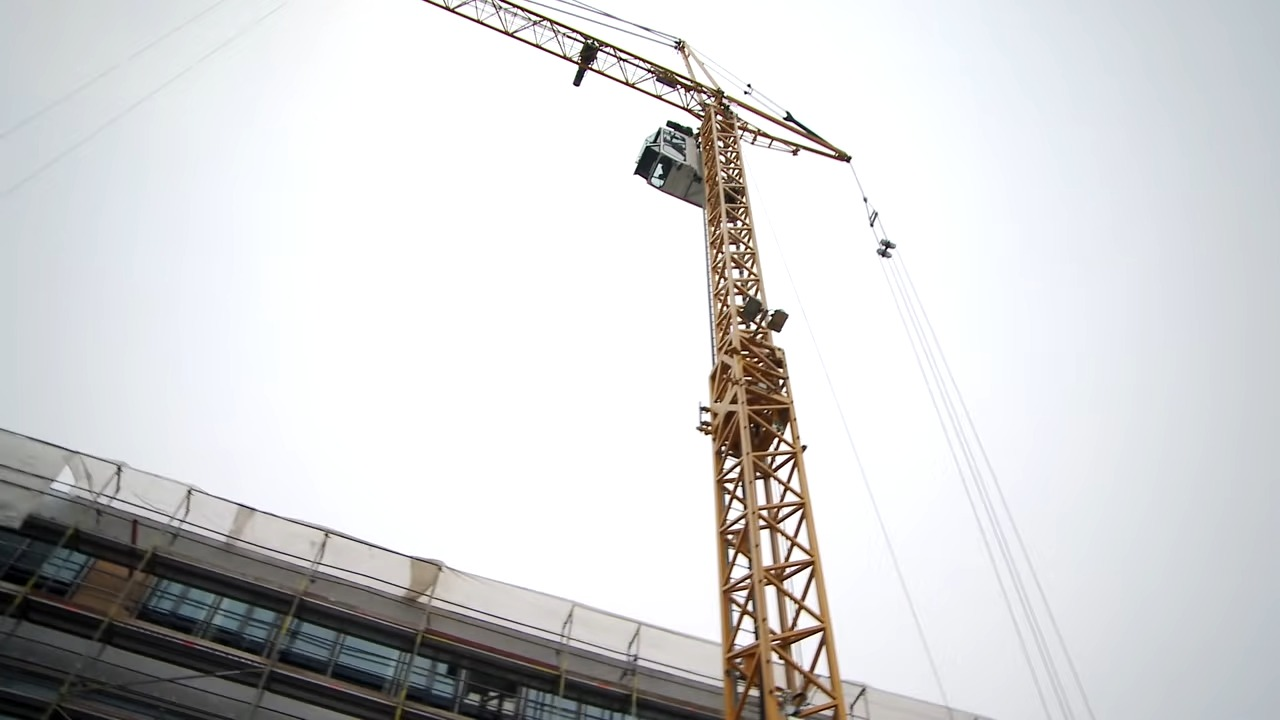
Tower cranes are highly effective for jobs requiring lifting loads high into the air, such as during the erecting tall buildings. A tower crane has a static vertical mast with a horizontal boom. It is mounted on large reinforced concrete foundations, and counterweights provide stability.
Using a cabin mounted on rails, tower crane operators have a broad range of motion to lift loads precisely. Tower cranes are essential for assembly work like mounting masts and stacking stone towers.
Rough Terrain Crane
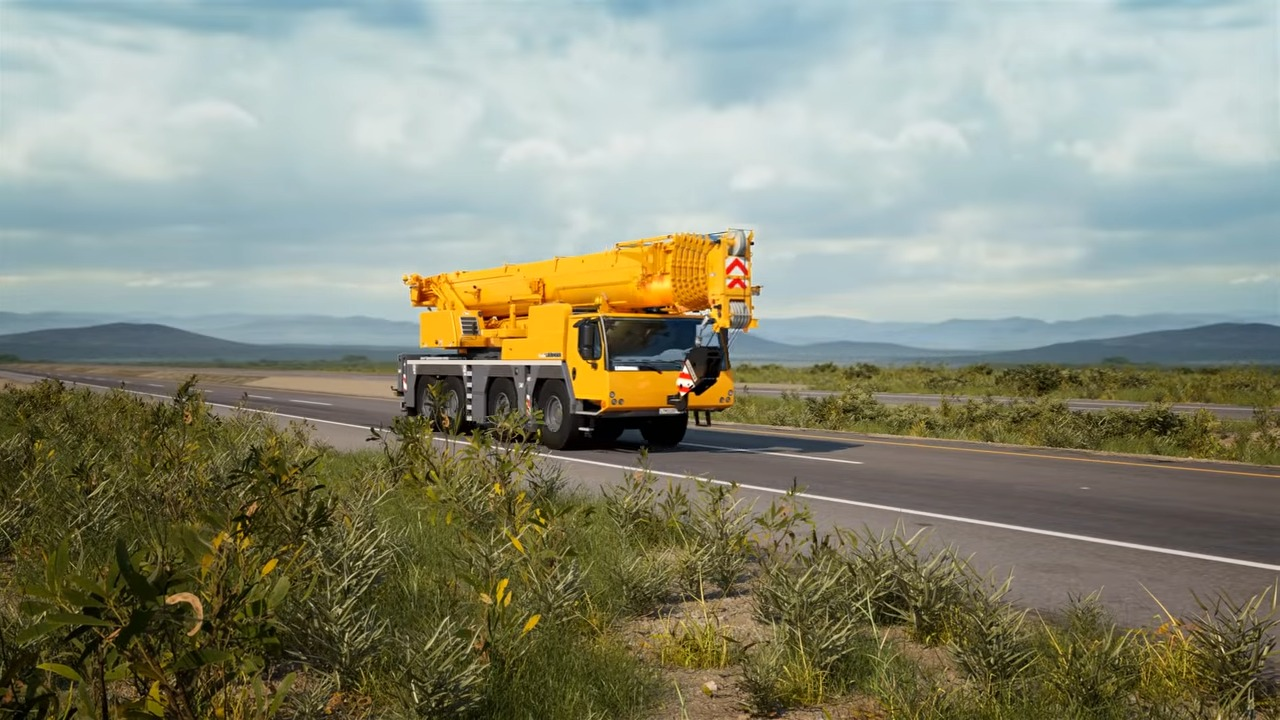
Rough terrain cranes are highly mobile and capable of working in challenging terrain. They feature large tires or tracks allowing movement over rough ground, job sites, and off-road areas where fixed or crawler cranes cannot reach.
Equipped with outriggers and stabilizers, rough terrain cranes can lift heavy loads for equipment, mounting masts, and material handling.
Their independent engine powers movement and lifting via a hydraulically powered articulated boom and counter jib. This makes rough terrain cranes more compact than other mobile options.
Other Specialized Cranes
Several other crane types serve distinct lifting needs. Gantry cranes, like overhead cranes, are used in industrial environments for tasks like stacking loads. Floating cranes, crane vessels, and crane ships are used at ports to unload cargo and lift materials onto construction sites.
Jib cranes are mounted on walls and towers. Loader cranes are used in quarries. Aerial cranes and sky cranes are helicopter-mounted for lifting in hard-to-reach areas. Bridge cranes traverse bridge girders in factories. Each has features tailored for heavy lifting applications.
Crane Safety Considerations
Safety is paramount when operating heavy-lifting machinery. Following proper protocols helps protect both equipment and personnel.
Operator Safety
Crane operators face hazards working at heights and around heavy loads. Ensuring their safety is critical. Operators must receive certification and ongoing training on a crane’s lifting capacity and features. Enclosed cabs protect from environmental elements. Fall arrest systems prevent falls for operators accessing tower cranes.
Well-maintained brakes, hooks, and ropes avert equipment failures. Certification of all cranes and thorough inspections for defects before each shift help reduce risks. Communication between operators and ground crews coordinates lifting activities to avoid accidents. Adhering to safety standards creates a safe working environment for crane operators.
On-Site Safety
Ensuring safety at job sites and construction projects is crucial when operating cranes. Before lifting, ground crews must establish exclusion zones and secure the lifting area. Signage communicates no-entry areas. Weather conditions like high winds can jeopardize stability, requiring halting lifts.
Well-maintained access routes for mobile cranes prevent accidents. Stable, level ground for outriggers and counterweights provides a safe working base. Compliance with posted weight limits on bridges and structures avoids collapses.
Equipment Safety
Inspecting cranes and their components protects both operators and the general public. A pre-use inspection checks for defects in booms, ropes, hooks, and other lifting mechanisms that could cause a failure. Overhead power lines require de-energizing or height restrictions to keep cranes clear.
Loads must never exceed the rated lifting capacity, which varies based on crane type, configuration, and radius. Proper maintenance and certification ensure all equipment meets safety standards. Taking precautions avoids accidents and keeps workers and the community safe near active lifting operations.
Applications of Cranes in Construction
Cranes play an indispensable role across many construction sectors. Their lifting power and precision are leveraged for numerous projects.
Building Construction
In high-rise and commercial building projects, tower cranes are commonly used during erection to lift components and materials into place. They efficiently transfer steel beams, pre-cast concrete sections, mechanical equipment, and more to construction workers.
Tower cranes have the lifting capacity to mount masts and install exterior wall panels on tall structures.
Mobile cranes also assist by offloading delivery trucks and setting equipment on lower levels. Cranes expedite assembly sequences, allowing buildings to rise rapidly while minimizing risks to workers.
Infrastructure Projects
Cranes are instrumental machines for large-scale public works like bridges, tunnels, and port developments. Floating cranes play a crucial role in offshore energy projects by installing components. Gantry cranes help construct pre-cast sections.
Rough terrain cranes handle tasks like lifting heavy cargo and loading equipment needed to build roads and rail lines. Their lifting capacities allow infrastructure to take shape efficiently.
Manufacturing and Shipping
In industrial environments, overhead and gantry cranes facilitate production by moving materials and finished goods. Cranes load ships, unload cargo at ports, and stack containers using jib arms, lifting hooks, and moveable hoists.
Specialized stacker cranes speed warehouse storage and order fulfillment. Cranes expedite assembly lines and ensure just-in-time delivery. Their lifting abilities are central to modern manufacturing and shipping operations transporting heavy loads worldwide.
Choosing The Right Crane For The Job
Selecting the appropriate crane model depends on the lifting tasks required. Understanding key factors helps ensure safety and efficiency.
Considering Lifting Capacity
Lifting capacity is the maximum weight a crane can safely lift and is highly dependent on crane type, configuration, and radius. Capacity ratings must exceed the heaviest load. Mobile cranes may have differing capacities depending on their set-up using outriggers.
Tower cranes’ capacities decrease with higher lifts. The ratings of floating cranes change based on shipload and tide. Operators must know load weights to pick a crane that avoids overload.
Exceeding capacity risks equipment damage and accidents from dropped or unstable loads. Proper capacity planning is important for heavy lifting tasks like loading equipment and positioning tall loads.
Factoring Mobility Needs
For tasks requiring lifting at multiple locations, mobile cranes are often preferable. Choosing between truck-mounted, crawler, or rough terrain models depends on transport needs. Truck cranes can drive between sites, while crawlers and rough terrain cranes have independent movement.
Floating cranes offer waterborne Mobility. Jib, gantry, and overhead cranes are stationary but save transport time. Assessing a project’s mobility demands helps pinpoint the most suitable mobile crane.
Crane placement must consider clearance and weight limits on bridges. Mobile cranes need adequate set-up space. Carefully assessing the construction site layout and terrain avoids potential issues that could delay work or risk safety. The conditions often determine if mobile or stationary cranes are preferable.
The Future of Crane Technology
The future of crane technology promises advancements that improve safety and efficiency. Autonomous operation using sensors and AI could allow remote or autonomous operation to remove operators from hazardous areas.
Electric power sources like batteries will help reduce emissions at job sites and ports. Augmented reality, modular component design, and lightweight materials will enhance usability, uptime, and Mobility.
Connecting cranes to the Internet of Things enables predictive maintenance via remote performance monitoring. Together, these innovations will sustain cranes’ indispensable role in construction and heavy industry through enhanced precision, sustainability, and lifetime value. Continued progress positions these lifting machines for ongoing success.
Contemporary rough terrain cranes offer significant benefits, including better steering capabilities with all-wheel-centric steering, making them ideal for tight corners at construction sites. Their larger tires and hyper-sized axles contribute to enhanced off-road applications.
Rough terrain cranes, including all-terrain cranes and rubber tire cranes, excel in lift capacity and versatility. With their four-wheel drive, two engines, and significantly more comprehensive center, they play an essential role on various work sites, outperforming tower and truck-mounted cranes.
Renting rough terrain cranes from a crane rental company provides significant advantages, such as their ability to navigate tight spaces on job sites, including off-road applications. The four-wheel drive and all-wheel centric steering make them suitable for construction sites and offer better maneuverability.
With their wider center and more tires, contemporary rough terrain cranes exhibit better mobility on public highways and other roads than most other cranes. This makes them versatile for various construction industry applications without compromising efficiency.
While rough terrain cranes may have wider dimensions, limiting use on most other public roads, their main disadvantages are offset by their superior performance on construction sites. The benefits of better steering capabilities, larger tires, and off-road adaptability outweigh limitations on general road use.
Looking for Equipment?
Compare rates from dozens of companies in less than 3 minutes.
Meta Description: Discover the diverse responsibilities of a crane operator, safely operating cranes, conducting inspections, and ensuring efficient lifting operations in construction.
Crane operators play a vital role in construction sites and other industrial settings daily. They are responsible for safely operating heavy lifting machinery to maneuver large and heavy materials into place. This article will take a closer look at the diverse responsibilities of a crane operator by examining a typical day on the job.
Key Takeaways
Crane operators play a vital role in the construction and industrial sites by safely operating heavy lifting machinery.
They are responsible for tasks like load positioning, equipment inspections, following safety protocols, and communicating with team members.
Operating cranes requires understanding their unique control systems and maneuvering them precisely according to instructions.
My top priorities are adhering to safety regulations, maintaining safe distances, and avoiding overloads.
Crane operators also conduct maintenance through daily checks, lubrication, and issues reporting.
What is a Crane Operator?
A crane operator is responsible for safely operating heavy lifting machinery like mobile, tower, and overhead cranes to maneuver heavy loads and materials into position at construction sites, job sites, and other industrial settings.
They lift loads, conduct equipment inspections, and follow safety protocols to operate cranes and function properly for lifting and positioning various types of materials.
What Does a Crane Operator Do?
A crane operator operates cranes to lift, move, and position heavy loads at construction sites or industrial facilities. They perform equipment maintenance, conduct safety checks, and adhere to safety protocols. Additionally, they coordinate with ground personnel to ensure efficient and secure lifting operations.
Operating the Crane
A key responsibility of a crane operator is to operate the heavy machinery safely. They must have thorough knowledge and understanding of various mobile, tower, and overhead crane types. Crane operators use crane controls to control crane movements and functions such as lifting, lowering, swinging, and extending the boom or jib.
Understanding Crane Controls
Crane operators need extensive training on different cranes and their unique control systems, including buttons, foot pedals, levers, and switches, to operate functions like boom extension, load-lifting, and equipment movements.
They must have expertise in using these controls to accurately position loads and heavy lifting equipment at different construction and job sites while working closely with other workers and following safety protocols.
Crane operating requires operators to have a strong depth perception, knowledge of load capacities, and ability to safely lift heavy loads and machinery.
Following Instructions For Lifts
Crane operators play a vital role in carefully following construction site instructions, signals, and blueprints for each lifting task. They receive directions from riggers, spotters, and other workers on the ground via clear hand signals and radio communication.
Crane operators must have strong communication skills and the ability to work closely as part of a team to ensure safe and efficient lifting operations. Operators must precisely maneuver cranes and position loads according to instructions while adhering to safety regulations, even in noisy weather conditions.
Ensuring Accurate Load Placement
Placing loads accurately is the top priority for crane operators. They are responsible for safely lifting and positioning heavy machinery, materials, lifting equipment, and other heavy loads to various locations using mobile cranes, tower cranes, or overhead cranes.
Crane operators must have a thorough knowledge of lifting capacities, load charts, and the safe operation of cranes to prevent accidents and ensure loads are secured properly at the required site location. Their expertise is essential for smooth crane operations and maintaining lifting equipment at construction, job, and industrial sites.
Safety Practices
Safety is the top priority for crane operators as their work involves lifting heavy loads and operating dangerous machinery. They must demonstrate safe job site practices and responsibilities at all times.
Adhering To Protocols
It is essential that crane operators strictly follow all applicable safety regulations and protocols set by occupational safety standards. This includes conducting pre-checks of cranes, rigging equipment, and loads before operations.
Operators must also complete required training and certifications to perform their duties safely. Adhering to protocols helps prevent construction, industrial, or job site accidents.
Maintaining Safe Distances
Crane operators are responsible for keeping a safe distance from power lines and other potential hazards when lifting loads into position. They must have full functioning knowledge to avoid risks to overhead or underground utilities.
Maintaining safe distances is also crucial for protecting other workers, machinery, and structures from any incidents during crane operations near them. The operator’s expertise ensures compliance with safety measures for the smooth lifting of heavy materials.
Avoiding Overloading
Crane operators must avoid overloading the lifting capacity of cranes to prevent possible equipment failures or accidents at job sites. They must follow these fundamental practices:
Thoroughly inspect load weights and dimensions before lifts to ensure they do not exceed the specifications in load charts. This is essential for safe crane operation.
Consider environmental conditions like high winds before lifting heavy loads or machinery to avoid risks. Weather can impact load stability.
Consult lifting equipment manuals and receive directions from supervisors to determine approved load limits. Exceeding capacity may damage cranes.
Crane operators must have extensive training and knowledge of load weights for mobile, tower, and overhead cranes. Their expertise is vital to avoid overloading.
Equipment Maintenance
Maintaining lifting equipment such as cranes, rigging, and machinery is essential for their safe operation at construction and industrial sites. Crane operators play a key role in conducting checks and minor repairs.
Daily Crane Checks
Crane operators perform daily pre-operational inspections of mobile, tower, overhead cranes, and other lifting equipment. They check for issues like fluid leaks, loose or worn parts, and functionality of controls and brakes according to inspection logs. Timely equipment checks help address minor problems before they become safety or operational risks.
Lubrication And part Peplacement
As part of their duties, operators also lubricate moving components, tighten loose fittings, and replace minor parts as required. This routine maintenance keeps the heavy machinery functioning properly during material lifts.
Operators must promptly report issues to on-site supervisors or equipment rental companies for larger repairs or component replacements. Their expertise is valuable in upkeeping cranes to ensure safe lifting operations at construction or job sites.
Reporting issues
Crane operators must promptly report any mechanical, structural, or electrical issues that could impact the safe functioning of lifting equipment.
They communicate maintenance needs and problems discovered during daily inspections to on-site supervisors. This helps initiate timely repairs.
Operators also submit written reports on cranes, rigging, or other machinery, as safety protocols and regulations require.
Documentation of equipment inspections and any incidents observed ensures transparency in identifying repair needs.
Communication of issues found is essential for equipment rental companies and supervisors to evaluate repair requirements for cranes, mobile cranes, tower cranes, and overhead lifting machines.
Reporting helps assess downtime required for repairs or replacements of worn-out components to ensure smooth lifting operations with fully functioning machinery at construction or industrial job sites.
It is part of an operator’s duties to prioritize safe crane and load handling by keeping supervisors aware of maintenance needs.
Contemporary rough terrain cranes offer significant benefits, including better steering capabilities with all-wheel-centric steering, making them ideal for tight corners at construction sites. Their larger tires and hyper-sized axles contribute to enhanced off-road applications.
Rough terrain cranes, including all-terrain cranes and rubber tire cranes, excel in lift capacity and versatility. With their four-wheel drive, two engines, and significantly more comprehensive center, they play an essential role on various work sites, outperforming tower and truck-mounted cranes.
Renting rough terrain cranes from a crane rental company provides significant advantages, such as their ability to navigate tight spaces on job sites, including off-road applications. The four-wheel drive and all-wheel centric steering make them suitable for construction sites and offer better maneuverability.
With their wider center and more tires, contemporary rough terrain cranes exhibit better mobility on public highways and other roads than most other cranes. This makes them versatile for various construction industry applications without compromising efficiency.
While rough terrain cranes may have wider dimensions, limiting use on most other public roads, their main disadvantages are offset by their superior performance on construction sites. The benefits of better steering capabilities, larger tires, and off-road adaptability outweigh limitations on general road use.
Looking for Equipment?
Compare rates from dozens of companies in less than 3 minutes.
Meta Description: Explore how to become a crane operator. Learn about education, training, career prospects, and job search tips in this comprehensive guide
This guide will walk you through becoming a crane operator, one of the most in-demand skilled trades careers. You’ll learn about the education and training requirements, such as trade school courses, certification options, and apprenticeship programs.
The article also details the various specializations within the field, career prospects, salary expectations, and tips for landing a job as a crane operator. Whether you’re a new graduate or an experienced operator, this information will help launch or advance your career.
Key Takeaways:
Complete high school and trade school courses covering crane operation, safety protocols, and certification test preparation.
Gain hands-on experience through apprenticeships and training programs to safely operate different cranes like mobile, tower, and lattice boom cranes.
Obtain certification by passing written exams and physical competency tests through programs such as NCCCO, which is required for crane operation jobs.
Pursue additional certifications, specialized skills, or roles in management with experience to take on more responsibilities and increase earnings over time in the construction industry.
Importance of Crane Operators In Construction And Industrial Projects
Crane operators play a vital role in many construction and industrial projects by safely moving heavy materials using various types of cranes like mobile cranes, tower cranes, lattice boom crawler cranes, and telescopic boom cranes.
They undergo specialized training and certification to operate these sophisticated machines skillfully while adhering to essential safety protocols and maintenance requirements on busy job sites. With an aging workforce, there is a growing demand for new certified crane operators.
Is a Career as a Crane Operator Right for You?
A career as a crane operator offers challenges, good pay, and job security without the need for years of college. Crane operators play a vital role in construction and industrial projects by safely moving heavy materials using mobile, tower, and lattice boom cranes.
Job Description and Responsibilities
As a crane operator, you will be responsible for safely operating sophisticated cranes and overseeing equipment maintenance, including keeping safety and maintenance logs.
You must adhere to important safety protocols and standards while operating mobile, telescopic, and lattice boom crawler cranes to lift heavy materials on busy job sites.
Skills Required to Succeed
To succeed, crane operators require robust physical control, good depth perception, and the ability to focus while operating heavy machinery for long hours.
You must also have effective communication and problem-solving skills to work with teams and ensure work sites meet operational demands through specialized training.
Career Prospects and Growth Outlook
With an aging workforce, there is a growing demand for new certified crane operators. Completing certification programs like the National Commission for the Certification of Crane Operators offers good career prospects and job security in the construction industry.
Salary and Compensation
On average, certified crane operators earn around $70,000 annually. However, highly experienced operators and those with specialty designations in tower or lattice boom cranes can earn over $80,000 working in fields like power generation that require their expertise.
Education and Training Requirements
Certain education and training requirements must be met to operate cranes safely and become a certified crane operator. Formal education and practical skills are required to handle heavy machinery skillfully.
1. Earning a High School Diploma or GED
A high school diploma or equivalent degree like the GED is required to enroll in trade school and operator training programs. The basics of math, reading, science, and technology taught in high school are necessary to understand maintenance logs, safety standards, and crane operating procedures.
2. Completing Trade School Courses
After earning a diploma, enroll in trade school courses to develop specialized skills for crane operation. Trade schools provide required training and help find apprenticeships, offering an alternative to expensive college degrees.
Coursework covers crane operation, maintenance requirements, safety protocols, and certification test preparation.
3. General Operator Training Program
General operator training teaches safe equipment handling and maintenance requirements. Trainees learn skills through classroom instruction and hands-on experience operating different types of cranes like mobile cranes, tower cranes, and lattice boom crawler cranes.
Training covers safety protocols, control systems, lifting capacities, and working around heavy machinery on job sites.
4. Apprenticeship Programs
Apprenticeships are essential for gaining on-the-job skills through mentoring from experienced crane operators. As an apprentice, you will automatically be connected with a mentor to guide you and ease your transition from the classroom to operating cranes at busy work sites.
Apprenticeships also offer networking opportunities important for career advancement in the construction industry.
5. Certification Options
Certification is required to become a certified crane operator. Programs like the National Commission for the Certification of Crane Operators and Crane Institute of America Certification authorize operators to run specialized equipment after successfully passing written core exams and physical exams testing skills operating different cranes, fixed or swing cabs.
Choosing a Specialization Area
Once certified, crane operators can choose to specialize in different types of equipment for more opportunities. Gaining expertise in an area requires additional experience and certification.
Mobile Crane Operation
Some operators focus on mobile cranes frequently used on construction sites. This includes rough terrain cranes, boom trucks, and crawler cranes that can operate on surfaces like swampy areas.
Mobile crane operators undergo specialized training on equipment like lattice boom crawler cranes, lattice boom truck cranes, and service truck cranes.
Tower Crane Operation
Other specialists operate tower cranes – large vertical cranes used to build tall structures. Tower crane operators must have certification for these types and pass specialty exams testing skills for safe operation, including working with fixed and swing cabs high above job sites.
Drill Rig Operation
Some crane operators gain expertise in drilling rigs in the oil, gas, and construction industries. Drill rig operators undergo specialized training programs and certification for operating heavy machinery like service truck cranes used to move drilling equipment.
Certification often requires passing specialty examinations and testing skills for safely operating drill rigs.
Other Specialized Roles
Other roles include operating telescopic boom cranes fixed or swing cabs for long-span construction or tower cranes fixed cabs high above busy job sites. Experienced operators may specialize in lattice boom crawlers or truck cranes.
Specialty designations in these areas allow operators to take on more complex lifts of heavy materials required at major work sites and meet all operational demands through nationally recognized certification.
Advancement Pathways and Ongoing Training
Crane operators have options to advance their careers through continuous skills upgrading. Recertification keeps skills sharp for safely operating heavy machinery.
Earning Additional Certifications: Experienced operators can increase their expertise by obtaining certifications in new equipment types like telescopic boom cranes or lattice boom cranes. Programs like the National Commission for the Certification of Crane Operators offer certifications requiring passing written and practical exams.
Gaining Specialized Skills and Equipment Endorsements: Operators can pursue endorsements like a specialty designation in tower cranes or by proving competency in swing or fixed cabs. Some gain skills in maintenance, rigging, or as qualified signal persons. Remote training sessions and hands-on practice help operators meet all operational demands.
Pursuing Management or Training Roles: The most experienced crane operators may take on roles like equipment manager and safety director or become certified operators and conduct required training programs for new operators, leveraging their expertise gained over the years.
Finding and Applying for Jobs
Securing employment requires proper preparation and utilizing available resources. Connecting with professionals aids in the search.
Networking During Education and Training
Meeting others like mentors during apprenticeships and operator training programs opens doors to opportunities.
Ask instructors for referrals and contact colleagues for job alerts or introductions to hiring managers seeking certified operators. Networking aids in the successful completion of certification and finding placements.
Using Online Job Boards and Company Career Sites
Major online job boards regularly post crane operator roles. Browse listings at dedicated construction industry portals for local openings requiring skills in operating equipment like lattice boom cranes. Company websites also advertise available positions and internships. Consider signing up for job alerts matching your credentials.
Crafting an Effective Resume
A strong resume highlighting certifications, like the National Commission for the Certification of Crane Operators, specialty designations, and maintenance logs, is critical. Emphasize skills in operating heavy machinery and adherence to safety standards.
Include apprenticeships and specialized training programs demonstrating competency in lifting heavy materials. Customize each resume using keywords from job descriptions.
Interviewing Skills and Tips
Research the company and equipment used on job sites. Be prepared to discuss hands-on experience, safety protocols, and required training. Demonstrate physical control and communication abilities through examples.
Emphasize core exam results, practical exams passed, and willingness to work varied schedules. Bring copies of certifications, specialty exams, and references for networking opportunities. Make a strong case for safety and meeting all operational demands.
Contemporary rough terrain cranes offer significant benefits, including better steering capabilities with all-wheel-centric steering, making them ideal for tight corners at construction sites. Their larger tires and hyper-sized axles contribute to enhanced off-road applications.
Rough terrain cranes, including all-terrain cranes and rubber tire cranes, excel in lift capacity and versatility. With their four-wheel drive, two engines, and significantly more comprehensive center, they play an essential role on various work sites, outperforming tower and truck-mounted cranes.
Renting rough terrain cranes from a crane rental company provides significant advantages, such as their ability to navigate tight spaces on job sites, including off-road applications. The four-wheel drive and all-wheel centric steering make them suitable for construction sites and offer better maneuverability.
With their wider center and more tires, contemporary rough terrain cranes exhibit better mobility on public highways and other roads than most other cranes. This makes them versatile for various construction industry applications without compromising efficiency.
While rough terrain cranes may have wider dimensions, limiting use on most other public roads, their main disadvantages are offset by their superior performance on construction sites. The benefits of better steering capabilities, larger tires, and off-road adaptability outweigh limitations on general road use.
Looking for Equipment?
Compare rates from dozens of companies in less than 3 minutes.
Meta Description: Discover how crane operators manage bathroom breaks during long shifts. Explore portable toilets, on-site facilities, and crane-mounted bathrooms.
Crane operators play a vital role in construction projects by safely maneuvering heavy loads. While their work is highly skilled, finding opportunities to use the bathroom during long shifts can be challenging.
This article explores the bathroom routines of crane operators and the options available to them. We will look at portable toilets, on-site facilities, and crane-mounted bathrooms. The focus remains on ensuring operators’ comfort, health, and productivity.
Key Takeaways:
Crane operators have various bathroom options on construction sites depending on project needs, including portable toilets, on-site facilities, and sometimes even crane-mounted bathrooms.
Proper placement and regular maintenance of portable toilets near cranes ensure convenient access without disrupting work or impacting health.
Standard procedures like securing equipment and washing hands allow operators to use the bathroom safely and hygienically during long shifts while continuing to support projects smoothly.
Evolution of Bathroom Facilities for Crane Operators
The job of crane operators has evolved significantly over the decades as the construction industry has grown in scale and complexity. With increasing demands on their time and body due to longer workdays and more strenuous tasks, finding bathroom opportunities has become more challenging.
Operators had even fewer options in the past, sometimes resorting to bottles or going long stretches without relief. Thankfully, the modern construction site has much-improved facilities that support operator comfort and well-being.
Challenges of the Past
In early times, when construction projects were smaller in scope and scale, operators would have to find creative ways to answer nature’s call during their long days. Some would use bottles or buckets in the crane cab, an unsanitary solution that took operators away from active operation.
Going down from the crane tower or mobile equipment to access the few basic ground facilities also meant wasting valuable time that could impact production schedules and deadlines. Staying hydrated was difficult due to the lack of easy access to bathrooms.
Modern Solutions
As projects and job sites grew more complex, the need for better bathroom options became apparent. Portable toilets started being utilized near cranes for convenient access without long trips. Later, some crane models began including built-in toilet facilities in the operator cabins, allowing relief without leaving the controls.
On-site buildings also house clean, well-maintained bathrooms now. These developments have protected operator health and allowed them to be more productive through long workdays.
Portable Toilet Options
As construction sites grew in size and complexity, portable toilets emerged as a practical solution for providing bathroom facilities near operators’ workplaces. Proper placement and maintenance of these toilets help protect workers’ health and comfort on long days.
Design and Features: Portable toilets are specifically designed for job sites, with features that make them easy to transport and set up in different locations as needed. They are typically equipped with holding tanks, handwashing stations, and other amenities to support operators’ basic sanitation needs.
Placement and Maintenance: Proper placement of portable toilets is essential, located close enough to cranes and equipment for convenient access during breaks without long walks. They are usually placed on concrete slabs or other solid and level ground. Regular maintenance like waste pumping and cleaning/restocking helps keep the facilities sanitary for workers.
On-site Bathroom Facilities
Beyond portable toilets, many modern construction sites include permanent bathroom buildings to support workers’ needs—proper location and design support accessibility without impacting productivity.
Location and Accessibility: On-site bathroom facilities are usually located in central buildings on job sites for easy access from different work locations. They are often placed near site trailers or construction management offices for convenience between tasks. Ramps and wide doors make the bathrooms accessible for all workers, including those with physical restrictions. This helps avoid accidents and protects health on the job site.
Special Considerations: Factors like multiple stalls and automatic fixtures help these facilities serve the needs of the many workers on busy sites. Cleaning and restocking are essential to maintain hygiene for the dozens using the bathrooms daily. Special considerations for women workers are also important to make all staff feel comfortable during breaks. Proper location and design of on-site facilities support the whole team’s well-being through long work weeks.
Crane-Mounted Bathrooms
While not common, some modern cranes now include built-in bathroom facilities in the operator’s cab or cabin. This offers clear advantages over other options.
Advantages: An attached bathroom means using the toilet without leaving the controls for operators who spend their whole day in the crane cab controlling lifts and maneuvers. This protects ongoing production and prevents accidents when climbing in and out or to/from portable facilities. Operators don’t waste valuable time walking to distant restrooms during breaks. A cab bathroom removes the need for dangerous climbing for tower crane operators above the work.
Current Limitations: However, crane-mounted bathrooms also present some challenges. Retrofitting older equipment models can be costly. Space within some cabins is limited, requiring innovative design of compact toilet fixtures. Upkeep and servicing also require careful management in high or enclosed places. But as the technology develops, more builders may see the value of operator safety, health, and productivity during long work weeks atop developments.
Bathroom Break Procedures
With various options available, operators follow similar steps to take care of business during shifts. Proper procedures help maintain productivity and safety.
Using Portable Toilets: When nature calls, operators will first locate the nearest portable toilet near their crane or equipment. They park any loads being lifted or lower any booms being operated. After locking the necessary controls for safety, operators make the short walk to the portable facility for relief. Handwashing with soap and water before returning helps protect their health.
Accessing On-site Facilities: Operators may drive small vehicles like man lifts or bucket trucks for on-site bathrooms for accessibility. Tower crane operators will secure their cabins before descending, then walk to centrally-located permanent bathrooms near site offices. Ramps and automatic doors make these ADA-compliant for all workers. In any case, operators follow related safety protocols before and after bathroom visits to prevent any accidents around active worksites.
Contemporary rough terrain cranes offer significant benefits, including better steering capabilities with all-wheel-centric steering, making them ideal for tight corners at construction sites. Their larger tires and hyper-sized axles contribute to enhanced off-road applications.
Rough terrain cranes, including all-terrain cranes and rubber tire cranes, excel in lift capacity and versatility. With their four-wheel drive, two engines, and significantly more comprehensive center, they play an essential role on various work sites, outperforming tower and truck-mounted cranes.
Renting rough terrain cranes from a crane rental company provides significant advantages, such as their ability to navigate tight spaces on job sites, including off-road applications. The four-wheel drive and all-wheel centric steering make them suitable for construction sites and offer better maneuverability.
With their wider center and more tires, contemporary rough terrain cranes exhibit better mobility on public highways and other roads than most other cranes. This makes them versatile for various construction industry applications without compromising efficiency.
While rough terrain cranes may have wider dimensions, limiting use on most other public roads, their main disadvantages are offset by their superior performance on construction sites. The benefits of better steering capabilities, larger tires, and off-road adaptability outweigh limitations on general road use.
Looking for Equipment?
Compare rates from dozens of companies in less than 3 minutes.
Meta Description: Learn how crane operators reach lofty workstations using ladders, elevators, and Jacob’s ladder technique, as well as about safety and training requirements.
Crane operators play a crucial role in construction and industrial settings, so it’s essential to understand how they reach their elevated workstations. This article explores the various methods, from climbing ladders to using elevators and specialized techniques, highlighting the importance of safety and efficiency in accessing these lofty workplaces.
Key Takeaways
Crane operators use Jacob’s ladder technique to access elevated cabs safely via external ladders attached to cranes.
Extensive training is required to master climbing techniques and demonstrate safety compliance through certification.
Operators are responsible for overseeing heavy lifting operations while following protocols to prevent risks at height.
Their elevated vantage point and clear communication skills enable efficient material handling around busy construction sites.
Methods of Ascent for Crane Operators
Depending on the type of crane, crane operators have different options for ascending to their lofty workstations. For many operators, the initial method involves climbing sturdy ladders commonly found on mobile cranes and smaller construction equipment.
These ladders provide reliable access and are a fundamental part of crane design.
Climbing Ladders
Ladders are utilized on various cranes across construction sites and projects. Mobile cranes frequently feature an internal ladder that runs up through the center of the mast, affording operators a steady path to the operator’s cab.
Taller luffing jib and tower cranes may have external ladder access on the rear or front of the mast sections. Operators climb methodically, grasping each rung carefully while equipment like hard hats and safety harnesses are worn for protection.
Reaching heights of up to 200 feet, ladders enable operators to gain elevation to their workspace efficiently. However, some cranes now incorporate alternate ascent methods for improved convenience and working conditions.
Using Elevators
Elevators provide an efficient ascent mode for operators working on taller tower cranes and luffing jib cranes at construction sites.
These cranes frequently feature enclosed lifts or elevators that swiftly transport operators between sections as the tower is assembled higher.
Hydraulic cylinders power the elevators to smoothly glide up guide rails secured to the mast sections.
This spares operators from lengthy climbs up external ladders attached to the crane’s tower or mast.
Elevators allow a more convenient vertical movement for tasks like installing additional tower sections, counterjibs, and hook blocks at higher levels.
They also lifted operators and needed tools and equipment to reduce physical exertion compared to climbing narrow ladders multiple stories in steel-toe boots.
Crane drivers can quickly access their elevated cabs high above the ground using onboard elevators, which are essential for the timely lifting and placement of heavy loads.
Proper maintenance of elevator components like guide rails, hydraulic cylinders, and electrical systems is necessary to ensure the safety of operators riding between levels.
Using the Jacob’s Ladder Technique
Jacob’s ladder technique utilizes an external ladder securely attached to the side of cranes to provide crane operators access to their elevated workstations. This climbing method is commonly used on mobile cranes and luffing jib cranes, which frequently feature vertical ladders running up through the mast or tower.
Operators safely ascend these ladders in their steel-toe boots, grasping each rung while wearing necessary safety harnesses and gear.
The Jacob’s ladder enables operators to reach heights of over 500 feet efficiently, from where they can carefully oversee lifting and assembly operations around busy construction sites using hand signals to coordinate with workers below. Proper training is required to master climbing ladders safely up cranes in changeable job site conditions.
Understanding the Jacob’s Ladder Method
The Jacob’s ladder method provides crane operators with a proven technique for gaining safe access to elevated workstations. This external climbing method involves operators ascending sturdy ladders securely attached to the rear or sides of cranes. Ladders run vertically along the full height of mobile cranes and luffing jib cranes, reaching heights over 500 feet high.
Operators are trained to methodically climb ladders while wearing necessary personal protective equipment, including steel-toe boots, safety harnesses, hard hats, and gloves to protect themselves from potential hazards while climbing the mast or tower.
Ensuring Safety When Climbing
Safety is the top priority when operators utilize the Jacob’s ladder method near busy construction sites. Proper precautions are taken, such as double-checking that ladder attachments are solidly fastened to the crane before each ascent.
Operators also inspect rungs for looseness or damage to avoid slips. High-wind conditions may require delaying climbs for safety. During ascent, operators follow practices like maintaining three points of contact and not carrying heavy tools to prevent falls.
Once at their workstation, operators attach lanyard hooks to anchor straps for fall protection. Adhering to safety procedures reduces risks when climbing to the operator’s lofty cab.
Reaching New Heights with Ladders
By climbing Jacob’s ladders, crane operators can safely access heights exceeding 500 feet above ground level.
This allows operators to reach expansive bird’s eye workstations on taller mobile cranes and luffing jib cranes used in high-rise construction.
Skilled operators methodically ascend rungs while wearing necessary PPE like steel-toe boots and safety harnesses for fall protection.
New tower sections extending the mast higher are often assembled by operators utilizing the external ladder for elevation.
Reaching the operator’s cab by ladder enables vital oversight of heavy lifting and placement of load materials around busy job sites.
Ladders provide efficient access between levels for tasks like installing hook blocks and counterjibs during the assembly of tower cranes.
Climbing ladders daily is part of the job, but operators are trained to follow safety practices and inspect equipment thoroughly to prevent risks at height.
The View From the Operator’s Station
Reaching their lofty perches via Jacob’s ladders, crane operators are presented with unobstructed panoramic views. From over 500 feet high, operators can survey the entire construction site and surrounding buildings from their spacious cabs.
This bird’s eye perspective allows operators to efficiently direct the lifting and placement of heavy materials around busy job sites.
Operators leverage their elevated vantage point to maneuver cranes safely, lower loads precisely using the luffing jib or boom, and coordinate lifting operations with signal workers on the ground below without risk of collisions on the construction site.
Carrying Out Tasks Efficiently
From their elevated perches high above construction sites, crane operators take on vital responsibilities crucial to the safety and productivity of projects. Precision control and clear communication from the operator’s cab or enclosed station are paramount.
Communicating with Crews Below
Crane operators closely coordinate with workers on the ground through proven communication methods. Hand signals and radio allow operators to safely direct the lifting and placement of heavy loads around busy job sites.
Safely Handling Materials
Operators also carefully oversee the lifting and installation of construction materials. Precision is key to avoid injuries, Whether hoisting steel beams, pre-cast walls, or other heavy components. Operators leverage their high vantage point to maneuver loads into position smoothly using the luffing jib, boom, or winch line.
Training Requirements for Operators
Operators develop extensive skills to safely and efficiently carry out tasks from elevated crane cabs. Mastery of key techniques is verified before overseeing lifts at active construction sites.
Mastering Climbing Techniques
Trainees complete comprehensive programs learning to climb steadily up the ladders of various cranes. This includes practicing secure attachment points, inspecting rungs, and following safety protocols when ascending or descending the mast or tower under supervision.
Demonstrating Safety Compliance
Operators must comply with practical exams, like correctly following fall protection procedures before commencing lifts. Only by validating safety skills through certification can workers be approved to operate heavy equipment over busy job sites according to stringent industry standards.
The Skills Needed for Working at Height
Crane operators require extensive abilities gained through rigorous development programs to safely carry out their elevated responsibilities. Mastery of climbing techniques allows operators to steadily ascend ladders up tall cranes, reaching heights over 500 feet above ground level. Operators also learn to inspect ladders and safety equipment for defects before each climb.
Through hands-on training, operators practice communicating clearly with hand signals to coordinate the lifting and placement of heavy loads around busy construction sites. Simulation and certification exams evaluate operators’ preparedness to handle delicate lifts according to load charts and respond appropriately to emergencies.
Only by validating proficiency in skills such as navigating complex lifts under strict safety compliance can operators be approved to oversee construction work from lofty cabs.
Contemporary rough terrain cranes offer significant benefits, including better steering capabilities with all-wheel-centric steering, making them ideal for tight corners at construction sites. Their larger tires and hyper-sized axles contribute to enhanced off-road applications.
Rough terrain cranes, including all-terrain cranes and rubber tire cranes, excel in lift capacity and versatility. With their four-wheel drive, two engines, and significantly more comprehensive center, they play an essential role on various work sites, outperforming tower and truck-mounted cranes.
Renting rough terrain cranes from a crane rental company provides significant advantages, such as their ability to navigate tight spaces on job sites, including off-road applications. The four-wheel drive and all-wheel centric steering make them suitable for construction sites and offer better maneuverability.
With their wider center and more tires, contemporary rough terrain cranes exhibit better mobility on public highways and other roads than most other cranes. This makes them versatile for various construction industry applications without compromising efficiency.
While rough terrain cranes may have wider dimensions, limiting use on most other public roads, their main disadvantages are offset by their superior performance on construction sites. The benefits of better steering capabilities, larger tires, and off-road adaptability outweigh limitations on general road use.
Looking for Equipment?
Compare rates from dozens of companies in less than 3 minutes.
We are currently rebuilding our checkout system and apologize for any inconvenience.
Dumpster rentals must be ordered separately from all other equipment. Go back to order review, select only equipment rental item(s) by deleting your dumpster rental(s) and proceed to checkout. Follow the same process with only your dumpster rental(s).
To order all equipment at once, please call (888) 888-8888


 Mediapayperlead-com December 11, 2024