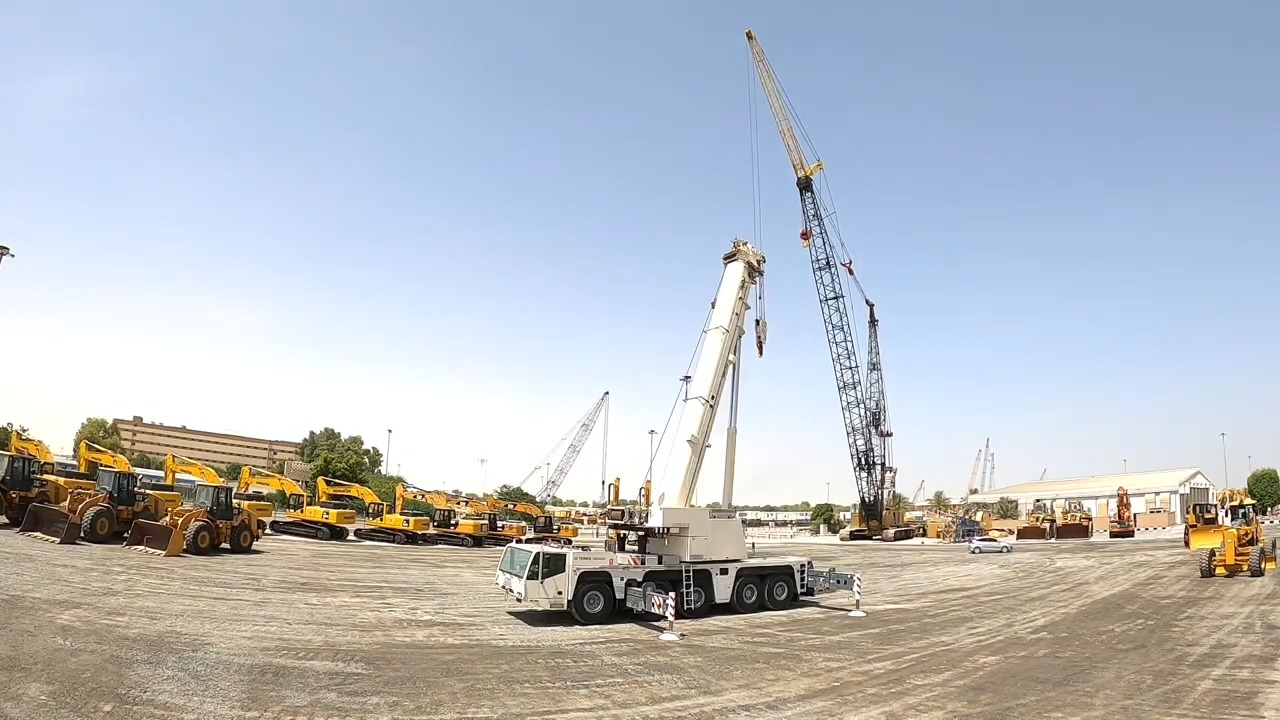
Meta Description: Learn how to choose the right crane efficiently for your construction project. Explore factors like lifting capacity, terrain suitability, and safety compliance to ensure optimal performance.
Choosing the right crane is essential for construction projects. This guide examines the key factors to consider when selecting a crane, including load specifications, lift requirements, site conditions, safety compliance, maintenance needs, and cost.
By carefully evaluating these factors, you can ensure that the chosen crane meets your project’s specific requirements, ultimately contributing to its success.
Key Takeaways
Consider the load specifications, lift heights, and reach needed based on your project’s materials.
Evaluate site conditions and terrain to select a crane suitable for your job site accessibility.
Ensure any crane rental meets safety standards to prevent hazards.
Consider maintenance needs when operating in changing weather conditions.
Determine if purchasing or renting is more cost-effective based on project duration and frequency of use.
Thoroughly assessing requirements and comparing compliant options leads to the right crane choice.
Understanding the Importance of Choosing the Right Crane
Choosing the wrong crane for your construction project can lead to many issues, such as being unable to lift heavy materials safely, delays due to insufficient lifting power or capacity, and even serious hazards. Most construction sites require cranes to efficiently transport equipment and materials to various heights.
The right crane with suitable load charts and lifting capacities can safely move loads horizontally or vertically according to your project’s load weight and lift height needs. Consulting an experienced crane specialist is important to evaluate your site conditions and select the crane type that meets all requirements.
Factors to Consider When Choosing The Right Crane
There are several important factors to examine when choosing a crane for your construction project. Properly evaluating these will help you select the machine best suited to your specific lifting needs.
1. Load Specifications
The load weight and dimensions of materials you need to lift and transport around the job site will directly determine the crane’s required lifting capacity and reach.
Carefully examining load charts from crane rental companies can help identify models with suitable lifting capacities to safely move weighty loads, whether flat concrete slabs or other irregularly shaped equipment and supplies.
The load weight will also influence the type of crane – mobile, crawler, tower, or hydraulic crane – that can best handle your project’s lifting requirements.
2. Height and Reach Requirements
The lift height needed for your project, especially if constructing multi-story buildings, will dictate the minimum boom length required. Additionally, the horizontal moving distance of the load must be considered to determine the crane’s reach.
Tower cranes, for example, have immense lifting capacities but limited mobility, so reach is an important factor.
3. Worksite Conditions and Accessibility
Access to the job site via roads or paths and the terrain can impact suitable crane options. Rough terrain cranes, for example, are well-suited to off-road construction sites with complicated ground conditions, while crawler cranes can operate in tight spaces and create their flat deck hauling areas.
Mobile cranes require sufficient space to maneuver safely. Consulting a crane specialist is important to evaluate these conditions and select from tower cranes, crawler cranes, rough terrain cranes, or other mobile cranes as required.
4. Safety Compliance
Ensuring the crane you select meets all necessary safety standards is critically important. Proper safety compliance certification helps prevent crane-related incidents that could endanger specially skilled crane operators or other workers on the construction site.
Choosing a crane from a reputable rental company can help ensure it follows OSHA and other regulatory safety compliance standards.
5. Maintenance and Repair Needs
The maintenance requirements, including spare parts availability, must also be considered. With rugged use lifting weighty loads, cranes require regular upkeep to sustain their lifting power capacity.
Opting for a crane model where repairs can be done using local lifting services or the rental company’s maintenance team helps lower repair costs. This is especially important on large projects with adverse weather conditions where downtime needs to be minimized.
6. Cost Considerations
The purchase price for owning a crane long-term for large projects
Rental rates from crane companies for short-term needs
Transportation costs for moving cranes between job sites
Fuel and maintenance costs for mobile cranes
Cost of specially skilled operators for tower or hydraulic cranes
City and state permitting fees that may apply
It is important to ensure the crane’s cost works within your budget. Renting for demolition or short-term bridge construction may be more economical than buying.
Consequences of Choosing The Wrong Crane
Choosing a crane that does not have the correct lifting capacity or boom length for your project’s needs can lead to severe issues. A crane may not be able to safely lift extremely heavy loads or transport materials to the required heights.
This could result in delays, damages, and hazards on the job site. Not selecting a crane suited to the terrain conditions could also cause problems if it cannot access off-road construction sites or operate in complicated ground conditions. Choosing the right crane is important to avoid such risks and ensure efficient lifting operations.
Frequently Asked Questions (How To Choose a Crane For Your Project)
When selecting a crane for your project, it’s crucial to consider factors such as the lifting capacity required, terrain and ground conditions, height or space restrictions, and compliance with city and state laws regarding crane operation.
When choosing a crane rental company for your project, it’s essential to assess their experience with similar projects, the availability of different types of cranes, their ability to provide management services, and their compliance with city and state laws. Look for a company that is a coast-to-coast provider with expertise in handling large loads and operating in various environments.
For demolition projects or projects requiring maximum lift, consider cranes with excellent lifting capacity, such as tower or hydraulic cranes. Additionally, evaluate the crane’s ability to operate in complicated ground conditions compared to static cranes and its compatibility with different transportation methods for loading material onto the flat deck hauling area.
When selecting a crane for projects demanding vast lifting capacities, consider factors such as the crane’s load capacity, its ability to transport materials safely, and its suitability for rough terrain or fixed structures. Mobile cranes offer versatility for daily construction sites, while crawler cranes provide stability on multiple ground types. Hydraulic cranes are ideal for lifting light to medium-sized equipment, and tower cranes excel in lifting heavy loads for tall buildings.
When selecting a crane for projects involving tall buildings and fixed structures, consider its ability to safely navigate low-clearance bridges and its capacity to lift heavy loads. Tower cranes are well-suited for such projects due to their tower sections and fixed structure capabilities.
Looking for Equipment?
Compare rates from dozens of companies in less than 3 minutes.
Meta Description: Calculate crane load capacity for safe lifting operations. Understand factors like boom length, lift angles, and load charts to ensure precision in construction projects.
Calculating a crane’s load capacity accurately ensures safe lifting operations. This article discusses the step-by-step process for determining a crane’s maximum lifting ability based on its specifications and configuration. Critical factors influencing capacity, like boom length, boom angle, load radius, and attachments, are explained.
Key Takeaways
Obtain the load chart specific to the crane model and identify its configuration factors like boom length and attachments.
Calculate the load radius accurately, as it is vital in determining capacity.
To find the safe lifting capacity under given conditions, refer to the load chart and cross-reference the crane’s specifications.
Double-check that the capacity is within the crane’s rated limits and follow other safety procedures before commencing lifts.
Understanding how factors like boom angle and job site influence a crane’s capacity is essential for safe operation.
Understanding Crane Load Capacity
Crane load capacity is the maximum weight a crane can safely lift under specific operating conditions. Every crane has a load chart issued by the manufacturer, which specifies the machine’s lifting capacity based on key factors like boom length, boom angle, lift radius, attachments, and other specifications.
It is crucial for crane operators and contractors to accurately determine the load capacity of their equipment based on these parameters to ensure safe lifting operations and avoid overloading.
What Is a Crane Load Chart?
A crane load chart, also known as a lift chart or capacity chart, is a table issued by the crane manufacturer that specifies the machine’s maximum lifting capacity based on variables like boom length, boom angle, lift radius, attachments, and other specifications. A printed chart or diagram is usually included in the crane’s operating manual.
Factors That Influence Crane Lifting Capacity
According to its load chart, the key factors influencing a crane’s lifting capacity include the boom length, boom angle, lift radius, crane model, attachments, outriggers extension, ground/job site conditions, wind speed, and structural strength considerations.
Crane operators must understand how each parameter impacts the machine’s capacity to lift loads safely.
How To Calculate Crane Load Capacity
Here are the step-by-step instructions for calculating crane load capacity, including:
1. Obtaining the Correct Load Chart
Having an accurate load chart specific to the crane is crucial for calculating its lifting capacity properly.
Locating the Load Chart: The load chart, also known as the lift chart or capacity chart, contains vital information for determining the crane’s maximum load based on factors like boom length, boom angle, lift radius, and more. The manufacturer typically provides it along with the crane documentation, and crane operators must acquire it for their specific equipment model and configuration.
Identifying Crane Specifications: To refer to the right load chart, it is important to identify the crane specifications, including the model, attachments, or modifications to the original configuration. This will ensure workers obtain the load chart matching their crane’s characteristics to calculate the lifting capacity precisely.
2. Determining the Crane Configuration
Understanding the crane setup is essential for identifying the right capacity specifications in the load chart.
Measuring the Boom Length: The boom length, also known as the boom arm or horizontal Distance, must be accurately measured as it is a critical factor influencing the lifting capacity. Operators must check the boom length before each lift.
Checking the Boom Angle: The boom or lift angle, specified in degrees, must also be identified clearly according to the crane’s current configuration. This angle refers to the angle between the boom and the ground.
Accounting for Attachments: Any attachments fitted to the crane, like hooks, slings, or other rigging equipment, can affect its lifting capacity. Their weights should be deducted from the total capacity as per the load chart.
3. Calculating the Load Radius
The load radius is a pivotal factor for determining lifting capacity from the load chart.
Importance of the Load Radius: Also known as the lift radius, this refers to the horizontal distance between the crane’s center pin and the center of the load. It is crucial to measure this Distance precisely, as even small variations can affect the safe working load.
Measuring the Distance Accurately: Operators must carefully calculate the load radius to plan lifts safely within capacity. They should use measuring tapes or laser measures to obtain an accurate reading of the horizontal span and consider the load’s dimensions to position the center point. Precise measurement avoids unsafe lifting situations.
4. Referring to the Load Chart
With all the information gathered, operators can now determine lifting capacity from the load chart.
Understanding the Load Chart Columns: The load chart contains columns for boom length, boom angle, load radius, and corresponding safe working loads. Operators must understand what each column represents to read specifications accurately.
Locating Capacity at Specific Configurations: Workers then cross-reference the crane’s actual boom length, boom angle, and load radius to find the intersection and corresponding maximum capacity for those conditions. This capacity is the rated lifting ability under the given configuration.
5. Ensuring Safety Compliance
The final step is double-checking calculations against safety standards.
Verifying Capacity Limits: Operators must confirm the determined lifting capacity does not exceed the crane’s rated capacity under the given configuration. Exceeding limits risks structural failure and accidents.
Prioritizing Safety Procedures: It is also important to follow other safety protocols like using outriggers when lifting, having the load chart on site, assessing job site stability, and more. Adhering to compliance procedures ensures the lifts can be made safely within the crane’s operating dimensions.
Benefits of Proper Load Calculation
Calculating crane load capacity accurately according to the load chart specifications has several essential benefits. It helps ensure safe lifting operations and prevent potential hazards.
Preventing Crane Accidents: Proper load calculation prevents overloading the crane, which can lead to structural failure or instability during lifting. This protects workers from crane tip-overs, component breaks, or other accidents that may cause injuries. Understanding capacity limits per the load chart helps crane operators safely operate within the machine’s lifting range.
Protecting Equipment and Personnel: Adhering to the rated lifting capacity prevents damage to the crane due to overloading. This protects the expensive equipment from wear and tear and catastrophic failures. It also creates a safe working environment for construction workers and personnel involved in lifting operations at job sites by avoiding potential accidents.
Frequently Asked Questions (How To Choose a Crane For Your Project)
When selecting a crane for your project, it’s crucial to consider factors such as the lifting capacity required, terrain and ground conditions, height or space restrictions, and compliance with city and state laws regarding crane operation.
When choosing a crane rental company for your project, it’s essential to assess their experience with similar projects, the availability of different types of cranes, their ability to provide management services, and their compliance with city and state laws. Look for a company that is a coast-to-coast provider with expertise in handling large loads and operating in various environments.
For demolition projects or projects requiring maximum lift, consider cranes with excellent lifting capacity, such as tower or hydraulic cranes. Additionally, evaluate the crane’s ability to operate in complicated ground conditions compared to static cranes and its compatibility with different transportation methods for loading material onto the flat deck hauling area.
When selecting a crane for projects demanding vast lifting capacities, consider factors such as the crane’s load capacity, its ability to transport materials safely, and its suitability for rough terrain or fixed structures. Mobile cranes offer versatility for daily construction sites, while crawler cranes provide stability on multiple ground types. Hydraulic cranes are ideal for lifting light to medium-sized equipment, and tower cranes excel in lifting heavy loads for tall buildings.
When selecting a crane for projects involving tall buildings and fixed structures, consider its ability to safely navigate low-clearance bridges and its capacity to lift heavy loads. Tower cranes are well-suited for such projects due to their tower sections and fixed structure capabilities.
Looking for Equipment?
Compare rates from dozens of companies in less than 3 minutes.
Meta Description: Learn how to efficiently choose the right crane size for your construction project. Understand factors like lifting capacity, reach, and safety considerations.
Proper crane size selection is essential for construction projects that require the lifting and moving heavy materials.
This article discusses the key factors to evaluate when determining the right crane size, including lifting capacity, reach, height, ground conditions, space limitations, wind, and regulatory compliance. Understanding each factor ensures the chosen crane can do the job safely and efficiently.
Key Takeaways
Carefully assess lifting capacity, reach, height, and other specifications to choose the appropriate sized crane for the job.
Evaluate lifting requirements based on load weight, dimensions, and frequency of moves.
Inspect job site conditions like terrain, space, and overhead obstacles that may impact crane operation.
Consider weather patterns and the potential for high winds that could affect stability.
Comply with local permits, regulations, and safety standards for crane use.
Understanding Crane Sizing
Understanding crane sizing is essential when determining the right type of crane for your construction project. Proper sizing ensures the crane has sufficient load capacity, reach, and lift height to safely move heavy materials and loads daily based on the specific function, total weight, and moving distance at the job site location.
Choosing the correctly sized crane is essential for safety and completing the project on schedule and within budget.
Factors to Consider When Choosing the Right Crane Size
There are several important factors to examine when determining the recommended crane size for your construction project.
These include assessing lifting capacity, reach, height, and other specifications to ensure safe operations. Carefully evaluating each factor is essential to selecting the crane type and model best suited for your job site needs.
1. Lifting Capacity
One of the most significant considerations is the crane’s load capacity. It would be best to calculate the total weight of the load and equipment to lift, considering additional weight from rigging or other attachments.
Choosing a crane with a lifting capacity that meets or exceeds this total weight is critical. An overloaded crane risks safety and can even lead to fatal accidents. Be sure to determine weight specifications for all heavy materials that need to be moved daily at different locations on the construction site.
2. Reach Requirements
When determining crane size, examining the reach specifications required for safely lifting materials around the job site is essential. The maximum horizontal distance needed and overhead obstructions that may reduce the radius are vital factors.
Choosing a crane with sufficient boom length or mobile capabilities is essential to avoid unsafe lifting situations. Proper reach is also vital to efficiently transfer loads between different locations on the construction site daily.
3. Lifting Height Details
In addition to reach, evaluating lift height details will help select the suitable crane model. The height required to lift loads above ground level must be calculated based on the load center of gravity and dimensions. Cranes with telescopic capabilities or adjustable boom lengths provide flexibility when moving loads to various lift heights.
Proper lift height is critical for safety to avoid potentially fatal accidents. Factors like uneven terrain, fixed lift paths, and weather conditions should also be considered to ensure loads can be lifted to all necessary locations on the job site.
4. Ground Condition Analysis
When determining crane size and model, ground conditions must be carefully analyzed. The crane must be set up and operated safely on the job site, and factors like uneven terrain and ground that may not provide stable support must be considered.
Soft or loose ground could require special equipment, such as outriggers, to distribute weight and prevent tipping. The crane’s movement may also be limited in some areas.
Choosing a crane suited for the specific ground conditions will help prevent accidents. Consulting lifting services professionals can guide cranes appropriate for your project site.
5. Space Limitation Assessment
In addition to ground support, considering space limitations is another vital factor. The construction site may have constraints that restrict crane movement and radius. Measurements of the work area are needed, along with identifying any overhead obstructions from existing structures that could reduce the maximum lifting radius.
Choosing a crane type and size that fits within the horizontal distance parameters is important. A space assessment prevents issues like a limited reach that could compromise safety when moving heavy materials or loads daily. Following a space analysis ensures the efficient operation needed to complete your project.
6. Wind Factor Examination
Examining wind factors is essential for safety when determining the recommended crane size. Weather conditions like high-speed winds can compromise crane stability, especially for lifting heavy loads or materials.
Checking local weather forecasts and historical data provides an idea of typical wind conditions. Cranes designed with wind-resistant features, such as enclosures or guy-wires, may be needed to safely operate daily when winds are a concern.
Following recommendations can help prevent accidents in variable weather. Consulting lifting services experts ensure all factors, including wind, are properly evaluated for your project site location.
7. Permit and Compliance Check
In addition to technical specifications, ensuring permit and regulatory compliance is vital for safety. Familiarizing with local codes and requirements for crane operation, such as restrictions on size or lifting certain weights without a permit.
Additional considerations include compliance with standards for inspection, maintenance, and certified operators.
Using experienced lifting services for guidance ensures all factors, including permit needs, are addressed to complete your construction project safely within estimated timelines and budgets. Adhering to compliance is also important to avoid potential fines or liability issues.
Frequently Asked Questions (How To Choose a Crane For Your Project)
When selecting a crane for your project, it’s crucial to consider factors such as the lifting capacity required, terrain and ground conditions, height or space restrictions, and compliance with city and state laws regarding crane operation.
When choosing a crane rental company for your project, it’s essential to assess their experience with similar projects, the availability of different types of cranes, their ability to provide management services, and their compliance with city and state laws. Look for a company that is a coast-to-coast provider with expertise in handling large loads and operating in various environments.
For demolition projects or projects requiring maximum lift, consider cranes with excellent lifting capacity, such as tower or hydraulic cranes. Additionally, evaluate the crane’s ability to operate in complicated ground conditions compared to static cranes and its compatibility with different transportation methods for loading material onto the flat deck hauling area.
When selecting a crane for projects demanding vast lifting capacities, consider factors such as the crane’s load capacity, its ability to transport materials safely, and its suitability for rough terrain or fixed structures. Mobile cranes offer versatility for daily construction sites, while crawler cranes provide stability on multiple ground types. Hydraulic cranes are ideal for lifting light to medium-sized equipment, and tower cranes excel in lifting heavy loads for tall buildings.
When selecting a crane for projects involving tall buildings and fixed structures, consider its ability to safely navigate low-clearance bridges and its capacity to lift heavy loads. Tower cranes are well-suited for such projects due to their tower sections and fixed structure capabilities.
Looking for Equipment?
Compare rates from dozens of companies in less than 3 minutes.
Meta Description: Optimize safety and efficiency with a crane size calculator, a crucial tool for determining the right crane specifications for lifting tasks. Ensure precise calculations for lifting capacity, reach, and height to enhance equipment selection and job performance.
This article discusses how to properly size cranes for lifting jobs using a crane size calculator. Selecting the right equipment is essential for safely and efficiently moving loads.
A size calculator takes key lift details like load weight, reach, and height to recommend a suitably sized crane. Understanding factors that impact crane size selection and the benefits of using this tool helps ensure the recommended crane matches the lifting requirements.
Key Takeaways
A crane size calculator is crucial for determining the right equipment for lifting jobs based on load weight, height, and radius.
Proper sizing avoids overloading or insufficient capacity risks while ensuring safety and efficiency.
Inputting load details into the calculator and understanding its output help select a crane with matching specifications.
Factors like ground conditions and stability are also considered when recommending a suitable mobile, crawler, or tower crane.
Understanding the Purpose of a Crane Size Calculator
A size calculator is an essential tool that crane operators and lifting equipment rental experts use to determine the suitable crane and estimated crane size needed for different lifting jobs based on the load weight, lift radius, and lift height.
It helps calculate the lifting capacity and ensure the recommended crane has the capacity, reach, and configuration to safely lift the load based on factors like ground conditions and stability.
Why is it Important to Select the Right Crane Size?
Selecting the right crane size to lift any load and perform the lifting operation efficiently and safely is crucial. An undersized crane can risk safety and damage the load or crane if it exceeds its lifting capacity.
A crane size calculator helps determine the suitable crane and estimated size needed based on the load weight, lift radius, and height to ensure the crane has adequate lifting capacity, reach, and stability, considering factors like ground conditions.
Using a Crane Size Calculator
To utilize a crane-size calculator, certain vital information needs to be provided. This helps the tool accurately estimate the suitable crane specifications.
Inputting the Required Information
A crane size calculator must input the load weight, lifting radius or distance between the crane and load, and lift height to determine the recommended crane configuration. Operators and equipment rental experts must provide this lifting job data, including the total weight, the required radius or reach, and the lift height.
The calculator then uses this input information and other factors from the load chart, like ground conditions and stability, to ensure safety during lifting operations. Accurately entering the load dimensions, lifting requirements, and other necessary details helps the crane size calculator suggest a crane with matching lifting capacity, reach, and height for safe and efficient lifting.
Understanding the Output
Once the required information is input, the crane size calculator will estimate the recommended configuration based on the lifting capacity, reach, and height required for the specific job.
Operators and equipment rental experts must carefully review the output, which includes details like the estimated crane size and type, whether mobile, crawler, or tower crane, and ensure it has the load chart specifications and stability to safely lift and move the load, considering varying conditions like the crane and load position on site.
Benefits of Using a Crane Size Calculator
There are several advantages to utilizing a crane size calculator when determining equipment needs for lifting jobs.
Avoid Oversizing or Undersizing a Crane, Which Can Be Dangerous or Inefficient
Properly sizing the crane is essential for safety and productivity. A crane size calculator helps rental experts and crane operators select a machine with the suitable lifting capacity, reach, and height to get the job done safely without risks associated with using a crane that exceeds its load chart capacities or one that lacks the required specifications.
Reduce Costs By Renting the Optimally Sized Crane For The Job
By determining the estimated crane size needed upfront, unnecessary expenses associated with renting a crane with excess capacity not required for the lifting tasks can be avoided. The calculator ensures the recommended crane has specifications that cost-effectively match the load and lift requirements.
Improve Safety By Having the Right Equipment for Lifting Tasks
A crane size calculator determines if a suitable crane matches the lifting capacity, reach, and height specifications needed for jobs. This helps ensure the safety of operators, riggers, and other personnel by reducing risks associated with using an improperly sized crane.
Selecting equipment with ratings that align with the load and lift requirements, as estimated by the calculator, improves safety considerably. It also prevents equipment damage and accidents that could result from exceeding the crane’s load chart capacities.
Frequently Asked Questions (How To Choose a Crane For Your Project)
When selecting a crane for your project, it’s crucial to consider factors such as the lifting capacity required, terrain and ground conditions, height or space restrictions, and compliance with city and state laws regarding crane operation.
When choosing a crane rental company for your project, it’s essential to assess their experience with similar projects, the availability of different types of cranes, their ability to provide management services, and their compliance with city and state laws. Look for a company that is a coast-to-coast provider with expertise in handling large loads and operating in various environments.
For demolition projects or projects requiring maximum lift, consider cranes with excellent lifting capacity, such as tower or hydraulic cranes. Additionally, evaluate the crane’s ability to operate in complicated ground conditions compared to static cranes and its compatibility with different transportation methods for loading material onto the flat deck hauling area.
When selecting a crane for projects demanding vast lifting capacities, consider factors such as the crane’s load capacity, its ability to transport materials safely, and its suitability for rough terrain or fixed structures. Mobile cranes offer versatility for daily construction sites, while crawler cranes provide stability on multiple ground types. Hydraulic cranes are ideal for lifting light to medium-sized equipment, and tower cranes excel in lifting heavy loads for tall buildings.
When selecting a crane for projects involving tall buildings and fixed structures, consider its ability to safely navigate low-clearance bridges and its capacity to lift heavy loads. Tower cranes are well-suited for such projects due to their tower sections and fixed structure capabilities.
Looking for Equipment?
Compare rates from dozens of companies in less than 3 minutes.
Meta Description: Discover how much weight a crane can lift with factors like boom lengths and load charts. Learn about crane types and capacities for safe lifting operations
This article comprehensively overviews factors determining a crane’s exact lifting capacity. It examines how specifications such as load weight, lift height, distance, and boom angle can influence a crane’s rated ability.
The effects of these critical variables are demonstrated through examples of common crane types and their applications.
Key Takeaways
A crane’s lifting capacity depends on factors like load weight, lift height, boom angle, and distance from the crane.
Common crane types, including mobile, tower, and boom trucks, have essential lifting capacities ranging from 10 to 175 tonnes, depending on their specifications.
Understanding a crane’s load chart is essential, as it specifies the equipment’s rated lifting ability under different load scenarios based on critical variables.
Carefully considering all capacity-influencing factors and referring to load charts is essential to ensure safe lifting operations within a crane’s configured maximum.
How Much Weight Can a Crane Lift?
The amount of weight a crane can lift depends on its type and size. Cranes can range from small mobile cranes that lift a few tons to large tower cranes that lift hundreds of tons.
For example, a small mobile crane might lift around 20 tons, while a large tower crane could lift over 20 tons. The lifting capacity of a specific crane should be listed in its specifications, and it’s important to adhere to these limits for safety reasons.
Crane Types and Their Basic Lifting Capacities
Cranes come in various types, each suited for different applications and load capacities. It’s important to understand the lifting range of common crane varieties to select the right equipment for any job site or project.
1. Mobile Cranes – 10 to 60 tonnes
Mobile cranes are frequently used on job sites due to their versatility and ability to lift loads weighing 10 to 60 tonnes, depending on the specific crane model. Their lifting capacities vary significantly depending on maximum boom length, configuration, job site conditions like uneven ground, and weather.
Mobile cranes are suitable for many applications requiring lifting, loading, and positioning of heavy objects or equipment where the crane can be transported between locations. Operators must consider load charts specifying the effect of boom angle, horizontal distance, and total load weight to ensure safe operation within the mobile crane’s rated capacity.
2. Tower Cranes – 20 tonnes
Tower cranes are commonly used in construction projects that require lifting structural components and materials over an extended period. Depending on boom length and load radius, the average lifting capacity is around 20 tonnes.
Tower crane operators must carefully refer to load charts that indicate the reduction in lifting capacity based on factors like the horizontal distance of the load from the crane’s rotation point, boom angle, total weight of the load, and wind speed.
Tower cranes provide a stable lifting platform with high lift ranges, but their capacities are affected more by load weights, boom extensions, and weather conditions than other crane types. Understanding a tower crane’s load chart is crucial to ensure safe lifting well within the equipment’s rated lifting capacity and OSHA standards.
3. Boom Trucks – Up to 175 tonnes
Boom trucks, also called aerial lifts, are versatile cranes mounted on trucks commonly used on job sites for lifting heavy equipment and materials. Some boom truck models have large lifting capacities of up to 175 tonnes, depending on boom length, weight, lifting angle, and load radius.
The operator must completely understand the crane’s load chart to ensure safe operation within the rated capacity. Factors like ground conditions, load charts, total suspended load, and stability are crucial when using boom trucks to lift heavy loads and materials to construction sites.
Factors that Determine a Crane’s Exact Lifting Capacity
Several important factors determine the precise lifting capacity of a crane for each job. A thorough understanding of these variables is crucial for operators to lift loads safely within the equipment’s rated capacity.
1. Weight of the Load
The weight or load is one of the most significant determinants of a crane’s lifting capacity. The heavier the total load weight, the less the crane’s capacity, as indicated in load charts, which plot capacities against load weights.
Operators must accurately determine load weights, including rigging equipment, to ensure safe lifting within the crane’s maximum rated capacity.
2. Height of the Lift
Another critical factor is the height or lift range of the load. According to load charts, as cranes lift loads to higher vertical distances, their lifting capacities generally reduce.
This is due to physics principles and the increased stresses and forces exerted on crane components at higher lifts. Operators must carefully consider required lift heights and adjust load weights based on the crane’s chart.
3. Distance of the Load
According to load charts, the horizontal distance between the load and the crane’s base or rotation point, also called load radius, affects lifting capacity. As loads are positioned farther from the crane, their lifting capacities generally decrease due to physics principles and increased crane structure stresses.
Operators must factor in load radii accurately to determine safe lifted weights within the crane’s rated capacity.
4. The angle of the Boom
The angle of the crane boom, measured in degrees, also influences its lifting capacity. Steeper boom angles where the load is farther from the crane result in lower capacities, as indicated in the crane’s load chart, which plots capacities against boom angles. A proper understanding of load charts is essential to adjust load weights based on required boom positions safely and safely.
5. Load Chart Specifications
Load charts in crane operation manuals specify the crane’s lifting capacity, considering variables like load weights, radii, boom angles, and heights. They represent the crane manufacturer’s structural and stability analysis to indicate its rated lifting capacities under different load scenarios.
Operators must thoroughly comprehend load chart specifications and always refer to them for safe lifting operations within the crane’s configured capacity.
Frequently Asked Questions (How To Choose a Crane For Your Project)
When selecting a crane for your project, it’s crucial to consider factors such as the lifting capacity required, terrain and ground conditions, height or space restrictions, and compliance with city and state laws regarding crane operation.
When choosing a crane rental company for your project, it’s essential to assess their experience with similar projects, the availability of different types of cranes, their ability to provide management services, and their compliance with city and state laws. Look for a company that is a coast-to-coast provider with expertise in handling large loads and operating in various environments.
For demolition projects or projects requiring maximum lift, consider cranes with excellent lifting capacity, such as tower or hydraulic cranes. Additionally, evaluate the crane’s ability to operate in complicated ground conditions compared to static cranes and its compatibility with different transportation methods for loading material onto the flat deck hauling area.
When selecting a crane for projects demanding vast lifting capacities, consider factors such as the crane’s load capacity, its ability to transport materials safely, and its suitability for rough terrain or fixed structures. Mobile cranes offer versatility for daily construction sites, while crawler cranes provide stability on multiple ground types. Hydraulic cranes are ideal for lifting light to medium-sized equipment, and tower cranes excel in lifting heavy loads for tall buildings.
When selecting a crane for projects involving tall buildings and fixed structures, consider its ability to safely navigate low-clearance bridges and its capacity to lift heavy loads. Tower cranes are well-suited for such projects due to their tower sections and fixed structure capabilities.
Looking for Equipment?
Compare rates from dozens of companies in less than 3 minutes.
Meta Description: Discover how cranes work and their importance in construction. Learn about tower cranes, mobile cranes, and the basic principles of crane lift.
Cranes are indispensable heavy machinery used across many industries to lift and move weighty objects efficiently.
This article discusses how different types of cranes work through their design and mechanisms, how loads are safely operated, typical applications of cranes in the construction, manufacturing, and shipping industries, and their importance in building the modern world.
Key Takeaways
Cranes utilize counterweights, pulley systems, and leverage principles to lift weighty objects safely with less force than their weight.
Tower, mobile, gantry, and floating cranes efficiently transfer construction, manufacturing, and shipping materials.
Operator training, certification, and load charts ensure cranes operate within capacity.
Control systems allow remote operation from protected cabs while safety features prevent accidents.
Applications in building tall structures, production lines, and global trade showcase cranes’ indispensable role.
How Does A Cranes Work?
Cranes are mechanical devices that lift and move heavy loads horizontally and vertically. They work on the principle of simple machines, particularly levers and pulleys, to multiply force and facilitate the movement of heavy objects. Here’s a basic overview of how cranes work:
Base and Rotation System
All cranes require a stable base or foundation to support the weight of the load. Mobile cranes have wheels or tracks, while tower cranes are fixed to a concrete foundation.
The base enables the crane to rotate, allowing operators to position loads using slewing units precisely. The rotation system is critical for providing stability and range of motion.
Boom
The long horizontal boom acts as an arm and is a defining part of all cranes. Booms can be fixed in length, or a telescopic design with slide-out sections can be used to increase reach.
They extend horizontally from the base using pulley systems of wire ropes and sheaves. Booms position the hoist and load over the work area below. Cranes with longer booms can lift loads higher or at greater distances.
Counterweights
Most cranes utilize a counterweight system to counterbalance the heavy load and prevent the crane from tipping over. Counterweights are massive blocks of concrete, iron, or other heavy material attached to the opposite end of the crane from the load.
As the load is lifted using pulley systems and wire ropes, the counterweights exert an equal amount of counteracting downward force. This maintains the crane’s stability and allows it to lift weighty objects to great heights safely.
Counterweights are positioned precisely during manufacturing to account for the heaviest expected loads that will be lifted. They play a vital role in providing the necessary counterforce so cranes can lift loads that may weigh many tons with less risk of tipping.
Hoist Mechanism
The hoist mechanism is the vital component that provides the lifting force to maneuver heavy loads. It consists of a hoist rope or cable connected to a hook or lifting attachment at the end of the boom.
Powerful electric motors or hydraulic systems then work to reel in or play out this rope to raise smoothly and lower loads. The hoist uses a system of pulleys, gears, and sheaves to multiply the force and enable cranes to lift loads far exceeding their weight, such as steel beams, building materials, or machinery parts.
Safety Features
Given the significant weight involved, safety is paramount with crane operation. Cranes incorporate various safety devices and protocols. Limit switches prevent overloading and damage to ropes or lifting components. Emergency stop buttons and alarms alert workers if the load drifts off target. Booms are equipped with locking pins and tags to avoid free fall.
Crane operators are trained and certified to handle loads competently within the rated capacity charts. Rigging equipment like slings and shackles are regularly inspected. These features help ensure cranes can safely lift weighty objects at job sites and facilities.
Importance Of Crane in the Construction Industry
Cranes play a vital role in the modern construction industry. They help workers easily lift weighty objects and building materials, allowing for the construction of tall buildings and other large projects.
Cranes utilize pulley systems and leverage mechanical advantage principles to lift loads requiring much more force. Mobile cranes, tower cranes, and other types of construction cranes are essential machinery used daily on job sites worldwide to move heavy loads efficiently and safely.
Cranes accelerate construction timelines and allow workers to access high areas with their long booms. The construction industry would not be what it is today without cranes’ capabilities to lift heavy objects and building materials into place.
The Different Types of Cranes And How They Work
Several types of cranes are commonly used in various industries based on their unique designs and capabilities. The main types include:
1. Mobile Crane
As the name suggests, mobile cranes are mounted on wheels or tracks, allowing them to be easily transported from one job site to another as needed.
Mobile cranes, also called truck-mounted cranes, are versatile and can work in tight spaces. They use hydraulic or mechanical booms to lift heavy loads and materials.
2. Tower Crane
Tower cranes are large construction cranes permanently installed on site. The crane and its horizontal jib arm are mounted on a sturdy vertical tower structure of tower sections.
Tower cranes have the advantage of a fixed position and height, making them well-suited for lifting loads and materials to the upper levels of tall buildings under construction. Their lifting capacity and reach are greater than other crane types.
3. Overhead Cranes
Overhead cranes are ubiquitous in industrial settings like factories, warehouses, and shipyards, where heavy loads must be moved regularly. They consist of a bridge beam that spans the work area mounted on an overhead system of rails, beams, or girders.
A trolley equipped with a hoist travels along the bridge beam, allowing the crane to service the area below it. Overhead cranes use a pulley system, wire ropes, and lever mechanical advantage principles to lift loads far exceeding what could be lifted by hand.
They are ideal for applications involving the frequent movement of heavy materials, machinery parts, or finished goods. With their ability to lift loads overhead, these cranes provide a versatile material handling solution for industrial facilities.
4. Gantry Cranes
Like overhead cranes, Gantry cranes consist of a structure spanning the area below it. However, unlike overhead cranes, gantry cranes are not constrained to move along tracks or rails and are more flexible.
They use a hoist, ropes, pulleys, and leverage principles to lift and transport heavy loads like shipping containers, construction materials, machinery parts, and more. Gantry cranes are commonly used in shipping ports and large industrial facilities to move loads efficiently within wide work areas.
5. Other Specialized Cranes
Other types of specialized cranes include luffing jib cranes, which have rotating jib arms attached to a vertical mast to lift loads. These are useful for construction applications where space is limited. Hydraulic truck cranes also use fluid power to extend and retract their booms, making them versatile for lifting in tight spaces. Crawler cranes have a tracked mobile platform for rough terrain.
Tower cranes are fixed, tall structures used on construction sites. Each crane type is tailored for different job functions and load-handling needs.
How Cranes Lift Loads
One of the most important aspects of cranes is their ability to lift extremely heavy objects that far exceed what could be reasonably handled manually. Cranes can do this by applying simple mechanical principles that multiply available force. The key components include:
Leverage and Pulley Systems
All cranes utilize pulley systems, wire ropes, sheaves, and leverage principles to multiply the lifting force as the hoist rope is reeled in or out; several pulleys work together to transfer the pulling force to the lifted load.
This allows cranes to lift tons of weight using motors or engines that produce much less force. The pulley arrangement acts like a lever, magnifying the input force applied to the rope or cable. Without this force multiplication, cranes could not function effectively at construction sites and facilities handling heavy loads.
Load Charts and Calculations
Cranes are precisely engineered to lift only within a specific weight capacity range. Based on engineering calculations, load charts list the rated lifting capacities at different boom lengths and radii. Factors like outreach distance, load weight, stability, and wind speed are considered.
Operators carefully consult load charts to ensure loads are safely within specifications. This prevents overloading the crane’s structure or tipping incidents. Accurate determination of load weights using scales is also critical for safe operation.
Safety Features
Modern cranes incorporate numerous safety systems to protect workers. Load moment indicators monitor the tipping force on the crane and alert operators if it is exceeded to prevent structural failure. Proximity detection ensures the working area is clear before maneuvers.
Fire suppression systems guard against engine fires. Booms feature locking pins and tags to avoid uncontrolled movements. Remote controls allow operators to operate cranes from a distance in hazardous zones.
Third-party inspections and certifications ensure all safety systems function properly. These features collectively help cranes safely lift weighty objects within their rated capacity.
Crane Operation
Once the crane is properly set up and inspected, the next important aspect is how it is safely operated to lift and maneuver heavy loads. Modern cranes utilize advanced control systems to allow skilled operators to handle loads precisely:
Control Systems
Today, Most cranes operate electro-hydraulic control systems rather than manual levers and ropes. The operator uses a system of joysticks, pedals, and switches to remotely signal hydraulic valves that power slewing, luffing, hoisting, and other functions.
This allows lifting loads from a protected cab, improving safety. Digital readouts also provide load weights, boom angles, and other parameters. Remote controls enable operating cranes from greater distances when required. Proper training is needed to handle these advanced yet sensitive control technologies competently.
Crane Operator Certification
Crane operators are required to obtain certification, which requires passing written and practical exams to demonstrate competency.
Certification tests operators’ knowledge of load charts, safety procedures, signal communication, and emergency operations.
Operators must maintain certification through ongoing training classes to keep up with new crane technologies and industry standards.
Certification ensures cranes are only operated by qualified personnel who can safely lift heavy loads within the crane’s lifting capacity.
Standard Procedures
Standard safety procedures are followed on all job sites and facilities for rigging, lifts, and equipment inspections.
A licensed rigger oversees the slinging and attachment of loads to the crane using certified lifting equipment like slings and shackles.
Signal persons use hand signals or radios to direct crane operators during lifts.
Crane operators plan lifts by consulting load charts and assessing the load’s weight, dimensions, and rigging requirements.
Strict adherence to procedures is critical for the safe lifting of heavy objects and the stability of cranes.
Applications of Cranes
Cranes are indispensable equipment used across many industries to handle heavy loads efficiently. Some of their major applications include:
Construction Industry
Cranes are ubiquitous on construction sites for their ability to precisely position weighty objects high in the air. Tower cranes are erected on-site to aid in constructing tall buildings by hoisting steel beams, pre-cast concrete sections, and other materials into place.
Mobile cranes on crawler tracks or hydraulic outriggers assist with tasks like setting pre-fabricated sections and installing equipment. Their versatility in lifting within tight spaces makes them valuable for construction projects of all sizes.
Manufacturing Facilities
Cranes are essential equipment in modern manufacturing plants for efficiently transferring raw materials and finished products. Gantry cranes with long reaches help load and unload incoming and outgoing truck shipments.
Overhead cranes with hoists help move parts between workstations on the production line. Mobile harbor cranes lift components into position during assembly. Their ability to maneuver weighty machinery parts precisely is invaluable for optimizing facility workflow.
Shipping and Ports
Large floating and gantry cranes at ports worldwide play a critical role in loading and unloading cargo from container ships and tankers. They utilize telescopic boom designs to lift shipping containers stacked many high and transfer them onto large transport trucks and rail cars.
Mobile harbor cranes equipped with spreaders can safely lift loads over dangerous waters. Without such heavy-lifting capacity at ports, global shipping and trade would halt.
Frequently Asked Questions (How To Choose a Crane For Your Project)
When selecting a crane for your project, it’s crucial to consider factors such as the lifting capacity required, terrain and ground conditions, height or space restrictions, and compliance with city and state laws regarding crane operation.
When choosing a crane rental company for your project, it’s essential to assess their experience with similar projects, the availability of different types of cranes, their ability to provide management services, and their compliance with city and state laws. Look for a company that is a coast-to-coast provider with expertise in handling large loads and operating in various environments.
For demolition projects or projects requiring maximum lift, consider cranes with excellent lifting capacity, such as tower or hydraulic cranes. Additionally, evaluate the crane’s ability to operate in complicated ground conditions compared to static cranes and its compatibility with different transportation methods for loading material onto the flat deck hauling area.
When selecting a crane for projects demanding vast lifting capacities, consider factors such as the crane’s load capacity, its ability to transport materials safely, and its suitability for rough terrain or fixed structures. Mobile cranes offer versatility for daily construction sites, while crawler cranes provide stability on multiple ground types. Hydraulic cranes are ideal for lifting light to medium-sized equipment, and tower cranes excel in lifting heavy loads for tall buildings.
When selecting a crane for projects involving tall buildings and fixed structures, consider its ability to safely navigate low-clearance bridges and its capacity to lift heavy loads. Tower cranes are well-suited for such projects due to their tower sections and fixed structure capabilities.
Looking for Equipment?
Compare rates from dozens of companies in less than 3 minutes.
Meta Description: Discover methods like helicopters and combination lifts for safely removing tower cranes from atop buildings. Learn how they get cranes off the top of buildings.
Tower cranes play a vital role in the construction of tall buildings. Once their job is complete, they must be safely dismantled and removed from construction sites.
This article discusses the different methods equipment operators use to get tower cranes off the tops of buildings. From helicopter lifts to mobile crane combinations, we will explore the various processes to lower cranes and ensure worker protection safely.
Key Takeaways
Tower cranes are erected using internal or external climbing methods and dismantled by securing sections and removing counterweights and jibs.
Tall structures use heavy-lift helicopters to lift crane pieces individually from high floors, while mobile cranes remove shorter cranes by reaching pieces from the ground.
Complex projects combine methods with helicopters lifting upper pieces coordinated with mobile cranes on lower floors to transfer cranes piece by piece safely without any issues.
How Are Cranes Removed From the Tops of Buildings?
Here are a few methods that they get cranes off the top of the buildings, including:
1. Dismantling Process
The dismantling process starts with securing the tower crane structure using steel collars and preparing it for lift. The counterweights and jib of the crane are then removed piece by piece with the help of a mobile crane or heavy-lift helicopter.
2. Helicopter Lift Method
For taller skyscrapers, the heavy lift helicopter is used to remove tower cranes from construction sites. It positions itself near the skyscraper and lifts the crane sections one by one, transferring it safely to the ground. The entire process requires careful coordination between the helicopter pilot and workers on the site.
3. Combination Lift Method
A combination lift method is used for taller skyscrapers and heavy tower cranes that exceed the lifting capacity of a single mobile crane or helicopter. In this process, sections of the crane tower, like the jib and counterweights, are detached using hydraulic cylinders.
A heavy lift helicopter works on the ground or roof with a mobile or second crane. The helicopter lifts parts from the upper floors while the mobile crane supports from below. This method requires careful coordination between the multiple cranes, helicopters, and workers on site to safely transfer the crane constructs piece by piece to the ground.
Erection of Tower Cranes
Tower cranes are erected on construction sites using either an internal or external climbing method. The heavy lift helicopter or a mobile crane is used to lift the crane sections piece by piece from the ground. Steel collars connect the sections securely as they climb up the few floors of the building under construction, with workers ensuring safety during the entire process.
Frequently Asked Questions (How To Choose a Crane For Your Project)
When selecting a crane for your project, it’s crucial to consider factors such as the lifting capacity required, terrain and ground conditions, height or space restrictions, and compliance with city and state laws regarding crane operation.
When choosing a crane rental company for your project, it’s essential to assess their experience with similar projects, the availability of different types of cranes, their ability to provide management services, and their compliance with city and state laws. Look for a company that is a coast-to-coast provider with expertise in handling large loads and operating in various environments.
For demolition projects or projects requiring maximum lift, consider cranes with excellent lifting capacity, such as tower or hydraulic cranes. Additionally, evaluate the crane’s ability to operate in complicated ground conditions compared to static cranes and its compatibility with different transportation methods for loading material onto the flat deck hauling area.
When selecting a crane for projects demanding vast lifting capacities, consider factors such as the crane’s load capacity, its ability to transport materials safely, and its suitability for rough terrain or fixed structures. Mobile cranes offer versatility for daily construction sites, while crawler cranes provide stability on multiple ground types. Hydraulic cranes are ideal for lifting light to medium-sized equipment, and tower cranes excel in lifting heavy loads for tall buildings.
When selecting a crane for projects involving tall buildings and fixed structures, consider its ability to safely navigate low-clearance bridges and its capacity to lift heavy loads. Tower cranes are well-suited for such projects due to their tower sections and fixed structure capabilities.
Looking for Equipment?
Compare rates from dozens of companies in less than 3 minutes.
Meta Description: Learn how cranes are safely transported to construction sites. Explore crane types, transportation methods, safety measures, and necessary permits.
Transporting cranes safely and efficiently between construction sites requires careful planning due to their size and specialization.
This article examines the unique transportation needs of different crane types used in construction projects and the meticulous preparation process of moving these vital pieces of heavy equipment. Understanding how each crane is transported is crucial for construction planning.
Key Takeaways
Mobile, tower, crawler, rough-terrain, and all-terrain cranes have unique size and configuration factors influencing their transportation needs.
Thorough inspection, repair, and component securing/disassembly processes are required to prepare cranes for transport safely.
Transportation methods vary depending on crane type but may involve over-the-road, rail, or water transport using specialized trailers and route planning for oversized loads.
Understanding the transportation requirements of different cranes is vital for construction project planning and budgeting.
Crane Types and Their Unique Transportation Needs
The various types of cranes used in construction projects have their specialized functions and unique transportation requirements due to size, weight, and configuration differences. Careful planning is necessary to transport each crane type safely from one job site to another.
1. Mobile Cranes
Mobile cranes are renowned for their versatility and ease of transport compared to other crane types. These cranes are designed for mobility, and many are roadworthy, allowing medium and smaller mobile cranes to travel over public roads under their power or on large trucks.
This makes them suitable for rapid deployment to multiple job sites where their lifting capabilities are needed. However, even mobile cranes may require escort vehicles and permits for oversized loads if they are too tall or wide for regular transport.
Their ability to reach sites quickly using the transportation network helps mobile cranes solidify their place as indispensable tools for lifting tasks across different construction projects.
2. Tower Cranes
Tower cranes are frequently used to construct buildings to lift heavy loads to higher floors. These cranes usually consist of several hundred feet of tower sections that must be separated into roadworthy components for transport to job sites.
Once on site, the large and specialist tower crane type requires careful planning to reassemble the components safely. The process of disassembly into roadworthy sections and reassembly once delivered allows tower cranes to be indispensable equipment for erecting the structure of tall buildings efficiently.
3. Crawler Cranes
Crawler cranes are well-suited for construction sites with rough terrain thanks to their ability to navigate challenging surfaces. However, their size and weight often necessitate disassembly into transportable components when moving between job sites farther apart.
The tracks that stabilize these cranes on uneven ground can also make them difficult to transport intact over long distances. Despite occasional disassembly for transport, crawler cranes are invaluable equipment for projects requiring lifting power in off-road environments where conventional wheeled cranes may struggle.
4. Rough-Terrain Cranes
Rough-terrain cranes are specially designed construction equipment suited to job sites with challenging terrain. Their robust build allows operation in off-road environments where conventional cranes may struggle—however, their substantial weight and size present transport challenges over longer distances.
Like crawler cranes, rough-terrain cranes often require disassembly into roadworthy components for transport between construction sites far apart. Specialized trailers and route planning are usually needed to move these cranes safely as oversized machinery. Once on-site, though, their lifting power proves invaluable for projects on uneven ground.
5. All-Terrain Cranes
All-terrain cranes are versatile and valued for their ability to operate on roads and in off-road conditions. This makes them suitable equipment for a wide range of construction projects. Their mobility is an asset whether navigating public roads or temporary access routes to job sites.
However, transport requires careful planning due to their large size and weight. All-terrain cranes may utilize specialized trailers or transport arrangements to move between sites as large machinery safely.
Their adaptability to various terrains while providing lifting capacity makes all-terrain cranes crucial for construction flexibility.
Preparing Cranes for Transport
Proper preparation is key to transporting cranes safely between construction sites. A thorough process is required to prepare these large equipment pieces for movement.
Inspection and Repairs
Thorough inspections of the crane’s type are conducted before transport. This identifies hazards like loose parts, damaged components, or other issues. Inspections ensure all systems are functioning properly and the crane is roadworthy before transport. Any necessary repairs or replacements are made to avoid problems en route.
Securing Components
For cranes requiring disassembly, components like booms and counterweights must be carefully separated and secured. This prevents shifting or unexpected movement of heavy equipment during transport. Straps and fasteners are used to attach separate parts to specialized trailers safely.
Disassembly
Complete or partial disassembly into roadworthy sections may be needed based on the crane’s size and configuration. This is especially important for tower and crawler cranes. A specialist team properly dismantles sections of the crane to prepare it for transport in a manner that allows reassembly on site.
Frequently Asked Questions (How To Choose a Crane For Your Project)
When selecting a crane for your project, it’s crucial to consider factors such as the lifting capacity required, terrain and ground conditions, height or space restrictions, and compliance with city and state laws regarding crane operation.
When choosing a crane rental company for your project, it’s essential to assess their experience with similar projects, the availability of different types of cranes, their ability to provide management services, and their compliance with city and state laws. Look for a company that is a coast-to-coast provider with expertise in handling large loads and operating in various environments.
For demolition projects or projects requiring maximum lift, consider cranes with excellent lifting capacity, such as tower or hydraulic cranes. Additionally, evaluate the crane’s ability to operate in complicated ground conditions compared to static cranes and its compatibility with different transportation methods for loading material onto the flat deck hauling area.
When selecting a crane for projects demanding vast lifting capacities, consider factors such as the crane’s load capacity, its ability to transport materials safely, and its suitability for rough terrain or fixed structures. Mobile cranes offer versatility for daily construction sites, while crawler cranes provide stability on multiple ground types. Hydraulic cranes are ideal for lifting light to medium-sized equipment, and tower cranes excel in lifting heavy loads for tall buildings.
When selecting a crane for projects involving tall buildings and fixed structures, consider its ability to safely navigate low-clearance bridges and its capacity to lift heavy loads. Tower cranes are well-suited for such projects due to their tower sections and fixed structure capabilities.
Looking for Equipment?
Compare rates from dozens of companies in less than 3 minutes.
Meta Description: Learn how tower cranes are assembled using hydraulic components for upward expansion. Explore the importance, preparation, and steps involved.
This guide will walk through the step-by-step process of assembling a tower crane from start to finish. Key stages like erecting the tower sections, mounting the jib and counterweight, and completing electrical and machinery connections will be examined.
Understanding proper crane assembly methods can help construction crews and operators ensure these tall cranes’ safe and efficient lifting capabilities.
Key Takeaways
Tower crane assembly is a multi-step process that requires careful planning and mobile cranes to lift components into place.
Erecting the tower sections securely lays the foundation for the crane structure.
Ensuring critical parts like the jib, counterweight, slewing gear, and cabin are correctly installed is vital for the crane’s safe operation on construction sites.
Importance Of Assembly of a Crane
Proper assembly of a tower crane is crucial for the overall construction project. Tower cranes are called upon to lift heavy materials and components into tall buildings with relative ease and efficiency.
The crane assembly process requires meticulous planning and complex calculations to ensure each core component is installed correctly and the entire crane structure is perfectly balanced.
During assembly, a mobile crane is often used to position the crane’s tower sections, counter jib, and mast sections. A climbing frame or unit is also utilized to help lift the crane higher as it constructs its structure. Once erected, the crane can then be used to transfer construction materials efficiently using its hoisting power.
Preparations for Assembly of a Crane
Before erecting the tower sections, preparations must be made to safely and effectively assemble the crane. Proper planning is crucial to complete the assembly process while maintaining rigorous safety standards efficiently.
Securing the Work Area
A secure work area is established at the construction site to assemble the crane. The space is cordoned off and marked clearly to restrict access to authorized personnel only. Safety signs are installed to warn workers of overhead operations. If assembling near a busy road, barricades may be required to redirect traffic away.
Assembling the Crane Base
A sturdy concrete foundation or slab is poured to support the weight of the entire crane structure. This concrete base provides a stable, level surface to mount the crane’s own tower and prevent tipping.
A mobile crane is utilized to lift and position the crane’s core components like the mast sections, counterweight, and slewing unit near the base for easy assembly.
Assembly of the Tower Sections
The tower sections form the main structure on which the entire crane is mounted. Correctly assembling these sections is crucial for supporting the crane’s weight crane’s weight and providing a stable base.
Using a Mobile Crane to Lift Sections: A mobile crane is utilized to lift each mast section into place. Given the heavy weight of the sections, often weighing several tons, a crane with sufficient hoisting power is required. The sections are carefully positioned near the base area for ease of assembly.
Bolting Tower Sections Together: With the sections in position, construction workers securely bolt each new section to the existing tower. Steel collars and bolted connections join the sections together. As more sections are added, the crane’s tower gradually expands upwards, level by level. Complex calculations ensure the tower structure remains perfectly balanced as it climbs higher on the construction site.
Mounting the Jib and Counterweight
Once erecting the tower, the jib arm and counterweight are vital components. These elements work together to give the crane its lifting capabilities.
Attaching the Jib Arm: The jib arm, the boom, is mounted to the top of the tower and slewing unit. It extends horizontally, allowing the crane to lift and lower materials across the work site. The jib section requires careful positioning to ensure it functions properly.
Hanging the Counterweight: A counterweight is hung from the back end of the jib to counterbalance the load. This prevents tipping and allows the crane to lift heavier materials with hoisting power. Workers use a mobile crane to lift and securely fasten the large counter jib and weight into place.
Installing the Slewing Unit & Cabin
Once the tower, jib, and counterweight are in position, the final core components of the slewing unit and operator cabin are lifted into place.
Connecting the Slewing Gear: The slewing unit contains the machinery that powers the rotation of the upper structure. It is carefully mounted to the top of the tower and bolted securely. Hydraulic connections join the slewing gear to the existing framework.
Lifting the Cabin into Place: A mobile crane is used to lift the cabin near the top of the tower. The cabin provides the crane operator with an enclosed space to operate the lifting machinery with relative ease and safety. It is then fixed to the jib and slewing unit to complete the crane assembly.
Completing Electrical & Machinery Hookup
With the core crane structure assembled, the final phase involves connecting all electrical and hydraulic systems, which makes the crane fully operational.
Wiring All Electrical Components: Electricians carefully run cables to connect the cabin controls to the slewing gear, hoisting winches, and safety mechanisms. All electrical wiring is inspected to ensure sturdy connections and compliance with the code.
Testing the Crane Operations: Once energized, the crane is tested under supervision. Crane operators run through functions like slewing, luffing, and load lifting using weights to simulate materials. These tests verify the crane’s hoisting power and that all movements work safely and as intended. Any issues are addressed before approving use onsite.
Frequently Asked Questions (How To Choose a Crane For Your Project)
When selecting a crane for your project, it’s crucial to consider factors such as the lifting capacity required, terrain and ground conditions, height or space restrictions, and compliance with city and state laws regarding crane operation.
When choosing a crane rental company for your project, it’s essential to assess their experience with similar projects, the availability of different types of cranes, their ability to provide management services, and their compliance with city and state laws. Look for a company that is a coast-to-coast provider with expertise in handling large loads and operating in various environments.
For demolition projects or projects requiring maximum lift, consider cranes with excellent lifting capacity, such as tower or hydraulic cranes. Additionally, evaluate the crane’s ability to operate in complicated ground conditions compared to static cranes and its compatibility with different transportation methods for loading material onto the flat deck hauling area.
When selecting a crane for projects demanding vast lifting capacities, consider factors such as the crane’s load capacity, its ability to transport materials safely, and its suitability for rough terrain or fixed structures. Mobile cranes offer versatility for daily construction sites, while crawler cranes provide stability on multiple ground types. Hydraulic cranes are ideal for lifting light to medium-sized equipment, and tower cranes excel in lifting heavy loads for tall buildings.
When selecting a crane for projects involving tall buildings and fixed structures, consider its ability to safely navigate low-clearance bridges and its capacity to lift heavy loads. Tower cranes are well-suited for such projects due to their tower sections and fixed structure capabilities.
Looking for Equipment?
Compare rates from dozens of companies in less than 3 minutes.
Meta Description: Discover the cost-saving benefits of renting a crane for construction projects. Access specialized equipment and skilled operators and streamline timelines.
This article examines the financial and operational benefits construction contractors can gain by renting cranes and heavy lifting equipment from experienced rental companies instead of purchasing their own.
It analyzes cost savings, flexibility, safety, and round-the-clock support to help businesses make informed decisions based on their project needs and budgets.
Key Takeaways
Renting equipment provides time and cost savings over ownership with no maintenance headaches or repair downtime.
Access to large rental fleets ensures the right cranes and lifting gear are available for specialized jobs.
Expert crews handle all logistics and regulatory compliance for safety and on-schedule project completion.
Total cost analysis shows renting remains economically viable versus long-term owning and upkeep expenses.
Full-service support with on-site supervision and a single point of contact delivers peace of mind.
Importance Of Renting a Crane
Renting a crane from an experienced crane rental company provides many benefits over purchasing equipment for individual construction projects. It allows contractors access to the right crane and specialized equipment as needed for job sites without incurring high ownership costs.
Crane rental services ensure compliance with safety standards through qualified crane operators using their large fleet of mobile cranes, tower cranes, and other heavy machinery.
Benefits Of Renting a Crane
Renting a crane from an experienced crane rental company provides many advantages over purchasing cranes for individual construction projects. It allows contractors flexibility to have the right equipment for different job sites and project requirements without incurring high ownership expenses.
Cost Savings of Renting a Crane
Renting cranes provides numerous cost-saving benefits compared to owning equipment. It avoids high upfront and long-term ownership expenses.
Avoid High Purchase and Ownership Expenses: Renting cranes from a crane rental service is a cost-effective alternative to purchasing new cranes or maintaining an existing fleet. It eliminates the need for a large down payment to buy cranes and avoids ongoing costs of maintenance, repairs, and equipment upgrades, which can quickly add up over the ownership period and cost hundreds of thousands of dollars.
Save on Specialized Rigging Crew Costs: Using cranes from a rental company saves labor costs associated with employing professional crane operators and qualified rigging personnel. Crane rental companies provide well-trained professionals with expertise in safe crane operation and OSHA compliance at attractive rates for the duration of projects. This ensures safety standards are followed for all lifts and heavy loads are moved efficiently.
Time Savings with Crane Rentals
Renting cranes from experienced rental companies provides substantial time savings for contractors compared to owning equipment. It allows them to focus on their core work without delays.
Faster Site Setup and Mobilization
Crane rental services manage the mobilization process, saving valuable time at job sites. Their large fleet of mobile, tower, and rough terrain cranes means the right equipment is quickly available.
Experienced operators ensure fast setup and take down at construction sites and project locations. Mobilizing rental cranes is more efficient than transporting owned equipment between sites. The expedited mobilization allows starting work promptly to meet tight project deadlines.
No Delays Due to Equipment Maintenance
With rental cranes, qualified mechanics from the rental company handle all maintenance and repairs, eliminating downtime. Contractors need not worry about maintenance schedules interfering with work progress.
Rental cranes also arrive ready to operate productively with required safety features and certifications, saving time for pre-operation inspections.
Experienced Crew Handles Logistics
Crane rental companies employ professional crane operators and trained rigging crews to handle all aspects of crane operation safely and efficiently.
The licensed operators have expertise in rigging complex lifts with towers, mobile cranes, and other construction equipment to move heavy loads as required.
Crews ensure on-time arrivals of suitable cranes at job sites and construction projects to meet lifting needs. They also oversee quick setup and mobilization between sites.
By managing crane logistics and compliance with safety standards, rental crews allow contractors to focus solely on their construction work without logistical headaches. This helps complete projects on schedule.
Safety with Certified Crane Operators
Crane operation is a highly skilled task requiring certified professionals to ensure safety. Renting from experienced crane companies provides contractors access to well-trained, licensed crane operators who can safely maneuver multiple crane types at various construction sites and projects.
The operators have expertise in compliant rigging of heavy loads and lifts according to OSHA standards. They use tower cranes, mobile cranes, and other equipment from the rental company’s large fleet to lift heavy construction materials precisely.
This saves contractors the costs of employing their operators while guaranteeing safety at job sites through qualified personnel.
Access Heavy Lifting Equipment for Specialized Jobs
Access to the right equipment is crucial for specialized construction jobs requiring heavy lifts. Crane rental companies with a large fleet of mobile cranes, tower cranes, and rough terrain cranes allow contractors to tackle projects with lifting needs beyond the capacity of commonly available cranes.
Their trained professionals safely operate these heavy machinery according to safety standards to lift bulky or high-altitude materials.
Contractors can rely on rental companies to provide suitable equipment as needed, like reach stackers or all-terrain cranes, saving the costs of purchasing less frequently used gear and expanding their service offerings. This ensures on-time project completion.
Avoid Equipment Maintenance Hassles
Renting cranes from experienced rental companies saves contractors from unplanned downtime and repair costs associated with owned equipment.
Rental Machines are Serviced and Ready: Crane rental fleets receive thorough ongoing maintenance by qualified mechanics to ensure reliable operation at job sites. Rental companies inspect and service their large selection of mobile cranes, tower cranes, and rough terrain cranes regularly so they arrive at construction projects in top working condition. This allows renters to focus on their core work without pre-operation equipment checks.
No Downtime for Repairs or Inspections: When maintenance issues arise, certified technicians from the rental agency quickly address them to minimize disruption. Contractors need not worry about repair delays pushing timelines. They also avoid the costs of maintaining an in-house mechanic team qualified to work on different crane types and heavy machinery.
Peace of Mind with Full-Service Support
Renting equipment from reputable crane companies provides contractors assurance through comprehensive on-site support.
Rentals Include On-Site Supervision: Crane rental firms ensure smooth operations by assigning experienced supervisors to construction projects. They oversee safety compliance and address issues with cranes, operators, or rigging crews. This relieves contractors from logistical headaches at job sites.
One Contact Handles Equipment, and Crew: By dealing with an accountable rental representative, contractors have a single point of contact to handle all lifting needs. From coordinating crane deliveries and swaps and qualified personnel to addressing billing or scheduling changes, full-service providers take the responsibility off contractors’ plates.
Consider Total Cost of Ownership
To determine the most cost-effective solution for lifting needs, contractors must account for short- and long-term expenditures.
Weigh Purchase Price vs Rental Fees
Purchasing cranes requires large down payments for the new equipment, while rentals offer flexible as-needed rates.
Rental rates for tower cranes, mobile cranes, and other heavy machinery may seem higher than loan or lease payments for owned assets in isolation.
Factor In Ownership Expenses Over Time
If multiple units are owned, expenses like maintenance, repairs, fuel costs, permits, and certifications add up substantially over the lifespan.
In contrast, one predictable rental fee covers all ownership expenses, providing budget certainty.
Considering the total cost of maintaining the equipment fleet versus renting the right cranes as project demand helps contractors maximize returns over the long run.
Frequently Asked Questions (How To Choose a Crane For Your Project)
When selecting a crane for your project, it’s crucial to consider factors such as the lifting capacity required, terrain and ground conditions, height or space restrictions, and compliance with city and state laws regarding crane operation.
When choosing a crane rental company for your project, it’s essential to assess their experience with similar projects, the availability of different types of cranes, their ability to provide management services, and their compliance with city and state laws. Look for a company that is a coast-to-coast provider with expertise in handling large loads and operating in various environments.
For demolition projects or projects requiring maximum lift, consider cranes with excellent lifting capacity, such as tower or hydraulic cranes. Additionally, evaluate the crane’s ability to operate in complicated ground conditions compared to static cranes and its compatibility with different transportation methods for loading material onto the flat deck hauling area.
When selecting a crane for projects demanding vast lifting capacities, consider factors such as the crane’s load capacity, its ability to transport materials safely, and its suitability for rough terrain or fixed structures. Mobile cranes offer versatility for daily construction sites, while crawler cranes provide stability on multiple ground types. Hydraulic cranes are ideal for lifting light to medium-sized equipment, and tower cranes excel in lifting heavy loads for tall buildings.
When selecting a crane for projects involving tall buildings and fixed structures, consider its ability to safely navigate low-clearance bridges and its capacity to lift heavy loads. Tower cranes are well-suited for such projects due to their tower sections and fixed structure capabilities.
Looking for Equipment?
Compare rates from dozens of companies in less than 3 minutes.
Meta Description: Discover how the operational efficiency of rented cranes impacts construction projects, enhancing productivity, cost-effectiveness, and timely completion.
This article discusses key factors that impact the operational efficiency of rented cranes and lifting equipment for construction projects. It explores how equipment specifications, operator skills, maintenance practices, transportation logistics, and safety protocols influence uptime and productivity.
Understanding these operational efficiency considerations helps construction firms enhance collaboration with rental partners to complete projects on schedule and budget.
Key Takeaways
Choosing well-maintained, modern equipment tailored for job site needs enhances operational efficiency.
Partnering with rental companies that offer rapid response, well-trained operators, and comprehensive support services optimizes uptime.
A thorough cost analysis of renting versus ownership aids effective project planning and budgeting.
Establishing best practices, such as preventative maintenance checklists and operator training programs, maximizes the productivity of rented cranes and machinery.
Key Factors that Impact Operational Efficiency of Rented Cranes
The condition and specifications of the rented equipment significantly impact uptime and productivity. Newer cranes incorporating advanced control systems and technologies can offer precise positioning and lifting for improved efficiency.
However, older machinery may require more maintenance downtime and decrease performance. Rental companies with well-maintained, modern fleets with features like hydraulic attachments and proportional boom controls can better meet deadlines.
1. Equipment-Related Factors
The equipment type, whether mobile cranes, crawler cranes, or tower cranes, determines the lifting capacities and suitability for specific tasks. Choosing the right equipment plays a vital role in operational efficiency.
Equipment must have the power and access needed for jobs in confined spaces or at height. Rental companies with diverse fleets can fulfill an array of project requirements. Predictive maintenance through regular servicing and inspections by experienced operators further reduces downtime. Overall, the specifications and condition of rented machinery can significantly impact efficiency.
2. Operator Skill and Training
Crane operators’ proficiency and expertise ensure safe and efficient lifting operations. Rental companies that provide properly trained operators with extensive experience in heavy lifting tasks can enhance productivity on job sites.
Regular assessments and refresher courses help operators maintain certification and skill levels. This leads to increased efficiency through precise crane positioning and handling of specialized attachments.
Hiring experienced operators is especially important for complex lifts or lifting personnel in tight spaces. Overall, well-trained operators with certifications in safety procedures and advanced control systems optimize equipment performance.
3. Project Site Conditions
The environmental conditions, terrain, and space availability at construction sites influence equipment uptime. Cranes rented for infrastructure projects may face more significant accessibility challenges in remote or confined areas. Adverse weather also introduces risk factors that trained operators can manage through equipment inspections and modified lift planning.
Rental companies providing the right cranes tailored for lifting requirements in urban or rural environments help minimize downtime due to operational restrictions. Choosing a flexible fleet to maneuver safely and efficiently in tight job sites is vital. This ensures projects stay on schedule through consistent access and lifting ability.
Ensuring High Equipment Uptime
Regular servicing helps catch potential issues before downtime, keeping powerful lifting machines productive on job sites.
Maintenance and Servicing Procedures
Crane rental providers that conduct thorough inspections and maintenance checks maximize equipment lifespan and performance. Predictive maintenance through data analytics and operator reports allows companies to make timely repairs that reduce risks. This substantial investment in preventative servicing increases efficiency over the long run.
Experienced technicians conduct regular maintenance to minimize disruptions and keep cranes operationally ready. Proper lubrication and component replacements performed by certified personnel further prevent unexpected breakdowns.
Adhering to Load Guidelines and Safe Operations
Rental companies must communicate load capacity charts and safe work practices to prevent overexerting costly machinery.
Trained operators play an essential role in ensuring lifts remain within rated specifications.
Exceeding weight tolerances or improperly configuring rigging setups can damage expensive components and lead to accidents.
Adhering to safety protocols is also vital for protecting workers and minimizing project delays from incidents.
By maintaining equipment properly and operating within guidelines, rental providers are better able to offer consistent uptime critical for efficient construction.
Considering Total Cost and Flexibility
Comprehensive analysis of short and long-term expenses helps determine the most cost-effective solution.
Cost Analysis of Renting vs Buying
Renting cranes offers advantages for projects requiring equipment temporarily or seasonally. Upfront capital expenditures are avoided, reducing financial risk. Operating costs like fuel, maintenance, and insurance are also minimized.
For infrequent lifting needs, renting removes the overhead of storing and insuring owned assets. However, frequent users may find ownership more affordable over time. Rental companies help impartially compare the total project costs of both models.
Contract Terms and Support Services
Clear agreements protect customers and define provider responsibilities. Reputable firms have transparent terms for deliveries, repairs, and lift planning assistance—value-added services like on-site technicians lower operating costs.
Long-term contracts with volume discounts provide budget predictability. Quality support also increases efficiency through expert guidance, freeing internal teams for core tasks. Comprehensive contracts and service level agreements ensure smooth, cost-effective lifting operations.
Planning for Efficient Transportation and Setup
Rental companies with solid transportation networks ensure on-schedule deliveries through load confirmations, permitting assistance, and optimized routes. Leveraging transport partners experienced in heavy hauling safely moves cranes in the most direct, cost-effective manner. Technologies like fleet telematics and load tracking provide real-time status.
For distant projects, local inventory allows fast responses. Companies managing diverse fleets across wide regions offer a greater ability to meet tight project schedules through shorter lead times. Comprehensive setup support from trained rigging crews also reduces downtime significantly, further boosting efficiency.
Maximizing Productivity with Best Practices
Standard processes keep cranes running reliably to meet demanding schedules.
Operator Training Programs
Regular certification and skills assessments keep operators’ expertise sharp. Rental companies offering continuing education broaden capabilities over time. Refresher courses on diverse equipment models or advanced functions increase efficiency through optimal crane usage.
Comprehensive safety certifications are also vital to prevent costly incidents and downtime. Well-trained operators maximize uptime through safe, precise lifting abilities.
Preventative Maintenance Checklists
Consistent inspections and scheduled servicing catch minor issues before requiring repairs. Rental providers supplying maintenance checklists ensure cranes receive regular lubrication and component testing. This substantial investment in preventative maintenance leads to increased efficiency in the long term by reducing unexpected downtime.
Digitalizing inspection logs allows real-time visibility of fleet status. Overall, standardized best practices for operators and equipment care help construction firms reliably meet project deadlines.
Choosing a Reliable Equipment Rental Partner
Rental providers who prioritize customer service through rapid response distinguish themselves in the competitive construction market.
Availability, Delivery, and Response Times
Leading companies focus on quick turnarounds to minimize downtime. They ensure seamless transitions between lifts, from initial equipment availability assessments to rapid on-site deliveries. Companies with large, strategically placed fleets offer greater flexibility to meet tight deadlines.
Additionally, immediate assistance for technical issues prevents costly delays. Rental partners with 24/7 service and maintenance support maximize uptime through prompt response. Overall, prioritizing rapid availability, delivery, and issue resolution is vital for efficiency.
Technology and Modern Equipment
Investing in advanced machinery with the latest safety and productivity features gives customers a competitive edge. Renting newer cranes incorporating proportional controls, remote monitoring, or telematics allows precise lifts with real-time data insights, enhancing risk management and job site coordination.
Technology improvements in setup automation and transportation handling have also increased efficiency gains. Customers partnering with companies offering diverse fleets, including the newest equipment models, gain access to these performance benefits.
Frequently Asked Questions (How To Choose a Crane For Your Project)
When selecting a crane for your project, it’s crucial to consider factors such as the lifting capacity required, terrain and ground conditions, height or space restrictions, and compliance with city and state laws regarding crane operation.
When choosing a crane rental company for your project, it’s essential to assess their experience with similar projects, the availability of different types of cranes, their ability to provide management services, and their compliance with city and state laws. Look for a company that is a coast-to-coast provider with expertise in handling large loads and operating in various environments.
For demolition projects or projects requiring maximum lift, consider cranes with excellent lifting capacity, such as tower or hydraulic cranes. Additionally, evaluate the crane’s ability to operate in complicated ground conditions compared to static cranes and its compatibility with different transportation methods for loading material onto the flat deck hauling area.
When selecting a crane for projects demanding vast lifting capacities, consider factors such as the crane’s load capacity, its ability to transport materials safely, and its suitability for rough terrain or fixed structures. Mobile cranes offer versatility for daily construction sites, while crawler cranes provide stability on multiple ground types. Hydraulic cranes are ideal for lifting light to medium-sized equipment, and tower cranes excel in lifting heavy loads for tall buildings.
When selecting a crane for projects involving tall buildings and fixed structures, consider its ability to safely navigate low-clearance bridges and its capacity to lift heavy loads. Tower cranes are well-suited for such projects due to their tower sections and fixed structure capabilities.
Looking for Equipment?
Compare rates from dozens of companies in less than 3 minutes.
Meta Description: Discover the pros and cons of leasing a crane for your project needs. From cost-effectiveness to flexibility, explore the advantages and disadvantages of crane rentals.
This article analyzes the key factors to consider when evaluating the pros and cons of leasing heavy lifting equipment like cranes. It explores the financial and operational advantages offered by rental options compared to ownership, such as lower upfront costs and tax benefits.
However, total long-term expenses and lack of complete control are drawbacks in certain situations.
Key Takeaways
Crane leasing provides lower upfront costs, tax benefits, and flexibility compared to ownership.
Total rental expenses can exceed the purchase price for long-term projects.
Control over equipment duration and maintenance responsibilities is reduced with leasing.
Choosing the right financing option depends on project timelines and equipment usage requirements.
A thorough analysis of short and long-term financial implications is essential for an informed decision.
What is Crane Leasing?
Crane leasing is a form of financing that allows construction companies, general contractors, and crane operators to gain access to heavy equipment like cranes for their various projects and job sites through monthly rental payments rather than requiring an outright purchase.
It provides a cost-effective alternative to crane ownership, offering tax benefits and reducing upfront capital expenditures.
Types of Cranes That Can Be Leased
Virtually any type of crane can be leased, including stationary tower cranes, mobile hydraulic truck cranes, rough-terrain cranes, boom trucks, and specialty cranes.
Standard crane models available for lease include Liebherr, Terex, Manitowoc, Grove, and Palfinger equipment. Crane rental companies maintain large fleets of modern cranes from various manufacturers suitable for lifting requirements across different industries and project needs.
Pros of Leasing a Crane
Leasing a crane from a rental company provides various advantages over purchasing for construction firms, general contractors, and crane operators. It offers a more cost-effective solution that reduces upfront capital requirements and provides tax benefits.
1. Lower Upfront Costs
When leasing heavy equipment like cranes from crane rental companies, lessees avoid high purchase prices and long-term capital investments required when buying new or used cranes.
They also don’t have to worry about transportation logistics or storage costs for equipment between job sites. This makes leasing attractive for short-term projects or companies with variable lifting needs across different worksites.
2. Tax Deduction Opportunities
Crane lease payments are tax-deductible as a business expense, lowering tax liability. Since the equipment is not owned, lessees can claim depreciation expenses on leased assets.
This provides significant tax benefits over ownership for construction firms, general contractors, crane operators, and leasing equipment for various projects. Proper documentation is required to take advantage of tax deductions.
3. Flexibility in Lease Agreements
Crane leasing allows lessees to choose lease durations that meet short-term or long-term project needs. Terms typically range from 6 to 60 months.
Le-to-se agreements can be customized to suit job-site requirements, allowing equipment usage across multiple worksites and future projects.
Lessees can return or exchange the leased crane for a different model that suits lifting requirements without penalties, ensuring they have the right equipment.
At lease-end, agreements can be structured to either return or purchase the crane, giving lessees complete control over equipment ownership. This allows for informed decisions based on residual values.
Some lease programs allow upgrades to newer crane models within the lease term, providing flexibility to use modern equipment with the latest technologies as projects and lifting needs change.
4. Ability to Upgrade Equipment
Crane leasing allows lessees to upgrade their equipment to modern cranes with the latest technologies over the lease term. This ensures they have the most suitable crane for job site needs and regulations.
Rental companies frequently invest in new cranes so lessees can consistently access heavy equipment featuring the newest safety and productivity features.
Upgrading equipment allows lessees to take advantage of depreciation benefits on newer leased assets across different projects.
5. Reduced Maintenance Responsibilities
The crane rental company handles all repairs, maintenance, and inspections, eliminating additional maintenance expenses for lessees.
Lessees are not responsible for storage or transportation costs between job sites. They ensure cranes are readily available and maintained for on-site lifting needs.
Rental companies provide liability and insurance coverage on leased equipment, reducing risks for lessees.
Cons of Crane Leasing
While crane leasing provides several advantages, it is not always the most cost-effective option compared to ownership, depending on usage requirements.
1. Higher Long-Term Costs
Suppose a company needs to rent heavy lifting equipment like cranes for long-term projects and jobs that extend several years. In that case, the cumulative lease payments can exceed the purchase price of buying a used crane outright or financing through a crane supplier.
Over time, the total rental costs may become less cost-efficient than a long-term capital investment or loan to own the equipment. Proper financial analysis of long-term operational costs is required to make an informed decision.
2. Less Control Over Lease Duration
While lease agreements provide flexibility, they also mean lessees have agreed to use the heavy equipment for a set period.
The company is still responsible for the original lease payments and terms if the project needs or requirements change, necessitating a different crane model than the one initially leased.
Early termination of the lease contract could result in penalties, preventing complete flexibility if business needs or cash flow no longer require renting that specific equipment.
Long-term capital investments or loans may offer more control over equipment usage and ownership duration to suit evolving operational needs or unforeseen jobsite requirements.
Rental companies have contractual rights over equipment and could impact availability if the leased crane experiences mechanical issues and requires repairs during a critical lifting project.
Proper assessment of project timelines is essential to ensure lease terms align with actual equipment usage requirements to avoid unnecessary costs.
3. Potential Maintenance Disagreements
Occasionally, during the lease term, disagreements could arise between the lessee and lessor regarding responsibilities for repairs, maintenance expenses, or inspections required to keep the leased crane in safe operating condition.
Lease contracts may have varying clauses regarding such technical aspects, potentially impacting equipment availability if not addressed promptly.
Proper understanding of contractual obligations on both sides is important to avoid disputes and ensure the heavy lifting equipment receives regular maintenance to avoid breakdowns impacting job site work.
Frequently Asked Questions (How To Choose a Crane For Your Project)
When selecting a crane for your project, it’s crucial to consider factors such as the lifting capacity required, terrain and ground conditions, height or space restrictions, and compliance with city and state laws regarding crane operation.
When choosing a crane rental company for your project, it’s essential to assess their experience with similar projects, the availability of different types of cranes, their ability to provide management services, and their compliance with city and state laws. Look for a company that is a coast-to-coast provider with expertise in handling large loads and operating in various environments.
For demolition projects or projects requiring maximum lift, consider cranes with excellent lifting capacity, such as tower or hydraulic cranes. Additionally, evaluate the crane’s ability to operate in complicated ground conditions compared to static cranes and its compatibility with different transportation methods for loading material onto the flat deck hauling area.
When selecting a crane for projects demanding vast lifting capacities, consider factors such as the crane’s load capacity, its ability to transport materials safely, and its suitability for rough terrain or fixed structures. Mobile cranes offer versatility for daily construction sites, while crawler cranes provide stability on multiple ground types. Hydraulic cranes are ideal for lifting light to medium-sized equipment, and tower cranes excel in lifting heavy loads for tall buildings.
When selecting a crane for projects involving tall buildings and fixed structures, consider its ability to safely navigate low-clearance bridges and its capacity to lift heavy loads. Tower cranes are well-suited for such projects due to their tower sections and fixed structure capabilities.
Looking for Equipment?
Compare rates from dozens of companies in less than 3 minutes.
We are currently rebuilding our checkout system and apologize for any inconvenience.
Dumpster rentals must be ordered separately from all other equipment. Go back to order review, select only equipment rental item(s) by deleting your dumpster rental(s) and proceed to checkout. Follow the same process with only your dumpster rental(s).
To order all equipment at once, please call (888) 888-8888


 Mediapayperlead-com December 11, 2024