How Many Gallons Of Water Does a Water Truck Hold?
Meta Description: Explore the gallon capacity of water trucks and understand the factors that determine their size. Learn about standard capacities, specialized variations, and key considerations for selecting the right equipment.
Water trucks play a crucial role in various industries, providing a reliable means of transporting and distributing water for different applications. One of the key considerations regarding water trucks is their capacity in terms of gallons of water they can hold.
This guide explores the factors that determine the gallon capacity of water trucks, the typical range of capacities, and the specialized variations designed for specific tasks.
Understanding the gallon capacity of water trucks is essential for selecting the right equipment to meet specific project requirements and operational efficiency.
Key Takeaways:
Water truck capacities vary significantly based on their intended uses, from standard 2,000-6,000 gallon trucks to higher capacity models that can carry 60,000+ gallons.
Choosing the right capacity involves determining project-specific water needs and balancing refill frequency with operational costs.
Specialized designs exist for industries like mining, firefighting, and agriculture, requiring tailored features to meet unique application requirements efficiently.
Variations in Water Truck Sizes and Capacities
Water trucks come in various sizes and capacities depending on their intended purpose and specific needs. Standard on-road water trucks typically hold between 2,000 and 6,000 gallons to transport water for residential irrigation, construction sites, filling swimming pools, and dust control.
Larger tanker trucks equipped for off-road capability and carrying higher quantities are commonly used in large-scale construction, mining, soil compaction, and firefighting, where they may transport between 10,000 and 60,000 gallons.
Specialized high-capacity tanker vehicles can carry even larger loads of up to 100,000 gallons for intensive industrial activities or emergency response. The size, or capacity, of the water tank, along with the truck’s stability, speed, and suction power, must be determined based on the liquid source and how much water is needed.
Common tank materials include steel, aluminum, polyethylene, and fiberglass – the most durable steel for withstanding wear and corrosion in harsh working conditions.
Factors Affecting Water Truck Capacity
Several considerations impact the overall capacity of a water truck. Understanding these factors is key to selecting the right truck for any job.
Tank Size and Dimensions
The dimensions and shape of the water tank will determine its maximum capacity.
Larger tanks allow for higher volumes of liquid to be carried at once.
However, tank size also influences vehicle weight, stability, and maneuverability.
Standard dimensions and common capacities are available depending on truck type and industry.
Industry Standards and Regulations
Government regulations specify requirements for tank construction, equipment, safety, and load limits that vary based on the truck’s intended uses, such as potable water delivery, firefighting, or dust control.
Adhering to relevant standards ensures proper operation and compliance for large-scale construction, mining, agricultural spraying, or emergency response where water trucks are commonly used.
Other considerations include tank construction materials, piping and valve layout, installed spray nozzles or cannons, and inspection and maintenance schedules.
Understanding these factors upfront allows the selection of a water truck appropriately equipped to efficiently and reliably meet the specific needs of the job while satisfying all necessary compliance and performance standards.
Typical Gallon Capacity
The amount of water a truck can haul, or its gallon capacity, is an important specification. Capacities vary considerably based on the truck’s intended applications and specific model.
Range of Water Truck Capacities
Water truck capacities typically range from 2,000 to 4,500 gallons for standard on-road models. These are commonly used to transport potable water for residential irrigation and filling swimming pools.
Larger off-road models for heavy construction can hold between 6,000 and 20,000 gallons. The specialized firefighting, mining, and large-scale project tankers can carry over 30,000 gallons.
Variations Based on Specific Applications and Models
Agricultural sprayers for dust control and soil compaction average 3,000-5,000 gallons.
Depending on the terrain and response areas, firefighting tankers need a capacity of 4,000-10,000 gallons.
Municipal and rural water delivery trucks range from 2,500-6,000 gallons.
Vacuum tankers for septic and grease waste average 2,000-4,500 gallons.
Understanding typical capacity brackets and their alignment with different uses helps determine the right truck and tank size for hauling the necessary water volumes. This ensures job sites have an adequate liquid supply.
Specialized Water Trucks
While standard water trucks serve general purposes, specific industries rely on customized designs. Meeting unique application needs requires tailored features.
Customized Water Truck Designs for Specific Industries
Mining operations utilize durable off-road trucks with 20,000-60,000 gallon capacities.
Firefighting trucks integrate pump systems, water cannons, and foam tanks for rapid response.
Agricultural sprayers fit large tanks and boom sprayers for dust control and irrigation of broad ground areas.
Vacuum tankers for septic and grease waste feature air-assisted suction hoses and tanks.
Unique Features and Capabilities for Specialized Tasks
Forestry trucks have adjustable spray nozzles and booms to combat wildfires from varied angles. Construction watering trucks equip rear-mounted water cannons for soil compaction and road surface spraying.
Municipal trucks for potable water delivery to rural areas require FDA-compliant materials and piping. Specialized water trucks combine industry-specific designs with tailored features to meet non-standard operation needs efficiently.
Considerations for Selecting the Right Capacity
Choosing a water truck with an appropriate capacity requires weighing several important factors specific to the intended job. Understanding project needs and balancing capacity with functionality ensures the most suitable truck selection.
Determining Water Requirements for Specific Projects
Consider the water source location and how frequently the truck can refill.
Estimate daily water volumes required for dust control, soil compaction, irrigation, or firefighting.
Account for any spikes in demand, terrain challenges accessing water, or backup supply needs.
Balancing Capacity with Operational Efficiency and Maneuverability
Larger capacities reduce refill trips but increase weight and fuel costs.
Smaller tanks mean more runs but better stability for varied terrain and narrow work areas.
Optimize capacity based on specific project timelines to minimize downtime between water runs.
Evaluating project specifications and requirements thoroughly helps identify the right compromise between a water truck’s capacity, functionality, and overall operational efficiency.
Frequently Asked Questions (How Many Gallons Of Water Does a Water Truck Hold?)
Tanker trucks, also known as water tank trucks, offer varying tank sizes with capacities ranging from 2,000 to 8,000 gallons, making them ideal for efficiently filling swimming pools of different sizes.
Water tank trucks, available in various types, operate in diverse settings, such as filling swimming pools, addressing water shortages, and supporting construction projects. Their different tank capacities cater to specific needs.
Water trucks with spray heads efficiently disperse water for various purposes, including mitigating water shortages. Their adaptability and higher capacity make them valuable assets in critical situations.
The cost of operating water trucks depends on fuel, maintenance, and driver expertise. Skilled drivers play a crucial role in ensuring the efficient use of water trucks and minimizing operational costs.
Water tanks are vital in addressing water shortages by providing a storage solution within water trucks. With varying capacities and types, these tanks efficiently store and transport large quantities of water to areas facing scarcity, offering a crucial solution.
Looking for Equipment?
Compare rates from dozens of companies in less than 3 minutes.
Meta Description: Discover effective dust control techniques using water trucks. Learn key considerations, best practices, and sustainable dust suppression methods.
Dust control is a crucial aspect of environmental management, particularly in the construction, mining, and agriculture industries. Water trucks play a vital role in controlling dust by applying water to suppress airborne particles and minimize their impact on health and the environment.
This guide explores the effective use of water trucks for dust control, covering key considerations, techniques, and best practices to ensure efficient and sustainable dust suppression.
Key Takeaways:
Water trucks control fugitive dust on construction and mining sites by directly spraying surfaces.
Truck specifications and spray capabilities are required to match unique site conditions and soil types.
Tailored spray patterns and adjusting water flow rates help maximize dust suppression while minimizing over-application.
Understanding best truck use practices, like spray techniques and safety, ensures consistent and compliant dust control.
Role of Water Trucks in Dust Control
Water trucks have become a very effective solution for controlling dust on construction sites and other unpaved surfaces. By applying water to the ground, trucks suppress the small airborne soil particles that commonly cause dust issues. Some of the main advantages of using water trucks include:
Introduction to Water Trucks as a Dust Control Solution
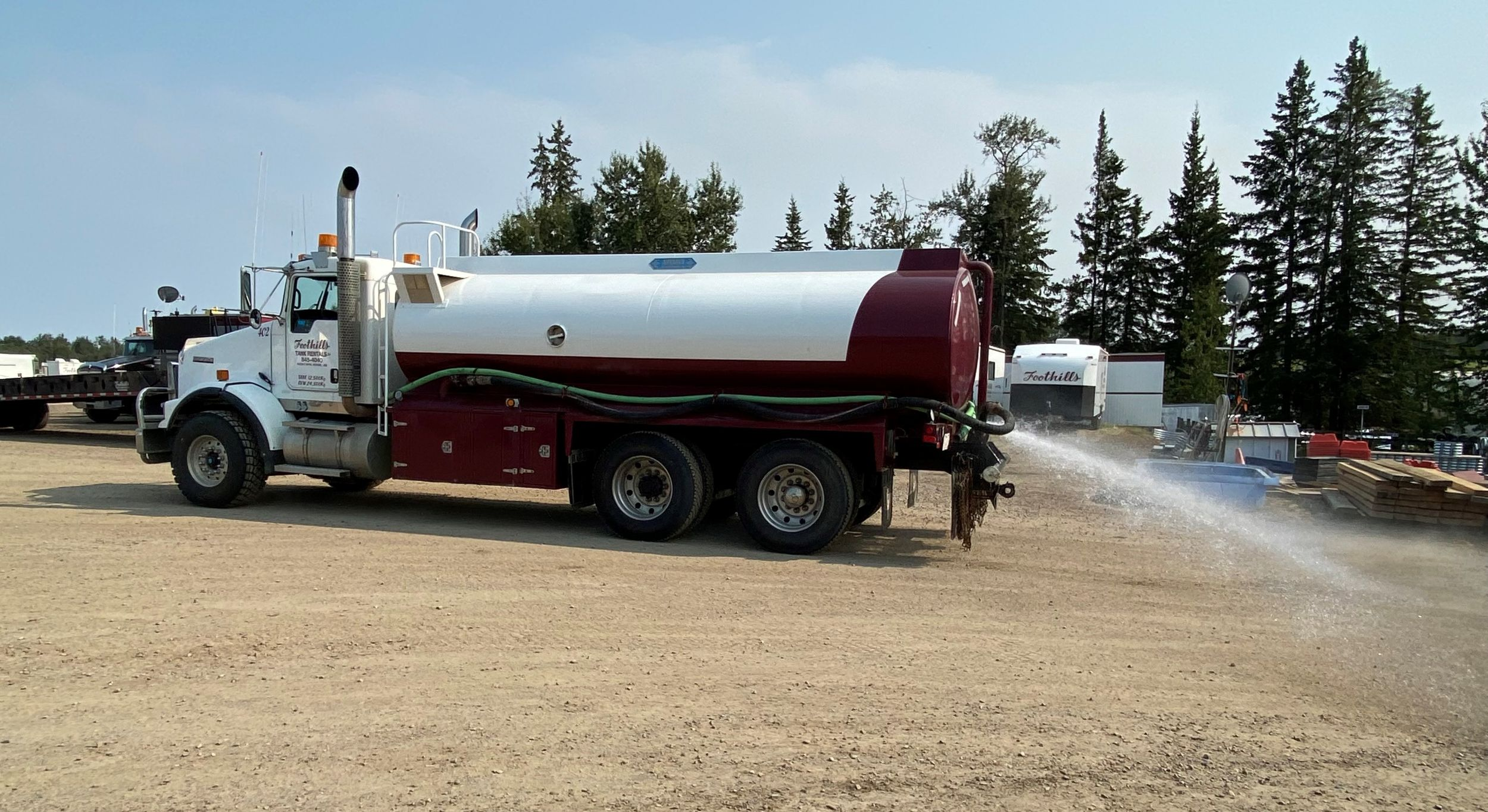
Water trucks are versatile heavy-duty vehicles with large water tanks specifically for dust suppression. Ranging in size from 2,000 to over 4,500 gallons, these trucks can spray water onto road surfaces, work areas, and stockpiles using an integrated system of spray bars, hoses, and nozzles.
By driving slowly across a site and wetting the ground, water trucks can control dust without stopping work or movement of other equipment. The frequent application of water helps keep fugitive dust under control on high-traffic unpaved roads and work areas throughout a site.
Advantages of Using Water Trucks for Dust Suppression
There are several benefits to choosing water trucks as a dust control method. With spray nozzles and pumps that can apply water at up to 500 gallons per minute, trucks provide a highly cost-effective and efficient way to control dust across large job sites.
By keeping fine soil particles moist and bound to the surface, water trucks help reduce dust emissions that could impact the health and safety of workers and nearby communities. They also maintain humidity levels to prevent dust from becoming airborne.
Water trucks are a practical solution for construction companies seeking an effective yet simple way to control dust on their sites.
Effective Dust Control Techniques Using Water Trucks
There are different methods water trucks can employ to control dust on construction sites. Understanding the proper techniques helps ensure fugitive dust issues are consistently addressed.
Direct Application of Water Spray
Trucks drive slowly across sites, spraying water from spray bars and nozzles to wet soil particles and road surfaces.
Frequent spraying keeps surfaces moist and prevents dust from becoming airborne due to vehicle traffic and other activities.
Nozzles can be adjusted to control the water application rate, applying the right amount for the conditions.
Spray coverage extends to stockpiles, loading areas, and other surfaces prone to dust emissions across job sites.
Direct water application maintains humidity levels and keeps fine particles from becoming airborne dust.
Wetting Agents and Additives for Enhanced Dust Suppression
Certain wetting agents added to water in truck tanks can improve dust suppression capabilities. Some products allow water to penetrate drier surfaces for longer-lasting moisture.
This helps control dust emissions from construction activities over entire shifts. Wetting agents also reduce the water amount needed for effective control.
Effective Water Truck Application Methods
To maximize dust suppression results, water trucks must be operated with careful attention to application techniques. Adjusting the water flow and spray patterns can help tailor control to specific site conditions.
Tailored Water Distribution Patterns
Water trucks are equipped with an array of spray nozzles that allow for flexible coverage of job sites. Nozzle patterns can be adjusted to target high-traffic roads, loading areas, and other surfaces where dust accumulates.
Truck operators develop spray routes to efficiently wet these priority zones while minimizing the over-spray of vegetation. Tailoring the spray distribution specifically to each construction site’s needs improves fugitive dust control.
Adjusting Water Flow Rates for Effective Dust Control
The water flow pumped through spray nozzles is another important variable operators manipulate. Higher rates around 500 gallons per minute are well-suited for heavy-duty dust suppression but can oversaturate some soils.
Testing various flow levels helps determine the minimum amount needed to humidify surfaces without creating mud or puddles. Making real-time adjustments as site conditions change ensures fugitive dust is controlled without excess water usage. Proper flow calibration conserves resources for enhanced cost-effectiveness.
Frequently Asked Questions (How Many Gallons Of Water Does a Water Truck Hold?)
Tanker trucks, also known as water tank trucks, offer varying tank sizes with capacities ranging from 2,000 to 8,000 gallons, making them ideal for efficiently filling swimming pools of different sizes.
Water tank trucks, available in various types, operate in diverse settings, such as filling swimming pools, addressing water shortages, and supporting construction projects. Their different tank capacities cater to specific needs.
Water trucks with spray heads efficiently disperse water for various purposes, including mitigating water shortages. Their adaptability and higher capacity make them valuable assets in critical situations.
The cost of operating water trucks depends on fuel, maintenance, and driver expertise. Skilled drivers play a crucial role in ensuring the efficient use of water trucks and minimizing operational costs.
Water tanks are vital in addressing water shortages by providing a storage solution within water trucks. With varying capacities and types, these tanks efficiently store and transport large quantities of water to areas facing scarcity, offering a crucial solution.
Looking for Equipment?
Compare rates from dozens of companies in less than 3 minutes.
Meta Description: A comprehensive guide to renting water trucks, covering factors to consider, choosing the right model, inspection procedures, and optimizing the rental experience.
Renting the right water truck is essential for construction and farming businesses that require heavy water transportation but don’t want the long-term commitment of ownership.
This guide will help you understand the various factors when renting a water truck, from determining your specific requirements to choosing a reputable rental supplier. Whether you need to haul water for a short-term project or on an ongoing basis, following the best practices covered here will ensure your rental experience runs smoothly.
Key Takeaways:
Renting a water truck is a cost-effective option for short-term needs versus ownership
Properly assess your project requirements, budget, and supplier options before finalizing a rental
Inspect the truck thoroughly, receive safety training, and maintain communication with the rental company
Choosing a reputable supplier with a variety of models and maintenance support optimizes your rental experience
What is a Water Truck?
A water truck, a tanker truck, or wet line truck is a specially designed heavy equipment vehicle with a large liquid-hauling tank that can hold thousands of gallons of water.
Water trucks are used across many industries like construction, mining, agriculture, and fire prevention to transport water from a nearby source to job sites that require reliable water supply.
Renting a Water Truck
When construction and farming businesses need heavy water transportation but don’t want the commitment of ownership, renting a water truck is often the best option.
Factors to Consider When Renting a Water Truck
Some important considerations for choosing a rental include the duration of use, budget, job site requirements, truck size, and capabilities needed to navigate various terrains. The tank size and flow rates must match the project’s water needs.
Advantages of Renting
Access to the latest models – Rental companies maintain fleets of new water trucks so you get the best technologies and features.
Avoid high upfront costs – Renting does not require a large down payment like purchasing. This makes it suitable for businesses balancing operational costs.
Meet temporary/short-term needs – Renting is cost-effective for temporary use at construction sites or short-term projects lacking a nearby water source.
Reduce maintenance costs – Rentals eliminate expenses for repairs, maintenance, storage, and disposal at the end of life.
Test vehicles first – Renting allows testing water trucks on job sites before making an informed decision about purchasing specific models.
Situations Where Renting Makes More Sense
There are certain situations where renting a water truck is often a better option than purchasing:
Temporary/short-term projects: Renting is cost-effective for job sites or construction sites requiring a reliable water supply for a limited time.
Frequent change of location: For mining, agriculture, or other industries where work takes place across various locations, renting avoids the costs of relocating a purchased vehicle.
Testing vehicles: Renting allows businesses to test different water truck models and determine the right vehicle with the right tank size, spray nozzles, and off-road capabilities before making an informed purchasing decision.
Avoid surplus capacity: If a business needs to transport water only for a few projects each year, renting is preferable to owning a water truck with excess liquid-hauling capacity sitting idle most of the time.
Access to the latest technologies: Rental companies maintain late-model fleets with additional features like airborne particle control systems and hose reels, ideal for the best dust control on job sites.
Determining Your Water Truck Needs
To rent the right water truck, businesses must evaluate their specific requirements carefully. Proper assessment of needs upfront ensures the rental meets expectations.
Estimating the Duration of Use
The length of the project impacts the rental duration. Short-term construction sites or temporary projects lasting less than two months often find renting more practical than ownership.
Assessing Your Budget
Companies must consider the budget to find a vehicle within their means. Larger tank sizes and additional features like spray nozzles or hose reels may be needed to complete jobs faster, maximizing profits over the long run.
Evaluating the Job Requirements
Job sites in rural areas far from water sources have different needs than mining operations. Requirements like tank size, flow rates, and off-road capabilities must match the water transportation and distribution needs.
Choosing the Right Water Truck Model
Evaluating different models available is an important consideration for any water truck rental.
Variables that Impact Water Truck Size
The amount of water needed daily, the distance to be transported, and job site conditions must be assessed to determine the optimal tank size and liquid hauling capacity.
Additional Specifications to Consider
Features like spray nozzles, hose reels, and off-road capabilities suitable for the terrain must be evaluated. Warning lights and airborne particle control systems may also be required for dust control on job sites.
Test Driving Options
Rental companies allow potential renters to test different truck models on their work conditions before signing agreements. This hands-on evaluation of size, features, and maneuverability helps finalize the best water truck for the project’s requirements.
Inspection, Documentation, and Training Procedures
Before taking delivery of a rented water truck, following proper protocols is important for the safety and protection of all parties.
Inspecting the Rental Truck
A thorough check of the vehicle is conducted with the rental company representative. Customers closely examine the tank, spray nozzles, hoses, and other liquid-hauling or distribution equipment.
Documenting the Truck’s Condition
Customers photograph or video the truck’s condition and note any existing defects. This provides a record to reference during return inspection and ensures proper condition is documented upfront.
Ensuring Staff Safety Training
Rental companies offer on-site guidance on safely operating all heavy equipment, features, and controls. This training minimizes risks for workers at job sites and prevents accidents or injuries during use.
Insurance, Maintenance, and Support
Ensuring protection and support is critical for any heavy equipment rental.
Clarifying Insurance Responsibilities: Customers must understand if the rental company insures the vehicle or if their commercial policy is responsible in case of any damage to the water truck during use.
Rental Company Maintenance Services: Regular maintenance keeps the water truck in peak operating condition. Many rental providers offer maintenance plans to service equipment between rentals and minimize downtime.
Availability of Technical Support: Should any issues arise during use, rental companies provide support to resolve problems quickly. This total confidence in after-sales support is important for customers.
Optimizing Your Water Truck Rental Experience
With proper planning and supplier selection, rental customers can maximize value.
Tips for a Smooth Rental Process
Have clear requirements and budgets determined in advance. Inspect equipment thoroughly and receive training before use. Maintain open communication with the rental company throughout the project duration.
Strategies for Choosing a Reputable Supplier
Consider companies with large fleets of water trucks in various sizes and models for all needs.
Check reviews and references from past customers for reliable and well-maintained equipment.
Inquire about the level of technical support and maintenance plans for total confidence in after-sales service.
Choose suppliers with years of experience in various industries like construction, mining, and fire prevention who understand unique job site challenges.
Frequently Asked Questions (How Many Gallons Of Water Does a Water Truck Hold?)
Tanker trucks, also known as water tank trucks, offer varying tank sizes with capacities ranging from 2,000 to 8,000 gallons, making them ideal for efficiently filling swimming pools of different sizes.
Water tank trucks, available in various types, operate in diverse settings, such as filling swimming pools, addressing water shortages, and supporting construction projects. Their different tank capacities cater to specific needs.
Water trucks with spray heads efficiently disperse water for various purposes, including mitigating water shortages. Their adaptability and higher capacity make them valuable assets in critical situations.
The cost of operating water trucks depends on fuel, maintenance, and driver expertise. Skilled drivers play a crucial role in ensuring the efficient use of water trucks and minimizing operational costs.
Water tanks are vital in addressing water shortages by providing a storage solution within water trucks. With varying capacities and types, these tanks efficiently store and transport large quantities of water to areas facing scarcity, offering a crucial solution.
Looking for Equipment?
Compare rates from dozens of companies in less than 3 minutes.
Meta Description: A dump truck is a heavy-duty vehicle for transporting and unloading materials. Learn about dump trucks’ different types, components, and uses in construction, mining, waste management, and other industries.
Dump trucks are indispensable heavy machinery used across multiple industries for transporting and hauling large amounts of materials. This article will explore the different types of dump trucks, their key components, and their uses in construction, mining, waste management, and other sectors.
We will also look at factors to consider for dump truck maintenance and safe operation. By the end, readers will comprehensively understand these versatile vehicles and their crucial role in various industries.
Key Takeaways:
Dump truck liners play a crucial role in off-highway dump trucks, protecting the dump body mounted on the truck chassis.
Several dump truck configurations, including off-road dump trucks, tipper trucks, and tractor-trailer combinations, rely on these liners to transport materials and carry heavy loads.
Dump truck manufacturers offer axle configurations and bottom dump mechanisms to suit different needs.
Some trucks have horizontal hydraulic rams to haul excess snow, while others use side dump trailers to transport heavy household appliances.
Main Applications and Uses of Dump Trucks
Dump trucks have proven extremely versatile heavy machinery with various applications across multiple industries. Some of the main uses of dump trucks include transporting construction materials, hauling excavated dirt and demolition waste, clearing snow, hauling excess materials, and transporting agricultural products.
A thorough understanding of dump trucks, their types, components, maintenance needs, and uses in different sectors is essential.
Types of Dump Trucks
Several types of dump trucks serve different purposes based on their design, size, and capabilities. The most common configurations include standard, super, winter weather, transfer, side, haul, semi-trailer, bottom dump, end dump, and articulated models. Depending on the application, these heavy-duty vehicles can carry many loose materials and loads.
Standard Dump Truck
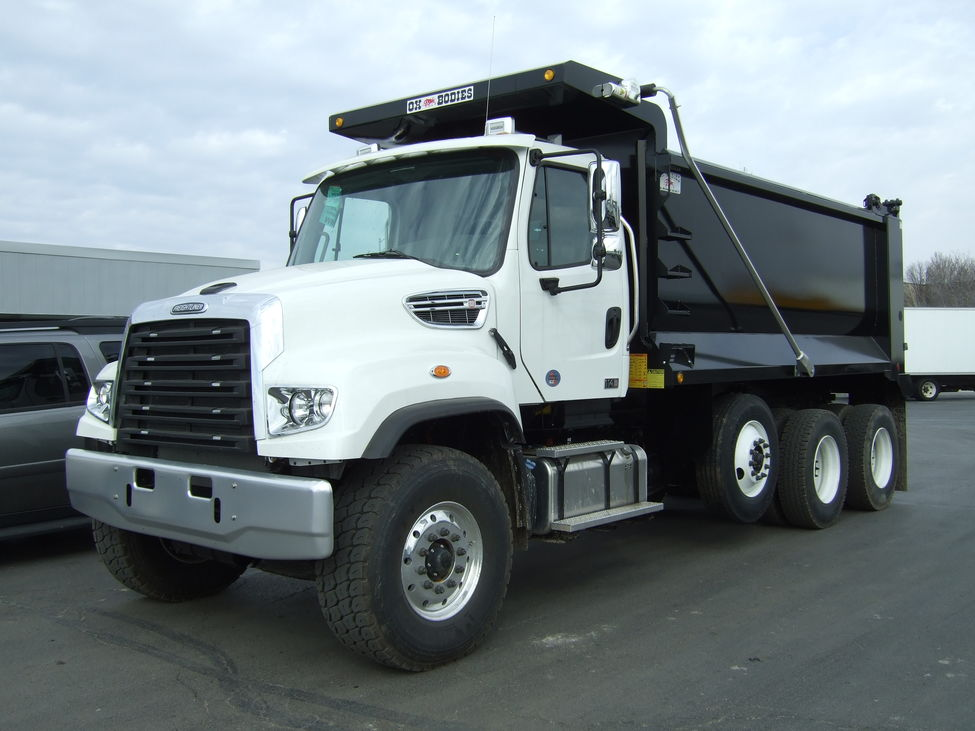
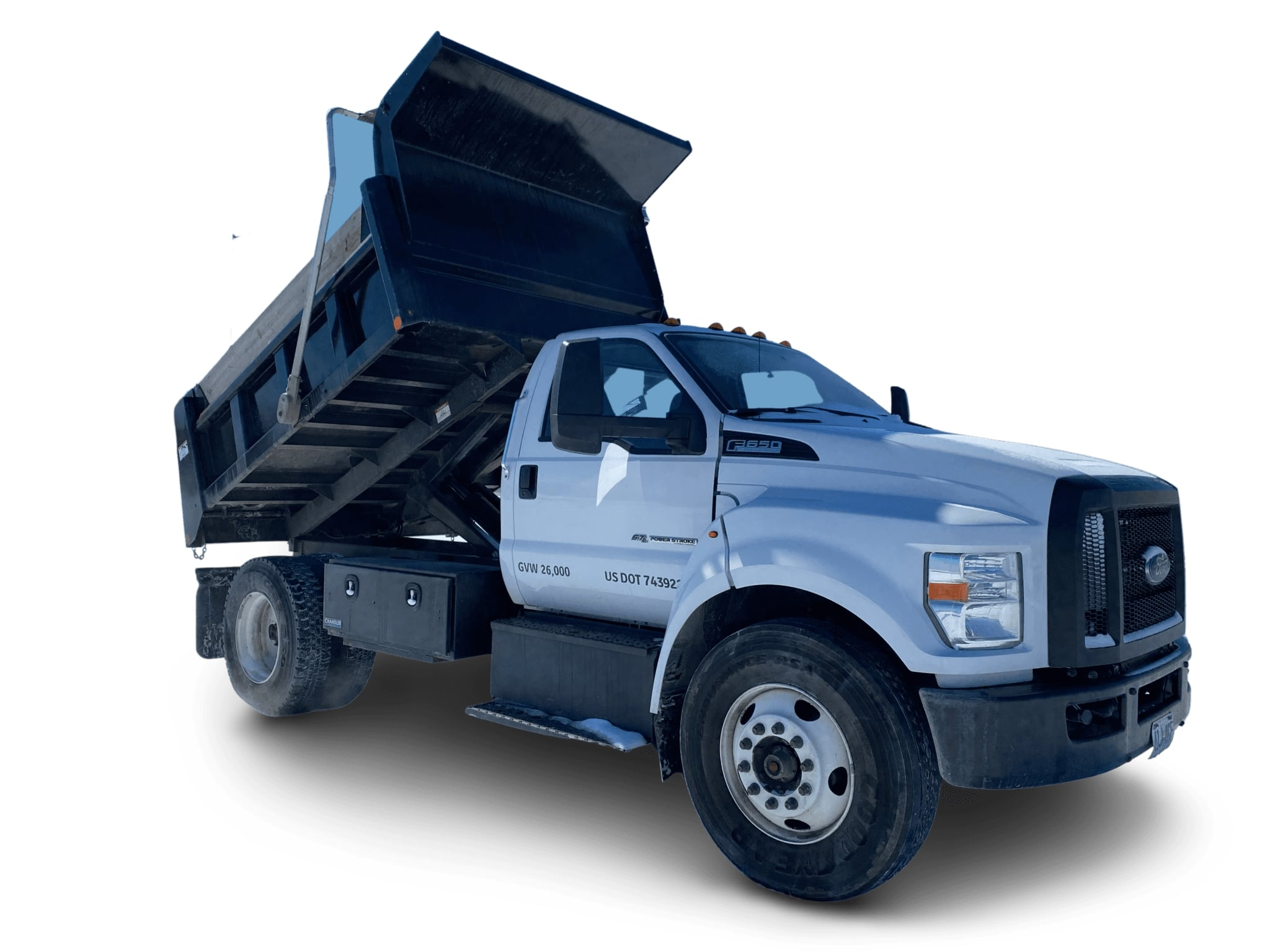
Standard dump trucks are versatile vehicles commonly seen in construction, road building, landscaping, and agricultural operations. Equipped with hydraulic systems for lifting the front of the dump box, they efficiently transport material loads.
Super Dump Truck
Super dump trucks are larger semi-trailer combinations with additional trailing axles for increased hauling capacity. The axles can be lifted to reduce taxes when empty and engaged when fully loaded using hydraulic mechanisms.
Winter Weather Dump Truck
In colder regions, winter weather dump trucks are often fitted with snowplow blades and carry salt or de-icing materials for snow removal tasks. Their ability to function as snow-clearing vehicles makes them useful in areas with heavy snowfall.
Transfer Dump Truck
Transfer dump trucks have a modified dump body that can shift loads between the truck and a separate trailer using a hydraulic system. This allows transporting materials while keeping the trailer stationary at the destination.
Side Dump Truck
Side dump trucks consist of semi-truck and trailer combinations fitted with hydraulic mechanisms.
They can efficiently unload materials from the side of the dump body.
This allows faster dumping and transporting of heavy loads, making these suitable for hauling tasks.
Side dump trailers are also available to haul heavy loads on construction sites and mining operations.
Haul Dump Truck
Haul dump trucks are large-capacity vehicles for transporting 40-400 tons of material in a single load. They are equipped with robust hydraulic systems to lift the front of the dump body or rear ejection mechanisms.
Due to their massive size, haul trucks are mainly used for heavy-duty applications on construction sites and mines requiring high payloads.
Semi-truck Trailer Dump Trucks
Semi-truck trailer dump trucks consist of standard semi-trucks for hauling trailers specifically outfitted for dumping. Hydraulic pistons are strongly built to withstand heavy loads and lift the front portion of the trailer to discharge cargo out the rear.
Care is important during unloading to prevent damage to the hydraulic rams. Varieties include end dump and bottom dump configurations for efficient material discharge.
End Dump Truck
End dump trucks are semi-trailer combinations where the trailer is specifically outfitted for dumping materials from the rear end. Strong hydraulic pistons integrated into the trailer lift the front portion to discharge cargo out the back.
Careful handling is important when operating horizontal hydraulic rams to avoid damage during unloading. These robust configurations suitably transport and discharge heavy construction materials over long distances.
Bottom Dump Truck
Bottom dump trucks feature a unique trailer design that allows efficient unloading of cargo through the bottom opening of the dump body. A hydraulic mechanism lifts the entire floor of the trailer to discharge materials.
These are commonly used for transporting bulk commodities like grains, gravel, and fly ash to different locations while ensuring minimal residual material is left inside after emptying. The bottom dump configuration makes discharge faster over other trailer types.
Articulated Haul Dump Truck
Articulated haul dump trucks feature innovative engineering with a pivoting frame, allowing these large vehicles to maneuver in tight spaces. They are commonly used for heavy lifting tasks in mining and large construction projects.
These massive trucks have high payloads and are well-suited for transporting excavated materials on rough terrain.
Largest Dump Trucks
The Belaz 75710 holds the Guinness World Record title for the largest dump truck, with an immense payload capacity of 496 tons. Its heavy-duty construction and enormous tires enable it to carry loads many times heavier than most standard dump trucks.
Such huge models are purpose-built to serve large-scale mining, tunneling, and heavy infrastructure projects’ unique needs.
Components of Dump Truck
Dump trucks comprise several important components that work together to enable efficient hauling and transportation of materials.
The key constituents include the chassis, engine, transmission system, axles, braking mechanism, and dump body. Properly maintained, these heavy-duty parts allow dump trucks to carry out tasks smoothly.
1. Chassis
The chassis forms the backbone of a dump truck, providing a sturdy frame to mount the other components. It is usually made of steel to withstand heavy loads.
2. Engine
Dump truck engines require high torque output to haul heavy loads. Common options are diesel engines with capacities ranging from 300 to 500 horsepower for standard trucks and up to 1000+ horsepower for larger models. The engine powers the drivetrain through a transmission system.
3. Transmission
A robust transmission system is required to handle the high torque from the engine. Common types include manual or automatic transmissions with multiple gears to deliver optimum performance under varying load conditions.
4. Braking system
Effective brakes are crucial for safely stopping or slowing down heavy-duty vehicles. Common brake types fitted are air brakes or hydraulic brakes with drum or disc configurations on all axles for short and controlled stopping distances.
5. Tires
Tires are a critical component for dump trucks as they bear the weight of cargo and chassis on various terrains. Heavy-duty radial tires suitable for withstanding high loads are commonly used. Dual tires may be fitted on drive axles for increased traction. Regular inspection and maintenance help maximize tire life.
6. Hydraulic System
Sophisticated hydraulic systems powered by pumps and rams enable dump bodies’ lifting and tilting operations. Cylinders precisely control the elevation and dumping angles depending on the material. Proper hydraulic fluid levels and leak-free fittings are important for smooth operations.
7. Dump Body
The dump body provides the cargo space for hauling materials. Various designs include side-opening, bottom-opening, or rear-opening styles. Durable construction using materials like steel or aluminum allows for handling heavy loads. Corrosion-resistant coatings protect the body in harsh conditions.
Industries Using Dump Trucks
Dump trucks are indispensable heavy machinery used across multiple industries for hauling and transporting various materials. Here are some of the key sectors utilizing dump trucks:
Construction
The construction industry relies heavily on dump trucks for tasks like transporting gravel, sand, cement, and demolition debris to and from construction sites. Their ability to carry bulky loads over rough terrain makes dump trucks well-suited for infrastructure and road-building projects.
Mining
Mining operations use large fleets of dump trucks of all types for shifting excavated ores and rocks within mine sites.
Haul trucks capable of carrying 100 tons or more are commonly deployed for moving materials like coal, iron ore, bauxite, and limestone. Their high power and reliability in harsh conditions meet the rigorous demands of the mining sector.
Landscaping
Landscaping, gardening, and yard maintenance companies utilize dump trucks loaded with topsoil, mulch, and other landscaping materials. They efficiently transport the supplies and remove excavated soil from projects. Compact dump trucks are convenient for urban landscaping tasks.
Agriculture
Farmers transport grains, fertilizers, feed, and bulk commodities using dump trucks. Models with grain-friendly dump bodies prevent spillage. They are useful for hauling harvested crops, soil, and other materials within agricultural fields and facilities.
Transportation
Transportation agencies utilize dump trucks for various purposes, including hauling asphalt and gravel for road repairs and maintenance. Snow removal dump trucks fitted with plow blades help clear roads during winter. Larger models are used to transport freight and cargo containers.
Waste Management
Waste management is another key sector employing dump trucks. These vehicles efficiently collect, transport, and unload demolition debris, landfill waste, and household garbage. Specialized configurations with compactor bodies or roll-off containers suit the needs of municipal waste haulers. Dump trucks play an important role in waste disposal and recycling operations.
Frequently Asked Questions (How Many Gallons Of Water Does a Water Truck Hold?)
Tanker trucks, also known as water tank trucks, offer varying tank sizes with capacities ranging from 2,000 to 8,000 gallons, making them ideal for efficiently filling swimming pools of different sizes.
Water tank trucks, available in various types, operate in diverse settings, such as filling swimming pools, addressing water shortages, and supporting construction projects. Their different tank capacities cater to specific needs.
Water trucks with spray heads efficiently disperse water for various purposes, including mitigating water shortages. Their adaptability and higher capacity make them valuable assets in critical situations.
The cost of operating water trucks depends on fuel, maintenance, and driver expertise. Skilled drivers play a crucial role in ensuring the efficient use of water trucks and minimizing operational costs.
Water tanks are vital in addressing water shortages by providing a storage solution within water trucks. With varying capacities and types, these tanks efficiently store and transport large quantities of water to areas facing scarcity, offering a crucial solution.
Looking for Equipment?
Compare rates from dozens of companies in less than 3 minutes.
Meta Description: Explore the differences between on-highway and off-highway dump trucks and understand their capabilities. Learn about payload capacities, maneuverability, and intended applications to determine the best option for your hauling needs.
This article provides an in-depth look at the key differences between on-highway and off-highway dump trucks.
Whether you need to haul materials on public roads or rugged job sites, it’s important to understand how each truck type is designed and what it can handle.
We’ll explore factors like payload capacities, maneuverability, and intended applications to help you determine which option best suits your needs and workload.
Key Takeaways:
Understanding the differences between on-highway and off-highway dump trucks is crucial for selecting the right equipment for specific tasks.
Off-highway trucks, such as articulated dump trucks and rigid frame trucks, are designed for rugged terrains and harsh ground conditions.
Articulated trucks offer improved fuel efficiency and maneuverability, while rigid frame trucks provide stability and durability.
Factors such as rear tandem axles, trailer dumps, dump bodies, wheel loaders, and well-maintained equipment impact the performance of these vehicles.
Categorization of Dump Trucks
Dump trucks are typically divided into two categories – on-highway trucks designed for work on roads, highways, and job sites and off-highway models like articulated dump trucks and rigid haul trucks engineered for mining, construction, and other industries involving uneven terrain and harsh ground conditions.
On-Highway Dump Trucks
On-highway dump trucks are designed to carry loads on roads, highways, and job sites.
Standard dump trucks: Standard dump trucks have a hydraulically adjustable bed and a relatively small wheelbase, making them well-suited for maneuvering on highways and congested job sites.
Super dump trucks: Super dump trucks, also called “super dumps,” have additional axles, including a moveable trailing axle and a liftable load-bearing axle. This allows them to distribute weight over a larger area for higher hauling capacities of up to 26 tons.
Transfer dump trucks: Transfer dump trucks are another way to increase payload capacity. They attach a detachable dump trailer, which does not have its controls but remains attached to the dump. This allows carrying two types of materials without mixing.
Truck and pup configurations: Truck and pup configurations essentially function the same as transfer dump trucks, with one key difference – the detachable pup trailer can stand alone dumping via its controls. This allows for hauling separate materials without mixing them.
Winter service vehicles: Some on-highway dump trucks are configured as winter service vehicles for plowing and spreading salt or other de-icers along roads and highways. While visually resembling standard dump trucks, they primarily spread material in transit rather than hauling loads between locations.
Trailer dump trucks: Trailer dump trucks include semi-trailer end dumps and bottom dumps, which have a detachable two-axle trailer to increase payload capacities. Double and triple trailer bottom dumps also use a two-axle configuration, allowing them to haul large quantities of material across various job sites and between mining operations despite being less maneuverable.
Side dump trucks: Side dump trucks provide benefits like faster material unloading than rear dump options. They allow dumping material to the side, improving efficiency on job sites with space or terrain constraints versus trucks that dump only from the rear.
Key Specifications and Manufacturers
On-highway dump trucks typically have payload capacities in the 20-30 ton range, with standard models suited for smaller job sites and super dumps able to carry over 26 tons.
Manufacturers of these trucks include Mack, Peterbilt, Kenworth, Freightliner, and Western Star, allowing buyers a variety of options from major brands.
Trailers enable increased payloads for tasks like hauling between mines, quarries, or construction sites requiring large quantities of material daily.
Side dumps provide benefits like faster unloading for applications needing efficient material dispersal on job sites with terrain or space constraints.
Winter service vehicles spread salt, sand, or other de-icers from the same truck body for efficient ice management while traveling along highways.
Standard trucks balance a relatively small wheelbase for maneuverability with a hydraulically adjustable bed, while super dumps add axles to maximize hauling capacities.
Various trailer configurations haul material between mining operations and industries, utilizing two-axle designs to optimize payload on rough terrain.
Off-Highway Dump Trucks
Off-highway dump trucks are purpose-built for hauling tasks in mining, construction, and other industries that require transporting materials on uneven terrain and non-maintained roads.
Articulated Dump Trucks (ADTs)
ADTs have an articulating center joint, allowing them to easily maneuver roughly packed ground conditions. This comes at the cost of payload capacity compared to rigid frame options, with most ADTs hauling 25-45 tons versus the heavier loads of rigid trucks.
Rigid Haul Trucks
Rigid haul trucks maximize payload potential, with even the smallest models capable of carrying around 60 tons. The largest rigid frame options can haul up to 500 tons of material. They are exclusively used in mining operations requiring large quantities of ore or minerals.
Applications and Load Capacities
ADTs are suited for construction jobs like earthmoving and grading uneven terrain.
They are also used for mining tasks like transporting ore within quarries and between sites.
Rigid haul trucks carry heavy loads of coal between mining operations.
Both ADTs and rigid trucks haul aggregates from extraction areas for road building.
ADTs are applied to transport waste in landfills and disposal facilities.
Manufacturers of ADTs and Rigid Haul Trucks
Major brands like Caterpillar, Liebherr, and Volvo Construction Equipment supply ADTs with up to 60 tons of load capacity to handle mining, quarrying, and construction hauling needs across varied ground conditions and work environments.
Meanwhile, manufacturers such as Caterpillar, Belaz, and Terex provide rigid-frame trucks capable of carrying extremely large payloads on mining sites and between facilities.
Differences in Driving and Hauling Capabilities
When choosing between on-highway and off-highway dump trucks, it’s important to consider how each type’s design impacts maneuvering loads on the job.
Maneuverability
Off-highway ADTs excel at navigating roughly packed ground conditions thanks to their articulating center joint, though rigid frame trucks lack this flexibility.
On-highway models like standard and super dumps are well-suited to winding job sites and congested work zones with relatively small wheelbases. Buyers should evaluate the terrain and space constraints of their operations.
Maximum Load Capacities
Rigid frame trucks can haul the largest payloads of up to 500 tons for moving bulk materials in mining.
On average, ADTs transport 25-45 tons per load to work sites with uneven terrain.
Standard on-highway models carry 20-30 tons of cargo between job locations.
Super dump trucks maximize this capacity at over 26 tons via additional axles.
Trailer configurations increase hauling abilities, with triple-trailer models moving large quantities.
Intended Work Environments
On-highway vehicles are suited to maintained roads and highways connecting job sites for construction and road building. Meanwhile, off-highway ADTs and rigid trucks tolerate harsh conditions to efficiently transport cargo within mining operations and between facilities handling bulk materials on rough terrain.
Body Configurations
The type of body directly impacts a dump truck’s capabilities.
Fixed-body Trucks vs Tractors
Tractors haul detachable trailers, allowing for standalone dumping of separate loads.
Fixed-body trucks integrate the cargo box as one unit for faster dumping cycles.
Trailers increase the maximum allowable length for carrying larger quantities.
Fixed bodies offer greater maneuverability due to their compact size.
Tractors require detachable trailers but provide flexibility to haul various types.
Maintenance is simpler for fixed-body models with integrated systems.
Dumping Mechanisms
Dump bodies use hydraulic, electric, or mechanical systems to discharge loads efficiently. Rear, side, and bottom dumping options suit diverse material types and job conditions.
Choosing the Right Truck Type
Selecting the optimal dump truck involves evaluating several factors specific to the intended application and work environment.
Factors to Consider When Choosing the Right Truck Type
One of the primary factors to consider is the type of terrain where the truck will operate. Off-highway dump trucks like articulated and rigid haul models are well-suited to uneven, roughly packed ground conditions common in mining and heavy construction. Their larger tires and suspension systems can withstand harsher terrain than standard on-highway trucks.
The hauling capacities and payload requirements of the job are also important. Rigid frame trucks maximize payload potential for bulk material transport, with capacities reaching 500 tons, while ADTs haul slightly less but offer better maneuverability.
Applications requiring smaller, more frequent loads under 50 tons are well-served by standard or super dump trucks.
The distances involved in truck routes and whether the vehicle needs to traverse maintained roads or highways also influence the decision.
On-highway trucks connect job sites and permit travel between locations on public roads. Off-highway models stay within operation boundaries and non-maintained haul roads.
The type of material being transported is another factor – loose materials like sand, gravel, and ore suit rear and bottom dumping.
In contrast, liquid or fine materials are better suited to rear discharge. The size and space constraints on job sites also determine if rear, side, or bottom dumping is preferable.
Frequently Asked Questions (How Many Gallons Of Water Does a Water Truck Hold?)
Tanker trucks, also known as water tank trucks, offer varying tank sizes with capacities ranging from 2,000 to 8,000 gallons, making them ideal for efficiently filling swimming pools of different sizes.
Water tank trucks, available in various types, operate in diverse settings, such as filling swimming pools, addressing water shortages, and supporting construction projects. Their different tank capacities cater to specific needs.
Water trucks with spray heads efficiently disperse water for various purposes, including mitigating water shortages. Their adaptability and higher capacity make them valuable assets in critical situations.
The cost of operating water trucks depends on fuel, maintenance, and driver expertise. Skilled drivers play a crucial role in ensuring the efficient use of water trucks and minimizing operational costs.
Water tanks are vital in addressing water shortages by providing a storage solution within water trucks. With varying capacities and types, these tanks efficiently store and transport large quantities of water to areas facing scarcity, offering a crucial solution.
Looking for Equipment?
Compare rates from dozens of companies in less than 3 minutes.
Meta Description: Discover effective maintenance practices for dump trucks. Learn about daily checks, fluid levels, tire inspection, brake checks, lighting system inspection, and battery maintenance to maximize uptime and ensure safety.
Dump trucks are essential machines for transporting goods at construction sites and mines. As these heavy-duty vehicles work under demanding conditions, their maintenance is crucial. This article provides guidance on effective maintenance practices for dump trucks.
You will learn techniques to keep your fleet well-maintained, from daily checks to preventive maintenance. Following the best practices can maximize uptime, productivity, and the overall life of your dump trucks.
Key Takeaways:
Dump truck maintenance can be simplified by regularly performing all the maintenance checks, including under the dump truck’s hood and the hydraulic system.
Regular inspection of dump truck tires is essential for ensuring the truck’s traction and stability, especially when lifting heavy loads.
A preventive maintenance program is crucial for keeping your truck in top condition and extending its life.
Maintaining a clean dumper body and ensuring that all dump truck parts work effectively is essential to protect your significant investment in construction equipment.
Daily Maintenance Checks
Daily maintenance checks play a crucial role in maximizing the uptime of dump trucks while minimizing maintenance costs. These routine tasks ensure minor issues don’t escalate into costly repairs and safety hazards.
Fluid Levels
One of the most critical activities is inspecting fluid levels. Proper engine oil, coolant, brake fluid, and hydraulic fluid levels are essential for smooth operations.
Low fluid levels can damage engines and hydraulic systems and lead to brake failures. It is advisable to check the fluids using the owner’s manual as a guide to know the recommended levels.
Tire Inspection
Tire inspection is another essential part of daily checks. The tires provide traction and stability to heavy dump trucks that carry loads over rough terrain. Ensuring proper tire pressure prevents uneven tire wear and potential blowouts. Examining tire treads helps identify any signs of damage, cracks, or uneven wear patterns early on.
Replacing worn tires on time avoids accidents and unplanned downtime. The owner’s manual and maintenance history can refer to the required tread depth and pressure for different load and speed conditions. Regular inspections protect the safety of drivers and prevent traction and stability issues.
Brake Checks
Regular brake checks ensure driver safety and prevent accidents. Faulty brakes can lead to expensive repairs and delays in transportation schedules. Daily visual inspection of brake pads, fluid level, and brake line conditions is recommended.
Checking for worn pads, leaks, and corrosion helps catch issues before brakes fail. This protects the fleet and avoids costly downtime for brake repairs and replacements. The owner’s manual guides minimum pad thickness and fluid levels.
Lighting System Inspection
Proper lighting is essential for dump truck safety, especially in low visibility conditions. Daily checks of headlights, tail lights, turn signals, and warning lights help meet regulatory requirements.
Inspecting wiring, bulbs, and electrical connections prevents sudden lighting failures. This ensures clear visibility and communication with other vehicles on the road, avoiding accidents.
Battery Checks
The batteries are critical for engine starting and powering ancillary systems like hydraulic mechanisms. Daily inspection prevents starting problems and hydraulic failures from weak batteries.
Checking terminals for corrosion and connections for looseness are simple tasks outlined in manuals. This maintains uptime and avoids the stranding of heavy vehicles needing jump starts.
Belt and Hose Inspection
Timely replacement of worn belts and hoses is essential for preventing breakdowns. Daily visual inspection allows for catching cracks and leaks early. Belts keep crucial components like water pumps and alternators functioning. Hoses carry fluids to maintain optimal operating temperatures. Identifying worn parts maintains engine efficiency, safety, and reliability.
Weekly Maintenance Tasks
Weekly maintenance checks play an important role in monitoring the overall health of dump trucks. These more thorough inspections catch minor issues before they become significant problems.
Engine Inspection
Check engine oil level top-up if required
Inspect the air filter and replace it if it is dirty
Check for any leaks in the engine bay
Inspect hoses and belts for cracks or wear and replace them as needed
Check coolant level and condition
Check battery terminals are clean and connections are tight
Transmission Checks
Transmissions work under heavy loads and require regular inspection. This helps catch issues in a critical component affecting the truck’s performance and safety.
Check transmission fluid level and top up if needed
Inspect the gear shifter and linkage for smooth operation
Check for leaks around transmission seals and gaskets
Inspect drive belts connecting the engine to the transmission
Check transmission breathers are not clogged
Note any unusual noises or vibrations from the transmission area
Electrical Component Checks
Weekly checks of electrical systems are critical to prevent sudden failures.
Inspect wiring, connections, and terminals for signs of damage, corrosion, or looseness
Check the operation of all lights, wipers, gauges, and dashboard alerts
Ensure no unusual drain from the battery or overheating of the alternator
Tighten loose connections and replace frayed wiring to avoid short circuits
Preventive Maintenance Log Updates
Updating the maintenance log with completed checks and notes on part conditions is important. This helps establish maintenance schedules and order replacement parts in advance to avoid downtime. The log also helps identify recurring issues for continuous improvement.
Replacement of Worn Parts
Replacing worn components detected during inspections is vital to maintain performance and safety.
Change air, oil, and fuel filters at recommended intervals
Replace belts and hoses that show signs of cracking or wear
Attend to leaks from gaskets, seals, or hoses using repair kits or OEM parts
Install new brake pads if wear indicators show minimum thickness
Monthly Maintenance Activities
Conducting thorough monthly maintenance checks is important to regularly monitor wear and replace parts. This helps catch minor issues before they escalate.
Detailed Inspection of All Systems: Technicians inspect all vehicle systems, from the engine, transmission, and differentials to the brakes, steering, and hydraulic mechanisms. They check for abnormal wear, noises, leaks, and other signs needing attention listed in maintenance manuals. This ensures continued safety and reliability of operations.
Fluid Replacement: To maintain optimal operating temperatures and efficiency, technicians change engine oil, transmission fluid, coolant, brake fluid, and hydraulic oil. They dispose of dirty fluids safely as per local guidelines.
Filter Changes: The air, fuel, oil, and hydraulic filters are replaced to maintain clean fluid flow through components. Dirty filters cause poor performance and component wear. Genuine filters safeguard investments.
Lubrication of Parts: Greasing pivot points, hinges, and other moving parts monthly with the recommended grease maintains smooth operation and corrosion protection. Lubrication schedules avoid premature wear of these components.
Frequently Asked Questions (How Many Gallons Of Water Does a Water Truck Hold?)
Tanker trucks, also known as water tank trucks, offer varying tank sizes with capacities ranging from 2,000 to 8,000 gallons, making them ideal for efficiently filling swimming pools of different sizes.
Water tank trucks, available in various types, operate in diverse settings, such as filling swimming pools, addressing water shortages, and supporting construction projects. Their different tank capacities cater to specific needs.
Water trucks with spray heads efficiently disperse water for various purposes, including mitigating water shortages. Their adaptability and higher capacity make them valuable assets in critical situations.
The cost of operating water trucks depends on fuel, maintenance, and driver expertise. Skilled drivers play a crucial role in ensuring the efficient use of water trucks and minimizing operational costs.
Water tanks are vital in addressing water shortages by providing a storage solution within water trucks. With varying capacities and types, these tanks efficiently store and transport large quantities of water to areas facing scarcity, offering a crucial solution.
Looking for Equipment?
Compare rates from dozens of companies in less than 3 minutes.
Meta Description: Discover how many tons a dump truck can haul. Learn about weight limits, payload capacity, and factors influencing hauling capacity.
Dump trucks are essential vehicles in the construction and mining industries, known for their ability to transport heavy loads of materials over short and medium distances. Their hauling capacity is crucial in determining the efficiency of operations and the overall productivity of construction and mining projects.
Understanding the factors that influence the hauling capacity of dump trucks is vital for ensuring the safe and efficient transportation of materials. This guide will explore the factors determining how many tons a dump truck can haul and the significance of adhering to weight limits for safe and effective operations.
Key Takeaways:
Understanding a dump truck’s capacity ratings, such as payload, GVWR, and axle limits, is essential for safe hauling.
Capacity depends on truck size, with larger rigid and articulated models able to transport 10-40 tons of material.
Proper load calculation prevents overloading, protects equipment, and ensures jobs are completed efficiently in the fewest trips.
Understanding a Dump Truck’s Weight Capacity
One of the most important specifications for dump trucks is their maximum weight rating. This determines how many tons of material the vehicle can safely haul on each trip. Let’s explore the key factors influencing a dump truck’s weight capacity.
Impact of Truck Size and Design
Larger dump trucks have stronger frames and heavier-duty suspensions, allowing them to carry greater loads. Full-size models typically have a weight rating between 15-30 tons, while smaller trucks mounted on pickup frames may be rated for only 1-5 tons. The manufacturer’s specifications will list the exact limit.
Effect of Material Density
While cubic yards indicate volume, tons express weight. Material density plays a big role here. For example, a truck rated for 30 tons could haul about ten cubic yards of gravel but only six cubic yards of wet concrete since concrete is denser. Always check density when calculating load weight.
Legal Weight Limits
State and federal laws regulate maximum gross vehicle weight to prevent road damage. Exceeding these limits can result in fines. Be sure to consider weight restrictions, especially if transporting loads long distances. Optimal routes may need to be planned.
Determining the Hauling Capacity of Dump Trucks
One of the most important specifications for dump trucks is their maximum weight capacity. This rating considers key factors influencing how many tons of material can be safely transported on each trip.
Payload Capacity
Payload capacity refers to the weight of the cargo itself, excluding the truck weight. This is usually listed in tons and determined by the vehicle’s frame, suspension, and engine specifications. Larger trucks have stronger components, allowing higher payload capacities of 15-30 tons, while smaller trucks may be rated for only 1-5 tons.
Gross Vehicle Weight Rating (GVWR)
The GVWR accounts for both the payload weight and the truck’s chassis weight. It establishes the total gross weight considered safe by the manufacturer. State laws regulate maximum GVWR to prevent overloading roads.
Exceeding this rating compromises safety, accelerates component wear, and risks fines for overweight vehicles.
Axle Weight Limits
Individual axle weight limits apply and are usually lower than the overall GVWR. This ensures loads are properly distributed across axles to avoid damage. When hauling heavy cargo like gravel or dirt, axle weights must be monitored along with the GVWR.
Overloading single axles can lead to suspension failure even if the total weight is under the rating.
Examples of Dump Truck Hauling Capacity
Understanding typical hauling specifications can help determine the right equipment for transporting various materials.
Typical Tonnage Range for Standard Dump Trucks
Standard dump trucks with a single rigid frame are most commonly used to haul loose materials like gravel, dirt, and sand. Their payload capacity typically ranges between 10-30 tons depending on size, with larger models able to carry more weight.
This allows the safe transportation of multiple cubic yards of material in a single load.
Maximum Hauling Capacity for Articulated Dump Trucks
Articulated dump trucks are more maneuverable due to their segmented frame but have higher capacities of 15-40 tons. This makes them well-suited to jobs requiring greater payloads, such as moving cubic yards of pea gravel or other dense materials across rugged job sites.
Payload Capacity for Transfer Dump Trucks
Transfer dump trucks are dual-purpose vehicles that transport and unload material without dumping. They have lower capacities of 5-15 tons to balance mobility and hauling ability when moving loads between job locations or facilities.
Understanding typical hauling specifications ensures the right equipment is selected to transport the optimal amount of material for any job safely.
Frequently Asked Questions (How Many Gallons Of Water Does a Water Truck Hold?)
Tanker trucks, also known as water tank trucks, offer varying tank sizes with capacities ranging from 2,000 to 8,000 gallons, making them ideal for efficiently filling swimming pools of different sizes.
Water tank trucks, available in various types, operate in diverse settings, such as filling swimming pools, addressing water shortages, and supporting construction projects. Their different tank capacities cater to specific needs.
Water trucks with spray heads efficiently disperse water for various purposes, including mitigating water shortages. Their adaptability and higher capacity make them valuable assets in critical situations.
The cost of operating water trucks depends on fuel, maintenance, and driver expertise. Skilled drivers play a crucial role in ensuring the efficient use of water trucks and minimizing operational costs.
Water tanks are vital in addressing water shortages by providing a storage solution within water trucks. With varying capacities and types, these tanks efficiently store and transport large quantities of water to areas facing scarcity, offering a crucial solution.
Looking for Equipment?
Compare rates from dozens of companies in less than 3 minutes.
Meta Description: Discover strategies to improve fuel economy in dump trucks. Optimize driver behavior, route planning, and maintenance for cost savings.
Fuel efficiency is a major concern for dump truck operators seeking to reduce operating costs and boost profits. This article discusses practical strategies to improve the fuel economy of dump trucks.
We will explore how optimizing driver behavior, implementing new technologies, conducting routine maintenance checks, and refining fleet operations can all contribute to lowering fuel consumption. With a holistic approach that addresses organizational habits and truck specifications, it is possible to achieve meaningful fuel savings over time.
Key Takeaways:
Fuel efficiency is critical for dump truck operators to reduce operating costs.
Optimizing driver behavior by monitoring speeding, idling, and route efficiency can reduce fuel usage.
Regular vehicle maintenance, like checking tire pressure and implementing aerodynamic accessories, boosts fuel economy.
Leveraging telematics provides insights to enhance individual driver performance and refine fleet operations.
Improving Fuel Efficiency in Dump Trucks
Several factors influence the fuel consumption of dump trucks. Understanding these factors is key to enhancing efficiency and reducing operating costs.
Understanding Factors that Impact Fuel Consumption
The main factors affecting dump truck fuel consumption include driver behavior, vehicle specifications, load weight, terrain, weather conditions, and more. Driver actions like speed, braking habits, and idle time directly impact how much fuel is used.
Additionally, engine type, tire inflation, and aerodynamic accessories can significantly change fuel economy. Even fleet management tactics such as reducing deadhead miles and coordinating multi-stop deliveries make a difference.
By analyzing these various aspects, operators can gain insight into optimization opportunities.
Optimizing Driver Behavior
Driver habits have a significant impact on fuel efficiency. By optimizing certain behaviors, operators can reduce operating costs.
Monitoring Speed and Acceleration
How a driver accelerates and decelerates affects the fuel the engine consumes. Telematics systems allow managers to analyze speeding incidents, hard braking, and rapid acceleration, which lower mpg. Coaching drivers to drive smoothly and observe speed limits can enhance efficiency.
Managing Idling Time
Excessive periods of idling the engine while stationary are wasteful and drive up fuel usage. However, some idling is necessary when using heavy machinery. Telematics helps distinguish essential versus needless idling, saving on unnecessary fuel and lowering emissions.
Choosing Efficient Routes
Plan direct routes to minimize unnecessary distance
Avoid traffic-prone areas where possible
Consolidate multi-stop deliveries to reduce deadhead miles
Leverage job site locations for potential backhaul opportunities
By refining route efficiency, operators can reduce wasted mileage and fuel.
Vehicle Maintenance and Specifications
Regular maintenance and optimizing vehicle specs can boost fuel efficiency.
Inspecting and Maintaining Tire Pressure
Keeping tires properly inflated is crucial since underinflated tires can increase rolling resistance significantly. Tires underinflated by 10% can boost resistance by as much as 20%, wasting more fuel. Regularly checking tire pressure using a pressure gauge ensures optimum inflation to reduce drag.
Proper pressure allows tires to withstand hard braking and acceleration better, improving overall mpg. Investing in low-resistance commercial tires designed for maximum fuel efficiency can save operating costs over the long run.
Choosing Efficient Engine and Transmission Types
Opt for the appropriate engine size suited to the dump truck’s functions and load capacity. Oversized engines waste more fuel.
Diesel power tends to be the most efficient, though some models offer gas options.
Automatic transmissions allow less experienced drivers to achieve fuel economy similar to manuals. However, manuals can offer marginally better mpg when piloted skillfully.
Constant monitoring of new engine and powertrain technologies can improve efficiency over time.
Implementing Aerodynamic Accessories
Aerodynamic modifications help combat significant air resistance, which accounts for nearly half the fuel used, overcoming wind drag. Devices like trailer skirts, wheel covers, and grill shields smooth airflow and reduce fuel needs by 1-10%.
Investing in products matching your fleet can yield cost savings through enhanced mileage. Maintaining streamlined accessories also sustains optimized aerodynamics long-term.
Leveraging Technology and Data
Leveraging the power of data collection and analysis technologies provides valuable insights for optimizing operations.
Utilizing Telematics Systems
Telematics equipped with GPS tracking and diagnostic sensors give operators rich fleet data. Systems monitor real-time location, speed, idling, and fuel usage to pinpoint inefficient driving habits. Managers can access reports on each vehicle’s mileage, fuel economy, and performance over specified periods.
This helps identify top performers as well as drivers in need of additional coaching. Aggregated data also reveals high fuel use routes and job sites for reevaluation. Leveraging such deep analytics affords opportunities to enhance efficiency fleet-wide and reduce total operating costs continually.
Analyzing Driving Performance Data
Telematics provides metrics on speed, braking habits, and acceleration patterns.
Driver scores and rankings show who needs additional coaching on fuel-efficient behaviors.
Data reveals top performers to recognize and bottom performers to retrain.
Route efficiency can be optimized by comparing travel times and identifying bottlenecks.
Tracking Fuel Usage and Identifying Anomalies
Daily and monthly fuel consumption reports track usage and mpg fleet-wide.
Deviations from normal fuel efficiency are easy to spot and diagnose for potential mechanical issues.
Job site and route-specific analytics pinpoint where most fuel is spent.
This enables targeting optimization efforts at the highest impact areas to maximize savings.
Over time, tracking quantifies the impacts of changes on long-term fuel costs and efficiency.
Improving Efficiency in Fleet Operations
Strategic fleet management can optimize asset utilization and lower operating expenses.
Coordinating Backhaul Opportunities
Arrangements to pick up return cargo, like backhauling dirt from job sites, improve truck utilization. This generates revenue and eliminates deadhead miles that drive up per-mile operating costs. Leveraging technology to match loads with nearby hauling needs boost efficiency.
Reducing dead miles and boosting backhauls through coordinated fleet routing and communications enhances overall efficiency.
Frequently Asked Questions (How Many Gallons Of Water Does a Water Truck Hold?)
Tanker trucks, also known as water tank trucks, offer varying tank sizes with capacities ranging from 2,000 to 8,000 gallons, making them ideal for efficiently filling swimming pools of different sizes.
Water tank trucks, available in various types, operate in diverse settings, such as filling swimming pools, addressing water shortages, and supporting construction projects. Their different tank capacities cater to specific needs.
Water trucks with spray heads efficiently disperse water for various purposes, including mitigating water shortages. Their adaptability and higher capacity make them valuable assets in critical situations.
The cost of operating water trucks depends on fuel, maintenance, and driver expertise. Skilled drivers play a crucial role in ensuring the efficient use of water trucks and minimizing operational costs.
Water tanks are vital in addressing water shortages by providing a storage solution within water trucks. With varying capacities and types, these tanks efficiently store and transport large quantities of water to areas facing scarcity, offering a crucial solution.
Looking for Equipment?
Compare rates from dozens of companies in less than 3 minutes.
Meta Description: Explore various dump truck types and their unique features, applications, and the significance of hydraulic rams.
Dump trucks are indispensable heavy machinery used across multiple industries. They facilitate efficient transportation and handling of materials. This article provides an in-depth overview of different dump truck types used commonly.
Each type has unique configurations and applications. Understanding their features and suitability for different tasks helps select the right equipment. The outline covers all major dump truck varieties along with their usage and industry-wise importance.
Key Takeaways:
There are different types of dump trucks; each has its unique features.
Dump trucks offer versatile transportation of loose materials like rubble and building debris.
Straight dump trucks equipped with a modified dump box efficiently unload materials from the truck bed.
Haul trucks have a high gross vehicle weight rating for heavy-duty material transport.
Off-highway dump trucks operate in rugged terrains, while typical semi-end dump trucks are suited for smooth roads.
What Are Dump Trucks?
Dump trucks, or tipper trucks, are versatile heavy-duty vehicles used for transporting loose materials like sand, gravel, soil, and demolition waste.
They have an open box body called the dump body or dump box. Most dump trucks use hydraulic systems to efficiently unload or “dump” materials from the open box bed.
History and Evolution of Dump Trucks
Dump trucks have come a long way since their early inception in the late 19th century. Some of the earliest dump trucks did not even have a motor and were pulled by draft animals or tractors. In the early 20th century, dump trucks started integrating basic engine and transmission systems for self-propulsion.
By the 1920s, manufacturers like Mack Trucks began mass-producing conventional dump trucks with frame-mounted dump bodies that could be mechanically tipped to unload. In subsequent decades, dump trucks evolved with the integration of more powerful engines, advanced hydraulics for automatic dumping, increased payloads, and customized configurations for specialized industries like mining, construction, and waste management.
Today, dump trucks are high-tech machines of various types to suit diverse applications and terrains.
Main Dump Truck Types
The article now explores the key types of dump trucks used in various industries. Understanding their features and applications helps select the right equipment for different tasks.
Standard Dump Truck
The standard dump truck, or conventional dump truck, is one of the most common and versatile types. It comprises a truck chassis with a dump body mounted on the frame.
Equipped with a hydraulic system, standard dump trucks can efficiently lift the front of the dump box to unload loose materials like gravel, soil, and debris through the open rear. These trucks, sometimes called straight dump trucks, are widely used in construction, mining, landscaping, and other industries for general hauling and transporting materials.
Their maneuverability makes them suitable for job sites and smaller operations. Major dump truck manufacturers like Mack Trucks offer standard models in different wheelbase and payload configurations.
Transfer Dump Truck
A transfer dump truck consists of a standard dump truck pulling a separate movable cargo container or trailer. This allows the truck to transfer loads between the trailer and its dump box.
Major dump truck manufacturers like Mack Trucks offer transfer dump truck models that facilitate efficient transportation of materials to job sites using a tractor-trailer combination.
The transfer trailer can remain stationary at the worksite. At the same time, the truck moves loads back and forth, enabling continuous hauling and dumping of gravel, soil, demolition waste, and other construction materials.
Transfer dump trucks provide a versatile solution for internal logistics on job sites, with applications in road construction, landscaping, mining, and other industries.
End Dump Truck
An end dump truck is a tractor-trailer combination where the trailer contains its hydraulic system for automatic dumping. These trucks are also known as semi-trailer end dumps.
End dump trailers transport materials using a tractor-pulled semi-trailer configuration. They unload cargo through a tailgate that lifts the front end of the trailer using robust hydraulic pistons.
Care must be taken to avoid overloading and damaging the hydraulic system or rear axles when fully tilting the trailer to dump rubble, soil, and other heavy materials out the rear end.
End dump trucks are commonly used on construction sites for large-scale transport and dump materials like asphalt, sand, and gravel due to their high payloads and speedy unloading capability.
Side Dump Truck
Side dump trucks are a versatile type commonly used across the construction industry. These trucks consist of a tractor unit pulling a semi-trailer equipped with a hydraulic system to tilt the entire trailer body from side to side efficiently. This unique dumping mechanism allows the truck to rapidly discharge various materials from openings along the trailer’s left or right wall.
Some key advantages of side dump trucks include their ability to unload cargo without stopping completely. This makes them highly efficient for transporting and depositing bulk construction materials such as soil, sand, gravel, or asphalt on job sites.
The tilting trailer also ensures that virtually all load material can be removed, unlike rear-dumping trucks that may retain some residue.
Haul Dump Truck
Haul dump trucks, also called off-highway trucks, are among the most prominent types for heavy-duty material transport applications. With payloads ranging from 40 to over 400 tons per load, these heavy-duty trucks have significantly higher capacities than regular dump trucks or intermediary-size haul trucks.
Given their massive size, haul dump trucks are not intended for public roadways but operate within large job sites and mining projects. Some models can reach heights over 13 feet and weigh over 500,000 pounds when fully loaded with excavated dirt, demolition waste, or other construction cargo. Hydraulic lifting mechanisms or rear ejection systems help discharge the heavy loads.
Articulated Haul Dump Truck
Articulated haul dump trucks are specialized vehicles designed for demanding tasks in industries like mining, heavy construction, and resource extraction. These trucks feature an articulated or hinged frame that allows the front and rear sections to flex, enabling tight turns even while loaded.
They also have robust engines and transmission systems suited for rough terrain. Leading manufacturers, including Mack Trucks and Caterpillar, offer various articulated dump truck models to suit the material movement needs in space-constrained and off-road environments.
Other Specialty Dump Trucks
Aside from the leading dump truck types, specific niche variants exist to handle specialized applications. For example, winter weather dump trucks are converted for snow removal work with integrated snowplow blades and salt spreading. Belly dumps facilitate bottom unloading.
Roll-off trucks with hinged container beds are used for waste handling. The unique requirements for maximum productivity in different sectors and regions drive demand for such specialty trucks.
Choosing the Right Dump Truck For Your Needs
With the variety of dump truck types available, selecting the most suitable one requires evaluating certain factors. An optimal choice depends on a given industry or project’s specific material hauling and transport needs.
Considerations for Different Industries and Applications
When choosing a dump truck, key aspects include the job site conditions, load capacities required, and terrain traversed. For instance, standard and transfer dump trucks may suffice for residential jobs, while haul trucks are needed for heavy dirt-hauling tasks.
Side dumps excel for transporting rubble and debris over rough terrain. End dumps suit large-scale road construction. Winter weather dumps effectively clear snow.
For maximum efficiency, construction contractors, quarry operators, and mining companies must analyze their material movement needs to pick a dump truck model with the right specifications – like payload size, wheelbase, drivetrain, and hydraulic system. This ensures smooth transportation of cargo and optimal productivity.
Factors to Consider Include Load capacity, Maneuverability, etc.
Payload size: Consider the maximum weight of excavated material, debris, or cargo that needs regular transport. Haul trucks can carry 40-400 tons, while standard dumps are under 20-30 tons.
Terrain access: An articulated or all-wheel-drive dump is required over a rigid-frame truck for job sites in forests or off-road.
Mobility: Narrow work areas need compact trucks. Standard or transfer dumps are more maneuverable than long-wheelbase haulers.
Dumping mechanism: Based on material properties, choose between rear ejection, bottom dump, or side tilt systems for complete emptying.
Customization Options
Dump truck manufacturers offer various customizations to suit specialized needs. Examples include –
Integrating snowplow blades turns dumps into winter weather vehicles.
Modular dump bodies allow for the interchange of flatbeds for hauling rebar or tanks for liquid transport.
All-wheel steering improves tight-space maneuvering for articulated models.
Belly dumps facilitate the bottom dumping of powdered or wet materials.
The right customizations optimize a fleet for diverse job requirements throughout the year.
Operation and Maintenance
After selecting the right dump truck, safe and efficient operation through trained personnel is important. Let’s explore some key aspects of working with these heavy machines.
How Dump Trucks Work
Dump trucks primarily function using their hydraulic systems. Pressurized hydraulic fluid powers the ram to lift the dump box or tilt trailers for emptying.
The lifting mechanism, consisting of hydraulic cylinders, hoses, and valves, must be regularly inspected for preventive maintenance of components like rams, pumps, and valves. Proper lubrication keeps these systems functioning smoothly.
Safety Procedures
Safety is critical with heavy machinery. Operators receive certification and must understand load ratings to avoid overloading. They follow protocols for transporting cargo, dumping procedures, and working near other vehicles or equipment.
Beacons, lights, and mirrors help in low-visibility conditions. Personal protective equipment like steel-toed boots and high-visibility vests are mandatory on busy job sites. Periodic brake, steering, and electrical checks ensure safe truck and trailer operation.
Routine Maintenance and Repairs
Regular maintenance is crucial to dump truck uptime and performance. Daily checks include inspecting the hydraulic system, brakes, lights, tires, and trailer connections. Fluid changes are recommended as per manufacturers’ schedules.
Repairs for leaks, worn hoses, or faulty pumps must be addressed promptly by certified dump truck service technicians to avoid breakdowns. Repair histories help determine component life cycles and plan for replacements of parts like hydraulic cylinders, pumps, and valves.
Maximizing Dump Truck Life
Following proper operating and upkeep procedures extends the productive life of these sizeable investments. Careful loading prevents overstressing the chassis, frame, and axles. Harsh braking or rapid acceleration wears drivetrain components quickly.
Cleaning out debris from the dump box prevents corrosion. Sheltering trucks from the weather when not in use protects bodies and hydraulic mechanisms from damage over winter months. Regular preventive maintenance, as per manufacturer guidelines, catches minor issues before they become expensive repairs.
With good maintenance practices, high-use dump trucks can run efficiently for over 15-20 years of continuous heavy-duty operation.
Industries Using Dump Trucks
Dump trucks play a vital role across multiple sectors due to their versatility in transporting and depositing various materials. Understanding their applications provides insight into industry-specific needs.
Construction
The construction industry is one of the largest dump truck consumers for various material movement tasks. Standard, transfer and end dumps efficiently haul rubble, sand, gravel, soil, and asphalt to and from job sites.
Larger articulated and hauling trucks transport bulk loads. Contractors also utilize specialty variants like winter weather and bottom dump trucks. Whether building roads, bridges, or commercial structures, dump trucks form the backbone of construction logistics.
Mining
Extractive industries rely heavily on dump trucks to shift excavated dirt and ores and overburden inside active mines and between processing facilities. Haul trucks can shift loads exceeding 400 tons of material in a single run over rough terrain.
Articulated designs navigate tight spaces. Manufacturers produce long-lasting, heavy-duty models to withstand mining’s punishing operating conditions. Routine maintenance is critical given the 24/7 operation of mining trucks.
Waste Management
The waste management industry utilizes specialty dump trucks for efficiently handling and transporting garbage, demolition debris, and municipal solid waste. Roll-off trucks with detachable dumpsters collect residential and commercial waste.
These trucks transport loaded containers to landfills or disposal sites. Rear-loading trucks compact waste into their containers. Belly dumps and transfer trailers help unload compacted trash at processing facilities. Maintaining fleet hygiene is important to prevent disease.
Agriculture
In agriculture, dump trucks help transport materials like soil amendments, fertilizers, seeds, grains, and feed. Standard and transfer dump trucks suit smaller farms. Larger articulated models move heavier loads across fields and open spaces.
In some regions, off-highway haul trucks carry harvested crops, sometimes over long distances from farms to storage or processing facilities. Dump trucks provide flexible transportation of bulk materials around agricultural operations and to distributors. Their open bodies prevent the compaction of delicate produce.
The Future of Dump Trucks
As construction and mining activities evolve worldwide, dump trucks must adapt to remain efficient material haulers. Technology advances will shape how these workhorses operate going forward.
Innovation and New Technologies
Leading manufacturers are developing new dump truck models with alternative fuel engines, hybrid powertrains, and autonomous capabilities. Fully-electric designs could reduce emissions on job sites. Integrated telematics allows remote monitoring of fleets for improved safety, maintenance, and fuel efficiency.
Advanced driver assist features like collision avoidance and all-terrain navigation help operators. Larger payload capacities and stronger frames will enable single-trip transport of heavier loads. Continued innovation in hydraulics, chassis, and dumping mechanisms will maximize productivity across industries that rely on dump trucks as indispensable tools.
Sustainability Initiatives
Dump truck manufacturers are increasingly focusing on sustainability to reduce environmental impact. Some initiatives include –
Developing all-electric models powered by large batteries for zero-emissions transport within job sites and landfills.
Designing modular bodies that allow easier component repairs or upgrades to extend vehicle life.
Using telematics to optimize fuel usage, fleet maintenance needs, and driver behavior through data analytics.
Research using renewable biofuels and natural gas in engines to lower carbon footprint.
Alternative Fuel Dump Trucks
As concerns over emissions and energy independence grow, dump trucks running on alternative fuels are gaining traction. Some configurations include:
CNG/LNG-powered trucks that offer cost-savings and meet stringent emissions norms without expensive after-treatment systems.
Hybrid electric designs that combine electric motors with more miniature diesel or gas engines for better fuel efficiency.
Fuel cell electric trucks being tested generate power from hydrogen to potentially service heavy-duty, long-haul applications.
Adopting renewable fuels and new powertrain technologies can help dump trucks transition to a lower-carbon future while retaining their capability to transport bulk materials efficiently.
Frequently Asked Questions (How Many Gallons Of Water Does a Water Truck Hold?)
Tanker trucks, also known as water tank trucks, offer varying tank sizes with capacities ranging from 2,000 to 8,000 gallons, making them ideal for efficiently filling swimming pools of different sizes.
Water tank trucks, available in various types, operate in diverse settings, such as filling swimming pools, addressing water shortages, and supporting construction projects. Their different tank capacities cater to specific needs.
Water trucks with spray heads efficiently disperse water for various purposes, including mitigating water shortages. Their adaptability and higher capacity make them valuable assets in critical situations.
The cost of operating water trucks depends on fuel, maintenance, and driver expertise. Skilled drivers play a crucial role in ensuring the efficient use of water trucks and minimizing operational costs.
Water tanks are vital in addressing water shortages by providing a storage solution within water trucks. With varying capacities and types, these tanks efficiently store and transport large quantities of water to areas facing scarcity, offering a crucial solution.
Looking for Equipment?
Compare rates from dozens of companies in less than 3 minutes.
Meta Description: Explore the world of construction vehicles, from dump trucks to boom lifts. Discover their roles in construction projects and their impact on the industry.
Construction vehicles are an integral part of the construction industry, playing a vital role in earthmoving, material transport, lifting heavy loads, and accessing high elevations. These specialized vehicles are designed to meet the diverse needs of construction projects, from excavating and grading to transporting materials and positioning heavy objects.
Understanding construction vehicles’ types, functions, and applications is essential for ensuring efficient and safe operations on construction sites. This article provides an in-depth exploration of construction vehicles, their significance, and their impact on the construction industry.
Key Takeaways:
Construction vehicles play vital roles in earthmoving, material transport, lifting, and positioning heavy objects.
Their features ensure smooth operation in diverse terrains and weather conditions.
Selecting the right equipment involves determining project needs, site conditions, and safety regulations.
Emerging technologies are automating operations and integrating vehicles with IoT for optimized performance.
Importance of Construction Vehicles in the Industry
Construction vehicles play a vital role in modern construction sites and projects. From heavy machinery like dump trucks, excavators, and bulldozers to specialized equipment like skid steer loaders, tower cranes, and articulating boom lifts.
These vehicles enable tasks like digging trenches, transporting building materials and equipment, lifting heavy objects, mixing concrete, and unloading other materials to be completed efficiently. Their utilization is integral to construction companies and the overall industry.
Types of Construction Vehicles
Various types of specialized vehicles are used on construction sites to complete tasks efficiently. The right equipment choice depends on the job scope and site conditions. Some of the key vehicle categories include:
Earthmoving Vehicles
Earthmoving vehicles like excavators, bulldozers, backhoes, and wheel loaders are indispensable for moving and transporting large volumes of loose materials like soil, aggregates, and demolition debris.
Equipped with buckets and blades, these heavy machinery are used for tasks like digging trenches, grading rough terrain, and loading/unloading trucks for material transport.
Excavators
Excavators come in different sizes to suit diverse needs. Mini and compact excavators efficiently perform tasks in tight spaces and confined areas, while mid-size and large excavators can excavate in bulk and lift heavier objects.
Excavators are highly versatile and used across construction, mining, demolition, and other industries for tasks like trench digging, material handling, and commercial and industrial applications.
Backhoes
Versatile backhoes excel at digging trenches, ditches, and foundations across various terrains and job sites. Equipped to travel to challenging locations, backhoes efficiently undertake tasks like tree root removal and trench preparation before laying pipework and cables.
These construction vehicles are adept at material handling and can load and unload trucks with aggregates, soil, and other loose materials.
Bulldozers
Bulldozers feature wide tracks or wheels and powerful hydraulic motors to clear obstacles, grade rough terrain, and level ground for construction projects. Their robust dragging capability makes them effective for road building and smooth surfaces.
Crawler bulldozers stabilize operating in uneven outdoor environments, while wheeled variants offer maneuverability on job sites and indoor surfaces. Both types are indispensable for site preparation works.
Motor Graders
Motor graders are heavy construction vehicles characterized by a long blade used for precision grading and leveling of surfaces.
With robust engines and hydraulic systems, motor graders are adept at road building and repairing rough terrain.
They feature a grader blade between the front and rear axles that can be lowered and angled to smooth surfaces like the roadbed or job site.
Their grading capabilities are indispensable for site preparation works involving leveling ground for constructing buildings, roads, runways, and other infrastructure projects.
Motor graders efficiently grade loose materials like aggregate, soil, and asphalt.
Common tasks include roadwork and construction projects involving leveling surfaces for transporting heavy loads and machinery across job and project sites.
Material Transport Vehicles
Transporting resources efficiently is critical for construction work. Various vehicles specializing in cargo movement are used across job and project sites.
Dump Trucks
Dump trucks are quintessential material transport vehicles used in construction. Available in different variants like off-road, transfer, and tandem trucks, these heavy-duty vehicles haul demolition debris, soil, aggregates, and other loose materials. With robust engines and sizable cargo beds, dump trucks efficiently transport building materials in bulk to and from sites.
Their dumping capabilities allow quick loading and unloading of aggregate materials and other construction commodities for tasks like backfilling. Standard and specialized dump trucks are indispensable across industries for their heavy lifting and carrying capacity.
Load Haulers
Load haulers are heavy-duty transport vehicles for off-road cargo movement across rough terrain. Equipped with large tires, robust engines, and heavy-lift suspensions, these trucks efficiently carry heavyweight materials over challenging sites.
Their hauling capacity makes load haulers suitable for transporting construction aggregates, equipment, and machinery between remote job sites and project locations.
Transport Trucks
Transport trucks carry a wide range of cargo across their sizable payload decks. Used for shuttling goods to diverse locations, these vehicles form the backbone of material movement for industries like construction.
Transport trucks efficiently handle cargo like building materials, demolition debris, premixed concrete, and more, from standard box trucks to specialized tankers and flatbeds. Their carrying capacity supports tasks involving the transportation of bulk commodities and heavy loads for projects across urban, rural, and offshore environments.
Lifting and Accessing Vehicles
Efficiently lifting equipment and workers into place is crucial across construction sites. Specialized vehicles support tasks from overhead.
Cranes
Cranes are indispensable lifting machines for their ability to maneuver heavyweight objects. Tower cranes deftly position structural elements on high-rise buildings, while mobile cranes serve diverse needs like equipment installation and material placement. Their lifting capacity is integral to lifting heavy loads across job sites.
Boom Lifts
Boom lifts provide safe access to overhead areas and elevated surfaces. From small scissor lifts to large articulating boom lifts, these vehicles efficiently position workers for tasks like installing lights, repairing building facades, and performing maintenance.
Boom lifts ensure the smooth execution of jobs requiring access to tight indoor or outdoor spaces and lift workers for tasks like inspecting infrastructure or installing signage.
Scissor Lifts
Scissor lifts provide stable work platforms for personnel accessing elevated areas. Equipped with extendable arms resembling scissors, these compact lifts efficiently reach tight spaces like indoor ceilings or under trusses. Electric scissor lifts ensure emission-free operation for indoor applications, while diesel variants tackle outdoor job sites.
Contractors rely on scissor lifts for tasks like replacing lighting, performing repairs, and installing signage or equipment in areas challenging traditional ladders or scaffolding.
Aerial Lifts
Aerial lifts, including boom lifts and bucket trucks, give versatile access to overhead structures. Bucket trucks raise workers securely in insulated buckets to replace street lights. Meanwhile, boom lifts offer articulating platforms to reach high structures.
Contractors depend on aerial lifts for tasks like inspecting buildings under construction, pruning trees, and hanging signage or equipment. Their outreach supports the efficient execution of jobs requiring access to heights on job sites, commercial projects, and more.
Applications of Construction Vehicles
Construction vehicles play diverse roles across project sites based on their specialized functions. Understanding their applications is vital for contractors.
Earthmoving and Excavation
Earthmoving vehicles form the bedrock of site preparation work. Excavators excel at digging trenches for utility lines. Bulldozers level rough terrain and grade land. Backhoes undertake tasks like foundation digging. These heavy machinery efficiently excavate and transport loose materials like soil and debris on mining and demolition projects.
Their applications in the bulk material movement are integral to tasks involving land development, site clearing, and infrastructure creation.
Material Transport and Logistics
Transport vehicles form the backbone of material movement across construction logistics. Dump trucks haul demolition debris from sites. Concrete mixer trucks shuttle premixed concrete. Transport trucks carry aggregates, machinery, and building materials between suppliers, job sites, and fabrication yards.
Their applications ensure the smooth delivery of resources for projects involving large volumes of cargo transportation to urban and remote locations.
Lifting and Positioning Heavy Materials
Cranes efficiently place structural elements on job sites. Tower cranes are indispensable for erecting high-rise buildings by lifting steel beams and precast concrete panels into position. Mobile cranes install heavy machinery and equipment.
Boom lifts position workers and tools for tasks like installing signage, lights, or equipment. Their lifting capacity supports applications involving the positioning of heavyweight objects, multiple workers, and loads across all scales of construction, mining, infrastructure, and industrial projects.
Key Features and Functions
Understanding the attributes of construction vehicles is essential for contractors to select the right equipment.
Versatility and adaptability
Attach different buckets and tools for varied tasks.
Travel across rough terrains on job sites.
Fit into tight spaces for indoor and confined work.
Load Capacity and Lifting Capabilities
Construction vehicles are engineered with robust specifications to handle heavy loads on job sites. Cranes can lift heavyweight objects for tasks like erecting steel structures. Excavators possess lifting power for digging trenches and handling demolition debris.
Dump trucks carry bulk volumes of loose materials like aggregates. Their specifications ensure the smooth execution of jobs involving the movement of heavy materials, equipment, and multiple workers across diverse locations.
Terrain and Weather Considerations
Construction vehicles are engineered with features to withstand challenging job site conditions. All-wheel or track drive allows muddy or uneven ground mobility across mining, demolition, and infrastructure projects.
Enclosed cabs protect operators working in extreme weather. Their specifications ensure smooth operation in diverse outdoor environments and rough terrains for tasks involving material handling, digging trenches, and transporting heavy loads.
Specialized Attachments and Equipment
Attachments like drills, breakers, grapples, and hydraulic hammers enable multipurpose use. Bucket trucks carry insulated lifting platforms for tasks like replacing street lights. Concrete pumps streamline the delivery of premixed concrete for projects requiring continuous pouring.
Specialized vehicles like scissor lift access tight spaces for tasks like installing signage or lights. Contractors rely on their applications for diverse job sites, industrial yards, and commercial or urban construction and maintenance works.
Advancements in Construction Vehicle Technology
The construction industry is leveraging innovative technologies to enhance vehicle performance and capabilities.
Automation and Remote Operation
Equipment manufacturers are developing automated and remote-controlled construction vehicles. Excavators with autonomous digging and grading functions improve the precision of tasks like trench excavation. Remote-controlled skid steers and wheel loaders enable operators to perform material handling from a safe distance in hazardous areas.
Such technologies are poised to transform applications like demolishing contaminated buildings, earthworks in congested urban job sites, and material transport across multiple project locations. Advanced vehicles ensure optimized workflows while enhancing worksite safety.
Telematics and Fleet Management Systems
Construction equipment incorporates advanced telematics, enabling remote vehicle monitoring and tracking. Managers leverage sensor data to optimize fleet utilization, schedule maintenance based on working hours, and ensure smooth material delivery across job sites.
Telematics supports efficient fleet management for tasks involving the transport of heavy loads, lifting multiple workers, and operating across urban and remote project locations.
Sustainable and Eco-friendly Vehicle Designs
Manufacturers are developing construction machinery with lower emissions and carbon footprint. Hybrid and electric vehicles reduce noise and air pollution for indoor applications and densely populated areas. Biodegradable hydraulic fluids minimize environmental impact.
Fuel cell and solar-powered equipment are poised to transform applications requiring continuous operation free of refueling. Such innovations ensure regulatory compliance when performing tasks in environmentally sensitive areas while promoting sustainable infrastructure development.
Selection and Use Considerations
Choosing suitable construction vehicles for job sites requires determining project needs and conditions.
Project-specific Vehicle Requirements
Each construction project presents unique vehicle requirements based on the scope and location of work. Offshore projects demand machinery suitable for marine environments. Demolition sites necessitate equipment with demolition attachments.
Infrastructure tasks require load haulers for transport across rough terrain—earthmoving work benefits from excavators, backhoes, and bulldozers.
Site Conditions and Terrain Analysis
Thorough evaluation of job site terrain and environment aids appropriate vehicle selection. Project managers assess soil stability, slope gradient, and ground compaction to choose machinery suitable for tasks like excavation in loose soils, material transport across rough terrain, and operation in confined areas. This ensures safety and productivity.
Safety Considerations and Regulations
Construction work demands compliance with stringent safety norms. Vehicles must possess safety features like rollover protection, fall protection guards, and seat belts. Operator certification and training reduce risks when lifting heavy loads or working at heights.
Noise and emission regulations influence the choice of equipment for tasks in densely populated urban areas. Thorough consideration of safety regulations and hazards leads to incident-free vehicle usage across diverse project sites.
Frequently Asked Questions (How Many Gallons Of Water Does a Water Truck Hold?)
Tanker trucks, also known as water tank trucks, offer varying tank sizes with capacities ranging from 2,000 to 8,000 gallons, making them ideal for efficiently filling swimming pools of different sizes.
Water tank trucks, available in various types, operate in diverse settings, such as filling swimming pools, addressing water shortages, and supporting construction projects. Their different tank capacities cater to specific needs.
Water trucks with spray heads efficiently disperse water for various purposes, including mitigating water shortages. Their adaptability and higher capacity make them valuable assets in critical situations.
The cost of operating water trucks depends on fuel, maintenance, and driver expertise. Skilled drivers play a crucial role in ensuring the efficient use of water trucks and minimizing operational costs.
Water tanks are vital in addressing water shortages by providing a storage solution within water trucks. With varying capacities and types, these tanks efficiently store and transport large quantities of water to areas facing scarcity, offering a crucial solution.
Looking for Equipment?
Compare rates from dozens of companies in less than 3 minutes.
Meta Description: Explore different types of construction vehicles commonly used on job sites. Learn about dump trucks, concrete mixer trucks, excavators, backhoes, cranes, boom lifts, and more.
This article provides an overview of different types of construction vehicles commonly used on job sites. Each vehicle is described along with its key features and typical applications.
The goal is to help construction firms and contractors understand this Equipment and determine which machines best suit their project needs. Comprehensive knowledge of these vehicles can help one efficiently complete tasks and remain compliant with industry standards.
Key Takeaways:
Construction vehicles come in many types to perform critical tasks safely and efficiently.
Specialized machines include cranes for lifting, pavers for surfacing, and sweepers/vacuum trucks for cleaning.
Safety is paramount with features like rollover protection, alarms, and operator training/certification.
Choosing the right equipment and following protocols helps construction projects be completed without injuries.
Understanding the Wide Variety of Construction Vehicles
The construction industry utilizes a wide range of specialized vehicles to complete projects efficiently and safely. The right vehicle choice depends on the job requirements, from earthmoving to transport, lifting heavy loads, and specialized tasks. When selecting construction equipment, operators must also consider site conditions like terrain, load capacity needs, and indoor versus outdoor applications.
Common Vehicle Types Used in Construction
Common vehicles used on construction sites and job sites include dump trucks to haul loose materials like concrete, soil, and aggregate between locations. Concrete mixer trucks are essential for mixing and transporting concrete to building sites for industrial and commercial projects.
Excavators and backhoes are versatile machines for digging trenches, compacting soil, and handling other materials. Skid steer loaders can access tight spaces and perform tasks like digging and material handling when equipped with appropriate attachments.
Cranes such as mobile and truck-mounted cranes lift heavy materials and objects over short or long distances for building erection. Boom lifts provide access to high elevations for tasks like scaffolding and piping installation.
Scissor lifts suit indoor smooth floor applications and outdoor rough terrain jobs. Forklifts are commonly used in construction to transport pallets and other heavy loads. Bulldozers and motor graders are used to level and compact surfaces.
Earthmoving Vehicles
Earthmoving vehicles are essential for excavation, grading, and material transport. They are designed to operate effectively even in rough terrain conditions.
Load Haulers and Dump Trucks
Dump trucks are one of the most widely used construction vehicles for transporting loose materials like soil, sand, gravel, and debris at construction sites.
Larger dump trucks called load haulers can carry heavy loads of loose materials in bulk and are well-suited for tasks like bringing construction supplies to job sites or removing excavated waste materials.
Load haulers are commonly used in heavy construction projects involving earthworks, such as road building, commercial development sites, and mining operations, due to their ability to operate in rough terrain conditions.
Dump trucks are available in different sizes with varying load capacities to suit diverse material transport needs. Choosing the right size depends on load volume, distance to be carried, and site conditions.
In addition to standard dump trucks, specialized dump trucks such as transfer dump trucks and side dump trucks are part of the fleet of most construction companies to suit different job requirements.
The deep cargo beds of dump trucks make loading and emptying large volumes of loose materials convenient and efficient. This makes them highly useful for earthmoving and transport tasks on construction sites.
Excavators and Backhoes
Excavators and backhoes are highly versatile heavy construction equipment for digging trenches, handling materials, and compacting soil on construction sites.
Excavators feature a rotating cab, movable tracks, and a bucket and boom arm attachment to excavate soil and debris. Backhoes have a front loader bucket and rear backhoe attachment, allowing them to perform multiple jobs.
These machines are commonly used for foundation laying and utility work on commercial building projects. Excavators come in different types, including wheeled, tracked, long reach, and mini varieties, suitable for diverse indoor and outdoor applications like urban projects, demolition work, and mining operations.
Bulldozers and Motor Graders
Bulldozers and motor graders are helpful for grading and leveling surfaces. Bulldozers have a sturdy blade attachment at the front for pushing or pulling heavy materials like soil over the ground. Motor graders have a long blade and wheels or tracks to level uneven terrain and compact soil surfaces.
These earthmoving vehicles are often deployed for tasks like site preparation works and road building and landscaping projects where precise surface grading is required. Common types include tracked bulldozers for rough terrains and wheeled bulldozers for job sites with firm surfaces.
Lifting and Transporting Heavy Loads
Moving heavy materials safely and efficiently is crucial in construction. The right equipment choices can make or break a project.
Cranes and Telehandlers
Cranes such as tower cranes, mobile cranes, and truck-mounted cranes are indispensable for lifting tasks on commercial building projects, industrial sites, mining operations, and other large-scale construction works.
Mobile cranes allow the lifting of heavy loads over short or long distances on rough terrain job sites and urban projects.
Telehandlers, versatile lift trucks with a telescoping boom, are helpful for material handling on commercial and industrial construction sites.
Forklifts and Boom Lifts
Forklifts are commonly used on construction sites to transport pallets of building materials and lift other heavy objects for tasks like loading trucks.
Boom lifts provide access to elevated work areas for tasks like installing piping and scaffolding and performing maintenance works on building exteriors, industrial Equipment, and wind turbines.
Scissor lifts are suitable for both indoor smooth floor applications and outdoor rough terrain jobs requiring work at height where space is limited.
Compacting and Leveling Surfaces
Proper compaction and grading of surfaces are crucial for construction projects. A variety of machines help prepare job sites for subsequent work.
Rollers and Compactors
Rollers and compactors are widely used to compact and level earthen surfaces in construction. Double drum rollers and pneumatic compactors are suitable for tasks like compacting soil and asphalt in road buildings, commercial development sites, and parking lots.
Grid rollers work well on coarse soils and weathered rocks. Sheepsfoot rollers are effective for compacting wet clay and silty soils in trench work and site preparation for industrial projects.
Pavers and Trenchers
Asphalt pavers help lay even surfaces efficiently for paving projects like roads, parking areas, and walkways.
Concrete pavers are used to construct slabs and hardstands. Trenchers with various bucket attachments dig trenches for tasks like laying pipes, cables, and foundations at construction sites and in tight spaces with limited access.
Proper compaction and grading equipment selection help ensure job sites and new surfaces meet specifications, safety, and quality standards for subsequent construction work.
Reaching New Heights
Gaining safe access to elevated work areas is important on construction sites for tasks like installing Equipment and performing repairs and inspections. The following Equipment helps workers reach new heights.
Scissor Lifts and Boom Lifts
Scissor and boom lifts are versatile aerial lifts commonly used for indoor and outdoor applications. Scissor lifts are suitable for smooth indoor surfaces, while boom lifts can access rough terrains found in sites.
Electric scissor lifts allow working in confined spaces. Boom lifts provide heights of up to 100 feet for tasks like glazing, siding installation, and maintenance of building exteriors.
Manlifts and Aerial Work Platforms
Manlifts and aerial work platforms give access to even greater heights for tasks such as water tank maintenance, construction of wind turbines, and repair work on offshore oil rigs.
Some varieties of man lifts and aerial work platforms are mounted on truck chassis for mobility. Safety is a top priority; these machines have guard rails and fall protection anchors.
Proper equipment selection based on work requirements and site conditions ensures tasks can be performed safely and efficiently at elevation.
Specialized Construction Vehicles
Every construction project has unique requirements necessitating specialized equipment choices.
Concrete Mixer Trucks
Concrete mixer trucks are essential for pouring foundations and slabs on industrial, commercial, and urban construction projects. They are equipped with a revolving drum to mix concrete ingredients like cement, sand, and gravel en route to job sites.
Concrete mixer trucks come in various sizes, from mini mixers for small jobs to large-volume trucks for major civil engineering works. The mixers ensure homogenous concrete delivery, meeting quality and strength specifications.
Various attachments allow concrete placement through chutes, pumps, or buckets suited to requirements. Concrete mixer trucks are important in new and repair works involving concrete from roads to buildings.
Asphalt Laydown Machines
Asphalt pavers and laydown machines are used to lay asphalt surfaces efficiently for tasks like road construction, parking lots, and walkways.
These machines distribute and compact asphalt mixtures in uniform layers, followed by compaction with rollers to create smooth surfaces.
Asphalt pavers come in different varieties, including tracked pavers for softer surfaces and wheeled pavers suitable for existing roadwork.
Sweepers and Vacuum Trucks
Sweepers help remove debris and loose materials from construction sites, roads, and other work areas.
Vacuum trucks are useful for cleaning up tasks like dust control during demolition works and removal of slurry from trench digging projects.
Mounted and self-propelled sweepers are suitable for large areas, while walk-behind sweepers are convenient for tight spaces.
Proper equipment selection allows specialized tasks like paving and cleaning to be carried out productively while meeting job specifications.
Keeping Workers Safe
Safety should always be the top priority in the high-risk construction environment. Equipment plays an important role in protecting operators.
Safety Features of Common Vehicles
All construction vehicles have several essential safety features to shield workers from hazards. For example, rollover protective structures (ROPS) and falling object protective structures (FOPS) on excavators, loaders, and tractors prevent injuries from rollovers and falling debris.
Back-up alarms, cameras, and sensors help prevent collisions while reversing. Seat belts, emergency exit windows, and fire extinguishers are standard in cabs. Boom lifts, scissor lifts, man lifts, and aerial work platforms have railings, harnesses, and interlocks to prevent falls.
Safety training is also emphasized to ensure standard operating procedures are always followed. Safety gear like hard hats, boots, and high-visibility clothing helps workers be seen on job sites. Regular equipment maintenance ensures safety systems function optimally.
Operator Training and Certification
Construction equipment operation requires proper training due to inherent hazards on job sites.
Operators must undergo certification programs, which include instruction on controls, maintenance, and safety procedures.
Courses cover topics like hazard awareness and safe operation practices for lifting, digging, and transport tasks.
Simulation and hands-on training are given with excavators, loaders, cranes, and aerial lifts.
Certification ensures operators are competent to work with heavy machinery and avoid accidents while performing tasks like material handling.
Refresher courses are recommended to stay updated on the latest safety practices for dynamic worksites.
Proper training is critical in preventing injuries from equipment rollovers, falls, and other incidents during construction work.
It promotes a strong safety culture essential for high-risk projects like working at height or near energized Equipment.
Frequently Asked Questions (How Many Gallons Of Water Does a Water Truck Hold?)
Tanker trucks, also known as water tank trucks, offer varying tank sizes with capacities ranging from 2,000 to 8,000 gallons, making them ideal for efficiently filling swimming pools of different sizes.
Water tank trucks, available in various types, operate in diverse settings, such as filling swimming pools, addressing water shortages, and supporting construction projects. Their different tank capacities cater to specific needs.
Water trucks with spray heads efficiently disperse water for various purposes, including mitigating water shortages. Their adaptability and higher capacity make them valuable assets in critical situations.
The cost of operating water trucks depends on fuel, maintenance, and driver expertise. Skilled drivers play a crucial role in ensuring the efficient use of water trucks and minimizing operational costs.
Water tanks are vital in addressing water shortages by providing a storage solution within water trucks. With varying capacities and types, these tanks efficiently store and transport large quantities of water to areas facing scarcity, offering a crucial solution.
Looking for Equipment?
Compare rates from dozens of companies in less than 3 minutes.
Meta Description: Explore the impact of technology adoption in construction vehicles. Learn about emerging technologies, benefits, challenges, and future trends in the industry.
Construction vehicles play a crucial role in the development and execution of infrastructure projects, contributing to the efficiency and productivity of the construction industry. With the rapid advancement of technology, there is an increasing focus on integrating innovative solutions into construction vehicles to enhance their performance, safety, and environmental sustainability.
This guide explores the current state of construction vehicles, emerging technologies in the field, the benefits of technology adoption, challenges and barriers to implementation, future trends, and the overall impact of technology adoption in construction vehicles.
Key Takeaways:
Construction vehicles are embracing technologies like telematics, automation, robotics, and electric powertrains to boost efficiency.
These innovations offer increased productivity, optimized asset usage, lower operating costs, and enhanced safety.
While upfront investments, skills gaps, and regulatory challenges exist, technology adoption positions the industry for continued progress and opportunities.
Importance of Technology Adoption in the Construction Industry
Technology adoption in the construction industry has become increasingly important to improve efficiency and productivity on job sites. With new technologies like autonomous construction vehicles and equipment telematics, construction companies can better manage projects, share real-time data, and make more informed decisions.
However, successfully implementing new solutions requires addressing potential risks and developing new skills among project teams.
Current State of Construction Vehicles
Construction vehicles have undergone significant changes over the years to improve productivity on job sites. Traditional heavy machinery still plays an important role, but new technologies are also being integrated.
Traditional Construction Vehicles
Traditional construction vehicles such as excavators, bulldozers, loaders, and haulers continue to be widely used across construction sites for tasks like digging, grading, material handling, and transportation.
While these tried-and-tested machines formed the backbone of the industry for decades, there is now a growing focus on incorporating new technologies that can further enhance their operational efficiency.
For example, features like GPS, grade control, and equipment telematics are helping contractors better track and manage fleet assets to reduce downtime and fuel costs. Traditional vehicles are also optimized through continuous innovation to higher safety standards and minimize environmental impact.
Challenges and Limitations of Traditional Construction Vehicles
While traditional construction vehicles remain vital, they also face some challenges. Reliance on skilled labor and repetitive tasks leaves room for human errors.
Additionally, changing environmental and safety regulations require upgrades that increase costs. Contractors also struggle with an aging workforce and a shortage of new talent. These factors reduce productivity and efficiency on job sites.
Need for Technological Advancements
To address current challenges, the construction sector must embrace new technologies. Features like autonomous operation, artificial intelligence, and augmented reality can optimize processes, reduce risks, and attract young talent.
Advanced machines that leverage real-time data, remote monitoring, and seamless collaboration between distributed teams are needed. This allows for improved resource allocation, better communication, and more informed decision-making.
Adopting innovative solutions will help streamline supply chain management and minimize downtime. It can also help meet rising demand while ensuring worker safety through automation and data-driven insights.
Emerging Technologies in Construction Vehicles
To address current challenges, the construction sector increasingly embraces innovative machinery technologies. This opens up new possibilities to optimize operations and productivity on job sites.
Automation and Robotics in Construction Vehicles
Automation and robotics have started making inroads into construction vehicles through technologies like autonomous machines, AI, and augmented reality. Equipment OEMs are developing intelligent solutions that leverage real-time data, remote monitoring, and seamless collaboration between distributed project teams.
Autonomous vehicles can now perform repetitive, dangerous tasks more efficiently while minimizing human errors. Machines with advanced robotics also offer improved resource allocation abilities and reduce reliance on skilled labor.
This allows contractors to manage the rising demand for construction projects better while ensuring worker safety through automation and data-driven insights. Early implementations have demonstrated higher productivity and operational efficiency.
Telematics and GPS Tracking Systems
Equipment telematics solutions utilizing real-time data are gaining popularity among construction firms. Features like GPS tracking, fleet management, fuel monitoring, and predictive maintenance help improve asset utilization.
This allows contractors to reduce downtime, lower operating costs, and better allocate resources across job sites. Telematics also supports remote troubleshooting and informed decision-making.
Electric and Hybrid Construction Vehicles
Sustainable technologies are increasingly important in the industry. Electric and hybrid-electric vehicles offer environmental benefits by reducing carbon footprint on sites. Advanced batteries and power trains also provide lower fuel and maintenance expenses.
Some electric machines even enable quieter operations suited for densely populated areas. While still in the early stages, these solutions can potentially enhance productivity in a cost-effective and eco-friendly way.
Advanced Materials and Manufacturing Processes
New materials like composites and 3D printing offer ways to construct more durable yet lighter equipment. Digitally-enabled manufacturing allows for optimized designs suited to specific tasks or working conditions.
This improves performance and safety. Standardizing such processes also helps address skilled labor shortages by modularly assembling complex parts with minimal errors.
Benefits of Technology Adoption in Construction Vehicles
Implementing emerging technologies can help the construction industry overcome current challenges and unlock new opportunities. Machinery integrated with innovative solutions offers valuable advantages for stakeholders.
Increased Efficiency and Productivity
Advanced technologies allow contractors to optimize fleet utilization through real-time monitoring and remote management. Features like telematics, automation, and AI help streamline operations and minimize downtime on job sites.
This improves overall equipment performance and labor productivity. Contractors can now complete more work with fewer resources. Advanced analytics provides actionable insights to identify bottlenecks and schedule resources more efficiently.
Early adopters have reported higher returns on assets with up to a 30% increase in equipment utilization through technologies.
Enhanced Safety Features
Advanced technologies enable enhanced safety features like collision avoidance, blind spot detection, and telematics monitoring. This helps reduce accidents and protects workers. Autonomous machines perform hazardous tasks remotely, while automated processes minimize human errors.
Real-time data also helps identify potential risks and environmental conditions for corrective actions. Overall, technology improves safety compliance and lowers insurance costs.
Environmental Sustainability
Electric and hybrid vehicles lower emissions and reduce carbon footprint on job sites. Advanced materials make equipment lighter for improved fuel efficiency, too. Digital solutions also optimize supply chain operations and resource allocation to minimize waste.
Remote monitoring reduces unnecessary travel. Sustainable practices are crucial for future projects amid rising environmental regulations.
Cost Savings and Operational Improvements
Advanced analytics provides actionable insights into equipment health, fuel usage, and maintenance needs and helps achieve cost savings through efficient resource allocation. Features like telematics also minimize downtime through predictive maintenance.
Automation and robotics reduce reliance on expensive skilled labor over time. Technology adoption leads to lower operating expenses while improving project management, collaboration, and decision-making across the value chain.
Challenges and Barriers to Adoption
While technology presents many opportunities, its adoption in construction also faces challenges that must be addressed. Successful implementation requires overcoming specific barriers.
Initial Investment and Cost Considerations
Upgrading existing fleets requires substantial upfront capital expenditures, which is a deterrent. Over the long term, the total cost of ownership needs to be established against potential savings to justify investments.
Return on investment timelines may vary depending on project types and scales.
Costs of maintenance and repairs for advanced systems also need to be accounted for accurately.
Budgeting challenges arise due to uncertainty around evolving technologies and variable project timelines.
Inflated pricing during early adoption stages due to low demand-supply also impacts initial investment decisions.
Training and Skill Requirements for Operators
Transitioning to advanced equipment requires extensive training to develop new operational skills among workers.
A shortage of qualified trainers impacts the speed of skill development needed for technology adoption.
Reskilling the existing workforce and attracting young talent with required digital skills can increase initial costs.
Retaining trained operators is also challenging as they demand higher salaries due to scarce skills.
Integration with Existing Infrastructure and Processes
Ensuring seamless collaboration between new and legacy systems through standardized interfaces is difficult.
Siloed infrastructure and lack of real-time data/systems integration hampers optimization of technology benefits.
Change management challenges arise due to reluctance to alter well-established workflows.
Regulatory and Compliance Issues
Unclear safety and liability standards for autonomous operations delay wider acceptance.
Complying with evolving emission and sustainability regulations impacts technology roadmaps.
Lack of testing facilities and support for new solutions during product development and deployment.
Overcoming these change management barriers requires stakeholder collaboration, pilot implementations, and the development of supportive regulatory frameworks.
Future Trends and Predictions
While technology adoption faces hurdles, the long-term outlook for the construction industry remains positive with evolving innovations. Contractors can prepare for emerging trends.
Continued Advancements in Construction Vehicle Technology
Experts predict further developments in 5G connectivity, cloud computing, AI, robotics, and automation. Fully autonomous machines capable of complex tasks with distributed sensors and software will optimize operations.
Advanced data analytics will generate deeper actionable insights. Electric and hybrid equipment powered by cheaper renewable energy will see wider use. Digitally connected brilliant job sites leveraging real-time monitoring via drones, VR, and AR will transform project management.
New materials like graphene will make sturdier yet ultra-light equipment. Sustainability will remain a key focus.
Potential Impact on the Construction Industry
Widespread technology adoption is expected to transform the industry through higher productivity, optimized resource allocation, and reduced costs. This will boost project outputs while lowering environmental impacts.
Data-driven insights will enhance the safety, quality, and predictability of schedules. The sector may also see new business models around equipment-as-a-service and predictive maintenance. A younger workforce attracted by advanced skills will help address labor challenges.
Opportunities for Innovation and Growth
Continuous innovation will open up new revenue streams for industry leaders. Areas like customized digital tools, autonomous solutions, AI applications, advanced materials, and renewable energy integration show promise.
Strategic partnerships for co-creation will support innovative startups. Government initiatives for smart infrastructure will accelerate tech investments. Collective efforts towards standardized systems and regulations can help maximize benefits. Early adopters who overcome barriers proactively stand to gain significant competitive advantages.
Frequently Asked Questions (How Many Gallons Of Water Does a Water Truck Hold?)
Tanker trucks, also known as water tank trucks, offer varying tank sizes with capacities ranging from 2,000 to 8,000 gallons, making them ideal for efficiently filling swimming pools of different sizes.
Water tank trucks, available in various types, operate in diverse settings, such as filling swimming pools, addressing water shortages, and supporting construction projects. Their different tank capacities cater to specific needs.
Water trucks with spray heads efficiently disperse water for various purposes, including mitigating water shortages. Their adaptability and higher capacity make them valuable assets in critical situations.
The cost of operating water trucks depends on fuel, maintenance, and driver expertise. Skilled drivers play a crucial role in ensuring the efficient use of water trucks and minimizing operational costs.
Water tanks are vital in addressing water shortages by providing a storage solution within water trucks. With varying capacities and types, these tanks efficiently store and transport large quantities of water to areas facing scarcity, offering a crucial solution.
Looking for Equipment?
Compare rates from dozens of companies in less than 3 minutes.
We are currently rebuilding our checkout system and apologize for any inconvenience.
Dumpster rentals must be ordered separately from all other equipment. Go back to order review, select only equipment rental item(s) by deleting your dumpster rental(s) and proceed to checkout. Follow the same process with only your dumpster rental(s).
To order all equipment at once, please call (888) 888-8888


 Mediapayperlead-com December 11, 2024