Autonomous Vehicle Technology In Construction

Mediapayperlead-com December 10, 2024

Autonomous Vehicle Technology In Construction

Meta Description: Discover the impact of autonomous vehicle technology in construction, from safety to efficiency. Explore the benefits and future trends in the industry.

Autonomous vehicles are transforming the construction industry by improving safety, boosting productivity, and reducing costs. As construction companies look to optimize operations and address challenges like labor shortages and delays, autonomous equipment offers a viable solution.

This article discusses how autonomous technology can enhance key construction areas like earthmoving, material handling, and infrastructure development. We will also explore the benefits of autonomous vehicles in areas like safety, efficiency, and cost savings.

Key Takeaways:

  • Autonomous vehicles and equipment can optimize operations through earthmoving, 3D mapping, and infrastructure development applications.
  • Safety, productivity, and cost savings are improved by eliminating human error, accelerating timelines, and reducing operating expenses.
  • Technological advances in sensors, AI, and connectivity are driving increased adoption in construction.
  • The future promises wider use of autonomous systems, remote operations, and collaborative multi-machine projects.

Emergence of Autonomous Vehicle Technologies

The advancement of technologies like artificial intelligence, machine learning algorithms, and advanced sensors has enabled the development of autonomous vehicles, equipment, and machines.

These autonomous construction vehicles, equipment, and heavy machinery equipped with automated technologies can now perform repetitive construction tasks with improved safety, higher productivity, and significant cost savings compared to traditional human operators.

Key Applications of Autonomous Vehicles in Construction

The utilization of autonomous vehicles in construction has opened up diverse applications that can optimize operations and enhance safety. Areas like earthmoving and material handling are seeing new opportunities with automated technologies.

Earthmoving and Material Handling

Earthmoving operations involving soil, rock, and other materials require heavy equipment like excavators, dozers, load carriers, haul trucks, and skid steers.

The introduction of autonomous excavators, dozers, haul trucks, and other heavy machinery equipped with advanced sensors and machine learning algorithms allows them to perform repetitive excavation, grading, and material transportation tasks efficiently.

This helps construction companies overcome labor shortages and improve productivity and efficiency with significant cost savings compared to traditional human-operated equipment.

The autonomous machines can also work in all weather and terrain conditions without human intervention to dig trenches and move loads and stockpiles with consistent quality and optimized resource allocation.

3D Mapping and Site Surveying

Autonomous vehicles with advanced sensors like LiDAR and GPS enable efficient 3D mapping and surveying of construction sites. This technology helps generate highly accurate 3D models and maps of the terrain, which aids in project planning, resource allocation, and informed decision-making for site development.

With minimal human intervention, autonomous machines can survey large areas quickly to plan infrastructure projects efficiently.

Infrastructure Development

Autonomous vehicles are also used for infrastructure development projects involving roads, bridges, utilities, etc. Autonomous pavers guided by precision GPS systems can carry out paving operations with high accuracy to minimize errors.

Meanwhile, autonomous excavators, dozers, load carriers, and haul trucks help optimize earthmoving and material transport activities. This assists construction companies in completing infrastructure projects within tight timelines and budgets, with improved safety protocols during development work.

Improving Safety on Construction Sites

The hazardous working conditions on construction sites necessitate robust safety measures. Autonomous technologies are transforming safety protocols through features that minimize risks.

Eliminating Human Error

  • Autonomous vehicles and equipment operate according to pre-programmed instructions and machine learning algorithms, thus reducing the possibility of human errors.
  • Advanced sensors allow autonomous machines to identify potential hazards and react accordingly to avoid accidents.

Real-Time Monitoring and Detection

Autonomous construction vehicles are often equipped with cameras, GPS trackers, and other sensors that provide real-time location and performance data to operators. This enables round-the-clock monitoring of sites for safety issues and helps detect potential risks like equipment malfunctions or unstable terrain before they result in mishaps.

The automated collection and analysis of safety metrics can help construction companies strengthen protocols to protect workers and minimize risks like collisions with other autonomous machines or human operators.

Increasing Productivity and Efficiency

Autonomous vehicles and equipment have the potential to maximize productivity and optimize operations for construction companies.

Optimizing Resource Usage

Autonomous machines equipped with sensors and AI can efficiently allocate resources like materials, labor, and heavy machinery across projects based on real-time analytics. This helps reduce wastage and overuse of resources.

Reducing Downtime

The self-diagnosis and predictive maintenance features of autonomous construction vehicles and equipment minimize unplanned downtime from equipment failures, ensuring continuous workflow and increased uptime.

Accelerating Construction Timelines

Autonomous construction equipment can work continuously in shifts without rest breaks to perform tasks like excavation and material transport faster. This assists companies in completing projects ahead of schedule and within tight timelines and budgets.

Cost Savings for Construction Companies

Adopting autonomous vehicles and equipment enables construction companies to reduce operating expenses and optimize budgets.

Lower Operating Expenses

Autonomous machines require less fuel for operations than human-driven vehicles due to efficient routing and minimization of non-productive times. Their predictive maintenance also lowers repair costs.

Minimized Labor Costs

  • Autonomous construction equipment eliminates the need for human operators and drivers, significantly reducing labor wages and insurance costs. This provides construction firms with substantial cost savings over time.
  • The automated machines can work continuously without breaks or overtime pay. Initial investments can pay off through long-term benefits like lower operating costs.

The Future of Autonomous Construction Vehicles

As technologies mature, autonomous solutions are poised to transform construction sites increasingly.

Predictions for Wider Adoption

Industry experts forecast that most earthmoving, material handling, and infrastructure development tasks will be performed using autonomous vehicles and equipment within this decade. This will help address issues like labor shortages.

Remote Operations and Maintenance

Construction companies are also exploring ways to remotely operate and monitor autonomous assets using technologies like 5G and cloud computing. This will optimize oversight of project work.

Collaborative Multi-Vehicle Systems

Future construction will likely see integrated systems with multiple autonomous machines working together in a coordinated manner. Drones can aid autonomous vehicles in performing tasks faster through real-time data sharing and informed decisions.

Frequently Asked Questions (Autonomous Vehicle Technology In Construction)

Autonomous heavy equipment, such as automated excavators and dozers, enhances construction efficiency by minimizing errors in repetitive tasks. This technology improves efficiency and contributes to increased productivity on construction sites, making project timelines more predictable.
In the construction landscape, autonomous construction equipment is at the development stage, offering numerous benefits. While the initial investment is a consideration, the potential benefits include increased efficiency, minimized errors, and peak performance, making the technology a strategic choice for innovative construction projects.
Autonomous vehicles in the construction sector and mining industry reduce the reliance on human operators for mundane tasks. This ensures safety on construction sites and mining operations and allows workers to focus on more complex and value-added aspects of their jobs, ultimately improving efficiency.
Fully autonomous cars contribute to the evolution of the construction sector by automating transportation within construction sites. This eliminates the need for manual driving, offering a few reasons for the shift towards self-driving vehicles – from minimizing errors to enhancing overall safety. The technology continues to advance, and it’s only a matter of time before it becomes a standard in the industry.
The autonomous construction equipment market is set to revolutionize the mining industry and construction projects, providing numerous benefits like increased productivity and improved efficiency. Despite the initial investment, the technology promises long-term gains, offering an intelligent solution to streamline operations, reduce costs, and optimize the construction and mining processes.

Most Popular Construction Vehicles

Mediapayperlead-com December 10, 2024

Most Popular Construction Vehicles

Meta Description: Discover the most popular construction vehicles and their uses. Learn about modern construction sites’ versatile machines and specialized heavy equipment.

Construction projects require a variety of heavy machinery to get the job done efficiently. This article provides an in-depth look at the most commonly used construction vehicle types based on their functions.

Each machine plays a vital role in new builds and renovations, from earthmoving to material handling, lifting, hauling, and paving. Learning about these different vehicle types will help better understand modern construction sites.

Key Takeaways:

  • Various heavy machinery is used for grading, hauling, lifting, and supplying materials.
  • Equipment includes motor graders, compactors, scrapers, skid steer loaders, compact track loaders, and concrete mixer trucks.
  • Specialized vehicles like dump trucks, articulated trucks, and pavers transport loads and lay asphalt.
  • Choosing the right heavy equipment based on application ensures efficient construction work.

The Most Popular Construction Vehicles And Their Uses

Construction projects require a variety of heavy machinery to complete tasks on the job site efficiently. Each machine plays a vital role, from earthmoving and material handling to lifting, hauling, and paving.

Learning about these different vehicle types helps us better understand their functions on modern construction sites.

Earthmoving Vehicles

Some of the most essential vehicles used at construction sites are earthmoving vehicles. These heavy equipment are utilized for moving large volumes of materials like dirt, sand, and aggregate materials. Excavators, wheel loaders, motor graders, and backhoe loaders are among the most popular earthmoving vehicles used widely on commercial and industrial projects.

Excavators

Excavators are extremely versatile earthmoving machines present at almost every construction site. These tracked vehicles have a long articulating “arm” with attachments like buckets, hydraulic hammers, shears, etc.

Depending on the size, excavators can be used for tasks like digging trenches, lifting heavy objects, demolishing structures, material handling, and more. Larger excavators ranging from 30-80 tons are generally deployed for heavy civil projects and mining work that require moving large volumes of earth.

Smaller compact excavators under 8 tons are suitable for indoor and outdoor applications like utility work due to their maneuverability. Excavators can perform multiple functions, making them one of the most popular vehicles in the heavy equipment industry.

Wheel Loaders

Wheel loaders are versatile earthmoving vehicles commonly used for tasks like cutting into piles of aggregate materials and loading dump trucks. These heavy equipment are available in different sizes to suit various commercial and industrial applications.

Larger wheel loaders ranging between 5-30 tons are suitable for heavy lifting in mining, quarrying, landfill, and construction projects where they are used for moving heavy loads and objects.

Attachments for Wheel Loaders

Wheel loaders can be equipped with different types of attachments to enable multi-tasking on job sites:

  • Forklift attachments help lift and move palletized building materials and supplies efficiently for tasks like indoor material handling and staging of supplies.
  • Grapple buckets help handle loose materials like logs, branches, demolition debris, and other materials. They can lift heavy loads with an efficient grasp.
  • Sweeper brooms are attachment options for roadwork projects, clearing snow, dirt, or other debris from outdoor surfaces.
  • Hydraulic hammers and shears are suitable attachments for demolishing concrete structures and asphalt surfaces during renovation and repair.

Backhoes

Backhoes are extremely versatile construction vehicles that can perform the functions of both a loader and an excavator. These wheeled machines have a front attachment similar to wheel loaders for pushing or lifting loads, along with a rear-mounted articulating arm with a bucket or other attachments.

Versatility of Backhoes

The versatility of backhoes has made them one of the most popular equipment used across various construction sites:

  • With the ability to switch between the front loader and backhoe functions, these machines can efficiently handle tasks like digging trenches, lifting building materials, loading dump trucks, and handling loose materials.
  • Their compact size allows use in tight spaces for utility work, laying pipes and cables, or mixing concrete near structures.
  • Various bucket and hammer attachments enable backhoes to perform functions like demolition of structures, excavation of soil and aggregates, and breaking asphalt surfaces.
  • Rotating the cab and seat enables single-operator use for tasks like loading trucks, then getting down and continuing digging work with ease.
  • Medium-sized backhoes weighing 5 and 15 tons suit various commercial and industrial projects involving earthwork and material handling.

Dozers

Dozers, also known as bulldozers, are crawler tractors equipped with sturdy metal blades used for precise grading and leveling of land. They are common at large construction sites for tasks like clearing land.

Purpose of Dozers

The main purposes of dozers in construction include:

  • Pushing and grading large volumes of earth and loose materials like soil, sand, and aggregates for site leveling and preparation for foundation works.
  • Land-clearing and scraping operations during the initial phase of projects involving new developments, roadworks, and mining activities.
  • Precise grading of outdoor surfaces using GPS and laser guidance systems for applications in creating flat bases for slabs, retaining walls, or other concrete works.
  • Clearing snow from roads, parking lots, and other outdoor areas during winter maintenance uses specialized snow blades and plow attachments.
  • Compacting and leveling earthen surfaces using smooth drum compactors attached to larger bulldozers weighing over 15 tons for tasks like landfill projects.

Grading and Material Handling Vehicles

Various heavy equipment is used for tasks like grading surfaces, hauling loads, and supplying materials across busy construction sites.

Graders

Motor graders, commonly known as graders, are versatile heavy machinery utilized for tasks like site preparation, road building, and land development. Available in different sizes, these machines are equipped with sturdy blades to level earthen surfaces.

Larger graders over 15 tons deployed for commercial projects integrate precise GPS systems, enabling fine grading of outdoor areas to specifications. They efficiently move and compact large volumes of soil and aggregate materials.

Motor graders are indispensable for earthworks tasks, like creating a flat base before laying pipes, erecting structures, or paving roads. The toothed metal grading wheel connected to a hydraulic motor allows soils to be moved easily.

Functions of Graders

Some key functions that graders perform on construction sites include:

  • Using GPS systems, the precise grading and leveling of surfaces over large areas for tasks like site preparation, roadworks, and land development.
  • Compacting and shaping earthen surfaces through efficient movement of soils and loose materials like aggregates using the hydraulic motor-powered grading blade.
  • Removal and transport of excess soils to stockpiles during excavation and earthmoving works for projects involving changes in terrain.
  • Maintain gravel roads through crowning and grading to allow for water run-off, especially during seasonal tasks like snow removal.

Scrapers

Scrapers are specialized heavy equipment that efficiently transports loads of excavated earth and other loose construction materials over short horizontal distances on job sites. These hauling vehicles have a digging blade at the front for collecting soil and a rear discharge hopper.

Larger scrapers with 20-40 cubic yard capacities are suitable for moving bulk volumes of aggregate materials in mining, landfills, and heavy civil projects involving earthworks. The hydraulic system allows for smooth operation when scraping and transporting heavy loads.

How Scrapers Move Materials

Scrapers efficiently transport excavated loads using their sturdy design and hydraulic system. The front-mounted digging blade gathers loose material deposited into the rear hopper.

As the scraper travels forward articulated, a hydraulic cylinder pushes the gathered material out of the rear hopper. This process is repeated across short hauling cycles to efficiently move bulk volumes of earth and aggregates on construction sites. Larger scrapers can shift loads from 10-40 cubic yards per cycle.

Skid Steer Loaders

Skid steer loaders are versatile compact machines suitable for indoor and outdoor applications across various commercial and industrial sectors, including construction. Available in different sizes with operating weights of 2000-10000 lbs, these machines feature side-by-side seating and four-wheel skid steer steering, enabling excellent maneuverability even in tight spaces.

Skid steer loaders can efficiently handle tasks like moving building supplies, mixing concrete, and digging trenches near structures using suitable buckets, forks, augers, or hammer attachments. Their ability to work well on rough terrain makes them suitable for tasks like material handling and digging at outdoor job sites.

Differences from Wheel Loaders

While skid steer loaders and wheel loaders are both versatile equipment used for material handling tasks, there are some critical differences between the two:

  • Maneuverability – Skid steer loaders have four-wheel skid steer capabilities that enable them to turn within their dimensions, making them highly maneuverable even in tight spaces like indoor job sites. Wheel loaders have front-wheel steering like trucks.
  • Seating – Skid steer loaders feature a side-by-side seating arrangement to allow operation in tight spaces, while wheel loaders have single-operator seating behind the machine.
  • Attachments – Skid steer loaders can use a wide range of compatible buckets, forks, drills, hammers, etc. Wheel loaders are primarily suited for pallet forks and buckets for loading and digging.
  • Terrain – Skid steer loaders are better suited for uneven, rough terrain applications due to their low-ground-pressure tracks or wheels. Wheel loaders perform best on prepared outdoor surfaces.
  • Size – Skid steer loaders are available in smaller sizes suitable for indoor and urban job sites, while wheel loaders are generally larger machines used in outdoor construction and mining sites.
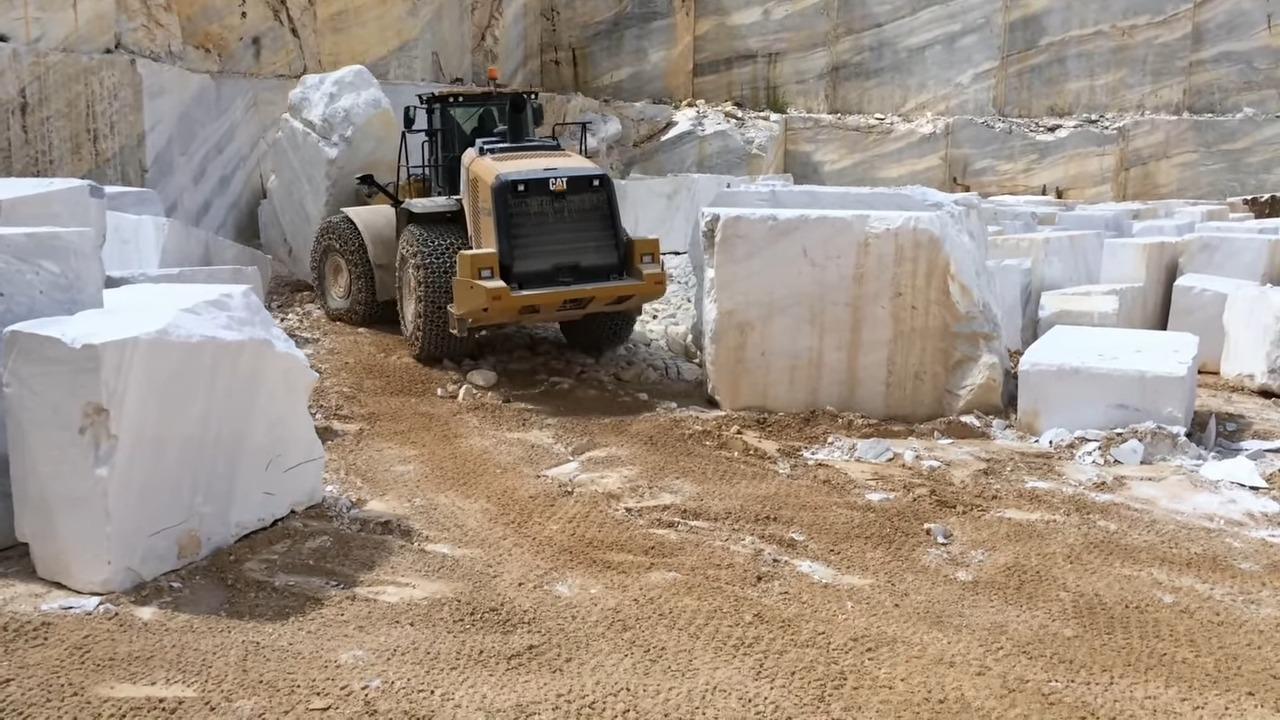
A yellow CAT wheel loader maneuvering between large blocks of white marble in a quarry

Specialty Construction Vehicles

Various specialized heavy equipment is used to perform specific tasks on construction sites.

Compact Track Loaders

Compact track loaders are versatile machines suitable for both indoor and outdoor applications. These trucks are one of the types of construction vehicles. Like skid steer loaders, they feature side-by-side seating and can efficiently handle tasks like material handling using compatible buckets and forks.

However, compact track loaders have continuous rubber tracks instead of wheels that provide better flotation over rough terrain and soft ground conditions. Their operating weight, ranging between 2000 and 6000 lbs, makes them suitable for tasks in urban construction sites, landscaping, and agricultural jobs.

The tracks enable them to traverse challenging outdoor environments and dig trenches near structures without causing ground damage like wheeled skid steers.

Compact Excavators

Mini or compact excavators are versatile small-scale equipment suitable for tasks in confined urban job sites. Weighing between 2000-6000 lbs, these hydraulic excavators feature zero tail swing designs for working in tight spaces.

Their digging depth of 6-12 feet makes them ideal for tasks like digging trenches for laying pipes and cables or mixing concrete near structures without causing damage. Mini excavators can efficiently handle tasks like the demolition of surfaces using suitable buckets, breakers, or shear attachments.

Asphalt Pavers

Asphalt pavers, or asphalt finishing machines, are indispensable equipment used in road paving projects for highway construction and repair. These machines efficiently lay and compact asphalt concrete or bituminous mixtures to build or resurface roadways and parking lots.

Larger pavers over 15 tons with extendable screeds up to 15 meters in width allow for high-production paving of surfaces. The vibration and tamping drum rollers attached to asphalt pavers ensure a smooth finish of the new asphalt layer.

Pavers integrated with GPS systems enable precise roadway paving as per specifications.

Compactors

Compactors are indispensable equipment used to compact and stabilize earthen surfaces like soil on construction sites. Roller compactors are available in weights ranging from 5-20 tons with smooth or padfoot drums. They are suitable for compacting granular materials in the development of roads, parking lots, foundations, etc.

Larger double drum rollers are deployed for soil compaction in constructing runways and highways. The vibration function of drum rollers helps achieve optimum compaction for supporting structural loads.

Pneumatic tires and sheep foot rollers are other types used for compacting cohesive soils and asphalt surfaces.

Hauling Vehicles

A variety of heavy-duty vehicles are used for transporting loads within and outside construction sites. Dump trucks with payloads ranging from 10 to 50 tons are commonly used for hauling demolition debris, sand, gravel, and other loose materials.

These trucks with dump bodies allow quick unloading and reloading of excavated soils. Articulated dump trucks with 30-40 cubic yard capacities are suitable for mining and heavy civil projects involving the movement of bulk aggregates and waste over long distances.

Concrete mixer trucks with rotating drums ensure concrete ingredients are thoroughly mixed during transportation from batching plants to job sites, where workers can pour and finish concrete before setting.

Dump Truck

Dump trucks in various payload capacities are indispensable for hauling loads at construction sites. These trucks are also known as construction trucks. Available in sizes ranging from 10 to 50 tons, these trucks with dump bodies allow for quick loading of demolition debris, soil, sand, and aggregates excavated using equipment like motor graders, scrapers, and wheel loaders.

The hydraulic dump feature enables expeditious unloading of transported materials at designated locations. Larger articulated dump trucks with 30-40 cubic yard capacities are suitable for moving bulk volumes of materials over long distances in mining, landfill, and heavy civil projects.

Concrete Mixers

Concrete mixer trucks, or transit mixers, are specialized hauling vehicles for transporting premixed concrete from batch plants to construction areas. Equipped with revolving drum mixers, these trucks ensure ingredients like cement, sand, gravel, and water are thoroughly blended during transportation.

The rotating drums allow the concrete mix to be maintained fluid until discharge. Concrete mixers enable casting foundations, slabs, and other structural elements at job sites, where workers can pour and finish concrete within its setting time. Their availability in different drum sizes accommodates small as well as large-scale projects.

Frequently Asked Questions (Autonomous Vehicle Technology In Construction)

Autonomous heavy equipment, such as automated excavators and dozers, enhances construction efficiency by minimizing errors in repetitive tasks. This technology improves efficiency and contributes to increased productivity on construction sites, making project timelines more predictable.
In the construction landscape, autonomous construction equipment is at the development stage, offering numerous benefits. While the initial investment is a consideration, the potential benefits include increased efficiency, minimized errors, and peak performance, making the technology a strategic choice for innovative construction projects.
Autonomous vehicles in the construction sector and mining industry reduce the reliance on human operators for mundane tasks. This ensures safety on construction sites and mining operations and allows workers to focus on more complex and value-added aspects of their jobs, ultimately improving efficiency.
Fully autonomous cars contribute to the evolution of the construction sector by automating transportation within construction sites. This eliminates the need for manual driving, offering a few reasons for the shift towards self-driving vehicles – from minimizing errors to enhancing overall safety. The technology continues to advance, and it’s only a matter of time before it becomes a standard in the industry.
The autonomous construction equipment market is set to revolutionize the mining industry and construction projects, providing numerous benefits like increased productivity and improved efficiency. Despite the initial investment, the technology promises long-term gains, offering an intelligent solution to streamline operations, reduce costs, and optimize the construction and mining processes.

Modular And Multi-Purpose Construction Vehicles

Mediapayperlead-com December 10, 2024

Modular And Multi-Purpose Construction Vehicles

Meta Description: Discover the versatility of modular and multi-purpose construction vehicles, offering adaptability and efficiency for various tasks. Explore their benefits and prospects.

Modular and multi-purpose construction vehicles represent a significant innovation in the construction industry, offering adaptability and versatility for various tasks. These vehicles are designed to provide flexibility by allowing interchangeable components and attachments, reducing the need for multiple specialized machines.

This guide will explore eight different types of multi-purpose construction vehicles, their benefits, and prospects, emphasizing the potential impact of these advanced vehicles on construction projects.

Key Takeaways:

  • Modular construction vehicles offer flexibility to perform multiple tasks with configuration changes.
  • Their interchangeable setups enhance versatility compared to specialized single-function equipment.
  • Benefits include cost savings, improved site efficiency, and the ability to adapt to different projects.
  • Advanced automation and standardized interfaces will optimize the interchangeability of future modular fleets.
  • Data analytics can help contractors optimize the usage of modular vehicles for maximum returns.

Eight Different Types of Modular and Multi-Purpose Construction Vehicles

Many modular and multi-purpose vehicle options are available for construction sites and projects. These vehicles offer the flexibility to perform multiple tasks with minimal adjustments. Some of the main vehicle types utilized include:

1. Modular Crane And Forklift

One popular configuration is a modular vehicle that can be adapted as a crane and forklift. This combination attachment allows the lifting and transporting heavy materials and equipment around the job site.

The modular design allows easy swapping between the crane and forklift setups based on needs. Hydraulic cranes and forklifts are commonly used modular attachments for lifting various payloads.

2. Multi-Purpose Excavator With Interchangeable Attachments

Excavators are highly versatile for construction sites due to their digging and material-handling capabilities. A multi-purpose excavator offers even more flexibility through its modular attachment system.

Interchangeable buckets, breakers, shears, grapples, and other tools can be quickly and easily attached/detached through the excavator’s auxiliary hydraulics. This allows a single excavator to perform various tasks like demolition, excavating, material handling, etc.

Contractors save on equipment costs while completing different projects more efficiently using the exact vehicle.

3. Modular Dump Truck With Adjustable Bed Configurations

Dump trucks are another essential vehicle for transporting materials. A modular dump truck takes it further with an adjustable bed for various configurations. Based on the job, the bed can be fitted with options like a utility bed, water tank, pipe trailer, or dump bed. The bed attachments are manufactured for quick installation/removal.

This multi-purpose dump truck provides hauling solutions for different materials while offering maximum payload. It also ensures efficient equipment, tools, and personnel transportation on construction sites.

4. Multi-Functional Bulldozer

Bulldozers are indispensable machines for site preparation and landscaping tasks. A multi-functional bulldozer enhances versatility with a modular blade attachment system. Different types of blades, like a push blade, angle blade, or rake blade, can be quickly changed based on the job.

This allows the bulldozer to perform operations ranging from clearing, grading, and sloping. Contractors benefit from a single bulldozer completing different projects more efficiently. The interchangeable blades also offer flexibility to tackle diverse terrain conditions across construction sites.

5. Modular Concrete Mixer And Pump Unit

Transporting and pumping concrete is essential during foundation works. A modular concrete mixer and pump unit combine these capabilities. The unit has a truck chassis fitted with a mixer drum, water tank, and boom pump.

This integrated configuration ensures efficient mixing and transporting of concrete to required structures like slabs or walls. The pump is hydraulically operated for smooth delivery of concrete through hoses. It offers a complete on-site concrete solution while taking up minimal space for easy maneuvering on construction sites.

6. Multi-Functional Drilling Rig With Interchangeable Drilling Heads

A multi-functional drilling rig provides versatility through a modular attachment system for interchangeable drilling heads:

  1. The rig is equipped to accommodate different types of drilling heads like core drills, rock drills, and hammers for excavation, sampling, or foundation works.
  2. Drilling heads can be easily changed according to the required material or depth to be drilled through manual or hydraulic operation. This ensures efficient drilling of diverse surfaces.
  3. Auxiliary hydraulics attached to the rig facilitate quick attachment/removal of drilling heads and tools. This improves functionality across different projects.
  4. Contractors benefit from a single multi-functional drilling rig instead of separate specialized equipment. It offers a cost-effective solution for completing various drilling tasks at construction sites and quarries.

7. Modular Construction Road Vehicle

Road construction requires machinery capable of paving, milling, compaction, and resurfacing activities. A modular road construction vehicle fulfills these needs through interchangeable module attachments. Paving modules equipped with screeds and material hoppers and milling modules with cutting drums can be attached or removed based on the project phase.

This adaptable vehicle streamlines roadwork by eliminating the need for separate equipment. Contractors benefit from a single machine completing different road construction processes efficiently.

8. Multi-Purpose Aerial Elevator

Aerial work platforms are essential for tasks like electrical work, glazing, and maintenance at height on construction sites. A multi-purpose aerial platform enhances accessibility through modular work platforms such as a personnel carrier basket, scissor lift, or boom lift that can be changed quickly.

This adaptable aerial unit ensures worker safety across rough terrain while completing different jobs efficiently at variable heights. The interchangeable work platforms, coupled with maneuverability, provide versatile solutions for both indoor and outdoor tasks.

Benefits of Multi-Purpose Construction Vehicles

Modular construction vehicles offer numerous advantages over specialized single-function equipment. Their modular design allows for enhanced versatility and adaptability. Some of the key benefits include:

Increased Versatility And Adaptability

The modular attachment systems of these vehicles enable quick adjustments to perform multiple tasks on construction sites. Interchangeable modules mean a single vehicle can perform roles like lifting, transporting materials, drilling, paving, and more.

This high adaptability ensures maximum utilization of the equipment across different projects. Whether the job requires excavation, grading, or concrete work, these versatile vehicles streamline operations through flexible configurations. The modular design allows adapting to evolving needs, reducing the need to purchase specialized machinery.

Cost Savings

Multi-purpose construction vehicles provide significant cost advantages over purchasing separate specialized equipment. Their modular design allows contractors to complete tasks with a single vehicle by changing attachments.

This reduces capital expenditure needs. Maintenance is also simplified as fewer vehicles means lower service requirements. Insurance and storage costs have decreased substantially. Contractors gain maximum return on investment with minimal equipment but high versatility.

Improved Efficiency And Productivity On Construction Sites

Modular vehicles improve efficiency and boost productivity at construction sites in four key ways:

  1. Quick configuration changes between attachments allow continuous operations around the clock with minimal downtime between tasks.
  2. A single vehicle can perform the work of multiple machines, expediting the completion of different project phases.
  3. Easy transport of modular units and standardized components streamlines on-site logistics.
  4. Centralized diagnostics and maintenance needs through a single display panel on the vehicle improve monitoring and reduce repairs. This maximizes uptime.
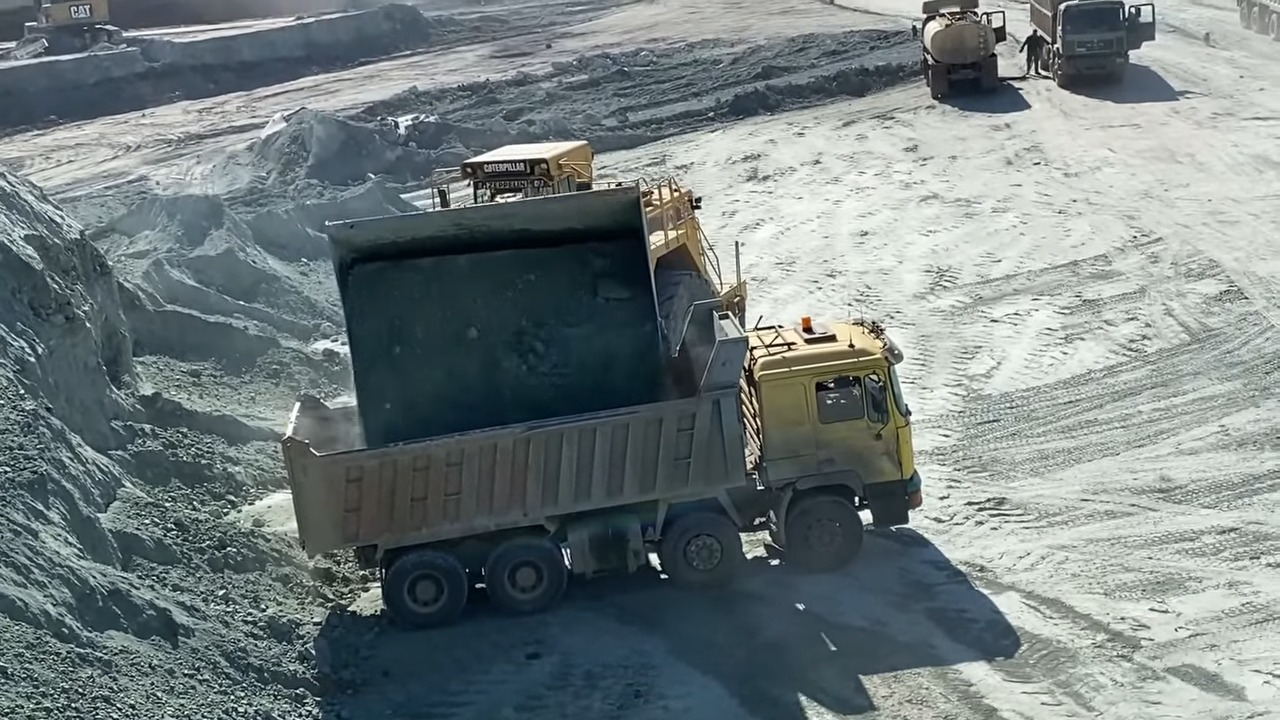
An industrial dump truck parked on a dirt road in a mining pit with other construction vehicles and machinery in the background

Future Prospects of Multi-Purpose Construction Vehicles

The modular construction vehicle landscape is constantly evolving with innovations. Advanced technologies are being integrated to maximize the benefits of these versatile machines. Some promising future directions include:

Advanced Automation For Seamless Interchangeability

With digitization trending across heavy industries, modular vehicles will increasingly utilize automated control systems. Advanced technologies like sensors, AI, and IoT will facilitate the plug-and-play interchangeability of modules.

Onboard diagnostics and real-time data analytics will optimize the performance of integrated systems. This paves the way for autonomous modular attachments in the future, streamlining construction processes through seamless automation and remote operations.

Overall, digitization will elevate modular vehicles to new efficiency, productivity, and safety levels on job sites.

Standardized Attachment Interfaces For Increased Compatibility

To fully realize the benefits of modular construction vehicles, industry stakeholders are working on developing standard standardized interfaces for attachments.

This will ensure plug-and-play compatibility between vehicles and modules from different manufacturers. Utilizing interface standards like hydraulic couplings, electrical connectors, and mounting points will facilitate interchangeability.

It will also improve after-sales support with interchangeable spare parts. Wider adoption of standardized interfaces can optimize modular vehicle designs for maximum versatility across equipment in the future.

Modular Designs For Electric And Zero-Emission Construction Vehicles

With sustainability regulations tightening, modular designs are also increasingly relevant for electric and low-emission vehicles. Manufacturers are exploring modular battery packs, motors, and fuel-cell units that can be quickly swapped to prolong machine uptime. Modular layouts facilitate the integration of alternate propulsion systems into existing vehicle platforms.

Based on job requirements, this will support the flexible transition to diverse power sources, like hydrogen or solar. Overall, modularization offers an efficient path for the heavy industry to adopt green technologies, reducing the environmental footprint of construction projects.

Utilizing Advanced Data Analytics For Optimized Equipment Configurations

As construction vehicles increasingly incorporate connected technologies, there are several ways advanced data analytics can optimize the usage of modular configurations:

  1. Sensors and IoT devices can track machine operating parameters, attachment usage patterns, and workload distributions across sites. This data enables predictive maintenance and inventory management.
  2. Real-time performance monitoring of integrated vehicle-attachment systems identifies the most efficient combinations for different tasks. This ensures optimal system configurations.
  3. Analytics reveal underutilized attachment modules and peak/off-peak demand periods. This supports dynamic modular reconfigurations for continuous high productivity.
  4. Data-driven insights help contractors right-size their modular equipment fleets based on projected workloads. Unnecessary capital expenditure on machinery is reduced.

Overall, leveraging the power of construction data can help maximize returns on modular investments through intelligent, analytics-driven decision-making. This strengthens the business case for these versatile vehicles.

Frequently Asked Questions (Autonomous Vehicle Technology In Construction)

Autonomous heavy equipment, such as automated excavators and dozers, enhances construction efficiency by minimizing errors in repetitive tasks. This technology improves efficiency and contributes to increased productivity on construction sites, making project timelines more predictable.
In the construction landscape, autonomous construction equipment is at the development stage, offering numerous benefits. While the initial investment is a consideration, the potential benefits include increased efficiency, minimized errors, and peak performance, making the technology a strategic choice for innovative construction projects.
Autonomous vehicles in the construction sector and mining industry reduce the reliance on human operators for mundane tasks. This ensures safety on construction sites and mining operations and allows workers to focus on more complex and value-added aspects of their jobs, ultimately improving efficiency.
Fully autonomous cars contribute to the evolution of the construction sector by automating transportation within construction sites. This eliminates the need for manual driving, offering a few reasons for the shift towards self-driving vehicles – from minimizing errors to enhancing overall safety. The technology continues to advance, and it’s only a matter of time before it becomes a standard in the industry.
The autonomous construction equipment market is set to revolutionize the mining industry and construction projects, providing numerous benefits like increased productivity and improved efficiency. Despite the initial investment, the technology promises long-term gains, offering an intelligent solution to streamline operations, reduce costs, and optimize the construction and mining processes.

Fuel-Efficient And Hybrid Construction Vehicle Models

Mediapayperlead-com December 10, 2024

Fuel-Efficient And Hybrid Construction Vehicle Models

Meta Description: Discover fuel-efficient and hybrid construction vehicle models’ benefits, challenges, and future opportunities. Learn how they reduce fuel consumption, lower emissions, and enhance performance in construction applications.

Fuel-efficient and hybrid construction vehicle models are pivotal innovations in the construction industry, designed to reduce fuel consumption, lower operating costs, and minimize environmental impact.

This guide will explore the benefits, challenges, types, case studies, and future opportunities related to these advanced vehicle models.

Key Takeaways:

  • Hybrid construction equipment offers 25-40% lower fuel consumption than traditional models through technologies like regenerative braking and electric boosting.
  • Despite higher upfront costs, hybrids save fuel and maintenance over time through increased efficiency and productivity.
  • Various equipment types like excavators, dozers, and trucks are now available from major manufacturers as hybrid and electric models.
  • Government incentives and regulations are accelerating the adoption of sustainable technologies in the industry to reduce emissions and operating expenses.

Benefits of Fuel-Efficient and Hybrid Construction Vehicle Models

Construction companies always look for ways to reduce operating costs while improving productivity. Fuel-efficient and hybrid construction vehicle models provide several benefits that help achieve these goals.

Reduced Fuel Consumption and Operating Costs

Fuel is one of the most significant expenses for construction fleets. Fuel consumption can be significantly reduced by utilizing more fuel-efficient internal combustion engines, hybrid technology, or electric drive components. This leads to lower diesel fuel or gasoline costs.

For example, some hybrid excavator models have shown 25-40% fuel savings compared to traditional models. The reduced fuel consumption also means lower emissions of air pollutants like nitrogen oxide and particulate matter, helping construction companies meet environmental standards.

Lower Emissions and Environmental Impact

By utilizing more fuel-efficient internal combustion engines, hybrid technology, or electric drive components in construction vehicle models, fuel consumption and air pollutants like nitrogen oxide emissions can be significantly reduced.

This helps lower the environmental impact of construction projects and fleets. Fuel-efficient hybrids allow work to continue in emissions-restricted job sites and areas focused on improving air quality.

The reduced dependence on fossil fuels like diesel fuel also lessens the carbon footprint of construction activities. Some government incentives for purchasing electrified vehicles aim to encourage adoption and decrease emissions from this industry.

Enhanced Performance and Versatility

Hybrid and electric construction vehicles provide quicker acceleration than traditional models thanks to electric motors’ additional torque and power boosts. This improves performance for tasks requiring heavy lifting or repetitive digging cycles.

The hybrid technology also enhances versatility – equipment can operate with just the electric motor or hydraulic system during certain operations for reduced noise and emissions. Using the electric drive components, they further allow regenerative braking to capture kinetic energy during deceleration.

This regenerated energy can power the hydraulic systems or recharge battery packs, improving overall energy efficiency. The hybrid systems thus help fleets complete jobs more productively while utilizing different power sources depending on the specific needs.

Potential For Cost Savings and Increased Productivity

Fuel costs are typically one of the highest operating expenses for construction fleets. Fuel-efficient hybrid models can provide significant fuel savings and reduced fuel consumption compared to traditional equipment powered solely by internal combustion engines. This directly leads to lower diesel or gasoline expenditures over time.

With their ability to recapture energy through regenerative braking and hydraulic systems, hybrids improve the efficiency of primary power sources like electric motors and internal combustion engines. This results in better fuel economy and energy consumption.

The additional torque and power of electric drive components allow quicker acceleration and lifting/digging cycles. Hybrids thus have higher productivity as jobs can be completed faster.

Some government incentives for purchasing electrified vehicles, like plug-in hybrids, can help lower the initial costs of these models for fleets. With their fuel savings and increased output, hybrids provide a faster return on investment through reduced operating expenses.

Mild hybrid systems using small batteries effectively capture and recirculate braking energy. This improves the efficiency of lighter-duty pickup trucks and vehicles without a large cost increase.

As battery technology and hybrid power systems continue making significant progress, construction OEMs are bringing more hybrid options to market. This higher availability will see hybrids adopted more widely, delivering even greater savings potential through lower fuel consumption and emissions.

Challenges and Considerations Of Fuel Efficient and Hybrid Electric Vehicles

While hybrid and electric construction vehicle models provide many benefits over traditional diesel or gasoline-powered equipment, certain challenges must be addressed for widespread industry adoption. Upfront expenses, technology limitations, and operational practicalities need evaluation.

Initial Investment Cost and Return On Investment

A key factor is the higher initial purchase price of fuel-efficient hybrids compared to conventional models. The battery packs, electric motors, and hybrid drive systems significantly increase costs.

However, fleet owners report achieving positive returns within a reasonable timeframe with fuel savings, productivity gains, and some government incentives. Original equipment manufacturers are also making significant progress in developing mild hybrid systems using smaller batteries that provide faster payback periods for lighter-duty applications like pickup trucks.

As battery and hybrid technology costs reduce further, the investment outlay will become more viable, especially for high-usage equipment. Careful analysis of fuel consumption reduction and job site needs is important to determine the right models.

Availability Of Infrastructure and Support For Hybrid Vehicles

For plug-in hybrid electric vehicles (PHEVs) and battery electric models, a lack of public chargers or home charging capability can hamper their adoption in construction fleets.

While the federal government and some local authorities are working to expand the electric vehicle charging network, it is still limited in many areas and job sites. Equipment operators also need proper training and support resources to use the new technologies efficiently.

Original equipment manufacturers play a crucial role in providing training programs, maintenance services, and technical assistance to address infrastructure and skill gaps as the use of electrified vehicles grows.

Performance Considerations And Limitations Compared To Traditional Models

  • The additional weight of large battery packs and electric components may somewhat reduce payload capacity compared to diesel/gasoline-only models. However, hybrids provide quicker acceleration and lifting/digging cycles through an electric motor boost.
  • Operating solely on battery power may only be feasible for light-duty applications or specific tasks. Hybrids still rely significantly on their internal combustion engines for heavy-duty applications and longer shifts.
  • Recharging battery packs takes more time than refueling at a gas station. However, hybrids can recapture braking energy and use multiple power sources to extend driving range.
  • Energy management systems are required to optimize the operation of the hybrid drive system and hydraulic systems. Proper driver training is important to realize the efficiency and productivity benefits fully.

Types of Fuel-Efficient and Hybrid Construction Vehicles

The construction industry utilizes specialized heavy machinery to perform job site tasks.

Original equipment manufacturers now offer hybrid and electrified alternatives for some of the highest-usage equipment types to provide fuel and cost savings benefits to owners and contractors.

Hybrid Excavators, Loaders, Dozers, and Other Heavy Equipment

Excavators and wheel loaders are the most common hybridized heavy equipment models as they consume significant fuel moving dirt and materials. Excavator models from manufacturers like Kobelco utilize battery packs and hybrid power systems, including an electric motor, to boost torque and efficiency.

This reduces fuel consumption by up to 30% compared to traditional diesel excavators. Hybrid wheel loaders employ technologies like regenerative braking and series or parallel drivetrains involving an internal combustion engine and electric motor.

Even large dozers with level and smooth work surfaces are now available as hybrid models. Mild hybrid systems are also effective for pickup trucks used to haul equipment and workers on job sites. Original equipment manufacturers are steadily developing more electrified options across different heavy-duty applications.

Fuel-Efficient Engines and Powertrain Technologies

  • Original equipment manufacturers are developing more efficient internal combustion engines that use technologies like direct fuel injection and turbocharging to reduce fuel consumption.
  • Hybrid systems integrate the combustion engine with electric motors and drive components to capture wasted energy and boost the efficiency of the overall powertrain.
  • Mild hybrid variants pair small battery packs with the engine to improve fuel efficiency through features like start-stop operation.
  • Some electric vehicle models are also being introduced for light-duty pickup truck applications and jobs requiring zero emissions.

Innovations In Regenerative Braking and Energy Recovery Systems

Regenerative braking systems capture the kinetic energy lost during deceleration and convert electric motors or hydraulic components into stored electrical or pressurized fluid energy. This improves the energy efficiency of heavy equipment significantly.

When the brakes are applied, the electric motors act as generators to charge battery packs. Hybrid excavators and loaders from manufacturers like Komatsu effectively utilize regenerative braking and hydraulic accumulators to recover braking energy and reduce the load on the primary diesel engine.

The captured power can then be reused to supplement the engine or drive the electric motors, providing torque boost during acceleration and lifting cycles.

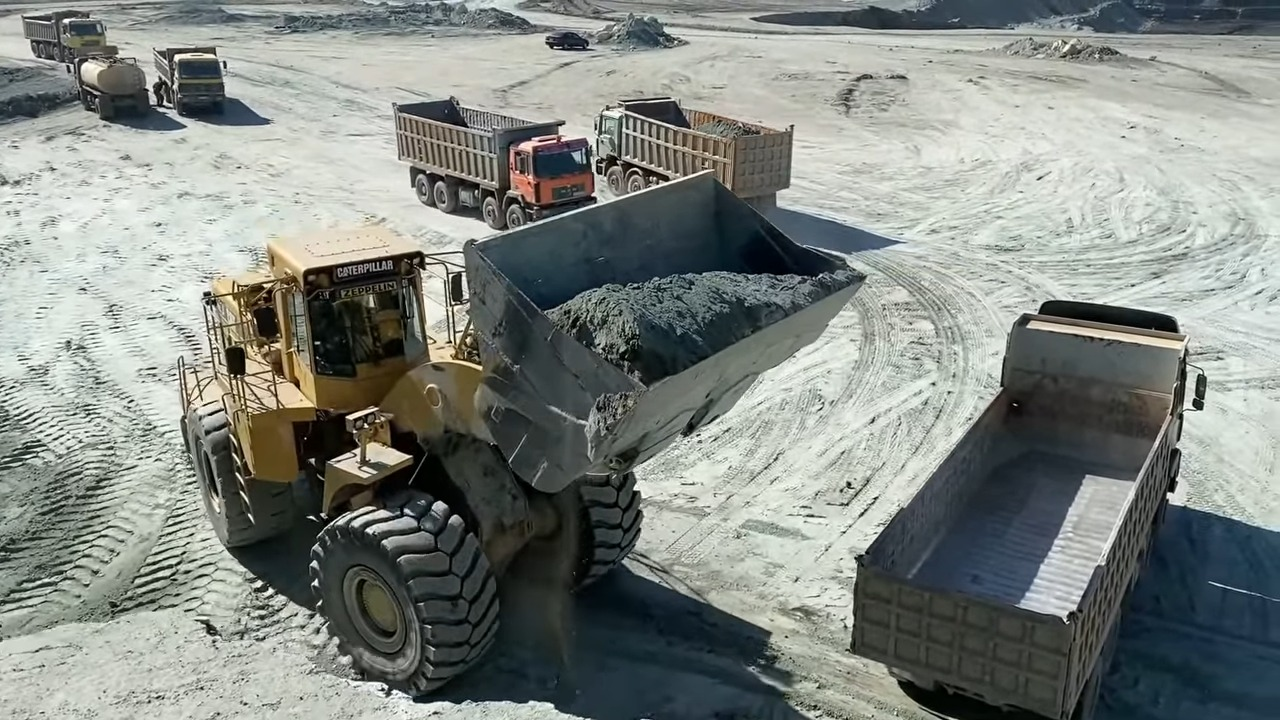
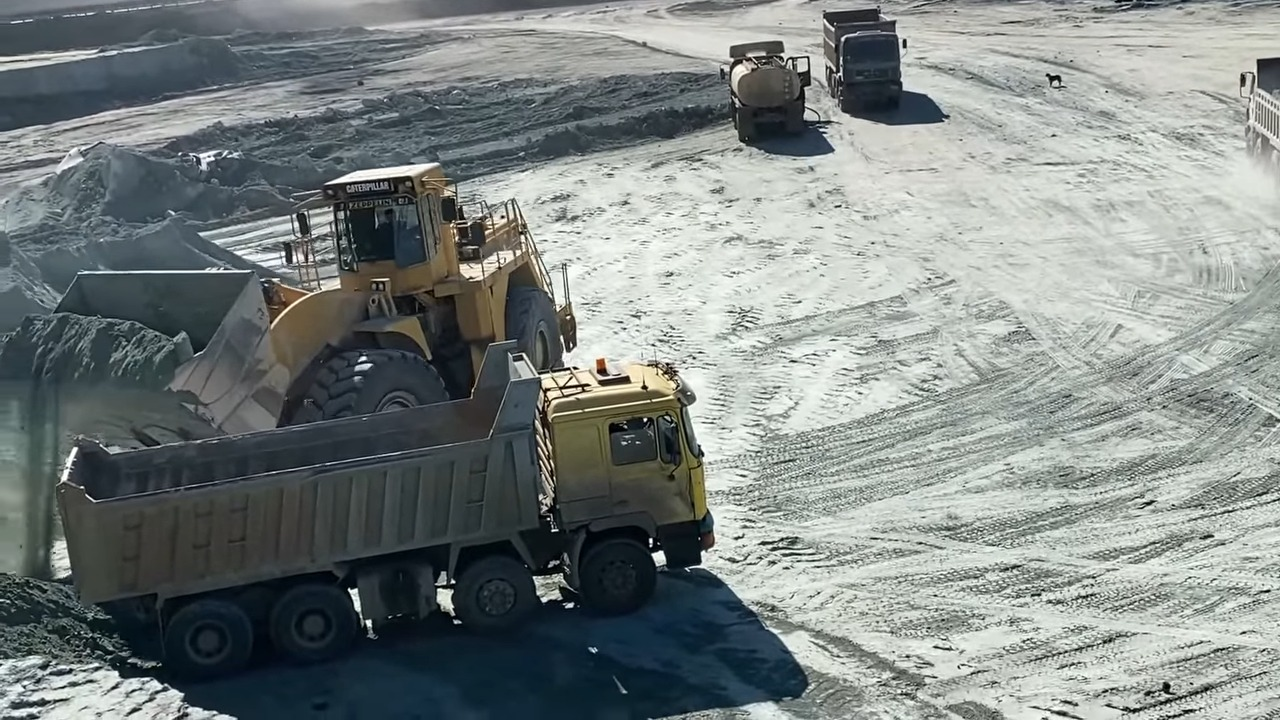
Large yellow Caterpillar wheel loader transporting a load of rocky material at a construction site, with other trucks and equipment in the background

Future Trends and Opportunities for Efficient and Hybrid Construction Vehicles

The construction industry constantly evolves to utilize new technologies that improve productivity and reduce operating costs. Fuel-efficient hybrid and electric-powered equipment models are gaining mainstream acceptance, and their adoption is expected to grow significantly in the coming years.

Original equipment manufacturers are ramping up research and development efforts to bring advanced solutions to market.

Potential Advancements In Battery and Electric-Hybrid Technologies

Battery technology is a crucial area of focus, as higher energy density and lower costs will expand the capabilities of electric and plug-in hybrid vehicles. Larger battery packs with higher storage capacity could enable all-electric operation for heavier-duty applications and longer shifts.

Solid-state batteries may provide a safer and more effective alternative to lithium-ion. Hybrid systems integrating advanced battery technology with efficient internal combustion engines and electric motors/drive components are poised to deliver lower fuel consumption and emissions.

Standards for public charging stations are also being upgraded, making electric vehicles more viable options. These innovations will likely see more construction fleets transition to electrified models, improving overall industry efficiency.

Role Of Government Regulations and Incentives In Promoting Fuel Efficiency

Government policies play a crucial role in accelerating the adoption of fuel-efficient and electrified construction vehicles through regulations and purchase incentives for fleet owners. Tighter emission standards by agencies like the EPA aim to reduce air pollution from diesel engines.

Meanwhile, federal tax credits and state-level subsidies for buying hybrids, plug-in hybrids, and battery electric models make them more cost-competitive than traditional models.

These incentives are helping drive the transition to vehicles using technologies like regenerative braking and hybrid power systems. Some authorities also prefer contractors deploying electric and hybrid equipment in government-funded projects.

Emerging Trends in Sustainable Construction

With a growing emphasis on sustainability and reduced environmental impact, construction project owners increasingly demand efficient job site equipment. Hybrids allow continued operations in areas with emissions restrictions.

Equipment manufacturers are developing hybrid models suited for light-duty and heavy-duty applications to lower fuel consumption and dependence on fossil fuels like diesel. Hybrid excavators and wheel loaders offer significant fuel savings potential. Mild hybrid systems are effective even for pickup trucks used on sites.

The hybrid technology combined with energy recovery systems optimizes energy usage, meeting the industry’s evolving efficiency and productivity needs.

Frequently Asked Questions (Autonomous Vehicle Technology In Construction)

Autonomous heavy equipment, such as automated excavators and dozers, enhances construction efficiency by minimizing errors in repetitive tasks. This technology improves efficiency and contributes to increased productivity on construction sites, making project timelines more predictable.
In the construction landscape, autonomous construction equipment is at the development stage, offering numerous benefits. While the initial investment is a consideration, the potential benefits include increased efficiency, minimized errors, and peak performance, making the technology a strategic choice for innovative construction projects.
Autonomous vehicles in the construction sector and mining industry reduce the reliance on human operators for mundane tasks. This ensures safety on construction sites and mining operations and allows workers to focus on more complex and value-added aspects of their jobs, ultimately improving efficiency.
Fully autonomous cars contribute to the evolution of the construction sector by automating transportation within construction sites. This eliminates the need for manual driving, offering a few reasons for the shift towards self-driving vehicles – from minimizing errors to enhancing overall safety. The technology continues to advance, and it’s only a matter of time before it becomes a standard in the industry.
The autonomous construction equipment market is set to revolutionize the mining industry and construction projects, providing numerous benefits like increased productivity and improved efficiency. Despite the initial investment, the technology promises long-term gains, offering an intelligent solution to streamline operations, reduce costs, and optimize the construction and mining processes.

Electric And Zero Emission Construction Vehicles

Mediapayperlead-com December 10, 2024

Electric And Zero Emission Construction Vehicles

Meta Description: Discover electric and zero-emission construction vehicles’ benefits, challenges, and future opportunities. Learn how they reduce emissions and lower operating costs.

Electric and zero-emission construction vehicles represent a significant advancement in sustainable technology within the construction industry. These vehicles offer the potential to reduce greenhouse gas emissions, lower operating costs, and improve working conditions.

This article will explore the benefits, challenges, current technologies, case studies, and future opportunities for zero-emission construction vehicles.

Key Takeaways:

  • Electric construction vehicles reduce noise, emissions, and operating costs while helping meet climate goals.
  • Current challenges include high purchase prices, limited ranges, and a lack of charging infrastructure on job sites.
  • Governments are offering incentives to encourage adoption and manufacturers developing innovative technologies.
  • Advancements in areas like batteries, fuel cells, and wireless charging promise to accelerate the industry’s clean transformation in the future.

Benefits of Electric and Zero-Emission Construction Vehicles

The construction industry increasingly recognizes the environmental and financial benefits of transitioning to electric and zero-emission vehicles and equipment. Some of the key advantages include:

Reduced Greenhouse Gas Emissions

The construction sector can meaningfully reduce its carbon footprint by replacing diesel and gasoline-powered machines with electric alternatives.

Electric vehicles produce zero direct exhaust emissions from construction sites, eliminating local air pollutants like carbon monoxide, particulate matter, nitrogen oxides, and hydrocarbons.

This leads to cleaner and healthier working environments for operators and those living and working near projects. It also helps lower the industry’s contribution to global emissions and climate change.

Lower Operating Costs

Over the lifetime of a vehicle, electric and zero-emission equipment can save significantly on fuel and maintenance costs compared to diesel counterparts.

With no oil changes or diesel fuel needed, electric machines have fewer parts requiring servicing, reducing downtime and repair expenses. The lower energy costs of electricity versus diesel also contribute to savings.

As battery technology continues to improve, electric vehicles are achieving comparable or longer run times to conventional machines, further boosting their economic case.

Reduced Noise Pollution

By replacing noisy internal combustion engines with quiet electric motors, zero-emission construction vehicles lower disturbing noise levels on job sites, especially in urban areas and near sensitive locations like hospitals and schools.

This improves the quality of life for local communities and allows construction to occur without disturbing neighbors. The industry can avoid costly project delays from noise complaints. Electric machines also reduce the major health impact of conventional vehicles.

Potential for Government Incentives And Grants

Many governments and municipalities are offering incentives to encourage the adoption of electric construction vehicles and equipment to meet climate targets:

  1. Direct purchase grants/subsidies: Programs that provide upfront funding to help offset electric machines’ higher initial capital costs compared to diesel counterparts. This could apply to equipment types like wheel loaders, excavators, vibratory plates, etc.
  2. Tax credits: Tax incentives like an income tax credit based on the purchase price of eligible electric vehicles and machinery. This helps lower the total cost of ownership over time.
  3. Priority access: Some major cities prioritize construction projects that use zero-emission vehicles and equipment to reduce air pollution and noise impacts in urban areas. This can speed up approval processes.
  4. Funding for charging infrastructure: Grants and loans are available for commercial fleets and construction sites to install the necessary charging stations and fast chargers that electric vehicles require. This helps address range and operation challenges and the unique power needs of heavy-duty machinery.
  5. Rebates on energy costs: Performance-based incentives that provide rebates for each kilowatt-hour of electricity used instead of diesel or gasoline. This further improves the operating cost competitiveness of electric options.

Challenges And Barriers To Electric Vehicles

While zero-emission construction vehicles offer many benefits, there are still some challenges holding back more widespread adoption:

Initial Investment Cost

The upfront purchase price of electric equipment remains significantly higher than diesel alternatives due to the high cost of battery packs. Lithium-ion batteries suitable for heavy-duty applications required for machines like excavators, loaders, and dump trucks can add over 50% to the base vehicle price.

This hefty premium and a lack of used electric equipment options have slowed fleet electrification. Government incentives have helped, but more support is needed to bridge this price gap and encourage early adopters.

Limited Range/Operation

Most electric construction vehicles today have shorter run times between charges compared to diesel counterparts with large onboard fuel tanks. This restricted range and operation time pose logistical challenges for fleets and projects requiring equipment to work longer hours at varied locations before returning to a depot to charge.

Addressing this through battery technology and fast charging infrastructure improvements is critical to unlock the full potential of electric machines.

Lack of Charging Infrastructure

With most construction sites lacking reliable electricity access, installing charging stations for electric vehicles requires an upfront investment. The unique power needs of heavy-duty machinery also demand high-powered fast chargers that draw significant amounts of energy.

Addressing this gap through targeted government funding and private sector investments is needed to catalyze a large-scale transition.

Performance and Range Limitations

Some current limitations around the performance and range of electric construction vehicles include:

  • Battery capacity: Available battery technologies may not yet provide sufficient energy density and storage capacity to match the demands of heavy-duty equipment operating at job sites all day. This reduces the run time and power available per charge.
  • Charging times: Fast charging infrastructure is still developing to support the unique power needs of sizeable electric construction machines. Fully charging battery packs can take longer than refueling a diesel tank in minutes.
  • Temperature effects: Cold and hot weather conditions may significantly decrease battery range and output due to the effect of temperature on chemical reactions inside the battery system. This needs addressing through battery design and thermal management.
  • Terrain challenges: The additional weight of large battery packs can affect equipment performance, especially when working on uneven, muddy, or steep terrain at construction sites.
  • Lack of standardization: With many different vehicle and battery types, no universal fast charging solution like a standard fuel nozzle is available. This complicates multi-machine fleet charging logistics.
  • Resale values: There is limited data on long-term battery degradation and life, adding uncertainty around residual values for used electric construction equipment.
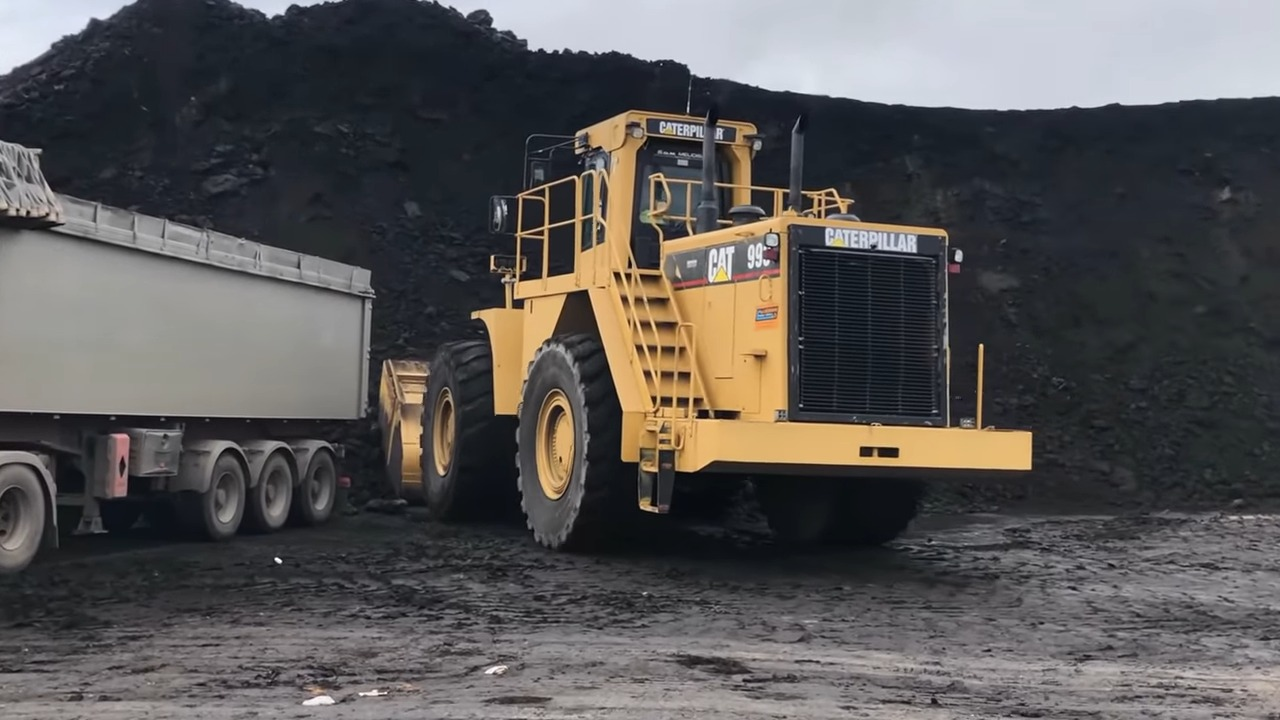
A large yellow Caterpillar front-end loader with the number 994 on its side, parked next to a pile of coal and a truck with a trailer

Current Technologies and Innovations

While the construction industry faces challenges in transitioning to electric equipment, manufacturers are hard at work developing innovative solutions to address barriers:

Electric Battery-Powered Vehicles

Most electric construction vehicles, such as cars, trucks, and buses, use lithium-ion battery packs. These batteries provide power for hydraulic systems and electric drive motors to operate equipment like excavators, loaders, dump trucks, and vibratory plates.

Some manufacturers are experimenting with higher-density solid-state and lithium metal batteries that could significantly increase energy capacity and storage. This would extend the run times of machines and enable longer outdoor operations on job sites.

Hydrogen Fuel Cell Vehicles

Some manufacturers are exploring hydrogen fuel cells as an alternative to battery-electric vehicles for heavy-duty construction applications. Fuel cells use hydrogen gas to generate electricity through an electrochemical reaction with oxygen from the air.

The only byproducts are water and heat, providing zero-emission operation. Tests show fuel cell powertrains may offer a longer range than batteries for equipment that operates continuously throughout long work shifts.

On-site hydrogen generation and fast refueling could match diesel refueling timelines. However, fueling infrastructure remains an obstacle to widespread adoption. Continued improvements may establish fuel cells as a viable, clean technology for the construction industry.

Emerging Technologies In Electric Construction Vehicles

In addition to battery and fuel cell innovations, other promising technologies being developed include:

  • Wireless and overhead charging systems that can replenish vehicle batteries without plug-in connections, addressing infrastructure challenges on job sites.
  • Supercapacitors charge and discharge faster than lithium-ion batteries to better suit intermittent heavy equipment duty cycles and reduce thermal issues.
  • Hybridization of electric drivetrains with small combustion engines or fuel cells to extend range while maintaining most of the emissions benefits.
  • Regenerative braking and hydraulic recovery systems that capture kinetic and potential energy during operation to recharge batteries.
  • Smart monitoring devices to optimize battery usage based on machine diagnostics and job requirements.

As these emerging solutions mature, they have the potential to overcome current limitations and accelerate the electric transformation of the construction industry.

Future Outlook and Opportunities For Electric and Zero-Emission Vehicles

As the construction industry works towards reducing its environmental impact, electric, and zero-emission equipment are poised to play a more significant role if critical challenges can be addressed. The future looks promising with continuous innovations:

Potential for Advancements In Battery Technology

Significant research is underway to develop more powerful yet longer-lasting battery solutions suitable for heavy-duty construction vehicles and machinery.

Projects involving lithium-metal, solid-state, and next-generation lithium-ion battery chemistries could lead to transformative leaps in battery capacity, energy density, charging times, and cycle life. This would surpass current limitations and enable the all-day operation of equipment on large job sites.

Improved battery thermal management may also optimize performance in various climate conditions. Such advancements can potentially achieve cost parity with diesel faster and accelerate the large-scale adoption of electric construction vehicles.

Growing Charging Infrastructure

As the number of electric vehicles increases across sectors, widespread charging networks for personal cars create opportunities to leverage existing infrastructure for construction equipment. Dedicated high-powered commercial chargers and wireless charging pads installed at depots and job sites could support machinery.

This would address current range anxiety issues. Both public and private investment is expanding charging options globally. The construction industry has an opportunity to help develop solutions as it transitions to fleets.

Frequently Asked Questions (Autonomous Vehicle Technology In Construction)

Autonomous heavy equipment, such as automated excavators and dozers, enhances construction efficiency by minimizing errors in repetitive tasks. This technology improves efficiency and contributes to increased productivity on construction sites, making project timelines more predictable.
In the construction landscape, autonomous construction equipment is at the development stage, offering numerous benefits. While the initial investment is a consideration, the potential benefits include increased efficiency, minimized errors, and peak performance, making the technology a strategic choice for innovative construction projects.
Autonomous vehicles in the construction sector and mining industry reduce the reliance on human operators for mundane tasks. This ensures safety on construction sites and mining operations and allows workers to focus on more complex and value-added aspects of their jobs, ultimately improving efficiency.
Fully autonomous cars contribute to the evolution of the construction sector by automating transportation within construction sites. This eliminates the need for manual driving, offering a few reasons for the shift towards self-driving vehicles – from minimizing errors to enhancing overall safety. The technology continues to advance, and it’s only a matter of time before it becomes a standard in the industry.
The autonomous construction equipment market is set to revolutionize the mining industry and construction projects, providing numerous benefits like increased productivity and improved efficiency. Despite the initial investment, the technology promises long-term gains, offering an intelligent solution to streamline operations, reduce costs, and optimize the construction and mining processes.

Construction Vehicle Safety

Mediapayperlead-com December 10, 2024

Construction Vehicle Safety

Meta Description: Discover the importance of construction vehicle safety, safe operation guidelines, and construction workers’ FAQs. Prioritize safety in your construction work zone.

Construction sites present unique safety challenges due to the extensive use of heavy machinery, vehicles, and equipment near work. According to the Department of Labor, one in four construction fatalities involve workers being struck by vehicles.

This article will outline critical guidelines and best practices for establishing a safety culture around construction vehicles and machinery. We will explore considerations for traffic control, equipment operation, communication protocols, and more.

Key Takeaways:

  • Understand common vehicle accident risks like struck-by incidents and properly train operators, spotters, and ground workers.
  • Establish controlled work zones, plan smooth traffic flows, and ensure high visibility to manage vehicles and heavy equipment safely on busy worksites.
  • Emphasize consistent safety protocols like inspections, clear communication, and proper PPE to develop an ongoing culture that protects all construction personnel from machinery hazards.

Importance of Construction Vehicle Safety in the Workplace

Vehicle safety is essential in the construction industry due to the inherently dangerous nature of operating heavy machinery, equipment, vehicles, and mechanized tools near workers.

With motor vehicles, cranes, excavators, and other motorized equipment posing serious hazards if proper protocols and controls are not established, site managers and employees must prioritize safety practices and training.

Regular inspections, clearly defined work zones, high-visibility gear, established communication procedures, and an overall culture of safety awareness can help protect workers from accidents and keep them safe within the busy work sites and areas where machinery is in operation daily.

Strict adherence to policies and procedures is critical to avoiding health incidents and ensuring all personnel return home safely at the end of each workday in this industry.

Vehicle Safety Guidelines

Train all equipment operators on safely operating heavy equipment, motor vehicles, and other mechanized equipment. Refresher training should be provided regularly.

Require pre-shift inspections of all vehicles and machinery to ensure they are in good operating condition with no issues that could endanger workers.

Clearly define work zones and restricted access areas using barricades, fencing, or barriers to control vehicle movement and keep employees out of swing radius and other hazardous zones.

Establish traffic patterns and turning radii for construction vehicles that minimize backing up and allow for three-point turns to reduce risks near other workers.

Use high-visibility vests and other protective equipment like hard hats to help operators maintain the visibility of workers nearby.

Implement communication protocols requiring eye contact and acknowledgment before equipment movement to reduce the chances of struck-by accidents.

Provide adequate lighting for nighttime operations to maintain safety and awareness of any hazards on site after dark.

Conduct ongoing safety training and reinforce policies to develop a strong construction safety culture.

Safe Vehicle Operation In the Construction Industry

Ensuring the safe operation of vehicles and heavy machinery is paramount in construction. This equipment can pose perilous hazards to workers when not properly maintained or controlled. Regular inspection and maintenance are vital to catching any issues before operation.

Inspections and Maintenance of Vehicles

Construction sites utilize various mechanized equipment in daily operations, from motor vehicles to cranes and excavators. To protect workers, managers must establish protocols for operators to inspect equipment before each use, checking for leaks, loose components, or malfunctions.

A pre-operation inspection allows any problems to be addressed immediately through maintenance, reducing the risk of accidents. Equipment should also undergo thorough inspections on a scheduled basis by qualified personnel to catch more serious issues and ensure everything remains in good operating condition.

Controls and Mirror Adjustment

Like driving a motor vehicle, operators must take steps to control their heavy machinery safely. This starts with familiarizing themselves with all equipment controls and making necessary ergonomic adjustments.

Taking a few minutes to position mirrors for optimal all-around visibility helps operators see clearly in blind spots and be aware of the proximity of other workers. Proper control and visibility are crucial for operating equipment near slopes or embankments where loss of control could lead to slips or rollovers.

Traffic Safety on Work Sites

With multiple vehicles and heavy equipment operating close to a typical construction site, managing traffic flow safely is paramount. Proper planning and controls are needed to protect workers from the hazards of moving machinery.

Setting Up Work Zones and Restricted Access Areas

To control vehicle movement and keep workers out of harm’s way, managers must first delineate the site into designated work zones with barricades, fencing, or other barriers. This establishes a “swing radius” around equipment to restrict access to the area it is operating in.

Restricted access zones should also be set for material laydown areas and vehicle traffic lanes, with signs marking these controlled areas.

Planning Traffic Flow and Backing/Turning Areas

Taking the time upfront to plan smooth traffic patterns, large turning radii, and spaces for vehicles to back safely reduces the risks of accidents related to sudden maneuvers. Flow maps can designate primary routes and secondary lanes for construction traffic versus deliveries. Sufficient space allows for three-point turns versus risky backup maneuvers near workers on foot.

Nighttime Lighting and Visibility

For crews working at night, sites must have adequate lighting in all vehicle operating areas and pathways.

Temporary light towers or fixtures help illuminate the work areas and keep drivers and operators aware of potential hazards or the proximity of other workers after dark. High-visibility vests are also crucial for workers to be seen in low-light conditions.

Frequently Asked Questions (Autonomous Vehicle Technology In Construction)

Autonomous heavy equipment, such as automated excavators and dozers, enhances construction efficiency by minimizing errors in repetitive tasks. This technology improves efficiency and contributes to increased productivity on construction sites, making project timelines more predictable.
In the construction landscape, autonomous construction equipment is at the development stage, offering numerous benefits. While the initial investment is a consideration, the potential benefits include increased efficiency, minimized errors, and peak performance, making the technology a strategic choice for innovative construction projects.
Autonomous vehicles in the construction sector and mining industry reduce the reliance on human operators for mundane tasks. This ensures safety on construction sites and mining operations and allows workers to focus on more complex and value-added aspects of their jobs, ultimately improving efficiency.
Fully autonomous cars contribute to the evolution of the construction sector by automating transportation within construction sites. This eliminates the need for manual driving, offering a few reasons for the shift towards self-driving vehicles – from minimizing errors to enhancing overall safety. The technology continues to advance, and it’s only a matter of time before it becomes a standard in the industry.
The autonomous construction equipment market is set to revolutionize the mining industry and construction projects, providing numerous benefits like increased productivity and improved efficiency. Despite the initial investment, the technology promises long-term gains, offering an intelligent solution to streamline operations, reduce costs, and optimize the construction and mining processes.

Construction Vehicle Inspection and Certification

Mediapayperlead-com December 10, 2024

Construction Vehicle Inspection and Certification

Meta Description: Learn about the significance of construction vehicle inspection and certification, including standards, procedures, and maintenance.

Construction vehicles are vital for infrastructure projects, making their safety and reliability crucial. This outline will explore the significance of inspecting and certifying these vehicles, covering standards, procedures, and maintenance. This process is essential for creating a safer and more efficient work environment in the construction industry.

Key Takeaways:

  • Construction vehicle inspection certification ensures equipment meets safety standards through regular inspections by qualified technicians.
  • Inspectors must undergo approved training programs to learn inspection procedures, qualifications, and regulatory guidelines.
  • The inspection process involves preparing documents, checking exterior/interior components, testing vehicle systems, and documenting inspection results.
  • Achieving inspection certification verifies a vehicle’s compliant status and allows it to operate on job sites safely.

Types of Construction Vehicles

Several vehicles commonly used on construction sites require inspection to ensure safety standards are met. Proper inspection and certification of these vehicles are essential for protecting workers and drivers.

Heavy Vehicles (Excavators, Bulldozers, etc.)

Heavy equipment includes powerful machinery like excavators, bulldozers, backhoes, loaders, and graders that move large volumes of soil and materials.

As these vehicles involve hazardous attachments and operations, technicians must undergo approved training programs to learn testing procedures and gain qualifications to inspect heavy equipment. A vital part of the inspection process involves reviewing these large motor vehicles’ safety equipment, braking systems, lights, guards, and structural integrity.

Trucks (Dump Trucks, Concrete Mixers, etc.)

Dump trucks, concrete mixers, and other commercial trucks are also widely used for hauling and transporting various construction materials. Inspectors need to be familiar with regulations regarding truck inspections and qualifications and have the skills to inspect these vehicles to ensure compliance properly.

Truck inspections cover areas like wheels and tires, lighting, brakes, frames, cargo securement, and emissions. Documentation of inspections is important for compliance and record-keeping purposes.

Cranes And Lifting Equipment

Mobile cranes, boom lifts, scissor lifts, man lifts, forklifts, and other lifting equipment are critical tools that pose risks if not properly maintained and inspected.

Inspectors require training and qualifications to inspect lifting equipment, slings, chains, hooks, and safety features. Thorough documentation of inspection results helps engineers determine if the equipment is safe for continued use or needs repairs before returning to service.

Inspection Standards and Regulations

Proper inspection of construction vehicles is crucial to ensure safety and compliance with various regulatory standards. Technicians must have a firm understanding of the guidelines and requirements inspectors must adhere to.

Occupational Safety and Health Administration (OSHA) Guidelines

The Occupational Safety and Health Administration is a federal agency that provides standards for protecting workers. Their guidelines outline requirements for inspecting things like brakes, lights, guards, and structural integrity on vehicles and equipment. Inspectors must be well-versed in OSHA regulations regarding motor vehicle inspections and qualifications.

Industry Standards For Construction Vehicle Inspection

Various industry organizations establish best practices and standards for inspecting different types of construction vehicles.

Inspectors complete approved training programs to gain expertise in testing procedures, qualifications, documentation requirements, and specifications inspectors must follow for areas like wheels and undercarriage, frames, cargo securement, and safety equipment.

Environmental Protection Agency (EPA) Regulations For Emissions Testing

The EPA sets regulations for vehicle emissions to protect air quality. Inspectors undergo training to administer emissions inspections properly and understand regulations around exhaust system inspections, opacity inspections, and standards vehicles must meet to remain roadworthy and compliant. Emissions inspection documentation is essential for record-keeping.

Inspection Process

Performing thorough and accurate inspections is key to ensuring safety compliance. Inspectors follow a standard process.

Pre-Inspection Preparation

Before inspecting, technicians review the vehicle’s maintenance records and note any issues. Inspectors also ensure they have the tools, equipment, and necessary inspection documents and forms. This allows the inspection to be completed efficiently and paperwork submitted properly.

Visual Inspection Of The Exterior And Interior Components

  • Lights and reflectors
  • Tires, wheels, and lug nuts
  • Braking components
  • Frame and undercarriage
  • Guards and shields
  • Interior components like seats, controls, and gauges

Any deficiencies are documented during this stage.

Functional Testing Of Vehicle Systems

Brakes, steering, lighting, and emissions are tested through demonstration. Inspectors note if systems pass established performance criteria.

Documentation Of Inspection Findings

All results are recorded on appropriate forms. Inspection documents must be accurate, clear, and compliant with regulations. Technicians may also provide maintenance recommendations to owners when needed repairs are noted.

Certification Testing Procedures

Achieving certification verifies an inspector’s qualifications and documents a vehicle’s inspection compliance.

  • Issuing Of Certification By Authorized Inspectors: Only inspectors who have completed approved training programs and exams can issue certifications. Certification is granted upon submitting satisfactory inspection records and documents confirming the vehicle’s inspected status.
  • Duration And Renewal Requirements For Certifications: Certifications are typically valid for one year, though requirements may vary by jurisdiction. To maintain certification, vehicles must pass periodic inspections. Records are reviewed to ensure continued compliance with any policy or specification changes.
  • Importance Of Certified Vehicles In Construction Projects: Certification helps ensure safety standards are adequately maintained and allows certified vehicles to be used for hire on job sites. It provides protection and accountability for workers, equipment owners, and project leaders.

Only inspected vehicles in compliance with regulations may be permitted to operate commercial machinery or transport construction materials.

Frequently Asked Questions (Autonomous Vehicle Technology In Construction)

Autonomous heavy equipment, such as automated excavators and dozers, enhances construction efficiency by minimizing errors in repetitive tasks. This technology improves efficiency and contributes to increased productivity on construction sites, making project timelines more predictable.
In the construction landscape, autonomous construction equipment is at the development stage, offering numerous benefits. While the initial investment is a consideration, the potential benefits include increased efficiency, minimized errors, and peak performance, making the technology a strategic choice for innovative construction projects.
Autonomous vehicles in the construction sector and mining industry reduce the reliance on human operators for mundane tasks. This ensures safety on construction sites and mining operations and allows workers to focus on more complex and value-added aspects of their jobs, ultimately improving efficiency.
Fully autonomous cars contribute to the evolution of the construction sector by automating transportation within construction sites. This eliminates the need for manual driving, offering a few reasons for the shift towards self-driving vehicles – from minimizing errors to enhancing overall safety. The technology continues to advance, and it’s only a matter of time before it becomes a standard in the industry.
The autonomous construction equipment market is set to revolutionize the mining industry and construction projects, providing numerous benefits like increased productivity and improved efficiency. Despite the initial investment, the technology promises long-term gains, offering an intelligent solution to streamline operations, reduce costs, and optimize the construction and mining processes.

Automated Safety Features in Construction Vehicles

Mediapayperlead-com December 10, 2024

Automated Safety Features in Construction Vehicles

Meta Description: Explore the impact of automated safety features in construction vehicles on workplace safety, productivity, and efficiency. Learn how autonomous technology minimizes risks, prevents accidents, and contributes to a safer work environment.

Automated safety features in construction vehicles play a crucial role in enhancing workplace safety. This guide will delve into the types of advanced safety technologies, their implementation, impact, and future trends, highlighting their significance in mitigating risks and creating a safer work environment.

Key Takeaways:

  • Automated safety features like collision avoidance and remote operation utilize advanced technologies to enhance safety on construction sites.
  • Sensors, telematics, and automated systems help improve worker protection, optimize equipment usage, and reduce project costs.
  • Emerging technologies from 5G to AI/ML will further advance automated features, minimizing risks through informed decision-making.
  • Adopting leading safety innovations will help construction firms leverage the future of technology for enhanced operations and protection.

Importance of Automated Features in Construction Vehicles

Automated safety features in construction vehicles, like autonomous navigation, collision detection, and remote operation, are essential to improve construction site safety, productivity, and efficiency.

These advanced technologies utilize sensors, cameras, and control systems to detect obstacles, operate in hazardous environments, and perform complex tasks while keeping human operators out of harm’s way. Automation helps construction companies minimize delays, prevent accidents, reduce human errors, and save lives by safely operating heavy equipment.

Types of Automated Safety Features

Automated safety features help enhance safety on construction sites.

Collision Avoidance Systems

Collision avoidance systems utilize sensors, cameras, and control automation to detect obstacles and prevent accidents by allowing vehicles like dump trucks to maintain a safe distance through features like autonomous navigation and collision detection.

This helps minimize delays from accidents and save lives by keeping operators out of harm’s way through the safe operation of heavy equipment.

Remote Operation Systems

Remote operation systems enable human operators to control equipment like excavators from a distance through leading-edge technologies like virtual and augmented reality.

This helps optimize efficiency by allowing operators to perform complex tasks while reducing risks in hazardous environments. Remote systems also use sensors to detect obstacles and alert operators in real-time to prevent collisions.

Automated Hazard Detection

Automated hazard detection systems leverage technologies like artificial intelligence, cameras, and radar to automatically detect potential dangers like ground-level changes.

Sensors provide real-time information to construction vehicles for informed decisions and collision avoidance with other vehicles or equipment on site. Detecting hazards improves the safety of human operators and authorized personnel on construction sites.

Blind Spot Detection

Blind spot detection systems use cameras and sensors to identify objects, workers, or other construction vehicles in a vehicle’s blind spots to enhance safety. This helps prevent accidents and collisions from undetected hazards.

The technology alerts operators in real-time through visual or audio warnings, allowing them to take evasive action and maintain a safe distance through features like autonomous braking. Blind spot detection improves the safety of human operators by minimizing human errors.

Automatic Braking Systems

Automatic braking systems leverage technologies like radar, lidar, and cameras to automatically detect potential collisions with obstacles, personnel, or other machinery on site in all conditions. When a risk is identified, automatic braking engages remotely to bring the vehicle to a safe stop.

This helps boost productivity by allowing operators to focus on tasks while preventing accidents through collision detection and safe operation. The systems utilize sensors to maintain safe distances and reduce risks in hazardous environments, ultimately improving safety on construction sites.

Telematics and GPS Tracking

Telematics and GPS tracking systems leverage leading-edge technologies to optimize efficiency on construction sites:

  1. GPS sensors allow construction companies to track the location of heavy equipment like dump trucks in real-time. This helps prevent collisions and minimize delays by avoiding congested areas.
  2. Telematics provides data on machine utilization so equipment is used productively. Under-utilized assets can be re-assigned to improve overall efficiency.
  3. Operators receive alerts if a vehicle moves into an unauthorized construction site area. This enhances the safety of personnel by restricting access.
  4. Detailed usage reports from telematics systems enable construction managers to make informed decisions around maintenance schedules, reducing costs. Data also provides insights into efficient fuel consumption, lowering operating expenses.

Telematics and GPS tracking utilize Internet of Things (IoT) technologies to optimize the efficiency of construction machinery, boosting productivity while improving safety through controlled remote operation.

Benefits of Automated Safety Features in Construction Vehicles

Automated safety systems provide many advantages to the construction industry by utilizing leading-edge technologies.

Improved Worker Safety

Features like collision avoidance, blind spot detection, and automatic braking help prevent accidents and save lives by minimizing risks for human operators and on-site workers. Automation allows machinery to detect hazards and maintain safe distances without human errors.

This enhances safety and reduces injuries as vehicles can operate autonomously in hazardous environments while keeping personnel out of harm’s way. Construction companies improve safety by leveraging these advanced technologies.

Increased Productivity

Sensors and remote operation technologies allow machines to work efficiently while optimizing, even in complex tasks. Automated systems help complete projects on schedule by minimizing delays from accidents.

Telematics also ensures equipment is used productively. Overall, automation boosts productivity through continuous operation and controlled operation of heavy assets.

Reduced Costs

Fewer accidents mean lower insurance costs for construction firms. Detailed data from telematics helps optimize maintenance schedules and lower repair expenses. Remote operation saves on fuel costs. Overall construction costs are reduced through automation and informed decision-making supported by real-time technologies.

Reduction in Accidents and Injuries

One of the key benefits of automated safety features in construction vehicles is reduced accidents and injuries on work sites. Technologies like collision avoidance systems that detect obstacles and maintain safe distances and blind spot monitoring help prevent mishaps by minimizing risks.

Features such as automatic braking triggered by sensors further reduce collision incidents. By leveraging these advanced automated capabilities, construction machinery can operate safely, even in hazardous environments, while keeping human operators out of harm’s way.

The result is fewer accidents, resulting in lower insurance costs for companies and improved protection of workers – a win-win for both safety and business objectives in this industry.

Future Trends and Innovations

The construction industry is cusp of transformative changes with new automated safety technologies. Leveraging these emerging innovations will be crucial for optimized operations.

Emerging Technologies in Automated Safety Features

Advanced sensor fusion, 5G connectivity, and AI/machine learning are being applied to next-gen systems. This integration of technologies will enhance detection capabilities, especially in challenging environments.

Features like predictive analytics and augmented feedback loops will minimize risks through informed decision-making. Construction companies investing in these leading-edge solutions can gain competitive productivity, costs, and worker safety advantages.

Potential Advancements for Enhanced Construction Vehicle Safety

As technologies continue advancing, future innovations may allow for higher autonomous operations. Advanced driver assistance with remote monitoring and intervention could optimize machine utilization while reducing human errors.

Emerging technologies like haptics, computer vision, and onboard analytics may also enable new remote guidance and control forms. This will boost site safety, productivity, and efficiency, especially for hazardous tasks.

Adopting automated safety innovations will be key for construction firms to leverage the future of technology for optimized operations, improved work environments, and enhanced safety.

Frequently Asked Questions (Autonomous Vehicle Technology In Construction)

Autonomous heavy equipment, such as automated excavators and dozers, enhances construction efficiency by minimizing errors in repetitive tasks. This technology improves efficiency and contributes to increased productivity on construction sites, making project timelines more predictable.
In the construction landscape, autonomous construction equipment is at the development stage, offering numerous benefits. While the initial investment is a consideration, the potential benefits include increased efficiency, minimized errors, and peak performance, making the technology a strategic choice for innovative construction projects.
Autonomous vehicles in the construction sector and mining industry reduce the reliance on human operators for mundane tasks. This ensures safety on construction sites and mining operations and allows workers to focus on more complex and value-added aspects of their jobs, ultimately improving efficiency.
Fully autonomous cars contribute to the evolution of the construction sector by automating transportation within construction sites. This eliminates the need for manual driving, offering a few reasons for the shift towards self-driving vehicles – from minimizing errors to enhancing overall safety. The technology continues to advance, and it’s only a matter of time before it becomes a standard in the industry.
The autonomous construction equipment market is set to revolutionize the mining industry and construction projects, providing numerous benefits like increased productivity and improved efficiency. Despite the initial investment, the technology promises long-term gains, offering an intelligent solution to streamline operations, reduce costs, and optimize the construction and mining processes.

What Is Construction Logistics

Mediapayperlead-com December 10, 2024

What Is Construction Logistics

Meta Description: Construction logistics is essential for successful projects. Learn about the challenges, effective planning, and best practices for managing construction site logistics. Discover how to optimize supply chain management and plan for future projects efficiently.

The importance of efficient logistics in the construction industry cannot be overstated. This article provides a detailed analysis of key aspects of construction logistics based on a literature review.

It examines common challenges in planning, resource optimization, safety compliance, and workforce training. Readers will learn practical tips to manage the transportation of workers and materials effectively and develop logistics plans tailored to their specific project needs.

Key Takeaways

  • Effective construction logistics planning is crucial for project success.
  • Key factors include project scope, site conditions, safety compliance, and stakeholder engagement.
  • Careful scheduling, inventory management, and optimizing storage/traffic flow are essential.
  • Leveraging technology helps improve planning, operations, and documentation processes.
  • Training crews and establishing best practices support resilient logistics management.

Logistics is Crucial for Efficient Construction Projects

Why Construction Logistics is Important

Construction logistics is vital in ensuring the successful completion of any construction project on time and within budget. It involves planning the transportation and storage of essential resources like construction equipment, materials, workers, and other resources required at various project stages. Effective logistics is important to avoid delays caused due to unavailability or late arrival of critical inventory. It helps construction businesses optimize resource utilization and minimize wastage and cost overruns that derail schedules.

Challenges of Managing Construction Logistics

While logistics is crucial, managing it effectively poses several challenges for construction logistics managers. Planning is a key challenge that requires forecasting the demand and supply of labor and materials, arranging for procurement, and determining optimum delivery schedules.

It is also important to plan construction site traffic flow and address safety compliance requirements regarding the physical environment, hazardous materials, and potential risks from heavy equipment and machinery. Other challenges include effective resource optimization to minimize waste, tracking shipments to and from job sites, ensuring quality control and customer satisfaction, and contingency planning for disruptions from weather conditions or other unforeseen events.

Constantly evolving supply chain ecosystems and regulations around tower cranes, GPS tracking, security cameras, and gate access procedures require logistics managers to plan carefully while ensuring compliance.

Skilled workforce training and access to the right equipment, like GPS devices, are also needed to navigate the complexities of multi-location projects. Careful planning remains crucial to overcome these challenges and deliver efficient logistics solutions for diverse construction needs.

Elements of an Effective Construction Logistics Plan

A construction logistics plan forms the backbone of efficient operations on a project site. A well-crafted plan addresses multiple interconnected aspects to facilitate the smooth movement of resources. Some key elements that should be included are:

Scheduling Project Resources and Deliverables

A key element of any effective construction logistics plan is scheduling and planning for procuring resources and deliverables required at different stages of a construction project. This involves forecasting the demand and supply of labor, equipment, materials, and other resources to facilitate optimum delivery schedules and transport planning.

Tracking shipments to and from construction and job sites and carefully planning delivery and appropriate locations for storing incoming and outgoing inventory is essential.

The plan should also address critical aspects like construction site traffic flow, emergency meeting areas, security cameras, and gate access to ensure smooth movement of crew members, vehicles, and heavy equipment needed on site. Scheduling is vital in coordinating all project activities, minimizing cost overruns and waste while meeting quality standards and customer satisfaction.

Ensuring Worksite Safety

  • Address potential hazards and risks from operating heavy machinery, tower cranes, hazardous materials, and variable physical environments.
  • Plan for safety compliance around regulations for site security, potential risks, and health standards.
  • Establish contingency plans for emergencies and disruptions from weather conditions or other unforeseen events.
  • Train crew members on safety procedures and ensure the availability of the right equipment, like GPS devices and GPS tracking systems.
  • Carefully plan traffic flow and storage of heavy materials on site to avoid accidents.

Optimizing Storage and Traffic Flow

Effective storage and traffic flow management are essential to minimize delays. Given the physical site constraints, the plan should address material storage requirements, appropriate locations for incoming and outgoing inventory, and construction site traffic flow.

Route planning and transport coordination help materials and equipment arrive at delivery locations safely and efficiently. Traffic monitoring systems using tools like security cameras, GPS tracking, and tower cranes can optimize on-site vehicle movement.

Coordinating Personnel Movement

Moving crew members between projects adds complexity. The plan must schedule workforce needs, track employee locations, and arrange transportation of tower crane operators and other team members between construction sites.

It can leverage technologies like GPS devices to monitor staff movement and ensure the availability of required skills across locations.

Strategies for Supplier Relationship Management

Strong relationships with suppliers are vital to meet demand. The plan should identify critical vendors, establish inventory replenishment protocols, and track shipments. It can give suppliers access to dispatch portals to independently manage orders while ensuring compliance. This streamlines procurement activities and minimizes costs. Regular collaboration helps proactively address issues.

Thorough planning of these aspects helps construction logistics managers deliver seamless movement of materials, equipment, and personnel, thereby improving project efficiency.

Factors to Consider for Construction Logistics

Effective logistics planning requires factoring in project specifics. Key considerations help develop customized, detailed solutions.

Accounting for Project Scope and Requirements

The scale and complexity of a given construction project highly influence logistics needs. Forecasting demand for labor, equipment, materials, and other resources depends on project scope, schedule, and quality standards.

This determines procurement timelines, storage capacities, and transport requirements. Logistics managers must thoroughly understand project requirements to arrange appropriate resources and plans.

Addressing Site Access and Infrastructure

Site conditions also impact logistics. Managers must evaluate the construction site, off-site storage if needed, and access to job sites via roads or other systems like rail. They should plan for any preparatory work needed to build access routes or temporary facilities.

Addressing site security, gate access, traffic flow, and potential hazards according to the physical environment ensures smooth transport. Contingency planning mitigates risks from variable weather conditions affecting deliveries.

Comprehensively assessing these factors leads to logistics solutions tailored for diverse project contexts. Regular review aids in adapting to evolving needs.

Planning for Materials, Equipment, and Transport Needs

Forecasting resource requirements is critical for procurement lead times. The logistics plan must account for materials, tools, machinery, vehicles, and other equipment needed at each project stage. It should schedule deliveries of incoming inventory to job sites and track shipments.

Transport planning depends on the construction site layout, traffic flow, storage capacities, and potential hazards. Route optimization helps coordinate the movement of heavy equipment, tower cranes, and hazardous materials safely between locations according to delivery schedules.

Preparing for Regulatory Compliance Requirements

Strict safety regulations govern the construction industry. The plan must comply with requirements around site security, potential risks, health standards, GPS tracking, security cameras, tower cranes, and gate access procedures.

It is essential to ensure the availability of appropriate personal protective equipment, emergency meeting areas, and compliance with waste disposal guidelines. Training crews and maintaining documentation helps demonstrate diligence should any issues arise.

Thorough consideration of project and site needs and regulatory mandates leads to robust yet adaptable logistics strategies.

Leveraging Technology for Construction Logistics

The construction industry has traditionally lagged in adopting new technologies. However, digitization now plays a key role in driving efficient logistics.

Digital Tools for Planning and Scheduling

Various software tools equipped with features like GPS tracking and sensors help logistics managers with planning, scheduling resources, and monitoring project progress remotely. Construction management software integrates project schedules with inventory and transport details for end-to-end visibility.

Cloud-based solutions facilitate collaborative planning between stakeholders. Digitizing paperwork reduces documentation tasks. Skill management portals optimize workforce allocation across sites. Resources can be scheduled more accurately based on real-time materials and equipment arrivals.

Analytics help with demand forecasting, route optimization, and tracking shipments. Integrating these tools into daily operations streamlines processes aids compliance and improves productivity for just-in-time deliveries.

Leveraging the right digital solutions tailored for logistics functions supports efficient planning and scheduling for diverse project needs.

Fleet and Asset Management Systems

Fleet management software integrated with GPS devices provides real-time visibility of heavy equipment, vehicles, and tower crane locations. It helps schedule preventive maintenance to avoid breakdowns.

Fuel consumption and engine health monitoring optimize transportation costs. RFID and barcode systems automate material tracking from off-site storage to job sites. Asset records facilitate compliance, insurance, and audits.

Paperless Documentation and Inspection Processes

Digitalizing paperwork reduces errors and saves time spent on documentation. Mobile inspection apps facilitate quality checks and sign-offs on deliveries remotely. Suppliers get access to portals to upload compliance documents electronically.

Materials test reports and crew training certifications are automatically updated, enabling just-in-time audits. Digital plan rooms let stakeholders collaborate online, comment, and approve revisions virtually. This streamlines processes while ensuring safety and compliance even during disruptions.

Leveraging the right combination of digital tools enhances every aspect of construction logistics, from planning and operations to compliance and cost control, thereby improving overall project efficiency.

A construction site with a yellow Caterpillar bulldozer loading dirt into the back of a dump truck while other trucks wait in line

Best Practices for Effective Construction Logistics Management

Logistics managers are key in optimizing project delivery through diligent planning and execution. Specific best practices can help streamline operations:

Training and Preparing the Project Team

Thorough workforce training is important to ensure safety compliance and productivity. Crews must be educated on logistics plans, safety protocols, equipment usage, documentation processes, quality standards, etc.

Team briefings aid coordination and buy-in. Just-in-time training using simulators on tower cranes and heavy machinery helps high-risk functions. Digital skills development programs facilitate adopting technologies.

Pre-project orientation of suppliers and contractors introduces stakeholders to logistics workflows, expectations, and roles to foster collaboration. An engaged, well-prepared team must handle complexities and deliver as scheduled.

Regular reviews and process improvements further refine operations. Adopting a proactive approach to construction logistics management supports efficient project execution despite challenges.

Establishing Processes for Continuous Improvement

Continuous assessment and refinement are essential to optimize logistics performance over the long run. Managers should establish regular review cycles to identify areas for improvement. Process metrics around on-time deliveries, inventory turns, cost savings, etc., help benchmark progress.

Digitizing data collection aids analysis. Feedback from all stakeholders must be incorporated to revamp strategies, factoring in emerging needs. Pilot testing innovations minimize risks from untested changes. This facilitates adaptive management for evolving project requirements.

Tips for Managing Unexpected Changes and Challenges

  • Maintain flexibility in planning to adapt to disruptions quickly
  • Establish contingency protocols in advance for emergencies and disruptions from weather
  • Regularly review and update risk assessments to address new potential hazards
  • Leverage supply chain relationships and technology to resolve issues promptly
  • Encourage open communication across the project team to collectively solve problems
  • Accurately document changes for reference to avoid future issues

Proactive practices help construction logistics managers effectively handle uncertainties and continually enhance operations.

Frequently Asked Questions (Autonomous Vehicle Technology In Construction)

Autonomous heavy equipment, such as automated excavators and dozers, enhances construction efficiency by minimizing errors in repetitive tasks. This technology improves efficiency and contributes to increased productivity on construction sites, making project timelines more predictable.
In the construction landscape, autonomous construction equipment is at the development stage, offering numerous benefits. While the initial investment is a consideration, the potential benefits include increased efficiency, minimized errors, and peak performance, making the technology a strategic choice for innovative construction projects.
Autonomous vehicles in the construction sector and mining industry reduce the reliance on human operators for mundane tasks. This ensures safety on construction sites and mining operations and allows workers to focus on more complex and value-added aspects of their jobs, ultimately improving efficiency.
Fully autonomous cars contribute to the evolution of the construction sector by automating transportation within construction sites. This eliminates the need for manual driving, offering a few reasons for the shift towards self-driving vehicles – from minimizing errors to enhancing overall safety. The technology continues to advance, and it’s only a matter of time before it becomes a standard in the industry.
The autonomous construction equipment market is set to revolutionize the mining industry and construction projects, providing numerous benefits like increased productivity and improved efficiency. Despite the initial investment, the technology promises long-term gains, offering an intelligent solution to streamline operations, reduce costs, and optimize the construction and mining processes.

How Is Construction Equipment Transported

Mediapayperlead-com December 10, 2024

How Is Construction Equipment Transported

Meta Description: Learn how to safely transport heavy construction equipment, including loading, securing, and choosing the right transportation method. Avoid fines and ensure worker safety

This article provides an overview of safely transporting heavy construction equipment. Proper transportation methods are outlined to help equipment owners and rental companies safely move machinery without damage or accidents.

The various loading and securing techniques explained in this guide ensure the legal and secure heavy equipment hauling on roads. These best practices can help avoid fines and keep workers and other drivers safe.

Key Takeaways

  • Proper preparation, inspection, and transportation are essential for safely moving heavy construction equipment.
  • Securely loading and fastening machinery, planning optimal routes, and following safety protocols prevent accidents and ensure legal transport.
  • Careful unloading at job sites and periodic checks while transporting help avoid potential issues to complete deliveries without incident.
  • Adhering to regulations protects equipment owners and haulers from liability and keeps workers and drivers safe.

Understanding the Importance of Safe Heavy Equipment Transportation

The transportation of heavy construction equipment is a complex process that requires utmost care and planning. As construction companies rely on machinery such as excavators, bulldozers, cranes, and other heavy-duty vehicles to complete projects on schedule, safely transporting this equipment to and from job sites is a top priority.

Improper handling during the loading, securing, and transporting of heavy loads can pose serious risks and lead to unexpected downtime or accidents. Thus, operators must understand compliance regulations and utilize the right methods.

Risks of Improper Transportation

There are several risks associated with improperly transporting heavy equipment. Machines not secured properly using tie-down points and working load limits can be dislodged from flatbed trailers or racks during transport. Loose components run the risk of falling onto other vehicles or causing the total weight to shift, placing undue sideways or rearward force on the transport vehicle.

This endangers the expensive equipment and the lives of drivers and other individuals on the road. Damage to the machinery or vehicles could also result in costly repairs and delays to project deadlines. Failure to double-check equipment dimensions before loading may lead to oversized loads that violate regulations.

Regulations for Compliance

Strict regulations have been implemented by governing bodies to ensure the safe and legal transport of heavy loads. The Federal Motor Carrier Safety Administration outlines standards for forward force calculations, safety protocols during loading/unloading, and necessary permits for overweight loads.

Non-compliance can invite hefty fines and even cause the vehicle to be deemed unsafe or “out of service.” Using the right trailer type, like flatbeds, step decks, or double drops, can help operators handle heavy equipment loads within the set guidelines.

Proper planning of routes to avoid structures with height/weight restrictions is equally essential. Adhering to industry standards for regular load inspections and following safety measures ensures the successful completion of every shipment.

Choosing the Right Transportation Method

When transporting heavy construction equipment such as excavators, bulldozers, cranes, or other machinery, selecting the proper transportation method is crucial. Different options exist for moving equipment depending on factors like load size, total weight, and travel distance.

Utilizing the right trailer can help ensure safe and legal transport while avoiding potential issues like unexpected downtime.

Towing Equipment Short Distances

For shorter hauls within a construction site or to a nearby job location, towing is often the best choice. Tow vehicles with heavy-duty hitches and braking systems can safely handle loads traveling shorter distances at slower speeds.

The towed equipment must be in good shape with functioning wheels and gearboxes designed for on-road towing. Safety protocols like using hand signals from escort vehicles are still required.

Using Flatbed Trucks for Longer Journeys

Transporting heavy equipment over longer distances generally requires a flatbed truck or trailer capable of safely securing loads within legal weight restrictions. Durable flatbeds distribute the total weight across a large surface area, allowing for convenient loading/unloading using ramps.

Machinery can be properly tied to the trailer using working load limit chains and tie-down points. Placing the load towards the front assists with weight distribution and maintaining control.

Specialized Trailers for Oversized Loads

Some heavy machinery, like large cranes or specialized attachments, may exceed standard size limits. Step deck or double drop trailers are suited for these oversized loads, using adjustable ramps and platforms to comply with regulations on height and width.

Special permits are also needed. Operators must carefully plan routes, avoiding structures that could limit the trailers’ and cargo’s clearance.

Preparing Your Equipment for Transport

Proper preparation is key to safely transport heavy construction equipment such as excavators, loaders, cranes, and other machinery. Ensuring vehicles and cargo are ready helps avoid potential issues down the road.

Inspecting Equipment and the Transport Vehicle

A thorough inspection of the equipment and transport vehicle is necessary before loading. Check for issues impacting the haul, like low tire pressure or non-functioning lights. The transport vehicle must be in good shape to safely handle heavy loads within legal weight restrictions.

Inspect tie-down points and confirm the working load limits will sufficiently secure loads equaling at least 50% of the total weight.

Removing or Securing Attachments

Detach any loose components from the base equipment that could become a safety hazard or cause an oversized load situation. Securely fasten the remaining attachments to the equipment to prevent unexpected movement during transport.

Proper securing avoids causing sideways or upward force that could shift the load’s center of gravity.

Checking Equipment Dimensions

Double-check equipment specifications against the transport vehicle to ensure nothing exceeds legal size limits for width or height.

This prevents needing an oversized permit or encountering issues at low bridges, tunnels, or other structures along the planned haul route. Use the right trailer, like a step deck, to accommodate large machinery.

Loading Equipment Safely

The loading process requires careful coordination and adherence to safety protocols to prevent accidents or damage to the expensive machinery.

Designating Roles and Responsibilities

Before beginning, assign responsibilities for tasks like driving equipment onto the transport vehicle and acting as spotters with hand signals. This ensures everyone understands their role to complete the process smoothly.

Cleaning and Leveling the Loading Area

Prepare a clean, level space near the transport to load heavy equipment safely. Remove debris that could impact traction or cause the total weight to shift sideways. Compact ground helps support weight loads within legal restrictions.

Guiding Equipment onto the Transport Vehicle

Use low speeds and signals from spotters to guide machines onto flatbeds, flat racks, or step decks. Gradual movement avoids sudden shifts in the load’s center of gravity.

Securing Equipment with Tie-Downs

Employ at least four tie-down points matched to the equipment’s weight and the transport vehicle’s working load limits. Evenly tension all chains to immobilize machinery, distributing downward force across contact points to safely handle loads.

Transporting Safely

Once heavy construction equipment is properly loaded, careful transport is required to complete the journey legally and without incident.

Planning the Best Route

Advance route planning avoids potential issues that could compromise safety. Check for weight restrictions on bridges and overhead clearances to bypass structures that could limit the height or width of the vehicle and its cargo. The best route prevents putting other drivers at risk.

Obtaining Necessary Permits

Acquire permits for overweight loads that exceed legal weight restrictions in respective regions. Permits help to transport vehicles and equipment to avoid unexpected downtime from potential fines.

Ensuring Equipment and Vehicle Safety

Conduct pre-trip inspections to confirm equipment is securely fastened with tie-downs and the transport vehicle is in good, road-worthy condition. Escort vehicles may be required for oversized loads. Drive safely and follow hand signals to complete delivery without rearward, forward, or sideways force shifting the heavy load during transport.

Frequently Asked Questions (Autonomous Vehicle Technology In Construction)

Autonomous heavy equipment, such as automated excavators and dozers, enhances construction efficiency by minimizing errors in repetitive tasks. This technology improves efficiency and contributes to increased productivity on construction sites, making project timelines more predictable.
In the construction landscape, autonomous construction equipment is at the development stage, offering numerous benefits. While the initial investment is a consideration, the potential benefits include increased efficiency, minimized errors, and peak performance, making the technology a strategic choice for innovative construction projects.
Autonomous vehicles in the construction sector and mining industry reduce the reliance on human operators for mundane tasks. This ensures safety on construction sites and mining operations and allows workers to focus on more complex and value-added aspects of their jobs, ultimately improving efficiency.
Fully autonomous cars contribute to the evolution of the construction sector by automating transportation within construction sites. This eliminates the need for manual driving, offering a few reasons for the shift towards self-driving vehicles – from minimizing errors to enhancing overall safety. The technology continues to advance, and it’s only a matter of time before it becomes a standard in the industry.
The autonomous construction equipment market is set to revolutionize the mining industry and construction projects, providing numerous benefits like increased productivity and improved efficiency. Despite the initial investment, the technology promises long-term gains, offering an intelligent solution to streamline operations, reduce costs, and optimize the construction and mining processes.

GPS Tracking In Construction Equipment

Mediapayperlead-com December 10, 2024

GPS Tracking In Construction Equipment

Meta Description: Discover how GPS tracking enhances safety and productivity in construction. Learn about real-time monitoring, theft prevention, and rugged GPS tracker features.” The focus keyword is “GPS tracking construction equipment.

GPS tracking of construction equipment has become increasingly important in today’s industry. With rising costs, security concerns, and demand for optimized operations, many companies now leverage precise location data to improve their businesses.

This article discusses how real-time monitoring of heavy machinery and tools can help reduce equipment downtime and theft while enhancing safety and productivity on job sites. Key benefits of GPS tracking solutions for construction will also be explored.

Key Takeaways

  • GPS tracking provides real-time visibility of construction equipment location and activity to improve safety, optimize fleet operations, and prevent costly theft.
  • Reliable tracking devices are ruggedized for harsh environments with long battery life and flexible installation options.
  • Real-time data insights and geofencing alerts help reduce equipment downtime, enhancing productivity through efficient scheduling and data-driven decision-making.
  • Proper monitoring protects valuable assets and resources while saving money by streamlining maintenance, fueling better bids, and keeping projects on schedule.

The Growing Problem of Construction Equipment Theft

Statistics on Equipment Theft in the Construction Industry

According to National Insurance Crime Bureau statistics, over 11,000 reported cases of stolen heavy equipment in 2020, including many instances of construction equipment theft. With so much valuable machinery spread across multiple job sites, construction sites are particularly vulnerable targets for thieves.

Thefts of construction vehicles, tools, and resources place a huge financial burden on companies. Data collected by construction equipment tracking solutions shows a steady rise in theft rates over the past 5 years. With each piece of stolen equipment costing thousands to replace, this growing problem poses serious risks to the bottom line of construction companies.

Costs of Equipment Theft for Construction Companies

When equipment goes missing, it results in lost time, productivity, and profits. Stolen construction equipment leaves companies scrambling to find replacement machinery or tools to keep projects on schedule. This often leads to costly delays, penalties for missed deadlines, and the hiring of temporary replacements.

In addition, theft of an excavator, bulldozer, or other large vehicle requires companies to bear repair/replacement expenses that can amount to tens of thousands of dollars or more. For a stolen pickup truck or other mobile assets, out-of-pocket costs for replacement still average several thousand dollars.

According to industry sources, when factoring in lost time, revenue, and other expenses, the average financial impact of a single equipment theft is estimated at over $30,000. With theft rates rising, this drains significant resources away from construction companies.

Benefits of GPS Tracking Construction Equipment

Increased Safety for Workers and Equipment

Implementing a GPS tracking solution allows construction managers to closely monitor the location and activity of all heavy equipment, vehicles, and powered tools on a job site. With real-time visibility into equipment location, safety issues can quickly be identified and addressed before incidents occur.

GPS tracking alerts if equipment moves into restricted areas near workers on foot. Data also provides coach operators insights into unsafe driving behaviors. Overall, GPS tracking creates a safer environment for everyone on site.

Optimized Fleet Management and Resource Scheduling

By tracking the precise location and utilization of all construction fleet assets, managers have the data needed for efficient fleet management and resource allocation. Under and over-utilized machinery can be identified and redistributed to other job sites based on actual productivity needs.

This allows companies to maximize earnings from each piece of equipment. Managers stay informed of maintenance needs and schedule repairs more cost-effectively.

Real-Time Equipment Utilization Data for Improved Decision-Making

Real-time GPS tracking provides a wealth of data about how equipment and vehicles are used in the field. Analytics reveal idle vs. active time percentages and peak utilization periods.

With these insights, management decisions around future purchases, replacements, and rentals vs. owns can be optimized to keep costs low and productivity high. Data also helps justify the need for additional equipment to bid on larger projects.

Theft Prevention and Detection

GPS tracking is a powerful deterrent to would-be thieves and allows immediate alerts if tagged assets are moved outside approved job zones or work hours.

This prevents costly theft and unauthorized usage of high-value machinery, vehicles, and tools, which have become a growing problem in the industry. Stolen items can be rapidly located with GPS tracking recovery services.

How GPS Tracking Works for Construction Equipment

Installing GPS Tracking Devices

Reliable GPS tracking requires discreetly installing tracking devices directly onto equipment, vehicles, and tools. These tracking devices are compact and rugged to withstand harsh job site conditions. Various installation options like screws, bolts, and cable ties allow for quick and easy mounting in discrete areas.

Installation is a simple process that company technicians or the tracking provider can handle. With proper placement and battery care, devices provide years of reliable location updates.

Real-Time Location and Activity Tracking

Once installed, GPS tracking devices silently transmit real-time location data via cellular networks or satellite to a secure web portal or mobile app.

Advanced sensors also provide insights into equipment utilization, idle vs active times, speeds, and other metrics. Managers gain full visibility into where every tracked asset is located and how it is used in the field or storage yard at any moment.

Geofencing and Alerts for Unauthorized Equipment Movement

Custom geofences allow the setting of virtual boundaries around approved areas like specific job sites or yards. Instant alerts are generated if any tracked vehicle or equipment breaches these electronic fences.

This helps ensure no unauthorized movement occurs after hours or to unintended locations, which could enable theft. SMS and email alerts provide around-the-clock monitoring and control.

With an understanding of how GPS tracking functions, construction companies can leverage this technology to its fullest potential for improved safety, productivity, and cost savings.

Key Features of Reliable Construction Equipment GPS Trackers

Rugged Design for Harsh Environments

When selecting the right GPS tracking solution, it’s essential to choose trackers engineered to withstand the punishing conditions of active job sites. Leading tracking devices feature ruggedized enclosures and strict IP ratings to resist dust, moisture, vibration, and wide temperature swings.

Vital internal components allow functioning in all weather. With proper sealing and mounting, trackers can endure impacts, spills, and even submersion without issue. Their durable design ensures uninterrupted visibility even in the most demanding environments.

Long Battery Life and Low Power Consumption

Since equipment may operate in remote areas away from power, trackers require long-lasting internal batteries. Top GPS trackers are optimized for minimal power usage, delivering months of operation per charge under regular monitoring.

Automatic sleep and wake cycles combined with efficient radio modules maximize battery life. Users are not left with gaps in location records due to drained batteries. Replacements are only needed every 1-2 years for a low total cost of ownership.

Flexible Installation Options

Versatile mounting accessories let trackers be quickly fitted to any machine or mobile asset using straps, brackets, and magnetic mounts. Some even feature integrated brackets for a perfect fit.

Whether installed inside protected compartments or externally, different form factors accommodate a variety of attachment points. Construction companies appreciate the simple plug-and-play setup without permanently modifying the tracked property.

Frequently Asked Questions (Autonomous Vehicle Technology In Construction)

Autonomous heavy equipment, such as automated excavators and dozers, enhances construction efficiency by minimizing errors in repetitive tasks. This technology improves efficiency and contributes to increased productivity on construction sites, making project timelines more predictable.
In the construction landscape, autonomous construction equipment is at the development stage, offering numerous benefits. While the initial investment is a consideration, the potential benefits include increased efficiency, minimized errors, and peak performance, making the technology a strategic choice for innovative construction projects.
Autonomous vehicles in the construction sector and mining industry reduce the reliance on human operators for mundane tasks. This ensures safety on construction sites and mining operations and allows workers to focus on more complex and value-added aspects of their jobs, ultimately improving efficiency.
Fully autonomous cars contribute to the evolution of the construction sector by automating transportation within construction sites. This eliminates the need for manual driving, offering a few reasons for the shift towards self-driving vehicles – from minimizing errors to enhancing overall safety. The technology continues to advance, and it’s only a matter of time before it becomes a standard in the industry.
The autonomous construction equipment market is set to revolutionize the mining industry and construction projects, providing numerous benefits like increased productivity and improved efficiency. Despite the initial investment, the technology promises long-term gains, offering an intelligent solution to streamline operations, reduce costs, and optimize the construction and mining processes.

Dismantling And Removal Of Construction Equipment

Mediapayperlead-com December 10, 2024

Dismantling And Removal Of Construction Equipment

Meta Description: Learn about the dismantling and removing of old construction equipment, including recycling, selling, and donation options. Find out how to evaluate equipment and choose the best removal method

Proper demolition of structures requires the right heavy machinery. This guide helps you understand the various equipment used in this sector and how to select options for your project.

We will discuss the most common machine types seen on demolition sites and factors to consider for your needs. We aim to ensure you choose the safest and most effective solutions so your project is completed efficiently.

Key Takeaways

  • Proper evaluation and removal methods help maximize the value of old equipment.
  • Selling directly, using brokers, donating or recycling are options to consider.
  • Donating provides tax benefits while helping vocational programs.
  • Recycling recovers metals and reduces waste and disposal costs.
  • Carefully assess each machine’s condition to choose the best next step.

Overview of Dismantling and Removing Old Equipment

It is crucial to properly dismantle and remove heavy construction equipment when it reaches the end of its usable life. Leaving old machinery sitting takes up valuable storage space and poses safety and environmental risks.

The careful planning and execution of dismantling operations ensures all materials are disposed of or recycled efficiently according to regulations.

Why it’s important to remove old equipment

Neglecting to remove outdated heavy equipment and vehicles means valuable resources are going to waste. Old machines containing metals like steel can be recycled, reducing the need for raw materials in manufacturing.

Additionally, ageing and damaged equipment pose dangers like leaks of flammable liquids or the release of hazardous materials if not handled properly. Proper removal protects workers and meets environmental standards.

Goals and benefits of different removal methods

The goals of dismantling old construction equipment include freeing up space for new machinery, recycling reusable components, and disposing of waste safely.

Different removal processes each have their benefits – recycling recovers metals for reuse, donation or resale puts machines to use elsewhere, and proper disposal prevents pollution on demolition sites and landfills. Thorough planning is needed to choose the best route for your specific needs and location’s rules.

Equipment Evaluation

Proper evaluation of heavy construction equipment is crucial when determining the best route for dismantling and removal. The careful examination allows the identification of reusable components and establishes resale or scrap value.

Determining condition and resale value

Inspecting machinery closely for defects, wear, and operational status helps assess residual life. Documenting hours of use, service records, and safety certification helps potential buyers. Resale value depends on make/model, condition, and demand for that equipment type.

Researching recent market prices of similar machinery will help establish a fair price if selling.

Identifying reusable parts

Thoroughly dismantling equipment can yield parts for reuse. An excavator or crane’s long arm and attachments may find new life on another machine. Skid steer loader buckets, hydraulics, engines, and electrical systems also have resale potential.

Operators should inspect for reusable steel, tools, and materials before complete deconstruction. Salvaging parts makes dismantling more efficient and profitable compared to scrapping entire vehicles.

Careful equipment evaluation allows for determining the highest and best subsequent use: continued operation, resale/donation, dismantling for parts, or scrap recycling. This evaluation is key to any demolition, deconstruction, or heavy equipment removal project.

Recycling

Recycling old construction equipment is important to any dismantling and removal project. It helps reduce waste and protects the environment while potentially generating revenue.

Recycling centers and process

Recycling centers accept machinery, vehicles, materials, and debris from demolition sites. They have the expertise and equipment to dismantle large equipment efficiently. Metals like steel are separated and prepared for smelting.

Non-ferrous metals such as copper and aluminum, which have resale value, are also recovered. The process requires careful handling of flammable or hazardous fluids and ensures worker safety.

Profit potential from scrap metals

Recycling metallic components recovered from deconstructed machines has significant potential profit. Facilities pay for scrap steel, tools, and other materials. Using a magnet can help operators identify valuable non-ferrous metals.

Revenue generated reduces removal and disposal costs. Recycling is more sustainable and cost-effective than sending equipment directly to landfill or storage. It’s an intelligent solution for any commercial, industrial, or residential demolition, deconstruction, or heavy equipment removal project.

Selling Directly

Selling heavy equipment yourself can generate additional revenue compared to scrapping. However, it requires more effort to find buyers and complete transactions.

Finding potential buyers

Advertise equipment online and in industry publications/websites to reach customers. Research what similar machines recently sold for to establish fair pricing. Contact local demolition contractors and construction companies who may need machinery. Networking within the industry helps determine buyer interest.

Preparing equipment for sale

Thoroughly clean and inspect machines for needed repairs. Replace fluids and do maintenance to showcase the operational condition. Note equipment specifications, hours used, and service records. Take high-quality photos for listings. Consider on-site demonstrations to show functionality.

Handling sales transactions

Draft purchase agreements and bills of sale. Arrange for buyers to inspect equipment before purchase. Accept various payment methods like wire transfers, cash, or loan assumptions. Oversee safe loading of sold machinery for transport. Provide documentation of ownership transfer to complete the sale.

Selling directly involves extra duties but may yield the highest revenue if the equipment is in good condition and demand. It’s worth considering for suitable machinery.

Using a Broker

Working with a broker can ease the transaction process for those wanting assistance selling equipment.

Choosing a reputable broker

Research brokers specializing in construction machinery to find one with experience successfully selling a high volume of similar equipment. Check reviews and confirm they are licensed to facilitate sales legally. A reputable broker maintains an online marketplace reaching a wide buyer network.

Working with a broker for sale

Provide brokers with detailed photos and specifications of equipment to market online. They will recommend pricing strategies based on market trends. Brokers handle showings, negotiations, and paperwork to finalize sales.

Payment is rendered upon closing. Using a broker removes the responsibilities of finding buyers, showings, and transactions from the equipment owner. Brokers often charge a commission only if the sale closes.

Partnering with an experienced broker leverages their expertise and resources to efficiently sell heavy machinery, allowing owners to focus on core business. It can yield competitive market prices for equipment in any condition.

Donation

Donating still-usable heavy equipment can benefit worthy causes while providing tax advantages for owners.

Identifying suitable charities

Research charities focused on construction-related vocational training or disaster relief efforts. Confirm they can arrange licensed transportation of donated machinery. Consider local technical schools and Habitat for Humanity that may use equipment for building efforts. Properly vetted charities ensure the safe and productive use of donated vehicles and machines.

Tax benefits of donating

  1. Deduct fair market value from taxes as a charitable donation
  2. No capital gains are owed on profits if equipment is donated rather than sold
  3. Value can exceed costs and provide greater returns than selling
  4. Donation is tax deductible in the year of transfer, unlike gradual deductions from depreciation
  5. No taxes due on potential sales profits, keeping more money for business
  6. Helps the community while fulfilling corporate social responsibility programs
  7. Equipment can have years of remaining life, benefiting trainees and projects
  8. Tax savings incentivize donating usable machinery that may otherwise be scrapped

Donating heavy equipment can generate goodwill while offering owners tax relief compared to selling or scrapping. It helps sustainably redistribute construction assets to communities.

Frequently Asked Questions (Autonomous Vehicle Technology In Construction)

Autonomous heavy equipment, such as automated excavators and dozers, enhances construction efficiency by minimizing errors in repetitive tasks. This technology improves efficiency and contributes to increased productivity on construction sites, making project timelines more predictable.
In the construction landscape, autonomous construction equipment is at the development stage, offering numerous benefits. While the initial investment is a consideration, the potential benefits include increased efficiency, minimized errors, and peak performance, making the technology a strategic choice for innovative construction projects.
Autonomous vehicles in the construction sector and mining industry reduce the reliance on human operators for mundane tasks. This ensures safety on construction sites and mining operations and allows workers to focus on more complex and value-added aspects of their jobs, ultimately improving efficiency.
Fully autonomous cars contribute to the evolution of the construction sector by automating transportation within construction sites. This eliminates the need for manual driving, offering a few reasons for the shift towards self-driving vehicles – from minimizing errors to enhancing overall safety. The technology continues to advance, and it’s only a matter of time before it becomes a standard in the industry.
The autonomous construction equipment market is set to revolutionize the mining industry and construction projects, providing numerous benefits like increased productivity and improved efficiency. Despite the initial investment, the technology promises long-term gains, offering an intelligent solution to streamline operations, reduce costs, and optimize the construction and mining processes.